
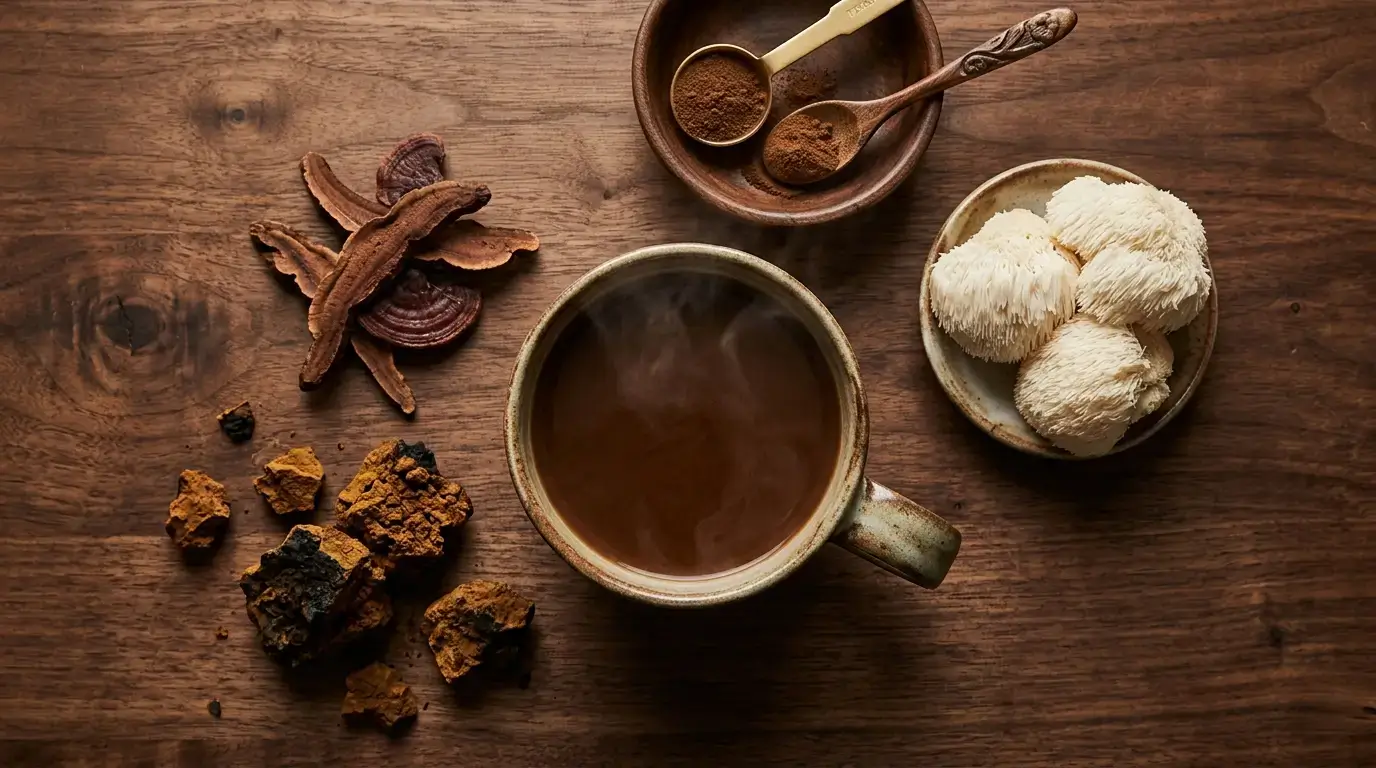
You’ve probably seen it on TikTok, in your favorite wellness store, or popping up at coffee shops. Mushroom coffee — the blend of regular coffee and medicinal mushroom extracts — is one of the fastest-growing functional beverages of 2026, with a 5-year search growth of over 250% and a market projected to exceed $2.2 billion by the end of this year.
But is it actually worth it? Or is it just another wellness trend built on shaky marketing claims?
The honest answer: it’s somewhere in between. The mushrooms used in mushroom coffee — lion’s mane, reishi, cordyceps, and chaga — have real, studied bioactive compounds. But the specific benefits you’ll see from a morning cup depend heavily on the quality of the product, the species used, and what you’re realistically hoping to get from it.
This guide breaks down everything you need to know — what mushroom coffee is, what each mushroom actually does, what the science supports (and what it doesn’t), and how to find a product that’s actually worth your money.
What Is Mushroom Coffee?
Mushroom coffee is regular coffee — ground beans, instant, or pods — blended with dried, powdered extracts of medicinal mushrooms. You don’t use cooking mushrooms like shiitake or portobello. The mushrooms used are specific species prized in traditional Eastern medicine for their adaptogenic and bioactive properties.
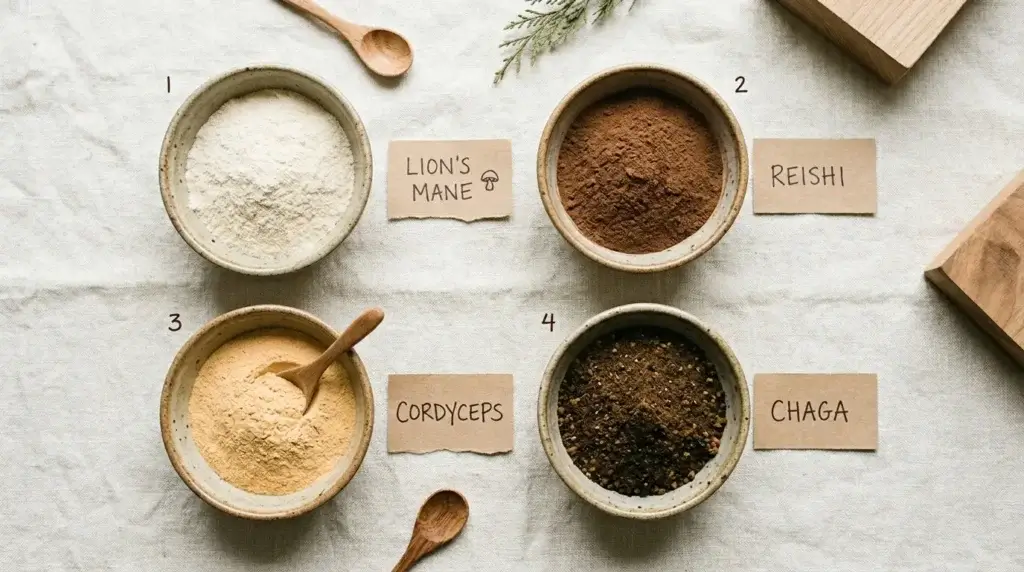
The most common ones you’ll find in products today:
- Lion’s mane (Hericium erinaceus) — the cognitive one
- Reishi (Ganoderma lucidum) — the stress and sleep one
- Cordyceps (Ophiocordyceps sinensis) — the energy and endurance one
- Chaga (Inonotus obliquus) — the antioxidant and immunity one
- Turkey tail (Trametes versicolor) — the gut health and immune one
Most products blend 2–4 of these together with coffee in a roughly 1:1 ratio. Because mushroom powder contains zero caffeine, this effectively halves the caffeine of your usual cup — which is either a benefit or a drawback depending on your relationship with caffeine.
The taste? Earthier and nuttier than plain coffee. Not mushroomy in a savory way — more like a deeper, slightly woodsy version of regular coffee. Most people find it perfectly pleasant once they’re used to it.
The Real Benefits of Mushroom Coffee: What Science Actually Shows
Let’s go mushroom by mushroom. This is where most articles get vague — so let’s be specific.
Lion’s Mane: Brain Function and Focus
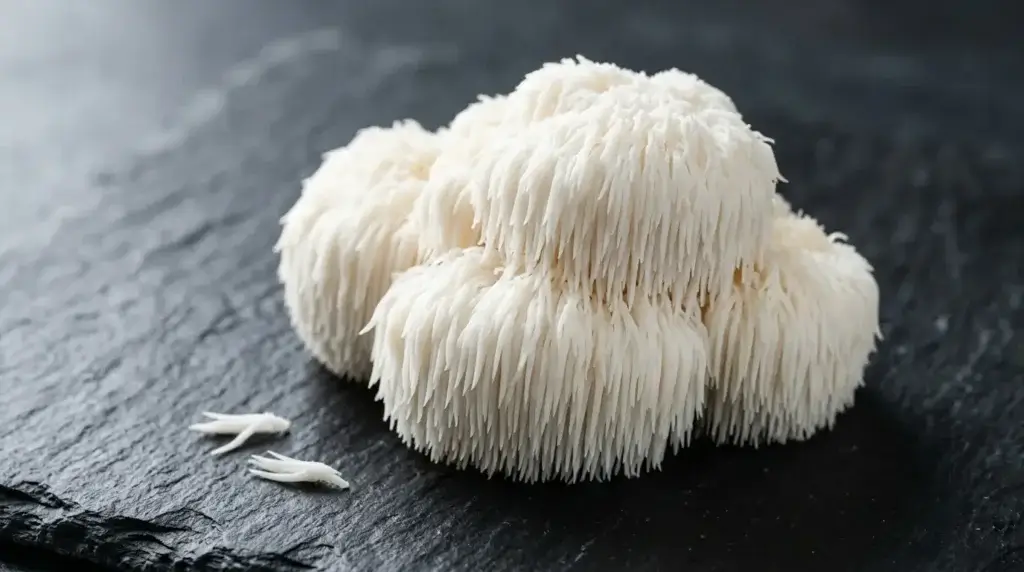
Lion’s mane is the star of mushroom coffee for a reason. It’s the most researched functional mushroom for cognitive health, and the evidence is genuinely interesting.
The key compounds are hericenones (found in the fruiting body) and erinacines (found in the mycelium). Both stimulate the production of nerve growth factor (NGF) — a protein your brain needs to grow, maintain, and repair neurons.
A 2023 double-blind study published in Nutrients (Docherty et al.) tested a single dose of lion’s mane extract on 41 healthy adults aged 18–45. Participants completed cognitive tasks significantly faster after just one dose. After 28 days, they also reported lower perceived stress — though that result didn’t reach statistical significance in this small study.
A 2024 analysis confirmed cognitive function improvements in older adults, including those experiencing early cognitive decline.
What this means for mushroom coffee drinkers: If your product uses fruiting body extract at a meaningful dose (at least 500–1000mg per serving), you may notice improved mental clarity and slightly faster thinking — especially during sustained focus work.
Honest caveat: Most studies use pure, high-dose lion’s mane. The amount in a single serving of many mushroom coffee blends may be lower. Check the label.
Reishi: Stress Reduction and Sleep
Reishi has been used in Chinese medicine for over 2,000 years — called lingzhi, meaning “herb of spiritual potency.” It’s classified as an adaptogen: a substance that helps your body respond to stress without overstimulating the system.
The relevant compounds are triterpenoids and beta-glucans. Triterpenoids have shown calming, cortisol-modulating effects in multiple studies. Beta-glucans are powerful immune modulators.
Research published in Phytomedicine found that reishi extract reduced anxiety and fatigue in patients with neurasthenia (stress-related exhaustion). A 2024 meta-analysis confirmed anti-fatigue and sleep-supporting effects across multiple formulations.
What this means for mushroom coffee drinkers: The reishi in your cup may help smooth out the cortisol spike from caffeine, reducing jitteriness and making the energy feel more balanced. It may also make it slightly easier to wind down in the evening — though if you’re drinking coffee in the afternoon, the caffeine itself will still affect your sleep.
Cordyceps: Energy and Physical Performance
Cordyceps is the mushroom of choice for athletes and anyone looking for a natural energy boost. Its primary mechanism: enhancing cellular ATP (adenosine triphosphate) production — essentially improving how efficiently your cells generate energy.
Studies on cordyceps have shown improvements in VO2 max (oxygen utilization), reduced fatigue during exercise, and improved endurance — particularly in older adults. A well-cited study in the Journal of Dietary Supplements found significant improvements in aerobic exercise performance in healthy older adults after 12 weeks of cordyceps supplementation.
What this means for mushroom coffee drinkers: If you drink mushroom coffee before a workout, the cordyceps element may give you a modest but real edge in endurance. It’s also the reason many people find mushroom coffee feels more “complete” as a pre-workout than plain coffee.
Chaga: Antioxidants and Immunity
Chaga is sometimes called the “king of mushrooms” for its antioxidant density. It contains exceptionally high levels of polyphenols, melanin, and beta-glucans — compounds that fight oxidative stress and support immune function.
Many of the mushrooms in mushroom coffee, including chaga, reishi, cordyceps, and lion’s mane, contain antioxidants like polyphenols and beta-glucans which combat oxidative stress and reduce inflammation.
Research on chaga supports its antioxidant and anti-inflammatory properties, though human clinical trials are still limited. Beta-glucans specifically are well-studied for their ability to activate and regulate immune cells.
Important note: There is one documented risk with chaga — it contains high levels of oxalates. People with kidney issues or a history of kidney stones should avoid high-dose chaga supplementation. A cup of mushroom coffee with a standard dose of chaga is unlikely to cause problems for healthy people, but it’s worth knowing.
Mushroom Coffee vs Regular Coffee: Key Differences

| Mushroom Coffee | Regular Coffee | |
|---|---|---|
| Caffeine | ~45–70 mg per serving | ~95–200 mg per serving |
| Jitters / anxiety | Significantly reduced | Common at higher doses |
| Energy curve | Smoother, more sustained | Fast spike, potential crash |
| Brain function | Lion’s mane adds NGF support | Caffeine only |
| Immune support | Yes (chaga, turkey tail, reishi) | Minimal |
| Stress response | Modulated by reishi | Can increase cortisol |
| Antioxidants | Very high | Moderate |
| Taste | Earthy, nutty, slightly deeper | Clean coffee flavor |
| Cost per serving | $1.50–$4.00 | $0.20–$2.00 |
The most meaningful differences are the lower caffeine, smoother energy curve, and the added adaptogenic and cognitive support. If you currently experience jitters, anxiety, or a hard crash from regular coffee, mushroom coffee is a very genuine upgrade.
Who Should Drink Mushroom Coffee?
Mushroom coffee is a particularly good fit for:
People sensitive to caffeine — The reduced caffeine content (often 40–50% less) combined with reishi’s cortisol-modulating effect makes this dramatically more manageable for caffeine-sensitive individuals.
Knowledge workers and students — The lion’s mane + caffeine combination is arguably the most evidence-backed natural stack for sustained cognitive performance available in beverage form.
People over 40 — Both lion’s mane (neuroprotective, NGF-stimulating) and reishi (immune-modulating, anti-fatigue) have particularly well-supported benefits for middle-aged and older adults.
Anyone trying to reduce overall caffeine intake — It’s one of the most painless ways to cut caffeine by half without losing the ritual and taste of a morning coffee.
Athletes and active people — The cordyceps component provides modest but real endurance and recovery support.
It’s less ideal for people who need maximum caffeine fast (say, a pre-dawn workout) or those who love the clean, bright flavor of high-quality specialty coffee — mushroom coffee does have a different, earthier taste profile.
What to Look for in a Mushroom Coffee Product
This is where most buyers go wrong. The mushroom coffee market is full of low-quality products that barely contain enough active compounds to do anything.
1. Fruiting body vs mycelium — This is the most important distinction. Fruiting body extract contains the highest concentration of bioactive compounds (hericenones in lion’s mane, triterpenoids in reishi). Mycelium grown on grain is cheaper to produce and contains less of the key compounds — and often a lot of the “active weight” is just starch from the grain substrate. Look for “fruiting body” explicitly on the label.
2. Dosage — A meaningful dose of lion’s mane is 500–1000mg per serving. Many products offer 100–200mg. Check the numbers, not just the presence of the ingredient.
3. Extraction method — Hot water extraction and dual extraction (hot water + alcohol) preserve more of the bioactive compounds than raw powder. Look for “extract” not just “powder.”
4. Beta-glucan percentage — Some quality brands list the beta-glucan percentage (typically 20–40% in quality products). Higher is better for immune support.
5. Third-party testing — Given that the functional mushroom industry still lacks regulatory standardization, choose brands that publish their Certificates of Analysis (COAs).
Best Mushroom Coffee Brands in 2026: What’s Actually Worth Buying
[IMAGE 3 — best-mushroom-coffee-brands-comparison.jpg]
The mushroom coffee market has exploded — and with it, a flood of products that range from genuinely excellent to essentially useless. Based on the criteria outlined above (fruiting body extract, meaningful doses, third-party testing), here is an honest comparison of the brands most worth knowing.
Four Sigmatic — The Pioneer
Best for: Beginners, people who want a proven product with a long track record
Four Sigmatic is the brand that popularized mushroom coffee in the West and remains one of the most trusted names in the space. Their Think blend uses lion’s mane and chaga, with 250mg of lion’s mane fruiting body per serving — lower than the optimal 500–1000mg but consistently dosed and third-party tested.
- Fruiting body extract: ✅
- Dose per serving: 250mg lion’s mane
- Third-party tested: ✅
- Price per serving: ~$2.50–3.00
- Best product: Mushroom Coffee with Lion’s Mane & Chaga
Honest note: The dose is on the lower end. It’s a solid daily option, but if cognitive performance is your primary goal, you may want to supplement with additional lion’s mane powder.
RYZE — Best Value for Daily Use
Best for: People who want a complete multi-mushroom blend at a reasonable price point
RYZE uses a 6-mushroom blend (lion’s mane, cordyceps, reishi, shiitake, turkey tail, king trumpet) at 2000mg total per serving — one of the highest blend doses available. The lion’s mane is fruiting body derived. Their formula also includes MCT oil, which helps the fat-soluble compounds absorb more efficiently.
- Fruiting body extract: ✅ (lion’s mane)
- Total mushroom dose: 2000mg per serving
- Third-party tested: ✅
- Price per serving: ~$1.60–2.00
- Best product: RYZE Mushroom Coffee (original blend)
Honest note: RYZE doesn’t always disclose the exact dose of each individual mushroom within the blend — you’re getting 2000mg total but the split isn’t always fully transparent. Still one of the best value options available.
MUD/WTR — Best Coffee Alternative
Best for: People trying to quit coffee entirely, not just reduce caffeine
MUD/WTR is technically not a mushroom coffee — it contains no coffee at all. It’s a blend of cacao, masala chai, and functional mushrooms (lion’s mane, reishi, cordyceps, chaga) with just 1/7th the caffeine of coffee. It tastes more like a spiced chocolate drink than coffee.
- Fruiting body extract: ✅
- Caffeine: ~35mg (from black tea in masala chai)
- Third-party tested: ✅
- Price per serving: ~$2.50–3.00
- Best product: MUD/WTR :rise blend
Honest note: If you want to maintain the coffee taste, MUD/WTR is not for you. If you want to break the coffee habit entirely while keeping a warm morning ritual, it’s excellent.
Everyday Dose — Best for Gut Health Focus
Best for: People who want mushroom coffee plus collagen and prebiotic support
Everyday Dose adds collagen peptides and L-theanine to their mushroom coffee blend (lion’s mane + chaga). The L-theanine is a smart addition — it’s an amino acid found naturally in green tea that promotes calm focus and directly counteracts caffeine jitteriness.
- Fruiting body extract: ✅
- Added L-theanine: ✅ (unique differentiator)
- Third-party tested: ✅
- Price per serving: ~$2.00–2.50
- Best product: Everyday Dose Original
Honest note: The collagen addition makes this more of a functional wellness drink than a pure mushroom coffee. If you’re already taking collagen separately, there may be overlap.
Quick Brand Comparison
| Brand | Fruiting Body | Lion’s Mane Dose | Caffeine | Price/Serving | Best For |
|---|---|---|---|---|---|
| Four Sigmatic | ✅ | 250mg | ~50mg | ~$2.75 | Beginners, trusted brand |
| RYZE | ✅ | ~333mg* | ~48mg | ~$1.80 | Daily use, best value |
| MUD/WTR | ✅ | Undisclosed | ~35mg | ~$2.75 | Coffee quitters |
| Everyday Dose | ✅ | Undisclosed | ~45mg | ~$2.25 | Gut health + collagen |
*Estimated based on 2000mg total blend ÷ 6 mushrooms
DIY Option: Best Dose Control at Lowest Cost
If you want maximum dose flexibility and the lowest cost per serving, buying separate fruiting body extracts and adding them to your existing coffee remains the best approach. Brands like Real Mushrooms, Host Defense, and Nootropics Depot sell high-quality single-species fruiting body powders — you control exactly what goes in your cup and at what dose.
How to Make Mushroom Coffee at Home
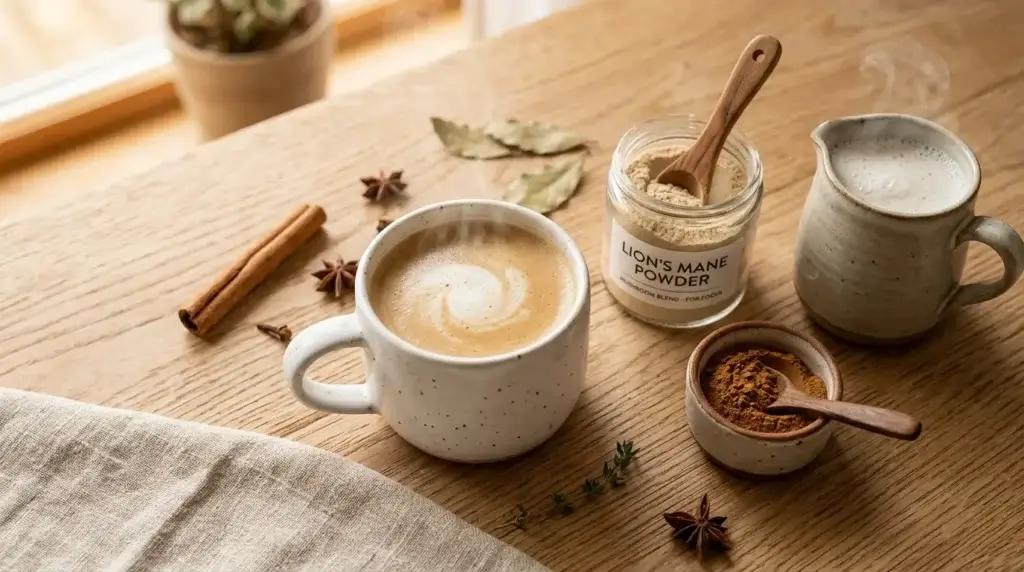
You have two main options: buy a pre-blended product, or add mushroom powder to your existing coffee.
Option A — Pre-blended (easiest) Brands like Four Sigmatic, RYZE, and MUD/WTR sell ready-to-mix instant mushroom coffee. Just add hot water (or blend into your existing coffee). Best for beginners.
Option B — DIY (most control) Buy separate fruiting body extracts (lion’s mane, reishi, cordyceps) in powder form and add ¼ to ½ tsp of each directly into your brewed coffee. This gives you control over dose and species. Add to your French press or pour-over after brewing.
Basic mushroom coffee latte recipe:
- Brew 8 oz of your regular coffee
- Add ½ tsp lion’s mane extract powder + ¼ tsp reishi extract powder
- Add steamed oat milk (ratio 1:1 for a latte consistency)
- Optional: a small pinch of cinnamon and a few drops of vanilla extract
- Whisk or froth well — mushroom powders can clump
Taste tip: reishi has a slightly bitter edge. If you find it too much, start with a smaller dose and increase gradually.
Does Mushroom Coffee Actually Work? An Honest Assessment
Here’s the honest take that most mushroom coffee content glosses over.
The individual mushrooms — lion’s mane, reishi, cordyceps, chaga — have genuinely interesting, scientifically supported bioactive properties. The research on lion’s mane for cognitive function is particularly promising. Reishi’s adaptogenic effects are well-documented. Cordyceps’ impact on energy metabolism is real.
While the ingredients themselves may be well-studied, many of the claims surrounding mushroom coffee products are theoretical extrapolations — not product-specific clinical outcomes. In other words: we know what pure, high-dose lion’s mane does in a controlled study. We don’t yet have clinical trials specifically on mushroom coffee blends at the doses typically found in commercial products.
The practical truth: most regular mushroom coffee drinkers notice real, subtle improvements — less caffeine-related anxiety, slightly clearer focus, smoother energy. The effects are not dramatic or immediate in most cases. Think of it less like a supplement and more like a quiet daily upgrade to your existing coffee habit.
The people who get the most from it are those who were already experiencing issues with regular coffee (jitters, crashes, anxiety) and switch to a quality mushroom coffee product with fruiting body extracts at meaningful doses.
Mushroom Coffee and Gut Health
One underrated benefit: several mushrooms used in mushroom coffee — particularly turkey tail and chaga — contain prebiotic fibers that support a healthy gut microbiome.
Turkey tail is actually one of the most studied mushrooms for gut health, with beta-glucans that selectively feed beneficial bacteria. If gut health is a concern, look for a blend that includes turkey tail alongside the more popular species.
(More on functional drinks for gut health in our gut health drinks guide.)
Side Effects and Who Should Be Cautious
Mushroom coffee is safe for most healthy adults, but a few things to know:
- Chaga — high in oxalates. Avoid or limit if you have kidney issues or a history of kidney stones.
- Reishi — may interact with blood thinners (anticoagulants). If you’re on warfarin or similar medications, check with your doctor first.
- Cordyceps — generally very well tolerated, but start with a lower dose if you have autoimmune conditions.
- Allergies — if you have mushroom allergies, avoid entirely.
- Pregnancy / breastfeeding — limited safety data; best to avoid until more research is available.
For healthy adults with no pre-existing conditions or medications, mushroom coffee is a low-risk addition to a daily routine.
The Verdict: Is Mushroom Coffee Worth It?

Yes — with caveats.
If you’re looking for a meaningful upgrade to your daily coffee that reduces jitters, supports focus, helps your immune system, and gives you a smoother energy curve, mushroom coffee is genuinely worth trying. The science behind the key mushroom species is real, and the lower caffeine content alone is a meaningful benefit for many people.
It is not a magic nootropic or a cure-all. The benefits are subtle and cumulative, not instant or dramatic. And the quality gap between products is enormous — a cheap product with mycelium powder at low doses will do almost nothing, while a quality product with fruiting body extracts at real doses can make a noticeable difference.
Start with a 30-day trial of a quality product (fruiting body extracts, at least 500mg lion’s mane per serving). Give your body time to adapt. See how you feel.
Your morning cup is a daily ritual anyway — it might as well do more than just wake you up.
Explore more functional coffee content: Coffee Alternatives for Wellness · Adaptogenic Drinks Benefits · Coffee with Ginger and Lemon Benefits
Frequently Asked Questions
What does mushroom coffee actually do?
Mushroom coffee combines regular coffee with medicinal mushroom extracts. The combined effect is lower caffeine, smoother energy without jitters, potential cognitive support from lion’s mane, stress modulation from reishi, and enhanced antioxidant and immune support from chaga and turkey tail.
Does mushroom coffee taste like mushrooms?
Not in a savory way. Most people describe it as earthier and nuttier than regular coffee — slightly deeper in flavor. The more familiar you are with specialty coffee, the more you’ll notice the difference. For most people, it’s a perfectly pleasant cup once they’ve had it a few times.
Is mushroom coffee better than regular coffee?
For people sensitive to caffeine, prone to jitters, or looking for cognitive and immune support, yes. For people who need maximum caffeine or prefer a clean, bright coffee flavor, regular coffee may still be the better choice for them. They serve slightly different purposes.
How long does it take for mushroom coffee to work?
Some effects (like reduced jitteriness) are noticeable from the first cup. Cognitive and immune benefits from lion’s mane and reishi tend to build over 2–4 weeks of consistent daily use — they’re cumulative, not instant.
Can I drink mushroom coffee every day?
Yes — it’s designed as a daily drink. Most research on functional mushrooms looks at daily use over 4–12 weeks. There’s no evidence of tolerance buildup or need for cycling.
What’s the best mushroom for coffee?
Lion’s mane is the most evidence-backed for cognitive benefits. Reishi is best for stress and sleep support. Cordyceps is ideal if energy and physical performance are your goal. Most quality blends combine 2–4 species for a broader effect.
What is the best mushroom coffee brand?
For most people, RYZE offers the best combination of value, dose, and quality — with a 2000mg multi-mushroom blend using fruiting body extract at around $1.80 per serving. Four Sigmatic is the most trusted brand for beginners. If you want to quit coffee entirely, MUD/WTR is the most complete alternative. For maximum dose control at lowest cost, buy single-species fruiting body extracts separately and add them to your existing coffee.
Is mushroom coffee good for you?
Yes — for most healthy adults, mushroom coffee is a genuinely beneficial upgrade to regular coffee. The lower caffeine reduces jitters and anxiety, lion’s mane supports cognitive function, reishi modulates the stress response, and chaga and turkey tail provide antioxidant and immune support. The benefits are subtle and cumulative rather than dramatic or instant.
What does mushroom coffee do for you?
Mushroom coffee reduces caffeine-related anxiety and jitteriness, provides smoother sustained energy without a hard crash, supports cognitive function through lion’s mane’s nerve growth factor stimulation, modulates the cortisol response through reishi’s adaptogenic activity, and delivers antioxidant and immune support through chaga and turkey tail. Most regular drinkers notice clearer focus and calmer energy within 2–4 weeks of consistent use.