
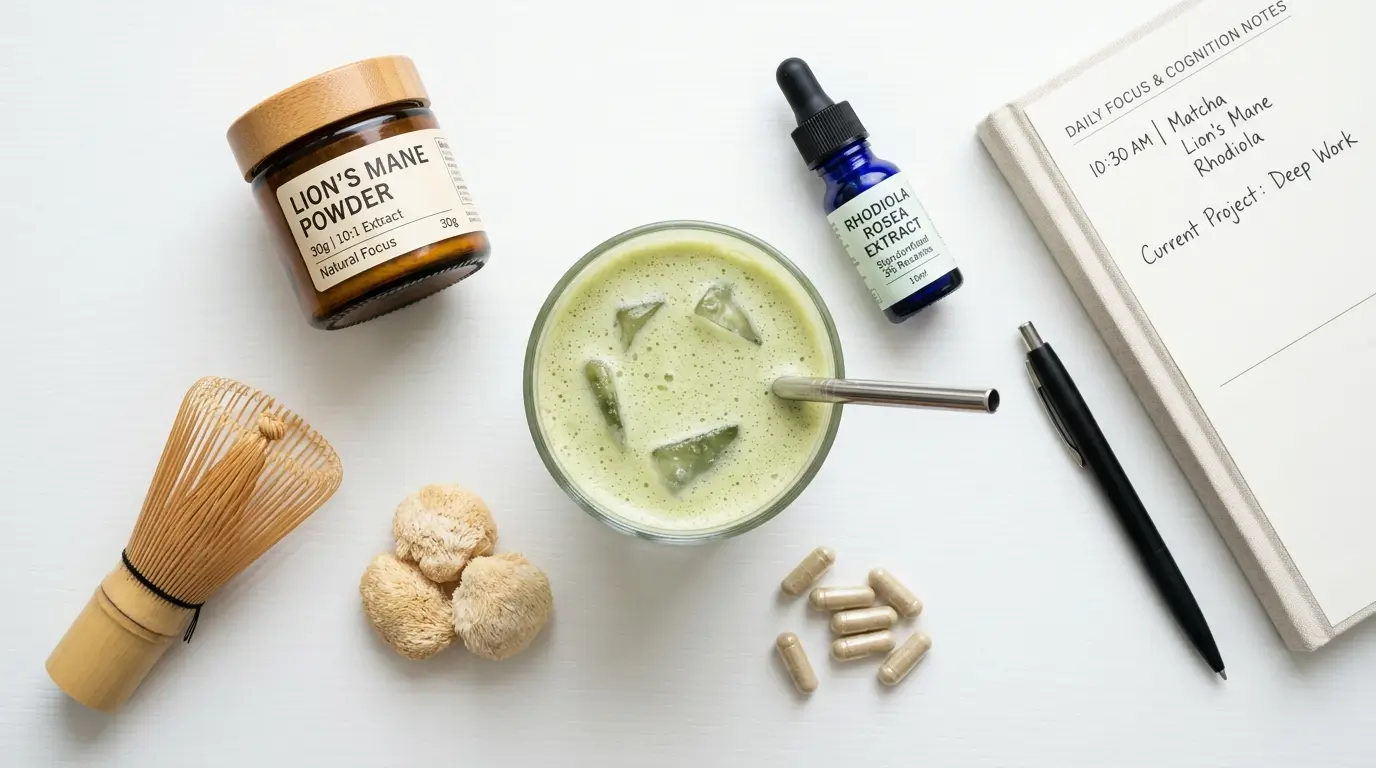
You’ve seen them at the checkout of your health food store, on your TikTok feed, and increasingly on café menus. Drinks with names like “Focus Blend,” “Brain Fuel,” or “Clarity Shot” — all promising sharper thinking, less brain fog, and calm energy without the caffeine crash.
The category has a name: nootropic drinks. And the market is growing fast, with the cognitive enhancement supplements sector projected to reach $6.29 billion by 2028.
But here’s the honest question nobody’s asking loudly enough: do they actually work?
The answer is nuanced — some ingredients have solid science behind them, others are riding the marketing wave, and a lot depends on the dose. This guide breaks down exactly what nootropic drinks are, which ingredients matter (and at what doses), what to look for when buying, and how to make your own effective versions at home.
What Is a Nootropic Drink?
The word “nootropic” comes from the Greek noos (mind) and tropos (to turn or change). It was coined in 1972 by Romanian psychologist and chemist Corneliu Giurgea to describe substances that enhance cognitive function, specifically memory, focus, creativity, and mental resilience — without the side effects or dependency risk of traditional stimulants.
A nootropic drink is simply a beverage formulated with one or more of these compounds in drinkable form — from sparkling waters and teas to coffee blends, functional shots, and powder mixes.
The key distinction from energy drinks: nootropics target brain function quality, not just stimulation level. The goal isn’t to feel wired — it’s to think more clearly, focus more sustainably, and manage cognitive stress better.
Nootropic beverages are drinks that contain natural or synthetic compounds that aim to improve cognition, enhancing memory, creativity, motivation, and overall mental aptitude.
Common formats in 2026:
- Functional sparkling waters with L-theanine, B vitamins, and adaptogen extracts
- Nootropic coffee blends combining caffeine with lion’s mane, L-theanine, or rhodiola
- RTD focus shots — small-format concentrated drinks with citicoline, bacopa, or ginseng
- Powder mixes you add to water, milk, or coffee
- Adaptogen teas — chamomile, lion’s mane, ashwagandha blended into tea formats
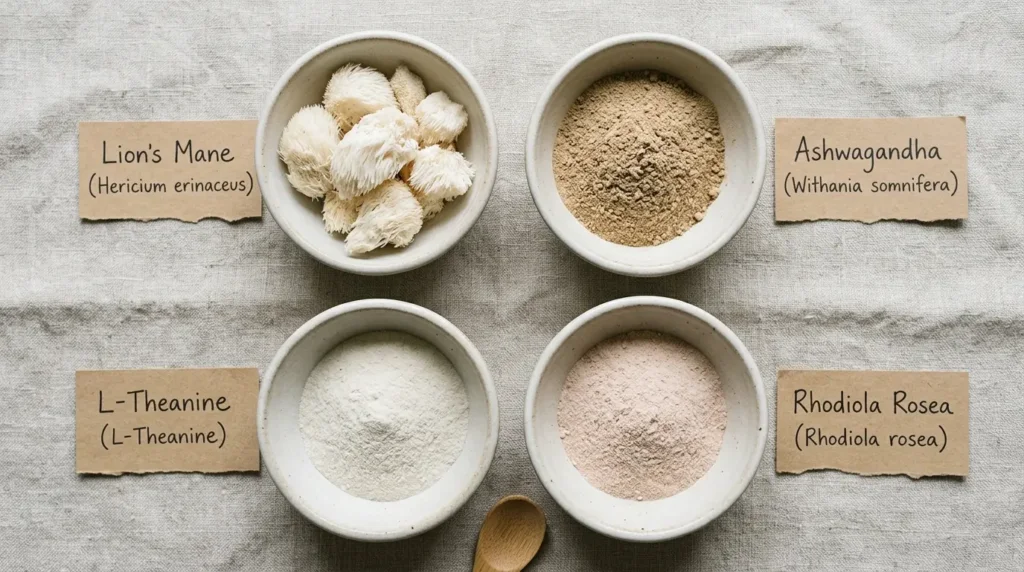
The 7 Key Nootropic Ingredients — What Science Actually Says
This is where most nootropic drink content goes wrong — either overpromising or dismissing everything. Here’s an honest ingredient-by-ingredient breakdown.
1. Caffeine + L-Theanine — The Most Evidence-Backed Stack
Caffeine is the world’s most widely consumed nootropic — and one of the best studied. It improves sustained attention, reaction time, and alertness by blocking adenosine receptors in the brain. Repeatedly in scientific studies, caffeine may improve sustained attention as much as some prescription stimulants.
But caffeine alone has a well-known downside: jitters, anxiety, and crashes. This is where L-theanine comes in.
L-theanine is an amino acid found almost exclusively in tea leaves. It promotes alpha brain wave activity — the relaxed-but-alert state — and blunts the cortisol spike from caffeine. Together, the caffeine + L-theanine combination consistently outperforms either compound alone in studies measuring attention, reaction time, and sustained focus.
Effective dose: 100–200mg caffeine + 200mg L-theanine (roughly a 1:2 ratio) Timeline: Effects within 30–60 minutes Evidence level: ★★★★★ — the strongest nootropic stack available in drink form
This is why matcha is considered a natural nootropic drink — it naturally delivers both caffeine and L-theanine in a roughly optimal ratio. (More on this: matcha vs coffee)
2. Lion’s Mane Mushroom — For Long-Term Brain Health
Lion’s mane (Hericium erinaceus) is the most studied functional mushroom for cognitive health. Its key compounds — hericenones (from the fruiting body) and erinacines (from the mycelium) — stimulate nerve growth factor (NGF) production, the protein that supports brain cell growth, maintenance, and repair.
A 2023 double-blind study found that a single dose of lion’s mane extract improved cognitive task performance speed in healthy adults aged 18–45. A 2024 analysis confirmed cognitive improvements in older adults over sustained use.
The important caveat: lion’s mane is a slow-acting nootropic. Unlike caffeine, you won’t feel it immediately. Benefits build over 2–4 weeks of consistent daily use.
Effective dose: 500–1,000mg of fruiting body extract daily Timeline: Cumulative benefits over 2–4 weeks Evidence level: ★★★★☆ — promising human evidence, more research ongoing
(Detailed lion’s mane guide: mushroom coffee benefits)
3. Ashwagandha — Stress-Driven Focus Restoration
Ashwagandha (Withania somnifera) is technically an adaptogen rather than a traditional nootropic, but it earns its place in focus drinks through a clear mechanism: it reduces cortisol, the stress hormone that directly impairs cognitive performance.
When you’re stressed, cortisol floods the prefrontal cortex — the brain region responsible for focus, decision-making, and working memory — and impairs its function. Ashwagandha consistently reduces cortisol levels in clinical trials, improving sleep quality by up to 72% in some studies and significantly lowering self-reported anxiety and stress.
The result: better focus not through stimulation, but through removing the cortisol interference that’s clouding your thinking.
Effective dose: 300–600mg of KSM-66 or Sensoril extract (these are standardized, clinically studied forms) Timeline: 2–4 weeks of consistent use for best results Evidence level: ★★★★☆ — strong clinical evidence for stress and anxiety reduction
Timing note: Ashwagandha’s cortisol-lowering effect makes it better suited for afternoon or evening use than morning. Stimulating nootropics like caffeine and lion’s mane are best in the morning; calming compounds like ashwagandha work well 1–2 hours before bed or mid-afternoon.
4. Rhodiola Rosea — Energy Without Stimulation
Rhodiola is an adaptogenic herb from the cold mountain regions of Europe and Asia that’s earned a strong reputation among biohackers for one specific benefit: reducing mental fatigue under stress without stimulating the nervous system.
Research shows rhodiola supports productivity, mental endurance, and cognitive performance under demanding conditions — making it particularly useful for long work sessions, high-pressure days, or sustained mental effort. It’s different from caffeine in that it doesn’t increase alertness — it reduces the drain on your cognitive resources.
Effective dose: 200–400mg of standardized extract (3% rosavins, 1% salidroside) Timeline: Some effects within hours, sustained benefits over weeks Evidence level: ★★★★☆ — good clinical evidence for mental fatigue and stress performance
5. Bacopa Monnieri — For Memory and Learning
Bacopa is the nootropic with the strongest evidence specifically for memory. It’s an Ayurvedic herb that increases the density of dendrites — the connections between brain cells — which improves how quickly you learn and how well you retain information.
The catch with bacopa: it’s definitively a long-game ingredient. Most studies show meaningful memory improvements after 8–12 weeks of daily use. Don’t expect to notice anything in the first week.
Effective dose: 300–450mg of bacosides-standardized extract Timeline: 8–12 weeks for full effect Evidence level: ★★★★☆ — consistent evidence across multiple RCTs
6. Citicoline — The Underrated Brain Fuel
Citicoline is a precursor to two critical brain compounds: acetylcholine (the neurotransmitter for learning and memory) and phosphatidylcholine (a key component of brain cell membranes). It’s been shown to improve episodic memory, support attention, and provide neuroprotective effects — particularly relevant as we age.
It’s less trendy than lion’s mane but arguably has stronger human evidence. Among nootropic formulators, citicoline is considered one of the most reliable cognitive support ingredients available.
Effective dose: 250–500mg daily (look for Cognizin® — the most clinically studied form) Timeline: Some benefits within days to weeks Evidence level: ★★★★☆ — solid human trial evidence
7. B Vitamins (B6, B9, B12) — The Baseline
B vitamins aren’t glamorous nootropics, but they’re foundational — deficiencies in B6, B9, or B12 directly impair cognitive function, and many people are mildly deficient without knowing it. B vitamins are essential for the synthesis of key neurotransmitters including serotonin, dopamine, and GABA.
If your nootropic drink doesn’t include B vitamins, it’s missing an important baseline layer. They’re inexpensive and safe at standard doses.
Effective dose: RDA-level amounts (look for methylated forms: methylcobalamin for B12, methylfolate for B9 — better absorbed than the synthetic versions) Evidence level: ★★★★☆ — well-established for cognitive baseline support
What’s NOT Worth Paying For
The nootropic drink market is full of ingredients that sound compelling but have thin or no human evidence at the doses found in commercial drinks. A few to watch out for:
Ginkgo biloba — once considered a classic nootropic, but more recent meta-analyses show inconsistent results. Some benefits possible at 120–240mg, but the effect is small.
Huperzine A — interesting mechanism, but requires cycling (not safe for daily long-term use) and not appropriate as a casual beverage ingredient.
Proprietary blends — when a product lists ingredients but hides the individual amounts in a “proprietary blend,” you have no way to know if any ingredient is at an effective dose. Often it isn’t.
Huge ingredient lists at low doses — a drink listing 15 nootropic ingredients in a 500mg total blend means none of them are at meaningful doses. More ingredients at trace amounts is less effective than 2–3 ingredients at real doses.
How to Make Your Own Nootropic Drinks at Home
Commercial nootropic drinks are convenient, but many are expensive and underdosed. Here are three simple homemade options using individual ingredients you can source and dose yourself.
Recipe 1 — The Focus Stack (Morning)
Built around the caffeine + L-theanine core stack with lion’s mane for long-term brain support.
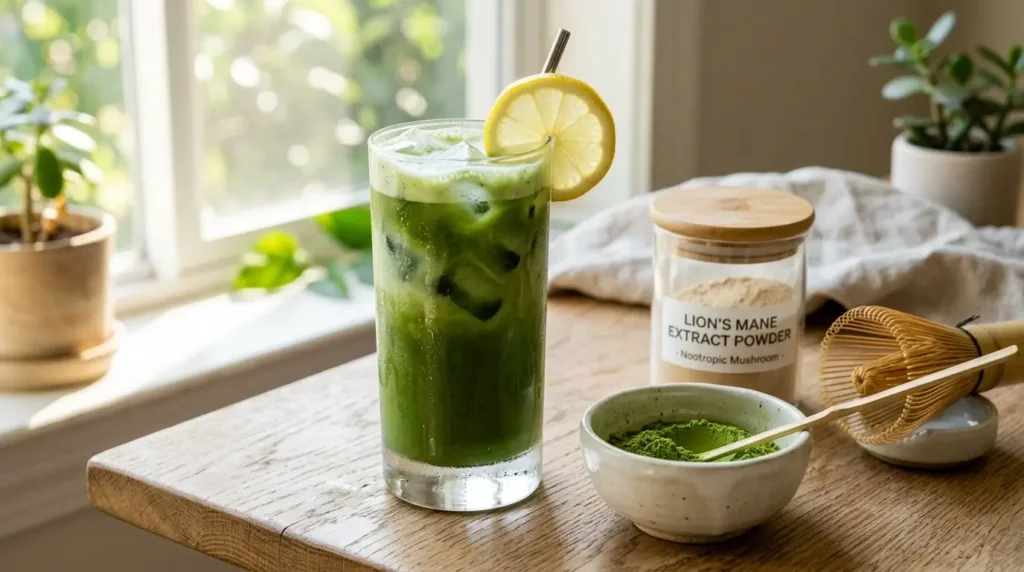
Ingredients:
- 240ml brewed green tea or matcha (natural caffeine ~70mg + L-theanine ~25–40mg)
- ½ tsp lion’s mane extract powder (500mg)
- ¼ tsp rhodiola extract powder (200mg) — optional
- Juice of ½ lemon
- 1 tsp raw honey
- Ice (if serving cold)
Method: Brew tea, let cool slightly, whisk in lion’s mane and rhodiola powders until dissolved, add lemon and honey. Serve hot or over ice.
Why it works: Matcha delivers the caffeine + L-theanine stack naturally. Lion’s mane adds the NGF-stimulating long-term layer. Rhodiola buffers mental fatigue. Total: three evidence-backed ingredients at meaningful doses.
Recipe 2 — The Calm Clarity Drink (Afternoon)
For the 2–4pm window when focus starts to drift but you don’t want more caffeine.

Ingredients:
- 300ml warm oat milk or almond milk
- ½ tsp ashwagandha powder (300mg — use KSM-66 if available)
- ¼ tsp lion’s mane extract powder (250mg)
- Small pinch of black pepper (enhances absorption of several compounds)
- ½ tsp cinnamon
- 1 tsp raw honey
- Optional: ¼ tsp turmeric
Method: Warm the milk, whisk in all powders until smooth, add honey. Drink at afternoon slump time.
Why it works: No caffeine — so no sleep disruption risk. Ashwagandha lowers afternoon cortisol that’s clouding focus. Lion’s mane adds the cognitive support layer. This is essentially a focus-optimized version of the golden milk trend.
Recipe 3 — The Deep Work Shot (Pre-Focus Session)
A small-format concentrate for before a demanding work block — writing, studying, complex problem-solving.
Ingredients:
- 60ml cold water or coconut water
- 200mg L-theanine powder (approximately ¼ tsp depending on brand)
- 100mg caffeine from green tea extract powder (or use a small espresso)
- ½ tsp lion’s mane extract
- Juice of ¼ lemon
- Few drops liquid stevia
Method: Mix all powders into the liquid, stir or shake vigorously, drink in 1–2 sips 20 minutes before your focus session begins.
Why it works: The caffeine + L-theanine is at the optimal 1:2 ratio. The small volume means faster absorption. Lion’s mane adds to the cognitive support. This is the closest homemade equivalent to the expensive focus shots on the market.
What to Look for When Buying Nootropic Drinks
If you’d rather buy than make, here’s the checklist that separates effective products from expensive placebo:
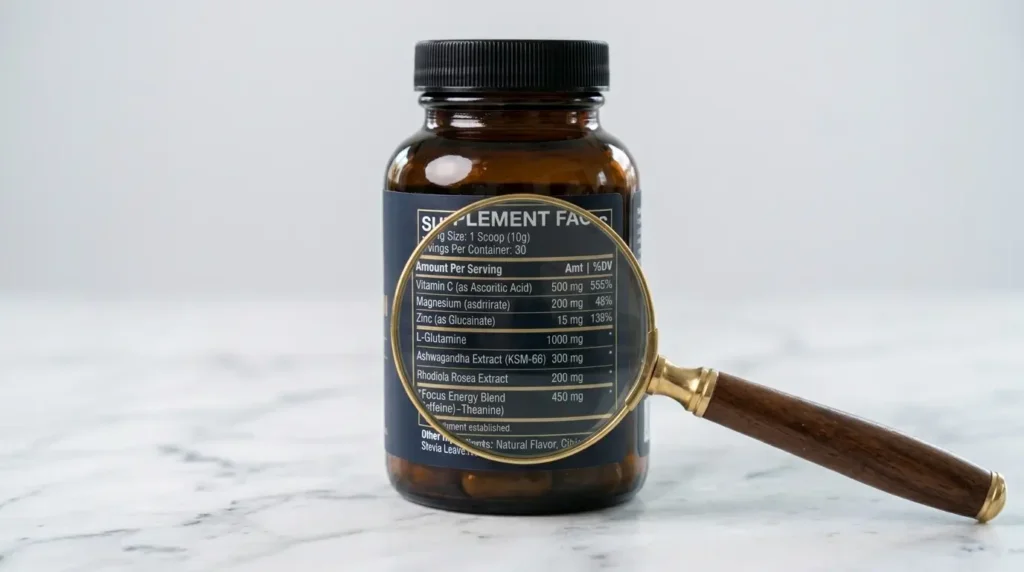
1. Transparent dosing — every ingredient with its exact milligram amount visible. No “proprietary blend” hiding the numbers.
2. Effective doses — compare against the research doses above. L-theanine below 100mg, lion’s mane below 300mg, bacopa below 200mg won’t do much.
3. Standardized extracts — ashwagandha should be KSM-66 or Sensoril. Rhodiola should specify 3% rosavins. These designations mean the active compound percentage is guaranteed.
4. Third-party tested — NSF, Informed Sport, or USP certification means the label matches what’s actually in the bottle.
5. Reasonable ingredient count — 3–6 well-dosed ingredients beats 15 trace-level ones every time.
When to Drink Nootropics (Timing Matters)
Unlike coffee, where timing is mostly about avoiding afternoon caffeine, nootropic drinks have real timing considerations based on their mechanism:
| Ingredient | Best timing | Why |
|---|---|---|
| Caffeine + L-theanine | Morning, pre-work | Fast-acting alertness, avoid afternoon use |
| Lion’s mane | Morning or evening | Consistent daily dose matters more than timing |
| Rhodiola | Morning or pre-work | Reduces mental fatigue, mild stimulating effect |
| Ashwagandha | Afternoon or evening | Cortisol-lowering, can support sleep |
| Bacopa | Any time, consistent daily | Purely cumulative — timing irrelevant |
| Citicoline | Morning | Can be mildly activating |
The most important rule: consistency over perfection. Nootropics that work cumulatively (lion’s mane, bacopa, ashwagandha) need daily use for 4–12 weeks to show meaningful effects. Skipping days resets the clock.
Honest Expectations: What Nootropic Drinks Will and Won’t Do
What you can realistically expect:
- Smoother, more sustained focus compared to caffeine alone (caffeine + L-theanine stack)
- Reduced mental fatigue during demanding cognitive sessions (rhodiola)
- Lower anxiety and cortisol interference with thinking (ashwagandha)
- Gradual improvements in memory and learning speed over weeks of consistent use (bacopa, lion’s mane)
- Better cognitive baseline if you’re deficient in B vitamins
What you should not expect:
- Dramatic, immediate “smart drug” effects — nootropics are subtle and cumulative, not stimulant-level acute
- Effects comparable to prescription cognitive enhancers
- Benefits that work independently of sleep, exercise, and nutrition — nootropics enhance a healthy foundation, they don’t replace it
The best nootropic “stack” is still: 7–8 hours of sleep, regular exercise, a nutrient-dense diet, and stress management. Nootropic drinks are a genuine add-on — not a shortcut.
The Verdict

Nootropic drinks are not snake oil — but they’re also not magic. The best ones contain a small number of well-dosed, evidence-backed ingredients that meaningfully support cognitive function through mechanisms science understands.
The caffeine + L-theanine combination is the most reliable and fastest-acting. Lion’s mane, ashwagandha, rhodiola, and citicoline all have solid human evidence behind them at the right doses.
The key is being a smart buyer: ignore the 15-ingredient blends with proprietary dosing, look for transparent labels and standardized extracts, and give cumulative ingredients the 4–8 weeks they need to show results.
Start with the Focus Stack recipe above. Make it every morning for a month. Then decide if you need to upgrade.
Explore more functional drink guides: Adaptogenic Drinks Benefits · Mushroom Coffee Benefits · Matcha vs Coffee · Coffee Alternatives for Wellness
Frequently Asked Questions
What are nootropic drinks?
Nootropic drinks are functional beverages formulated with compounds that support cognitive function — focus, memory, mental clarity, and stress resilience. Common ingredients include L-theanine, lion’s mane, ashwagandha, rhodiola, bacopa, citicoline, and B vitamins. They differ from energy drinks in that they target brain function quality, not just stimulation level.
Do nootropic drinks actually work?
Some do, some don’t — it depends entirely on which ingredients are included and at what dose. The caffeine + L-theanine stack has the strongest and fastest evidence. Lion’s mane, ashwagandha, and rhodiola have solid human trial support. Many commercial products, however, contain too little of any ingredient to produce meaningful effects. Always check individual ingredient doses against research benchmarks.
What is the best nootropic drink for focus?
The most evidence-backed combination for acute focus is caffeine + L-theanine (200mg caffeine: 400mg L-theanine ratio) — naturally found together in matcha, or combinable with any coffee plus an L-theanine supplement. For sustained focus over weeks, adding lion’s mane (500–1,000mg daily) builds the longer-term cognitive foundation.
Are nootropic drinks safe?
Natural nootropic drinks are generally safe for healthy adults at standard doses. Key cautions: ashwagandha may interact with thyroid medications; high-dose bacopa can cause digestive discomfort; anyone with medical conditions should check with a doctor before regular use. Avoid products with huperzine A for daily use — it requires cycling.
How long does it take for nootropic drinks to work?
It depends on the ingredient. Caffeine + L-theanine: 20–45 minutes. Rhodiola: hours to days. Lion’s mane, ashwagandha, bacopa: 2–8 weeks of consistent daily use. The cumulative ingredients require patience — most people quit before the benefits peak.
Can I make nootropic drinks at home?
Yes — and often more effectively than buying commercial products, because you control the dosing. Key ingredients (lion’s mane extract, L-theanine, ashwagandha, rhodiola) are widely available as pure powders. The Focus Stack recipe above (matcha + lion’s mane + rhodiola) delivers three evidence-backed nootropics at meaningful doses in one easy drink.