
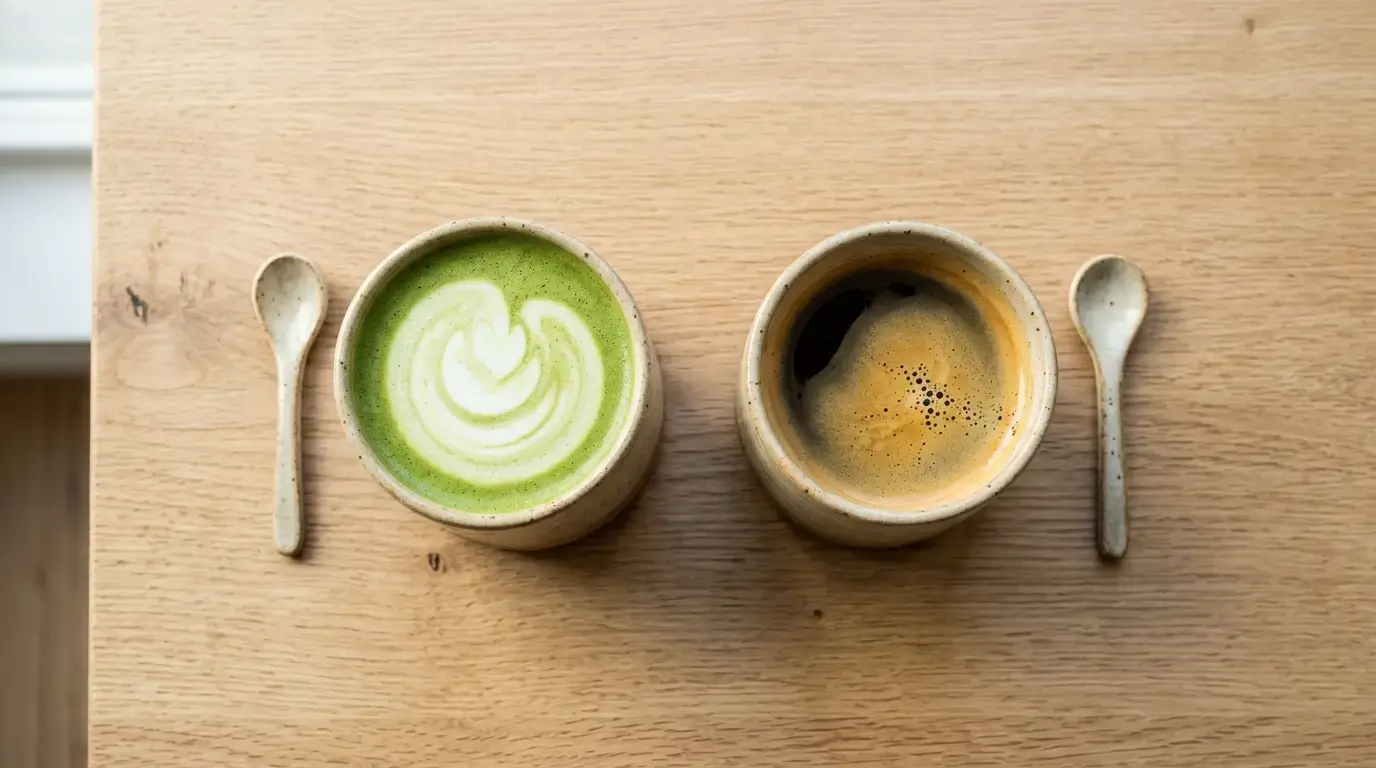
You’ve probably seen the green cups taking over your Instagram feed. Matcha is everywhere right now — café menus, wellness TikToks, morning routine videos. And if you’re a coffee drinker wondering whether you should make the switch, you’re not alone.
But is matcha actually better than coffee? Or is it just a trend dressed in a pretty green color?
The honest answer: it depends on what you’re looking for. Both drinks deliver caffeine, both have real health benefits, and both have their downsides. This guide breaks down every difference that matters — so you can make the right call for your body, your mornings, and your lifestyle.
What’s the Difference Between Matcha and Coffee?
At their core, both drinks are caffeinated beverages made from plants. But they work completely differently in your body.
Coffee is brewed from roasted coffee beans and delivers caffeine in a fast, concentrated hit. Your body absorbs it quickly, which is why you feel alert within 15-30 minutes — and why you sometimes feel jittery, anxious, or crash hard an hour later.
Matcha is powdered green tea made from shade-grown Camellia sinensis leaves. Because you’re consuming the entire leaf (not just an infusion), you get the full spectrum of compounds in the plant — including something coffee doesn’t have: L-theanine.
That one difference changes everything about how the two drinks feel.
Caffeine Content: Matcha vs Coffee — The Real Numbers
Let’s start with the numbers everyone asks about.
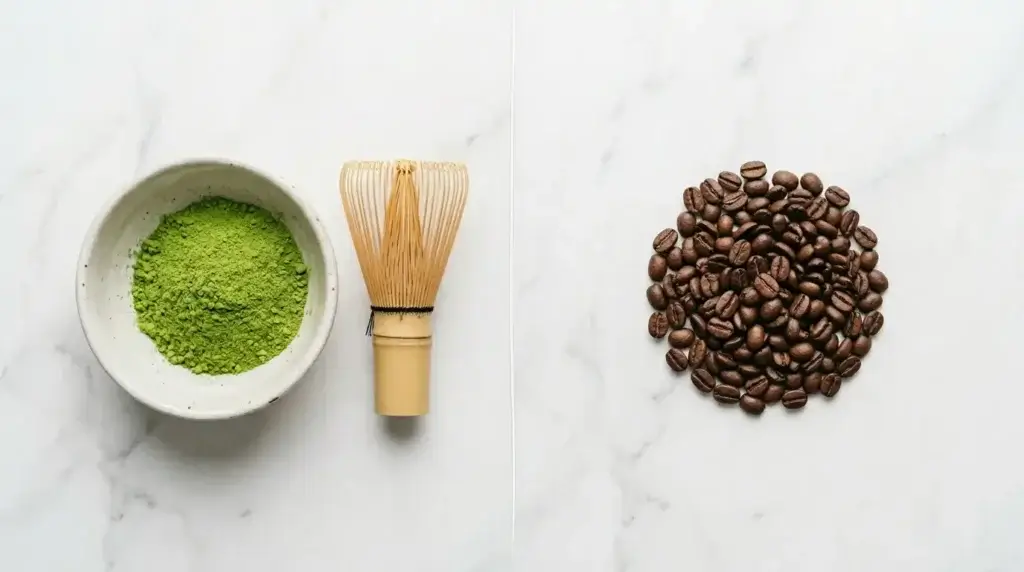
| Matcha (1 tsp / 2g) | Espresso (1 shot) | Drip Coffee (8 oz) | Cold Brew (8 oz) | |
|---|---|---|---|---|
| Caffeine | ~70 mg | ~63 mg | ~95 mg | ~150–200 mg |
| L-theanine | 25–46 mg | 0 mg | 0 mg | 0 mg |
| EGCG antioxidants | High | None | None | None |
| Prep time | 3–5 min | 1–2 min | 5–10 min | 12–24 hrs |
Matcha has less caffeine than most coffee preparations. But that comparison misses the point entirely.
Why Matcha Feels Different Even with Less Caffeine
Here’s what most people don’t realize: it’s not just about how much caffeine you get — it’s about how your body processes it.
Coffee delivers caffeine in an aggressive spike. You feel it fast, you peak fast, and you come down fast. That crash is real, and it’s not just in your head — it’s a documented drop in adenosine (the “tiredness” neurotransmitter) rebound after caffeine wears off.
Matcha works differently because of L-theanine, an amino acid found almost exclusively in green tea. L-theanine promotes alpha brain wave activity — the same relaxed-but-alert state you’re in when you’re meditating or deeply focused. When combined with caffeine, it slows the absorption, smooths the release curve, and blunts the jittery edge.
The result: a calm, sustained focus that most matcha drinkers describe as “alert without being wired.”
Multiple studies have confirmed this synergy. A 2008 study published in Nutritional Neuroscience found that the L-theanine + caffeine combination significantly improved attention and reaction time more than either compound alone.
Energy Boost: Does Matcha Give You More Sustained Energy Than Coffee?
For most people, yes — matcha provides more sustained energy with a gentler curve.

With coffee, the typical experience looks like this:
- 0–15 min: Nothing much
- 15–45 min: Alert, focused, maybe slightly anxious
- 1–2 hrs: Peak energy
- 2–4 hrs: The crash — fatigue, brain fog, sometimes irritability
With matcha, the curve is flatter and longer:
- 0–30 min: Gradual onset
- 30 min–3 hrs: Steady, calm focus
- 3–5 hrs: Slow, gentle decline — rarely a hard crash
This makes matcha particularly useful for tasks that require sustained concentration: writing, studying, deep work sessions. Coffee’s spike can be great for short bursts of physical or mental effort, but it’s less reliable for 3-4 hour focus blocks.
That said, if you need to be alert right now — say, you have a 7am meeting and you just rolled out of bed — coffee wins on speed.
Anxiety & Jitters: Which One is Better if You’re Sensitive to Caffeine?
This is where matcha has a clear, meaningful advantage.
If you’ve ever felt your heart racing after a second cup of coffee, or felt anxious and shaky for no reason on a caffeine-heavy day, you know what caffeine sensitivity feels like. Coffee’s rapid caffeine delivery can spike cortisol levels and activate your fight-or-flight nervous system — especially on an empty stomach.
Matcha is significantly more forgiving for caffeine-sensitive people. The L-theanine essentially acts as a natural “buffer” — it prevents the cortisol spike that comes with raw caffeine and keeps your nervous system in a more balanced state.
A 2019 clinical study found that participants who consumed L-theanine reported significantly lower anxiety scores and lower cortisol reactivity compared to a caffeine-only group.
Who should seriously consider switching:
- People who get anxious, jittery, or heart-poundy from coffee
- Anyone with diagnosed anxiety or panic disorder
- People who can’t drink coffee after noon without disrupting sleep
- Those who experience acid reflux or stomach upset from coffee
Coffee also stimulates more acid production in the stomach than matcha, making matcha the gentler choice for anyone with digestive sensitivity.
Health Benefits Compared: Antioxidants, Focus, and More
Both drinks have real, research-backed health benefits. They’re just different.
Coffee’s key benefits:
- Linked to reduced risk of type 2 diabetes
- Associated with lower risk of Parkinson’s and Alzheimer’s in long-term studies
- Contains chlorogenic acids (antioxidants) that support metabolic health
- Shown to improve physical performance and endurance
Matcha’s key benefits:
- Contains EGCG (epigallocatechin gallate), one of the most studied antioxidants in the world
- Associated with reduced inflammation and improved heart health
- Supports liver health and detoxification
- Promotes calm focus and reduced stress response (via L-theanine)
- Contains chlorophyll from the shading process, which some research links to detox support
On antioxidant count alone, matcha wins significantly. One serving of matcha contains roughly 137 times more EGCG than a standard cup of brewed green tea — and more total antioxidants than most coffee preparations.
Matcha vs Coffee for Weight Loss
Both drinks can support weight management, but through slightly different mechanisms.
Coffee is well-established as a fat-burning aid. Caffeine raises your metabolic rate by 3–11% and increases the oxidation of fatty acids during exercise. It’s one of the few natural compounds with consistent, clinically meaningful effects on fat burning.
Matcha supports weight loss through both caffeine and EGCG. EGCG has been shown to inhibit an enzyme that breaks down norepinephrine — the hormone your body uses to signal fat cells to break down fat. This thermogenic effect is modest but real, and it stacks on top of the caffeine effect.
The practical difference is small for most people. Neither drink is a magic weight loss solution — but both can support a healthy metabolism when consumed without sugar and as part of an active lifestyle.
Which One is Better for Your Gut?
Here coffee has a known downside. Coffee is highly acidic (pH around 5) and stimulates gastric acid production, which can irritate the gut lining in sensitive individuals. It also has a laxative effect on many people — great when you need it, not ideal when you don’t.
Matcha is alkaline-forming and generally gentler on the gut. Some research suggests the catechins in green tea may support a healthier gut microbiome by promoting the growth of beneficial bacteria. If you already deal with gut issues, matcha is likely the better daily driver.
(For more on drinks that actively support gut health, check out our guide to gut health drinks.)
When to Choose Matcha vs When to Stick with Coffee
Here’s a practical decision table:
| Choose matcha if… | Choose coffee if… |
|---|---|
| You’re anxiety-prone or caffeine-sensitive | You need a fast, powerful wake-up |
| You want 3–5 hrs of focused work | You’re about to exercise or do physical work |
| You have gut or acid reflux issues | You prefer a bold, intense flavor |
| You drink caffeine in the afternoon | You need maximum caffeine with minimum cost |
| You’re building a calmer morning routine | You rely on the ritual of brewing |
| You want more antioxidants per cup | You need proven ergogenic (performance) effects |
There’s no wrong answer. Many people find that matcha in the morning and coffee before a workout is the ideal combination — getting the best of both without overdoing either.
How to Switch from Coffee to Matcha (Without the Withdrawal)
Going cold turkey from coffee to matcha is rarely a good idea. Caffeine withdrawal is real — headaches, fatigue, irritability, brain fog — and it can last 3–7 days.
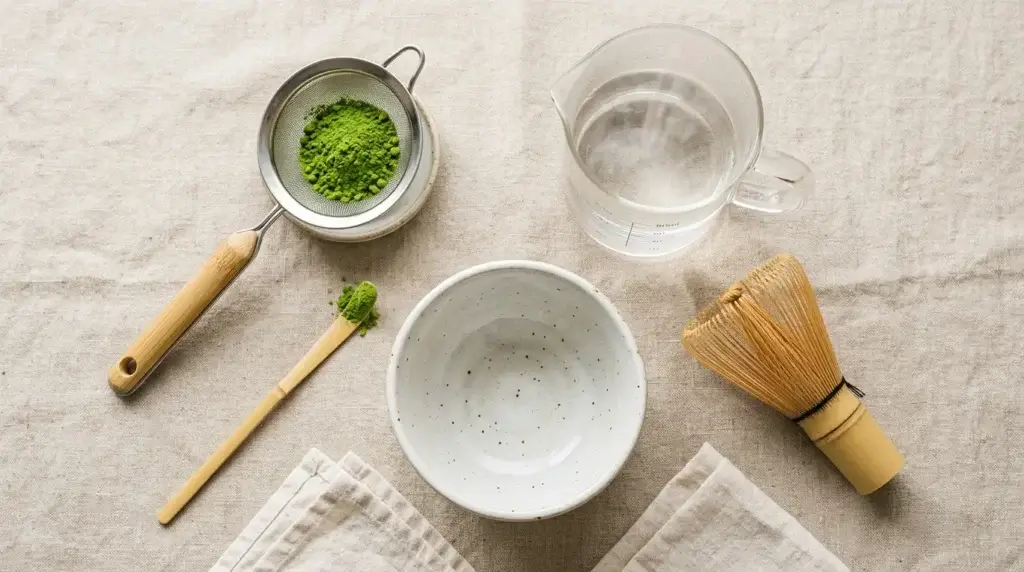
Here’s a gentler approach that works for most people:
Week 1: Replace your afternoon coffee with matcha. Keep your morning coffee.
Week 2: Replace your morning coffee with matcha on 3–4 days. Keep coffee on others.
Week 3: Switch fully to matcha. If you get a headache, allow one coffee — then try again the next day.
Tips for the transition:
- Use ceremonial grade matcha for daily drinking (culinary grade is for baking and smoothies, and tastes more bitter and harsh)
- Whisk properly with hot water (not boiling — around 70–80°C / 160°F) to avoid bitterness
- Start with 1 tsp per cup, not 2
- Add oat milk or almond milk if you find the taste too grassy at first
The bitterness most people associate with matcha usually comes from bad quality matcha, water that’s too hot, or not enough liquid. A good ceremonial grade matcha prepared correctly is smooth, slightly sweet, and umami-rich.
The Verdict: Matcha or Coffee?
If you’re asking which is “better” — the real answer is that they serve different purposes.
Choose matcha if your goal is calm, sustained focus, lower anxiety, better antioxidant intake, and a gentler experience for your gut and nervous system.
Choose coffee if your goal is a powerful, fast energy hit, performance before exercise, or you simply love the taste and ritual of coffee and it works well for your body.
If you’re currently experiencing jitters, energy crashes, or anxiety from coffee, matcha is absolutely worth trying. The L-theanine difference is real, and for many people it’s a genuine game-changer.
The two drinks don’t have to compete. Many of the healthiest, most productive people drink both — strategically, at different times of day, for different purposes.
Start with one cup of matcha tomorrow morning. See how you feel. Your body will tell you the rest.
Looking for more guidance on wellness drinks? Explore our guides on adaptogenic drinks benefits, best time to drink herbal tea, and herbal tea vs green tea benefits.
Frequently Asked Questions
Is matcha better than coffee for anxiety?
Yes, for most people. Matcha contains L-theanine, an amino acid that promotes calm alertness and blunts the cortisol spike that caffeine alone can cause. If coffee makes you anxious, jittery, or raises your heart rate, matcha is a significantly gentler alternative.
How much caffeine is in matcha compared to coffee?
A standard serving of matcha (1 tsp / 2g) contains around 70mg of caffeine. An espresso shot has ~63mg, drip coffee ~95mg, and cold brew can reach 150–200mg. Matcha has less caffeine than most coffee preparations, but the addition of L-theanine makes it feel more balanced.
Can I drink both matcha and coffee in the same day?
Yes — many people do. A common approach is matcha in the morning for calm focus, and coffee before an afternoon workout or physical activity. Space them at least 3–4 hours apart and be mindful of your total caffeine intake (recommended maximum is ~400mg/day for healthy adults).
Is matcha healthier than coffee?
Both have distinct health benefits. Matcha contains higher levels of antioxidants (especially EGCG) and is gentler on the gut and nervous system. Coffee has stronger ergogenic effects and is more researched for metabolic health and performance. Neither is universally "healthier" — it depends on your personal health goals.
What happens when you switch from coffee to matcha?
Most people experience more stable energy, fewer jitters, and less afternoon crash. The transition can include 2–5 days of mild withdrawal symptoms (headache, fatigue) if you quit coffee cold turkey. A gradual switch over 2–3 weeks avoids most withdrawal effects.