
Herbal teas have become a natural part of many daily routines, thanks to their gentle flavors, calming rituals, and caffeine-free nature. Unlike traditional teas made from tea leaves, herbal teas are infusions of flowers, roots, seeds, or herbs, enjoyed hot or cold at different moments of the day. Because of this flexibility, they easily fit into modern lifestyles focused on balance and mindful habits.
In this guide, you’ll discover what herbal teas are, explore common types, and understand the benefits of herbal teas when used as part of everyday routines. We’ll also look at when to drink herbal tea, how to enjoy it safely, and how it compares to other caffeine free teas. Whether you’re new to herbal infusions or simply looking to organize your tea choices better, this page serves as a central reference within the broader world of wellness drinks, helping you navigate all your tea-related content with clarity and confidence.
This guide was reviewed and refreshed in 2026 to reflect current wellness drink habits and herbal tea trends.
What Are Herbal Teas?
Herbal teas are drinks made by infusing herbs, flowers, roots, seeds, or fruits in hot or cold water. Unlike traditional tea, they do not come from tea leaves. Because of that, herbal teas are naturally caffeine free teas, which makes them easy to enjoy at any time of day. Many people turn to herbal infusions as part of a calm routine, especially when they want something warm, soothing, and simple.
One common point of confusion is the difference between tea and infusion. Technically, only drinks made from tea leaves are considered true tea. Herbal teas are infusions, even though the word “tea” is widely used. This distinction matters mostly for understanding ingredients and caffeine content, not for how people enjoy them in daily life.
Another key difference is how herbal teas compare to caffeinated tea. Traditional tea is often chosen for focus or energy, while herbal teas are more about balance, hydration, and comfort. Because of their gentle nature, herbal teas fit easily into morning, afternoon, or evening routines without overstimulation.
Overall, herbal teas are valued less for intensity and more for simplicity. They offer a flexible option for people looking to vary their wellness drinks, explore different flavors, and build mindful habits without relying on caffeine.
Common Types of Herbal Teas
There are many types of herbal teas, each with its own taste, aroma, and place in daily routines. Rather than exploring every option, it’s more useful to focus on a few well-known herbal infusions that people commonly include in simple, everyday habits.
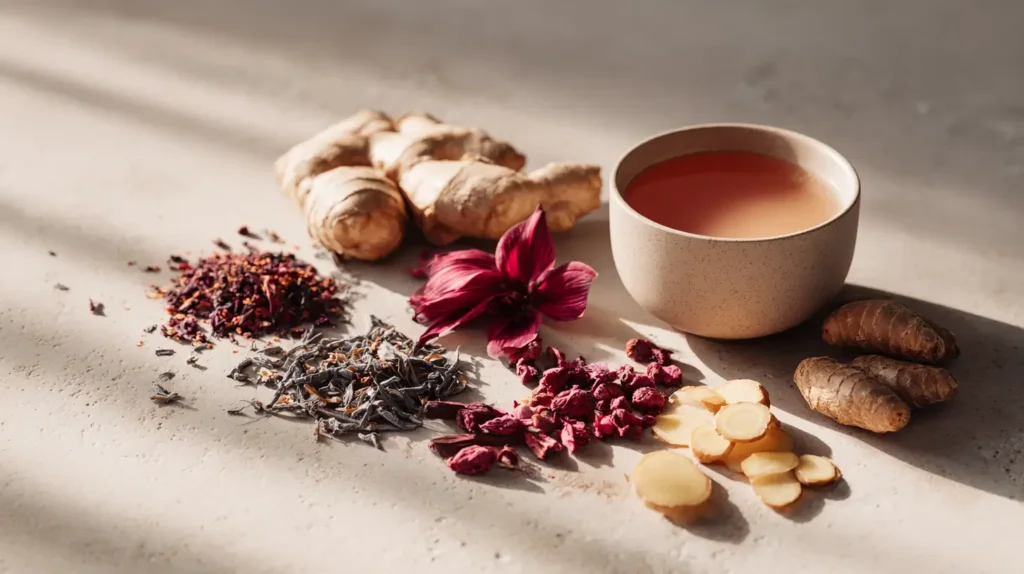
One popular choice is hibiscus tea, appreciated for its deep color and slightly tangy flavor. Many people explore its role in daily routines through hibiscus tea benefits, especially as part of refreshing and hydrating moments. This herbal tea can be enjoyed in different ways, and deciding between hibiscus tea hot or cold often depends on the season and personal preference.
Another widely enjoyed option is ginger tea. Made from ginger root, it has a warm and bold taste that fits naturally into both morning and evening routines. Those curious about its everyday use often look into ginger tea benefits to better understand how it fits into balanced habits.
These examples highlight how exploring different types of herbal teas doesn’t require an exhaustive list. Instead, it’s about finding flavors and routines that feel natural, enjoyable, and easy to maintain over time.
If you are unsure which option fits your routine, this detailed comparison on herbal tea vs green tea benefits can help you understand the main differences.
Benefits of Herbal Teas in Daily Routines
Herbal teas are often appreciated for how easily they fit into everyday life. Rather than being used for quick results, they’re commonly enjoyed as part of simple, calming habits that support overall balance. This gentle approach is one reason many people keep herbal teas in their regular rotation.
One of the most noticeable herbal tea benefits is how they support relaxation. Taking a few minutes to prepare and sip an herbal infusion can slow things down, especially during busy days. This quiet moment often matters just as much as the drink itself, helping create a sense of routine and comfort.
Herbal teas also contribute to daily hydration. Since most options fall under caffeine free teas, they can be enjoyed throughout the day without worrying about overstimulation. For people who struggle to drink enough plain water, herbal teas offer a flavorful alternative that still feels light and refreshing.
Finally, herbal teas work well as part of a calming routine. Whether enjoyed in the morning to start the day gently or in the evening to unwind, they adapt easily to different schedules. Because of this flexibility, herbal teas remain a popular choice for those looking to add small, mindful habits to their wellness routines—without pressure or complexity.
When Is the Best Time to Drink Herbal Tea?
One of the main advantages of herbal teas is their flexibility. Because most herbal infusions are naturally caffeine free teas, they can be enjoyed at different moments of the day without strict rules. The best timing often depends on personal habits and how herbal teas fit into your daily rhythm.
Many people enjoy learning about the best time to drink herbal tea to better align their tea habits with work, rest, and relaxation. Some prefer herbal teas in the morning as a gentle start, while others turn to them later in the day for a calming break.
Specific herbal teas may also be enjoyed at different times depending on taste and routine. For example, ginger tea is often included at moments when a warm and comforting drink feels right. If ginger tea is part of your habits, exploring the best time to drink ginger tea can help you decide when it fits best into your day.
Ultimately, there is no single perfect schedule. Listening to your body and building a routine that feels natural is what makes herbal teas easy to enjoy on a regular basis.
Herbal Tea Safety and Moderation
Herbal teas are generally enjoyed for their gentle nature, but moderation is still important. Even though they’re often seen as simple infusions, different herbs can affect people in different ways. Paying attention to how your body responds is always a smart approach.
One key aspect of herbal tea safety is variety. Drinking the same herbal tea all day, every day may not be ideal for everyone. Rotating between different types of herbal teas helps keep your routine balanced and enjoyable, without overdoing any single ingredient.
It’s also important to remember that herbal teas are meant to complement your diet, not replace meals or regular hydration habits. While they can support daily routines, they shouldn’t take the place of water or whole foods. Keeping expectations realistic helps maintain a healthy relationship with these drinks.
Overall, enjoying herbal teas mindfully is about balance. Choosing quality ingredients, drinking in moderation, and staying aware of how you feel allows herbal teas to remain a positive and calming part of your daily routine.
How Herbal Teas Fit into Wellness Drink Routines
Herbal teas naturally fit into broader wellness drink routines because they’re simple, flexible, and easy to enjoy. Unlike drinks designed for energy or performance, herbal teas are usually chosen for slower moments—when the goal is comfort, hydration, or balance rather than stimulation.
Many people like to rotate herbal teas with other wellness drinks throughout the day. For example, a morning routine might include something light and warm, while later moments call for a refreshing or calming option. Because herbal teas are caffeine free teas, they slide into these routines without adding pressure on timing or quantity.
Herbal teas also work well as a transition drink. They can mark the shift between work and rest, meals and downtime, or day and evening. This makes them especially useful for people trying to build mindful habits around what they drink, not just what they eat.
Within the larger category of wellness drinks, herbal teas stand out for their simplicity. They don’t require special preparation, they adapt to personal preferences, and they support routines that feel sustainable over time. That’s why they often become a steady, reliable choice rather than a trend-based one.
FAQs About Herbal Teas
Are herbal teas caffeine free?
Most herbal teas are naturally caffeine free because they are made from herbs, flowers, roots, or fruits rather than tea leaves. This makes them suitable for any time of day.
Can you drink herbal tea every day?
Yes, most herbal teas can be enjoyed daily as part of a simple wellness routine. The key is moderation and variety, along with paying attention to how your body responds to different herbs.
Is herbal tea better hot or cold?
Herbal tea can be enjoyed both hot and cold. The choice often depends on personal preference, the season, and how it fits into your daily routine.
Do herbal teas replace water?
Herbal teas can contribute to daily hydration, but they shouldn’t fully replace water. It’s best to think of them as a complement to regular water intake, not a substitute.
Conclusion
Herbal teas offer a simple and flexible way to bring calm moments into everyday life. Whether you enjoy them for their gentle flavors, their place in daily routines, or their naturally caffeine-free nature, herbal teas adapt easily to different habits and schedules. By exploring different types, paying attention to timing, and practicing moderation, they can remain a steady and enjoyable part of your day.
As part of a broader approach to mindful hydration, herbal teas fit naturally within the world of wellness drinks, alongside other balanced beverage choices. Used this way, they’re less about rules and more about rhythm—helping you build routines that feel both comforting and sustainable.