
Updated February 2026
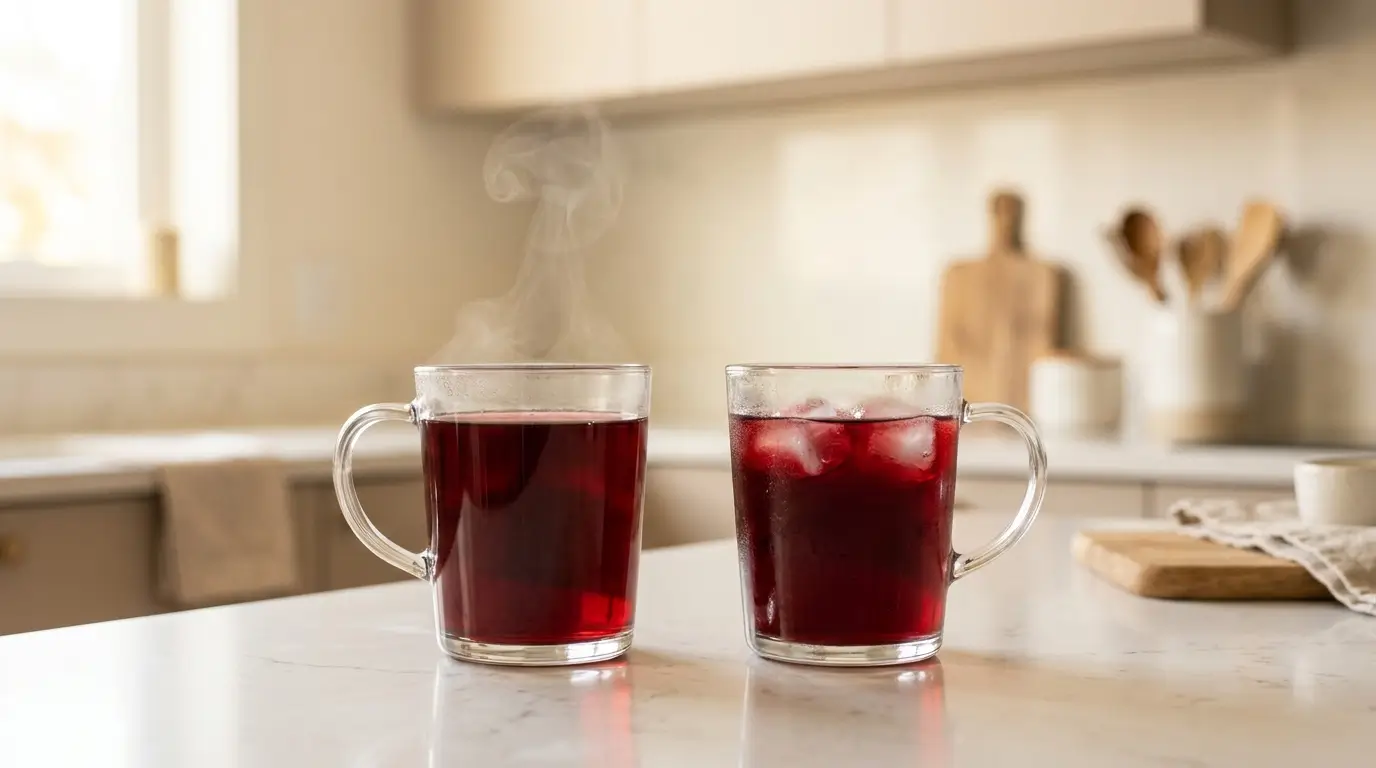
Hibiscus tea hot or cold — it’s a simple question, yet one that sparks a lot of curiosity. Some people swear by a warm cup in the morning, while others prefer a refreshing glass over ice. So, which option is actually better? And does the temperature really change the health benefits?
Hibiscus tea is known for its deep ruby color, tangy flavor, and impressive wellness profile. From supporting heart health to helping with hydration, this herbal tea has earned a loyal following. However, the way you prepare it — hot brewed or cold brewed — can affect its taste, strength, acidity, and even how your body responds to it. If you’re sensitive to acidity, you may also want to read whether hibiscus tea is acidic or alkaline. To understand all its potential health effects, you can read our complete guide on hibiscus tea benefits.
In this article, we’ll break down everything you need to know about hibiscus tea hot or cold, including the benefits of each method, how it impacts blood pressure, and which brewing style may suit your lifestyle best. You’ll also learn how to make hibiscus tea at home, explore cold brew and hot brew recipes, and discover what to avoid when drinking it. By the end, you’ll know exactly how to enjoy hibiscus tea in the way that works best for you.
What Is Hibiscus Tea?
What hibiscus tea is made from
Hibiscus tea is an herbal infusion made from the dried calyces of the hibiscus flower, most commonly Hibiscus sabdariffa. Unlike traditional teas, it doesn’t come from tea leaves, which means it’s naturally caffeine-free. Instead, the deep red petals are steeped in water to release their bold color, tart flavor, and plant compounds.
Because it’s an herbal tea, hibiscus tea hot or cold can be enjoyed at any time of day. Many people drink it in the morning as a coffee alternative, while others prefer it chilled as a hydrating wellness drink in the afternoon or evening.
Types of hibiscus used for tea
Although there are hundreds of hibiscus varieties worldwide, only a few are commonly used for tea. The most popular is Hibiscus sabdariffa, prized for its rich flavor and high antioxidant content. Other varieties may be used locally, especially when people prepare tea from fresh hibiscus flowers, but they tend to be milder and less tart.
Dried hibiscus is widely available in tea bags, loose-leaf form, and whole petals. Fresh flowers are sometimes used in homemade preparations, especially in tropical regions, and they offer a slightly lighter taste compared to dried calyces.
Flavor profile and natural properties
Hibiscus tea has a bright, tangy flavor often compared to cranberries or pomegranate. When brewed hot, the taste is bold and slightly acidic. When cold brewed, the flavor becomes smoother and less sharp, which is why many people find cold brew hibiscus tea easier on the stomach.
Beyond taste, hibiscus tea is packed with naturally occurring compounds like antioxidants and organic acids. These properties are what make people curious about hibiscus tea hot or cold benefits, especially when it comes to heart health, hydration, and overall wellness. If you want a deeper dive into its health profile, you can learn more about hibiscus tea benefits in our dedicated guide.
Hot vs. Cold Hibiscus Tea: Complete Comparison
| Hot Brew | Cold Brew | |
|---|---|---|
| pH (acidity) | 2.5 – 2.8 (very acidic) | 3.0 – 3.5 (less acidic) |
| Antioxidant extraction | Higher | Slightly lower |
| Blood pressure effect | Strong | Strong |
| Suitable for acid reflux | ❌ Risky | ✅ Better option |
| Flavor | Bold, intense, tart | Smooth, lighter, less tart |
| Preparation time | 10–15 minutes | 8–12 hours (overnight) |
| Best for | Maximum flavor, antioxidants | Sensitive stomachs, daily habit |
Hibiscus Tea Hot or Cold — What’s the Difference?
When deciding between hibiscus tea hot or cold, the difference isn’t just about temperature. The brewing method directly affects the flavor, strength, acidity, and overall drinking experience. Even though both versions use the same hibiscus petals, they can feel like two completely different beverages.
Understanding these differences helps you choose the option that best fits your taste preferences and wellness goals.
Taste and aroma comparison
Hot-brewed hibiscus tea has a bold, tangy flavor with a strong floral aroma. The heat quickly draws out the natural acids, giving the tea a sharp, cranberry-like taste. It feels warming and comforting, which makes it a popular choice during cooler months or as a soothing evening drink.
Cold-brew hibiscus tea tastes noticeably smoother and less acidic. Because the petals steep slowly in cold water, the flavor develops gently over time. The result is refreshing and lightly fruity, often enjoyable without added sweeteners. This is why many people prefer hibiscus tea cold during warmer weather.
Nutrient extraction in hot vs cold brew
Temperature plays a key role in how nutrients are extracted from hibiscus petals. Hot water pulls out compounds faster, producing a stronger and more concentrated tea in a short amount of time. This method is ideal if you want a quick and robust cup.
Cold brewing takes longer, but it extracts fewer bitter and acidic compounds. While the flavor is lighter, the tea still delivers antioxidants and plant compounds. For many people, this gentler extraction makes cold brew easier on digestion.
Which method preserves antioxidants better
Both brewing methods provide antioxidants, but they do so in different ways. Hot brewing releases a higher concentration quickly, which may be beneficial if you’re drinking hibiscus tea hot or cold for blood pressure or heart support.
Cold brewing helps preserve delicate compounds that can be affected by heat. This makes cold hibiscus tea a smart option if you’re sensitive to acidity or prefer a smoother drink with a lighter feel.
In the end, there’s no single right answer. Choosing hibiscus tea hot or cold depends on your taste, tolerance, and when you plan to enjoy it.
What the Research Says: Cold Brew vs. Hot Brew for Blood Pressure
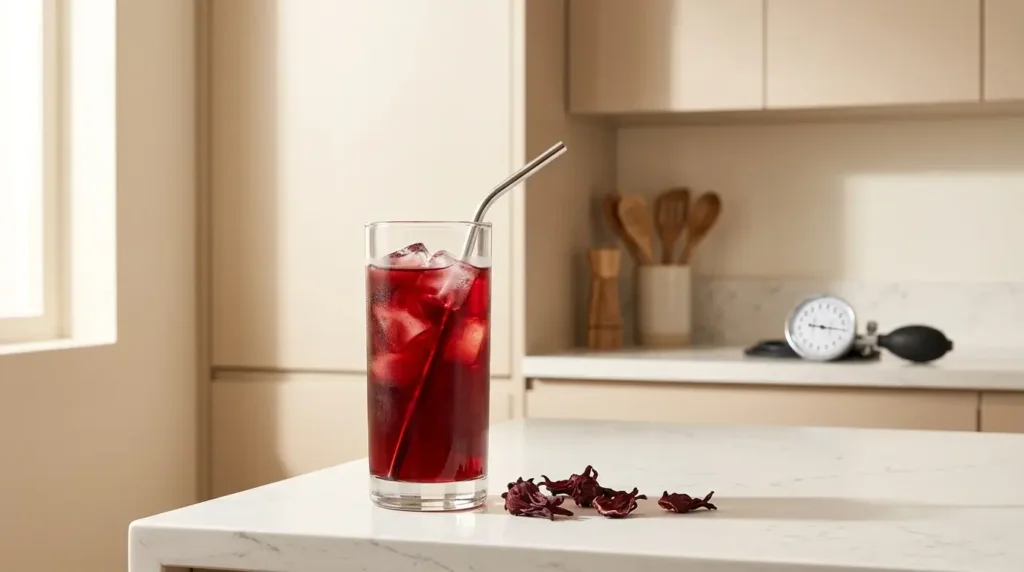
The blood pressure question is the most important one for most people drinking hibiscus tea for health reasons. The short answer: both work, but the mechanism differs slightly.
Hot-brewed hibiscus extracts a higher concentration of organic acids and anthocyanins — the compounds responsible for ACE-inhibitor-like blood pressure reduction. Clinical trials showing 7–13 mmHg systolic reduction used standard hot-brewed hibiscus tea at 2 cups per day over 4–6 weeks.
Cold brew extracts fewer acids and slightly fewer anthocyanins, but the difference is not dramatic enough to eliminate the cardiovascular benefit. A comparative study found that cold-infused hibiscus maintained meaningful blood pressure-lowering activity — just at a slightly lower potency per cup.
The practical takeaway: If blood pressure management is your primary goal, hot brew gives you slightly more active compounds per cup. If you have a sensitive stomach or acid reflux, cold brew delivers the same long-term cardiovascular benefit with significantly less digestive risk. Consistency matters more than preparation method — 2 cups of cold brew daily over 6 weeks outperforms occasional hot brew any day.
For a full breakdown of how hibiscus affects blood pressure and which temperature is optimal for your specific situation, see our detailed guide on hibiscus tea for blood pressure hot or cold.
Hot vs. Cold: The pH and Acidity Difference
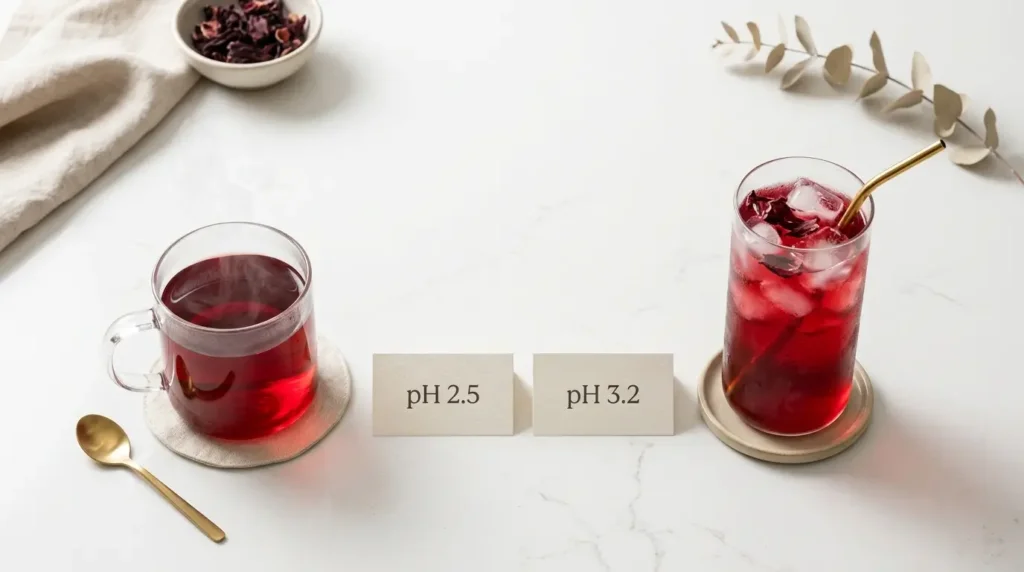
One of the most practically significant differences between hot and cold hibiscus tea is pH. Hot water extracts more organic acids — citric acid, malic acid, and hibiscus acid — from the dried calyces. The result is a noticeably more acidic drink.
- Hot brew: pH approximately 2.5–2.8
- Cold brew: pH approximately 3.0–3.5
This difference matters for two groups in particular:
People with acid reflux or GERD: A drink at pH 2.5 is significantly more likely to irritate an inflamed esophagus than one at pH 3.2. For reflux sufferers, cold brew is not just a preference — it is the medically relevant choice. Our full guide on hibiscus tea and acid reflux covers who is at risk and how to minimize it.
People concerned about tooth enamel: Drinks below pH 4.0 can erode enamel with repeated exposure. Cold brew at pH 3.2 is still acidic enough to warrant using a straw for daily consumption, but is meaningfully gentler than hot brew at pH 2.5.
For a complete explanation of hibiscus tea’s acidity and what it means for your health, see our guide on is hibiscus tea acidic or alkaline.
Hibiscus Tea Hot or Cold Benefits
When people ask about hibiscus tea hot or cold, they’re usually thinking about health benefits. The good news is that both versions offer impressive wellness support. The difference lies in how your body experiences those benefits, depending on brewing style, strength, and temperature.
Let’s break it down clearly.
General health benefits of hibiscus tea
No matter how it’s prepared, hibiscus tea is rich in natural antioxidants, especially anthocyanins, which give it that deep red color. These compounds help fight oxidative stress and support overall health.
Regular consumption of hibiscus tea hot or cold may help:
- Support heart health
- Promote healthy blood pressure levels
- Aid digestion
- Support hydration
- Provide a caffeine-free alternative to coffee or black tea
Because it’s naturally calorie-free and flavorful, hibiscus tea also fits well into weight-conscious and wellness-focused lifestyles. For a deeper breakdown, you can learn more about hibiscus tea benefits in our detailed guide.
Cold brew hibiscus tea benefits
Cold brew hibiscus tea benefits stand out for people who prefer a smoother, gentler drink. Since cold brewing extracts fewer acidic compounds, it’s often easier on the stomach. This makes it a good option if you experience sensitivity or reflux with hot herbal teas.
Cold-brewed hibiscus tea is also highly refreshing and hydrating. Many people enjoy it as a wellness drink during hot weather, workouts, or long days when staying hydrated matters most. Because it tastes naturally mild and fruity, it often requires little or no sweetener.
Hot hibiscus tea benefits
Hot hibiscus tea offers a stronger and more concentrated infusion. The heat helps release plant compounds quickly, which may enhance certain effects, especially for people drinking hibiscus tea hot or cold for blood pressure support.
A warm cup can also feel soothing and relaxing, making it a popular evening beverage. In cooler months, hot hibiscus tea provides comfort while still delivering antioxidants and hydration without caffeine.
For a broader hydration strategy, see how much water you should drink daily in our hydration guide: how much water daily.
In short, hot hibiscus tea is ideal when you want intensity and warmth, while cold brew shines when you want refreshment and gentle digestion.
When Hot Hibiscus Tea Is the Better Choice
Hot hibiscus tea is not universally inferior — there are specific situations where it is the better preparation:
Maximum antioxidant extraction: If your primary goal is antioxidant intake, hot brew extracts more anthocyanins per cup. For healthy adults with no acid sensitivity, this makes hot brew the higher-potency option.
Warming winter drink: Hot hibiscus tea with honey, cinnamon, and a slice of orange is one of the most satisfying warming drinks available — caffeine-free, deeply flavorful, and far more interesting than plain herbal tea.
Quick preparation: When you need hibiscus tea now rather than in 12 hours, hot brew is ready in 10–15 minutes.
Traditional preparation: Hot hibiscus tea is the traditional preparation in Egypt (karkade), Sudan, and much of West Africa. The cultural ritual of a hot glass of karkade has value beyond the biochemistry.
The best time to drink hibiscus tea — whether hot or cold — depends on your health goals and daily routine. Our guide on the best time to drink hibiscus tea covers every timing scenario in detail.
Hot Hibiscus Tea: Best Preparation
For the best results with hot brew:
- Use water at 90°C (195°F) — not boiling. Boiling water can degrade some of the more delicate antioxidants
- Steep for 5–10 minutes depending on desired intensity
- Use 1–2 teaspoons of dried calyces per 240ml (8 oz)
- Strain immediately after steeping — leaving the calyces in longer continues to extract acids and increases bitterness
- Sweeten while hot so sweetener dissolves completely
How to Make Cold Brew Hibiscus Tea
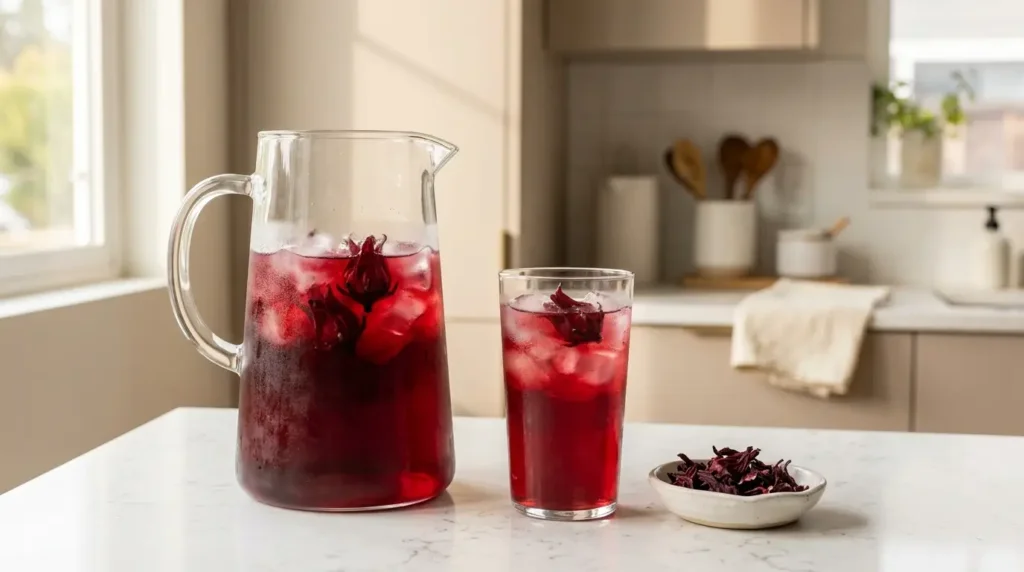
Cold brewing hibiscus tea requires zero active time — you simply combine the ingredients and wait overnight.
Ingredients:
- 3 tablespoons dried hibiscus calyces per 1 liter of cold water
- Sweetener to taste (add after straining)
- Optional: 1 cinnamon stick, a few slices of fresh ginger
Method:
- Add dried hibiscus calyces to a large glass pitcher or jar
- Pour cold filtered water over them
- Add optional spices if using
- Cover and refrigerate for 8–12 hours (overnight is ideal)
- Strain through a fine mesh strainer
- Sweeten to taste and serve over ice
Why cold brew works: Cold water is less efficient at extracting compounds than hot water, which is why it takes 8–12 hours instead of 10 minutes. This slower extraction process pulls fewer acids from the calyces, resulting in a smoother, less tart, less acidic drink with a beautiful deep ruby-red color.
For more cold brew recipes and herbal combinations, our cold brew herbal tea recipes guide covers the full range of options.
Storage: Cold brew hibiscus keeps in a sealed glass pitcher in the refrigerator for 3–5 days. Flavor is best within the first 2 days.
Who Should Always Choose Cold Brew
Cold brew is the clear choice — not just a preference — for these groups:
- People with acid reflux or GERD — the pH 3.0–3.5 of cold brew is significantly less likely to irritate the esophagus than hot brew at pH 2.5
- People with sensitive stomachs — even without diagnosed reflux, some people find hot acidic drinks cause discomfort
- People with kidney stone history — cold brew’s lower acid extraction means lower oxalate load per cup. Full guidance in our hibiscus tea and kidneys article
- People drinking hibiscus tea late in the day — a cold drink at room temperature is gentler on the digestive system before bed than a hot acidic beverage
How to Make Hibiscus Tea at Home
Making hibiscus tea hot or cold at home is simple, affordable, and allows you to control the strength and flavor. Whether you prefer a warm cup or a refreshing iced version, the process only requires a few basic ingredients.
Below are easy methods you can follow.
Hot hibiscus tea recipe
Hot hibiscus tea is quick to prepare and delivers a bold, tangy flavor.
Ingredients:
- 1 to 2 teaspoons dried hibiscus petals
- 1 cup hot water
Instructions:
- Bring water to a gentle boil.
- Add dried hibiscus petals to a cup or teapot.
- Pour hot water over the petals.
- Cover and steep for 5 to 10 minutes, depending on desired strength.
- Strain and enjoy plain or lightly sweetened.
This method is ideal when you want a strong cup with minimal waiting time.
Hibiscus iced tea recipe
Iced hibiscus tea offers a refreshing way to enjoy this herbal drink, especially in warm weather.
Ingredients:
- 2 teaspoons dried hibiscus petals
- 1 cup hot water
- Ice
Instructions:
- Brew hibiscus tea using the hot method above.
- Let the tea cool slightly.
- Pour over ice and dilute with cold water if needed.
- Sweeten to taste and serve chilled.
This approach combines the strength of hot brewing with the cooling effect of ice.
How to make hibiscus tea from fresh hibiscus flowers
If you have access to fresh hibiscus flowers, you can use them instead of dried petals.
Steps:
- Remove the petals and thoroughly rinse them.
- Use about 3 to 4 fresh petals per cup of water.
- Steep in hot water for 10 to 15 minutes or cold water for several hours.
- Strain before drinking.
Fresh hibiscus tea tends to have a lighter flavor, making it ideal for both hot and cold preparations.
Best Way to Drink Hibiscus Tea
There’s no single “perfect” way to enjoy hibiscus tea hot or cold. The best option depends on your health goals, taste preferences, and daily routine. Some people enjoy it as a calming hot drink, while others prefer it chilled as a refreshing wellness beverage.
Here’s how to decide what works best for you.
Is it better to drink hibiscus tea, hot or cold?
The truth is, both options are beneficial. Hot hibiscus tea is ideal if you enjoy bold flavors and want a comforting drink, especially in the evening or during cooler months. It’s also convenient when you want a quick cup without planning ahead.
Cold hibiscus tea is better if you prefer a smoother taste and plan to drink it throughout the day. Because it’s less acidic, many people find it easier on digestion. If hydration and refreshment are your goals, cold brew often feels like the better choice.
Ultimately, the better option is the one you’ll drink consistently.
What is the best time to drink hibiscus tea?
Hibiscus tea can be enjoyed at almost any time since it’s naturally caffeine-free. Many people drink it in the morning as a gentle start to the day or in the afternoon as a refreshing alternative to sugary drinks.
Some prefer drinking hibiscus tea in the evening, especially hot, because it feels relaxing. However, if you’re sensitive to its effects, avoid drinking large amounts late at night and see how your body responds.
Timing also matters, which is why we explored the best time to drink hibiscus tea.
Sweeteners, add-ins, and flavor combinations
Hibiscus tea has a naturally tangy flavor, so it pairs well with light sweeteners and natural add-ins.
Popular options include:
- Honey or maple syrup
- Lemon or lime slices
- Mint leaves
- Ginger slices
Whether you enjoy hibiscus tea hot or cold, keeping add-ins simple helps preserve its natural benefits and keeps sugar intake low.
Hibiscus Tea FAQs
This section answers the most common questions people ask about hibiscus tea hot or cold. These clear, direct answers also help optimize the article for featured snippets and Rank Math FAQ schema.
Is it better to drink hibiscus tea, hot or cold?
Neither option is universally better. Hibiscus tea hot or cold offers similar health benefits, but the experience differs. Hot hibiscus tea is stronger and comforting, while cold hibiscus tea is smoother, less acidic, and more refreshing. The best choice is the one you enjoy and drink consistently.
What is the best way to consume hibiscus tea?
The best way to consume hibiscus tea depends on your goals. For a bold flavor and quick preparation, hot brewing works well. For gentle digestion and hydration, cold brewing is often preferred. Drinking it plain or lightly sweetened helps preserve its natural benefits.
Is hibiscus tea good for you while pregnant?
Hibiscus tea is generally not recommended during pregnancy unless approved by a healthcare provider. Some studies suggest hibiscus may affect hormone levels or blood pressure, which is why pregnant or breastfeeding individuals should avoid regular consumption.
What should you avoid when drinking hibiscus tea?
When drinking hibiscus tea hot or cold, avoid:
- Excessive intake (more than 2–3 cups daily)
- Drinking it alongside blood pressure or diuretic medications without guidance
- Adding large amounts of sugar or artificial sweeteners
If you have a medical condition or take medication, consult a healthcare professional before making hibiscus tea a daily habit.
Is hibiscus tea better hot or cold?
It depends on your goal. Hot brew extracts more antioxidants and has a stronger blood pressure effect per cup. Cold brew is less acidic (pH 3.0–3.5 vs 2.5–2.8), gentler on the stomach, and better for people with acid reflux. For most people making hibiscus tea a daily habit, cold brew is the more sustainable long-term choice.
Does hibiscus tea lower blood pressure better hot or cold?
Both preparations lower blood pressure. Hot brew contains slightly more active compounds per cup. Cold brew is slightly less potent per cup but delivers the same cumulative benefit with consistent daily consumption — and is safer for people with digestive sensitivity.
Is cold brew hibiscus tea less acidic than hot brew?
Yes — significantly. Cold water extracts fewer organic acids from hibiscus calyces, resulting in a pH of approximately 3.0–3.5 for cold brew compared to 2.5–2.8 for hot brew. This makes cold brew the recommended choice for anyone with acid reflux, heartburn, or a sensitive stomach.
How long do you cold brew hibiscus tea?
8–12 hours in the refrigerator. Overnight is the most practical approach. Do not cold brew at room temperature — use the refrigerator to prevent bacterial growth during the long infusion time.
Does hot hibiscus tea have more benefits than cold?
Hot brew extracts more antioxidants and organic acids per cup — making it slightly more potent for blood pressure and antioxidant benefits. However, the difference is not dramatic, and for people who drink it daily, cold brew delivers the same cumulative health benefits with less acidic stress on the digestive system.
Can you make hibiscus tea hot and then let it cool?
Yes — this is the most common preparation method worldwide. Brew hot, allow to cool to room temperature, refrigerate, and serve over ice. This produces a slightly more acidic iced tea than true cold brew (because the initial hot extraction pulls more acids), but is faster and more practical than overnight cold brewing.
Is hot hibiscus tea or cold hibiscus tea better for blood pressure?
Both are effective. Hot brew is slightly more potent per serving. Cold brew is better tolerated daily without digestive side effects. The most important factor is consistency — drinking 2 cups daily over 4–6 weeks, regardless of temperature, is what produces the 7–13 mmHg systolic reduction seen in clinical trials.
Should You Drink Hibiscus Tea Hot or Cold?
So, is it better to drink hibiscus tea hot or cold? The answer depends less on the tea itself and more on how you enjoy it. Both hot and cold hibiscus tea offer similar wellness benefits, and the key difference lies in taste, comfort, and daily habits.
Hot hibiscus tea is a great choice if you enjoy rich, tangy flavors and want a warm, calming drink, especially in the evening or during cooler months. Cold hibiscus tea, on the other hand, feels lighter and more refreshing. Its smoother profile makes it easier to drink throughout the day, particularly if you’re sensitive to acidity or focused on hydration.
No matter which option you choose, hibiscus tea remains a naturally caffeine-free beverage that fits easily into a balanced lifestyle. If you enjoy exploring nourishing beverages like this, it can also pair well with other refreshing wellness drinks that support everyday hydration and well-being. When enjoyed in moderation and prepared in a way that suits your preferences, hibiscus tea can be a simple, enjoyable addition to your daily routine—hot or cold.