
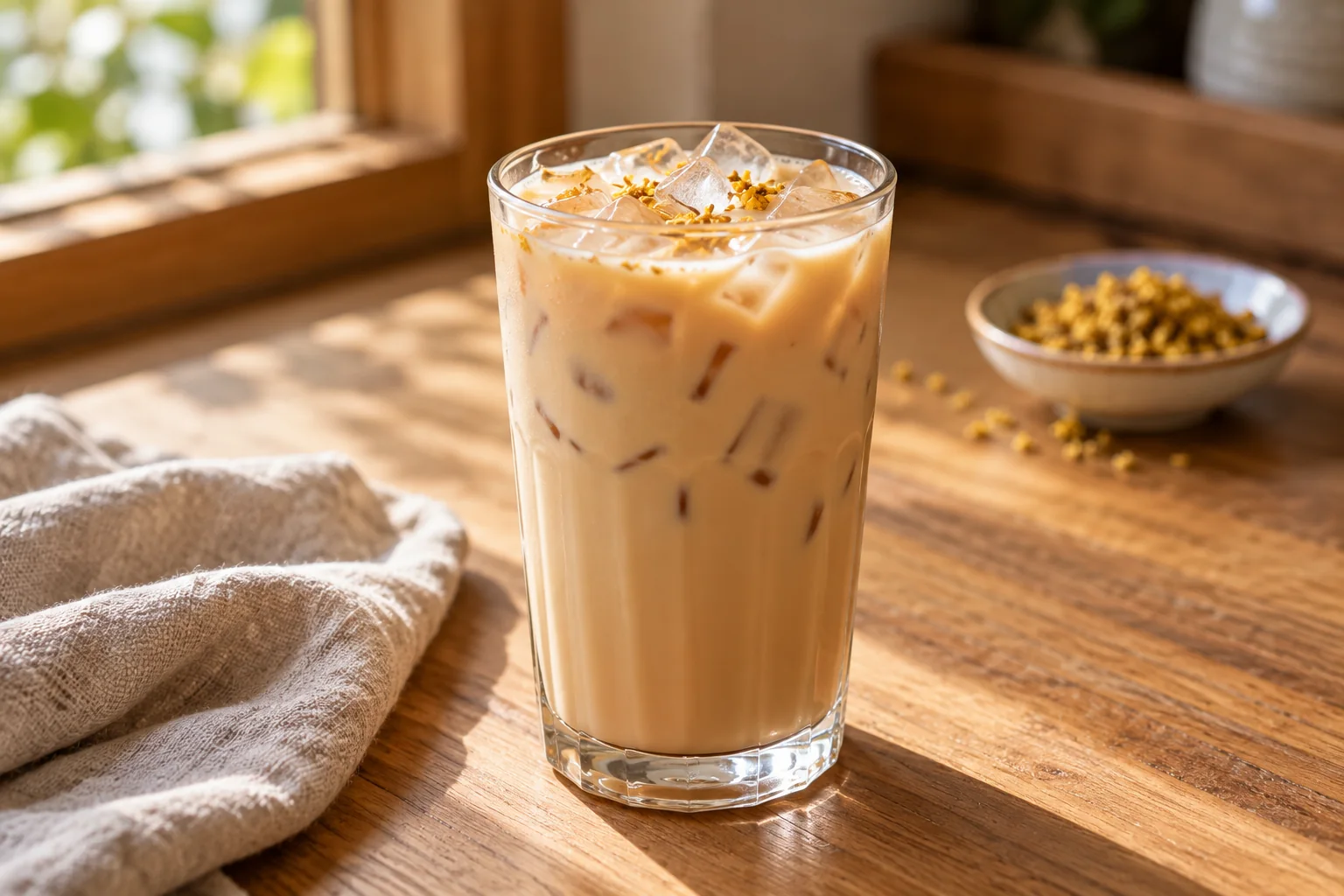
Osmanthus milk tea combines a floral tea infusion with milk and optional sweetener. For this homemade version, steep oolong tea with food-grade dried osmanthus flowers, strain, then add milk. Serve it warm or cool the tea before pouring it over ice. The result is a gently fragrant drink with a creamy texture rather than a strongly perfumed dessert.
This recipe uses a concentrated tea base so the flavor can still come through after adding milk. You do not need a milk-tea powder, a blender or tapioca pearls. The basic batch makes one serving, and the two serving methods use the same ingredients. Quantities below are a practical starting formula; adjust the tea preparation to the directions on your own packet.
What Does Osmanthus Milk Tea Taste Like?
Osmanthus has a floral aroma often associated with apricot or peach. In milk tea, that aroma sits above the flavor of the tea base: a lightly oxidized oolong can taste different from a darker roasted one. The milk softens the overall impression, while syrup adds actual sweetness. A sweet-smelling flower does not automatically make an unsweetened drink sugary.
The tea should remain noticeable. If the glass tastes mainly like milk, you may have diluted the tea too much or chosen a particularly mild base. If it tastes like perfume, adding more flowers is unlikely to help. Keep the first batch simple, then change one ingredient at a time.
For a broader introduction to pure flowers, blends and caffeine, read the osmanthus tea guide. This page focuses on the quantities and preparation needed for a milk drink, rather than repeating the full discussion of the ingredient.
Ingredients for One Serving
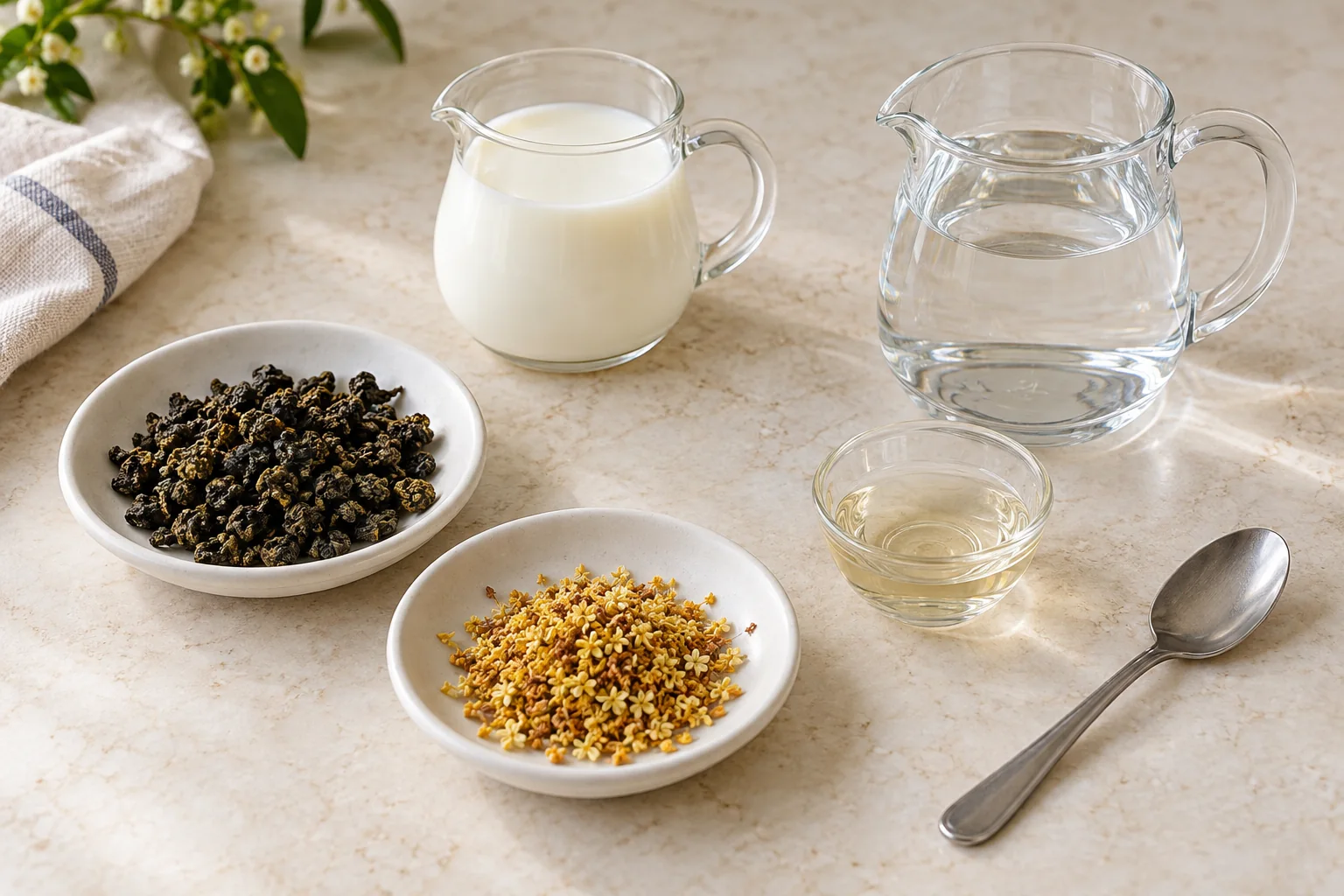
- 3 g loose-leaf oolong tea, measured by weight if possible
- 1/2 teaspoon food-grade dried osmanthus flowers, plus an optional tiny pinch for garnish
- 150 ml water, heated according to your oolong’s brewing directions
- 100 ml pasteurized dairy milk or a suitable unsweetened plant-based drink
- 2 teaspoons (10 ml) simple syrup, optional and adjustable to taste
- Ice, as needed for the iced version
Yield: One serving, approximately 250 to 260 ml before ice and the small amount of water retained by the leaves. Equipment: A small teapot or heatproof jug, fine-mesh strainer, measuring jug, teaspoon, and a mug or a glass of at least 350 ml capacity for the iced drink.
A kitchen scale is helpful because rolled oolong leaves are dense and spoon measurements vary. If you do not have one, use the product’s recommended leaf quantity for a strong single serving. The weight of the flowers will also vary with their size and packing; the half-teaspoon measure is a flavor starting point, not a medical dose.
Choose Culinary Flowers and a Tea Base
Buy osmanthus flowers sold specifically for food or tea preparation. Decorative dried flowers, potpourri, essential oils and blossoms from plants treated with unknown chemicals are not substitutes. Check that the packet identifies the ingredient and provides food-use directions. There is no need to guess from the color or smell of an unlabelled bag.
For the base recipe, use ordinary unscented oolong plus the separate culinary flowers. This gives you control over the two ingredients. Alternatively, a ready-made osmanthus oolong can be convenient: use the blend’s brewing instructions and leave out the extra flowers at first, so you do not double the floral component.
These blends are real product categories, rather than interchangeable names for pure flowers. Ten Ren describes osmanthus-scented green and oolong teas. Read the ingredient list on the product you buy; green tea, oolong and pure blossoms need not use the same water temperature or steeping time.
How to Make Osmanthus Milk Tea
1. Brew the Tea and Flowers
Place the oolong and dried flowers in a small teapot or heatproof jug. Add 150 ml of water at the temperature recommended for your tea. If your oolong has no directions, around 90°C (194°F) for about 3 minutes is a starting point for this recipe, not a universal rule for every oolong.
Set a timer and taste a small spoonful near the end of the steep. You want an aromatic, concentrated base. Do not leave the leaves soaking while you prepare the milk or take photographs: extending the steep indefinitely can make a very different drink from the one you intended.
2. Strain Thoroughly
Pour the infusion through a fine-mesh strainer into a clean heatproof container. Let it drain without crushing the leaves or forcing every last drop through. Tiny flowers can pass through a coarse tea basket, so a second fine strainer may be useful if you prefer a smooth drink.
Removing the leaves stops the main infusion stage. Adding milk to a teapot full of leaves and then letting it sit will not keep the flavor constant. Straining first also makes it easier to divide the tea evenly if you are preparing more than one serving.
3. Sweeten Lightly
Stir in the optional 2 teaspoons of simple syrup while the tea is still warm. You can begin with half that amount and adjust after adding milk. Syrup is convenient because it disperses easily; granulated sugar should be dissolved in the warm tea rather than dropped into a fully iced glass.
If you want a vanilla variation, replace the plain syrup with the same starting amount from the homemade vanilla syrup recipe. Keep the vanilla subtle so that it does not take over the osmanthus aroma. The base recipe does not require any flavored syrup.
4. Add Milk and Choose Hot or Iced
Add 100 ml of milk to the strained tea. For a hot drink, warm the milk separately until steaming and comfortable to drink, then combine it with the tea in a mug. For an iced drink, cool the strained tea first, then combine it with chilled milk and ice as described below.
Taste before adding more sweetener. The finished drink should have a clear tea flavor and a gentle floral finish. If desired, garnish with a tiny pinch of culinary flowers labelled suitable for eating; otherwise leave them out. Serve it freshly mixed; do not assume a pale color means it needs a large spoonful of syrup or a second dose of flowers.
Hot vs. Iced: The Same Recipe, Two Methods
| Version | How to finish it | Approximate timing |
|---|---|---|
| Hot osmanthus milk tea | Combine freshly strained tea with separately warmed milk. Serve in a mug. | About 8 minutes, depending on your kettle and milk-heating method. |
| Iced osmanthus milk tea | Cool the strained tea in a heatproof container set in an ice-water bath. Add chilled milk, then pour over ice. | About 20 minutes including cooling; the actual cooling time varies. |
For the iced version, keep the ice-bath water outside the tea container and avoid a sudden temperature change in glassware that is not heat-safe. Stir the tea occasionally as it cools. Once it is no longer warm, add the chilled milk. Do not leave the tea and milk on the counter for an extended cooling period.
Pour the mixture over a modest amount of ice in a glass with room at the top. You can add more ice after tasting. Pouring very hot tea directly over a full glass of ice can melt a large amount of it and dilute the drink before you have a chance to adjust anything.
If you prefer a very cold drink, chill the strained tea in advance and make the milk tea when you are ready to serve. This separates brewing from assembly without leaving the leaves immersed. Store the tea covered and refrigerated, not in an open jug beside the kettle.
Which Milk Works Best?
Whole dairy milk gives a fuller, creamy impression, while lower-fat milk usually produces a lighter drink. Either can be used here. Pick one you enjoy in tea rather than assuming the highest-fat option is always necessary. A strong floral aroma can become less apparent when you add a lot of rich milk.
For a dairy-free version, an unsweetened oat or soy drink is a reasonable starting choice. Flavor and behavior vary between brands. Some products have a strong cereal, bean or vanilla taste, which becomes part of the finished tea. Check the full ingredient list if you need to avoid an allergen.
Lactose-free dairy milk is another possible substitution, but it is still dairy. It does not make the recipe suitable for someone with a milk allergy. The same distinction applies to creamers and condensed milk: read their labels rather than relying on a front-of-pack description.
Start with the listed 100 ml. If you want more milk, add a little at a time and taste after each addition. You may prefer a milder cup, but adding substantially more liquid changes the tea-to-milk balance and the serving size.
How to Keep the Floral Flavor Noticeable
The most useful adjustment is often the tea concentration, rather than a large increase in flowers. Brew the tea separately in the measured water, strain it on time, and keep track of how much milk you add. These details make the next batch easier to improve.
- If the drink tastes weak, check whether hot tea melted too much ice.
- If the milk dominates, use slightly less milk next time or a tea with more body.
- If the floral note is too strong, reduce the dried flowers in the next batch.
- If the drink is bitter, shorten the steep or adjust the water temperature according to the tea packet.
- If it tastes too sweet, reduce the syrup; extra sweetness is not necessary to make a milk tea.
Avoid changing the leaf amount, flower amount, milk and syrup all at once. You will not know which adjustment solved the problem. A short note about the product, quantities and steeping time is more useful than trying to make every batch darker or sweeter.
Can You Add Boba, Foam or Other Flavors?
Tapioca pearls are optional, and the recipe works without them. If you add pearls, cook and handle them according to the package directions, place an appropriate serving in the glass, then add the milk tea. Their preparation time is additional to the tea recipe; do not assume every quick-cook and traditional pearl has the same instructions.
A small amount of homemade cold foam can also top the iced version. Keep the topping modest if you want the flowers to remain noticeable. A large cap of flavored cream changes both the flavor and the richness of the drink.
For a fruit-forward drink on another day, try the peach oolong tea recipe. That is a separate preparation using peach; the apricot-like aroma of osmanthus does not mean this recipe already contains fruit juice.
Avoid adding lemon juice directly to this milk tea as a routine flavor adjustment. It changes the acidity and may cause dairy milk to separate. If you want a citrus tea, a milk-free drink is usually a simpler starting point than trying to repair a curdled glass.
Does Osmanthus Milk Tea Have Caffeine?
This recipe contains oolong tea, so it contains caffeine. The flowers do not remove the caffeine from the leaves. The amount depends on the product, leaf quantity and preparation; the drink’s pale color or floral scent cannot tell you an exact caffeine value.
A milk infusion made only from pure osmanthus flowers would be a different recipe and would not have the tea character of this oolong version. If you are comparing tea bases, the guide to green tea and caffeine explains why a flower-scented green tea is also different from pure flower tea.
Use the label or manufacturer information when caffeine matters to you. Avoid assigning this homemade serving a fixed caffeine number based on a cafe drink, a different leaf blend or the amount of milk in the glass. Milk changes the concentration in the finished beverage, not the fact that caffeine came from the brewed tea.
Sweetness, Calories and Serving Size
The nutrition depends on the milk and sweetener you actually use. Unsweetened plant drinks, flavored dairy milk, simple syrup and condensed milk are not interchangeable for nutrition calculations. The unsweetened base and a cafe-style drink with pearls and cream should not be given the same calorie figure.
If you need a nutrition estimate, calculate it from the labels for your 100 ml of milk and optional 10 ml of syrup, then include any toppings. Do not use a “zero calorie” label for this recipe simply because the tea infusion itself contributes little energy. This article does not present the drink as a weight-loss aid.
Make-Ahead and Storage
For the best flavor and texture, assemble one serving shortly before drinking. You can brew the strained tea ahead, cool it promptly and refrigerate it covered. Add the milk and ice when serving so that melting ice does not keep changing the recipe. A next-day batch is a practical planning option, not a validated long-term storage claim.
Once milk is added, treat the beverage as perishable. Keep it refrigerated at 40°F (4°C) or below. The FDA advises limiting unrefrigerated time for perishable foods to two hours, or one hour above 90°F (32°C). Discard a drink that has exceeded those limits.
Use a clean covered container and follow the milk product’s own storage directions and use-by information. Do not judge safety only by whether the drink smells normal. Do not return a partly consumed serving to a shared batch, and prepare pearls or other toppings according to their separate instructions.
FAQS
What is osmanthus milk tea made of?
This version combines oolong tea, food-grade dried osmanthus flowers, water, milk and optional simple syrup. The flowers add aroma; the oolong provides the tea base.
What does osmanthus milk tea taste like?
It tastes floral and creamy, with an aroma often compared with apricot or peach. The final tea flavor depends on the oolong, while added syrup determines how sweet it is.
Can I use an osmanthus oolong blend?
Yes. Use the blend according to its brewing instructions and omit the extra dried flowers at first. Add more flowers only in a later batch if the aroma is too mild for your taste.
Can I make it without oolong tea?
You can use another suitable tea, but the taste and brewing instructions change. A drink made from pure flowers and milk is a different preparation, so it should not be assumed to have the strength of this oolong recipe.
Can I make osmanthus milk tea dairy-free?
Yes. Replace the dairy milk with a suitable plant-based drink and check all ingredients for allergens. Unsweetened oat or soy drinks are starting options; results vary by product.
Does osmanthus milk tea contain caffeine?
This oolong-based recipe contains caffeine. Its exact amount depends on the tea and brewing method. Pure osmanthus flowers do not make a caffeinated tea blend caffeine-free.
How do I make an iced version?
Cool the strained tea first, stir in chilled milk, and pour it over ice. Cooling first limits how much ice melts immediately and helps prevent an overly watery drink.
Why does my milk tea taste bitter?
Check the water temperature and steeping time against the tea directions. Also make sure you strained out the leaves. For the next batch, adjust the brewing rather than hiding bitterness under extra syrup.
Do I need osmanthus syrup?
No. This recipe uses culinary flowers for aroma and optional plain syrup for sweetness. A ready-made osmanthus syrup is a different product and may contain substantial sugar or other flavorings.
Can I add tapioca pearls?
Yes. Prepare them according to their package and add them as an optional topping. Their cooking time, quantity, nutrition and storage needs are additional to the base milk tea recipe.