
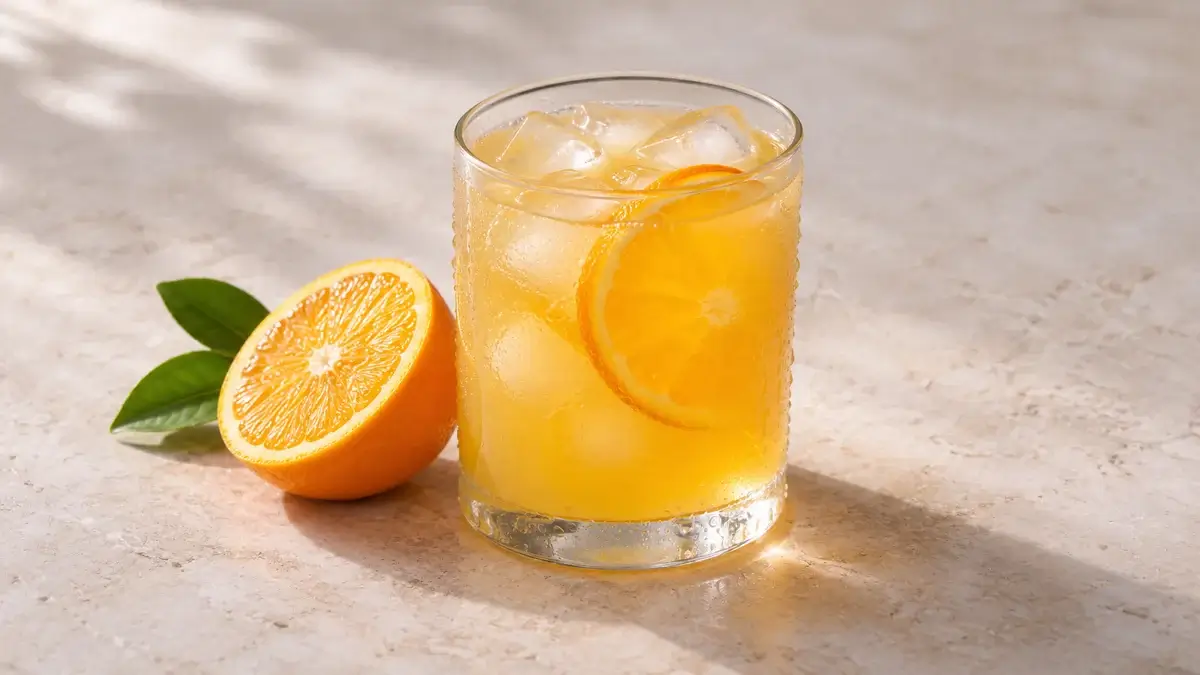
A cortisol cocktail, also called an adrenal cocktail, is an alcohol-free drink commonly made with orange juice, coconut water and salt. It provides naturally occurring sugar, potassium and vitamin C. Clinical research has yet to show that the drink lowers cortisol or causes weight loss. If you want to try it for the flavor, start with the citrus recipe below and use a small pinch of salt only if you like it. Cleveland Clinic’s review of adrenal cocktails.
Classic orange recipe · Guava and lemon variations · Weight-loss evidence · Potassium and medication considerations
What Is a Cortisol Cocktail?
The drink went viral alongside claims about “cortisol belly,” facial puffiness and “adrenal fatigue.” Versions vary. Some use orange juice, coconut water and a pinch of salt. Others add cream of tartar or powdered magnesium. Coconut water and orange juice supply most of the potassium in the basic recipe. Added salt contributes mostly sodium. Baylor Scott & White Health’s overview of the trend.
Cortisol is a hormone that helps regulate energy, blood pressure and the response to stress. Its level normally changes across the day. The Endocrine Society does not recognize “adrenal fatigue” as a medical diagnosis. Adrenal insufficiency, including Addison’s disease, and Cushing syndrome are distinct disorders evaluated by a clinician. Endocrine Society explanation of adrenal fatigue and systematic review of 58 studies.
Classic Orange and Coconut Water Cortisol Cocktail
Yield one 8-fl-oz glass before ice. Active time 3 minutes.
Print
Classic Orange and Coconut Water Cortisol Cocktail
A chilled orange and coconut water mocktail with an optional pinch of fine sea salt.
- Total Time: 3 minutes
- Yield: 1 glass, 8 fl oz before ice 1x
Ingredients
- 1/2 cup (120 mL) chilled 100% orange juice
- 1/2 cup (120 mL) chilled unsweetened coconut water
- Ice, for serving
- A small pinch of fine sea salt, optional, up to 1/8 teaspoon
- 1 orange slice, optional
Instructions
- Mix the juices. Pour the orange juice and coconut water into a serving glass and stir. Taste the mixture.
- Season to taste. For a salty-sweet flavor, add a small pinch of fine sea salt and stir until it dissolves.
- Add ice. Add ice and garnish with an orange slice if desired. Serve cold.
Notes
For a lighter citrus flavor, replace 1/4 cup of the orange juice with cold sparkling water and add it at serving time.
Nutrition is an estimate for the 8-fl-oz recipe before ice. The salt is optional and the amount of sodium depends on how much is added and the coconut water label.
- Prep Time: 3 minutes
- Cook Time: 0 minutes
- Category: Drinks
- Method: No Cook
Nutrition
- Serving Size: 1 glass (8 fl oz before ice)
- Calories: 86
- Sugar: 17 g
Keywords: cortisol cocktail recipe, orange coconut water mocktail, adrenal cocktail
The orange juice gives it a bright, sweet-tart flavor. Coconut water softens the citrus. To lighten the flavor and reduce the sugar in your glass, replace ¼ cup of orange juice with cold sparkling water and add the bubbles just before drinking.
Two Ways to Vary the Citrus Recipe
Guava-lime coconut cooler
Stir ¾ cup (180 mL) unsweetened coconut water, ¼ cup (60 mL) guava nectar and 1 to 2 tablespoons fresh lime juice together. Serve over ice with a lime wheel. Add a pinch of salt to taste, up to ⅛ teaspoon. The recipe yields roughly 8½ to 9 fluid ounces before ice. Check whether the guava nectar is sweetened. For a less-sweet glass, use 2 tablespoons nectar and make up the difference with sparkling water.
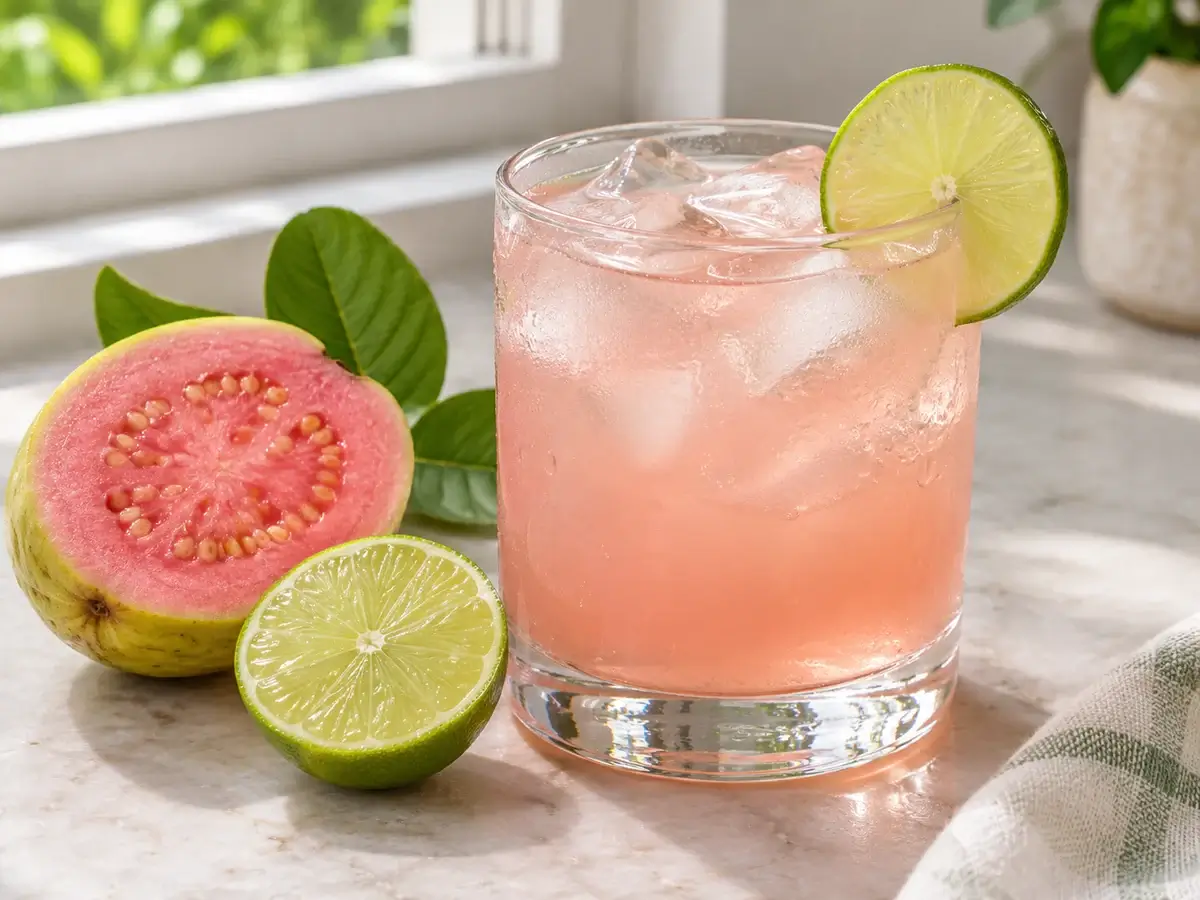
The amount of sugar varies with the nectar. A nectar labeled 120 calories and 28 g of sugar per cup contributes 30 calories and 7 g of sugar in ¼ cup. With the coconut water label below and 2 tablespoons lime juice, the full glass is about 80–85 calories with about 18 g of total sugar. Alyssa Pacheco, RD, publishes a 72-calorie estimate for her own preparation. Evidence for this drink as a PCOS treatment or a weight-loss aid is lacking. Guava-lime recipe inspiration and nutrition panel.
Lower-sugar lemon spritz or iced green tea
Caffeine-free spritz. Pour 1 cup (240 mL) cold plain sparkling or still water over ice. Squeeze in half a lemon. Add a little mint or a thin lemon wheel and taste before seasoning.
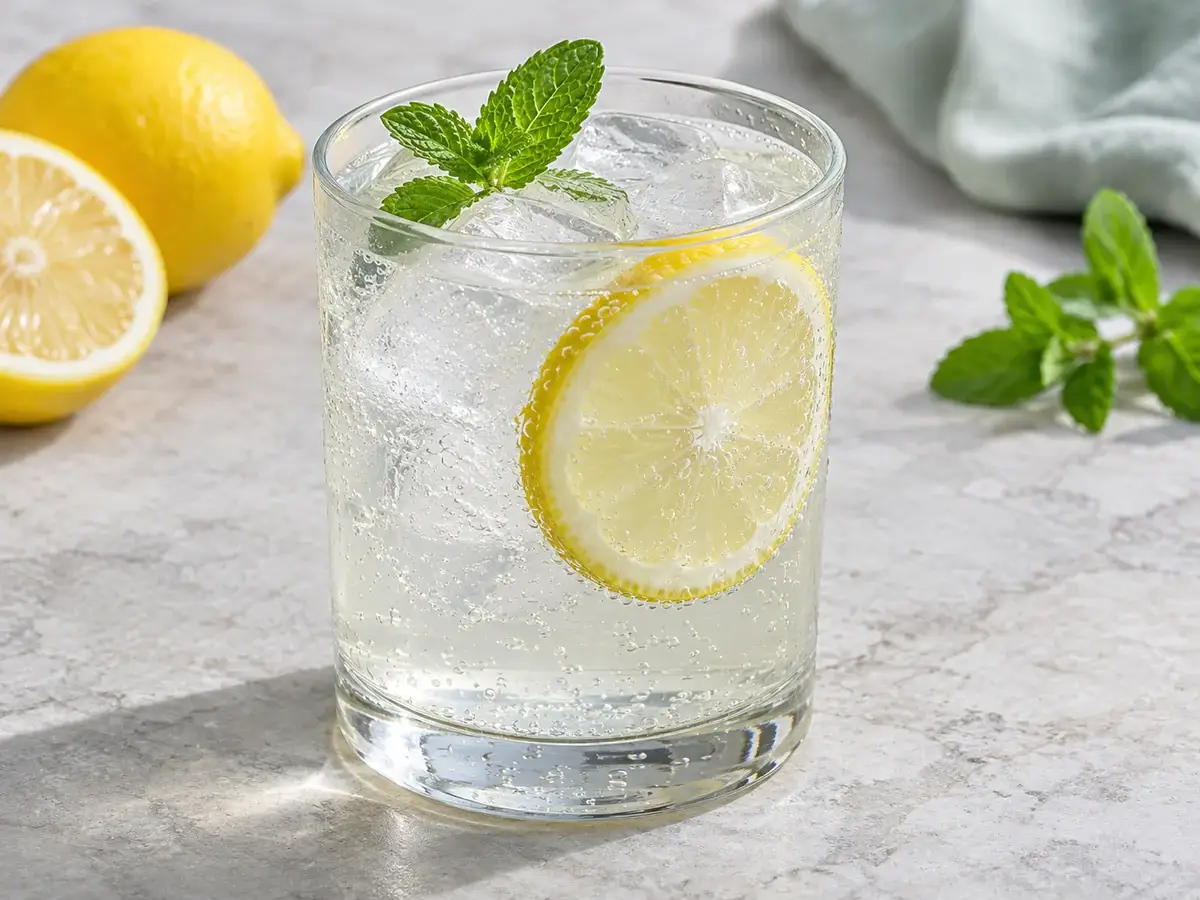
Green tea option. Use 1 cup chilled, unsweetened green tea in place of the water and stir in 1 to 2 teaspoons lemon juice to start. For matcha, whisk ½ teaspoon matcha into 2 tablespoons warm water until smooth, then add enough cold water to make 1 cup. Finish with lemon. Both tea options can contain caffeine. For a caffeine-free option, choose the spritz or try cold-brew hibiscus tea.
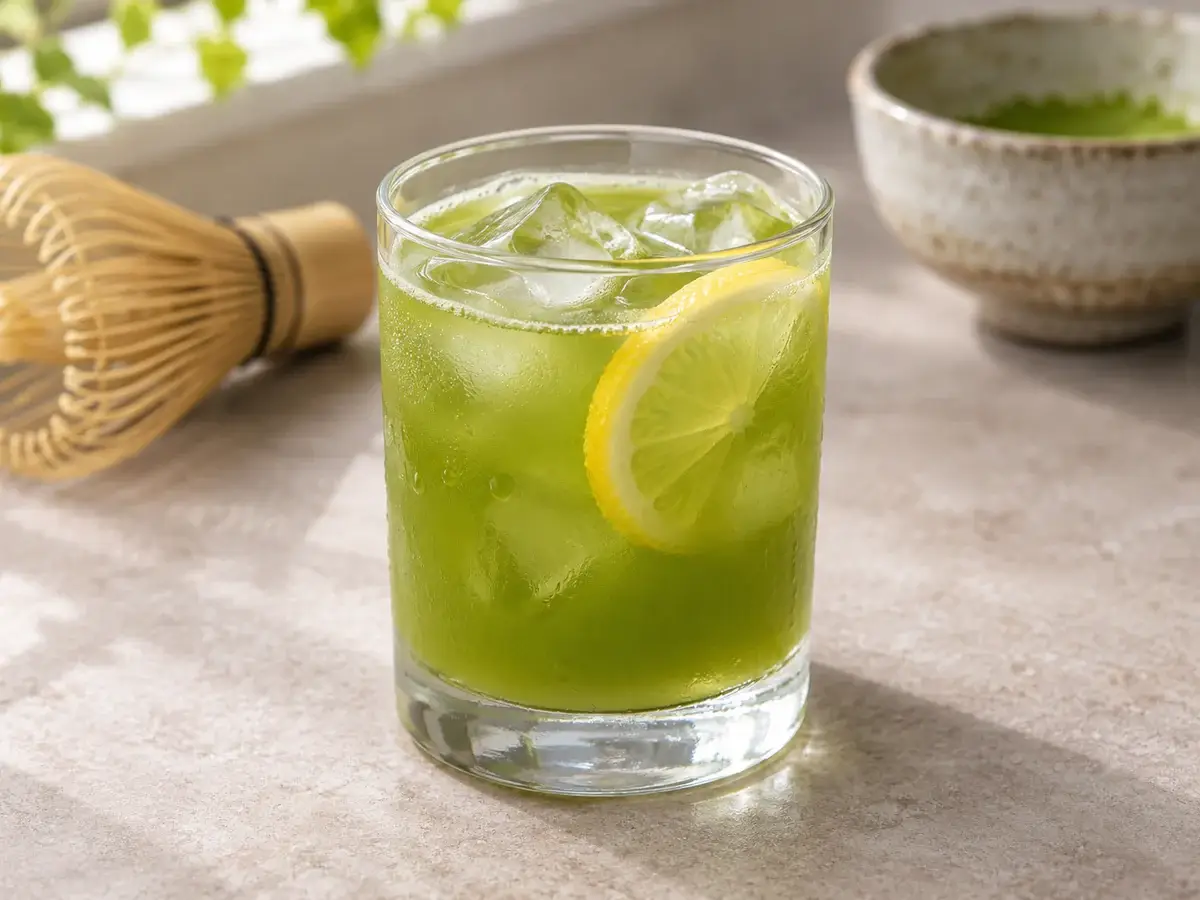
Fresh lemon contributes a small amount of natural sugar. These versions are lightly flavored, lower-sugar drinks at roughly 5–10 calories per glass before any sweetener. Stir in extra lemon to taste, or use a few cucumber slices if you want a milder finish.
Calories, Sugar, Sodium and Potassium per Glass
The example uses ½ cup raw orange juice and ½ cup of an unsweetened coconut water listing 60 calories, 14 g sugar and 541 mg potassium per 8 fluid ounces. Orange juice contributes roughly 60 mg vitamin C and 250 mg potassium per half cup. Values are rounded and will change with your products.
| One 8-fl-oz glass | Calories | Total sugar | Sodium | Potassium |
|---|---|---|---|---|
| Orange and coconut water, before salt | About 86 | About 17 g | About 20–30 mg | About 520 mg |
| Same glass with ⅛ teaspoon fine table salt | About 86 | About 17 g | About 310 mg | About 520 mg |
| Same glass with ¼ teaspoon fine table salt | About 86 | About 17 g | About 600 mg | About 520 mg |
| Same glass with ¼ teaspoon fine table salt and ¼ teaspoon cream of tartar | About 88 | About 17 g | About 600 mg | About 640 mg |
Count the salt in the full glass if you use it. A quarter teaspoon of fine table salt adds roughly 575 mg of sodium, about a quarter of the FDA’s 2,300-mg Daily Value. A quarter teaspoon of cream of tartar contributes about 124 mg potassium in the cited reference. The 495-mg figure refers to a full teaspoon. Larger-grain salts weigh differently by volume, so use your label if sodium matters to you. USDA orange juice values, coconut water label, FDA sodium guidance and cream of tartar nutrition data.
Brand labels vary, so check how much sodium and potassium are in coconut water.
Does the Cortisol Cocktail Help with Weight Loss?
Evidence for the drink as a weight-loss method is lacking. A citrus drink may fit your preferences and can replace a higher-calorie drink if you like it. Any change in calorie intake depends on what you replace, the glass you pour and the rest of what you eat and drink. Orange juice still contributes sugar when the carton says “no added sugar.” Whole oranges contain more fiber than their strained juice.
Viral explanations sometimes treat a rise in blood sugar after a drink as proof that the same drink causes a later cortisol surge. The response varies between people and depends on the meal and individual health. Clinical research has yet to establish that sequence for this recipe as a general rule. If you monitor glucose or follow a prescribed carbohydrate plan, count the juice and coconut water using the labels. Cleveland Clinic’s discussion of the drink’s calories and weight claims.
What the research actually measured
| Topic | What researchers studied | What that means for the recipe |
|---|---|---|
| Vitamin C and fat oxidation | In a small 2006 study, participants with marginal vitamin C status used about 25% less fat per unit of body weight during a 60-minute treadmill session than those with adequate status. | The endpoint was fuel use during exercise. The drink and long-term weight loss were outside the study. Vitamin C and exercise study |
| Vitamin C and stress | A separate short trial gave participants high-dose vitamin C and measured recovery after a laboratory stress test. | The dose and setting differ from a half cup of juice during an ordinary day. High-dose vitamin C trial |
| Potassium and weight | Participants with metabolic syndrome lost about 9.4 kg on average during a one-year dietary intervention. A change in potassium intake was associated with weight changes within the group. | The study examined a broader diet, and participants were not assigned to a potassium drink. One-year dietary study |
| Sleep and cortisol timing | In one laboratory study, evening cortisol was 37% higher after partial sleep deprivation and 45% higher after total deprivation compared with the prior evening in those groups. | The observation concerns short-term sleep loss and sampling time. It cannot predict a fixed change with a drink or with an individual sleep schedule. Sleep loss and evening cortisol study |
| Ashwagandha extracts | A 2025 review of trials reported an average reduction in measured cortisol of about 1.16 µg/dL across included studies. Participants’ ratings of stress did not change significantly on average. | Extracts, doses and study conditions differ from a homemade mocktail. Long-term safety and individual effects remain uncertain. Ashwagandha meta-analysis |
| L-theanine and green tea | A controlled study used an L-theanine-based nutrient drink and measured responses to a laboratory stress task. | A cup of green tea or matcha has variable amounts of L-theanine and caffeine. Clinical findings for a measured supplement drink cannot be applied to this tea recipe. L-theanine nutrient drink trial |
Research on stress also includes breathing and physical activity, which address different outcomes. One five-minute breathwork trial reported changes in mood and respiratory rate. Those are different measurements from cortisol and body weight. Controlled breathwork study.
Do You Need Magnesium, Cream of Tartar or Ashwagandha?
For the orange recipe, juice and coconut water are enough to make the drink. Cream of tartar is potassium bitartrate, a baking ingredient that adds potassium. Supplemented versions sometimes use magnesium glycinate and herb extracts. The recipes above rely on ordinary food ingredients.
Supplemental magnesium can cause diarrhea, nausea or cramping, and kidney disease can increase the risk of excessive magnesium. If you already take a supplement, ask a pharmacist how it fits with your medications and check the amount of elemental magnesium on the label. Ashwagandha can interact with medications and has been linked to rare cases of liver injury. The NIH also advises avoiding it during pregnancy and breastfeeding. NIH magnesium fact sheet and NIH ashwagandha fact sheet.
Who Should Check Before Adding Extra Electrolytes?
- People with kidney disease or on dialysis. Ask your clinician or renal dietitian about drinks high in potassium, especially recipes using coconut water, cream of tartar or potassium-based salt substitutes.
- People taking medicines that can raise potassium. Examples include ACE inhibitors such as lisinopril, ARBs such as losartan and potassium-sparing diuretics such as spironolactone, eplerenone or amiloride. Confirm the right intake with your prescribing team.
- Anyone with sodium or fluid limits. If you follow a plan for high blood pressure, heart failure or kidney disease, the salt and serving size both count toward your plan.
- People tracking blood glucose. Juice and coconut water contribute carbohydrate. Read the serving size and total carbohydrate on the label when deciding what to pour.
Use guidance specific to your medication, health status and lab results. NIH potassium fact sheet for health professionals and FDA sodium guidance.
What If You Suspect a Real Cortisol Problem?
Symptoms such as persistent unexplained physical changes or fatigue have many possible causes. A clinician can review the pattern, your medicines, and any corticosteroids you use. For suspected Cushing syndrome, common initial options include late-night salivary cortisol, 24-hour urinary free cortisol or an overnight dexamethasone suppression test. For suspected adrenal insufficiency, the clinician may use morning cortisol and ACTH measurements or an ACTH stimulation test. The test and timing depend on the clinical question. Endocrine Society Cushing guideline and NIDDK adrenal insufficiency testing guide.
FAQS
When should I drink a cortisol cocktail?
Choose a time when you’d enjoy a citrus drink. Evidence has yet to identify a timing benefit for cortisol or weight loss. If you use green tea or matcha, take the caffeine into account.
Is an adrenal cocktail the same as a cortisol cocktail?
The names commonly refer to the same family of citrus-and-electrolyte drinks. Recipes differ in the amounts of juice, coconut water, salt and optional powders.
Can I make it without coconut water?
Yes. Replace it with cold water, sparkling water or unsweetened herbal tea. The flavor will be less sweet and the potassium estimate from the classic recipe will change.
Can I skip the salt?
Yes. Taste the orange juice and coconut water together first. Use lemon or lime for a brighter finish and check ingredient labels if you track sodium.
Does a cortisol cocktail reduce facial puffiness?
Research has yet to establish that it does. A consistently rounder or swollen face can have several causes. Ask a clinician about persistent or unexplained changes.
Does a guava version help with PCOS?
The guava-lime drink is a flavor variation. Evidence for it as a treatment for PCOS or as a weight-loss aid is lacking.
Can I make it the night before?
Mix the still juice and coconut water in a clean covered container and refrigerate. Add ice, optional salt or sparkling water just before serving. Follow the storage dates on the juice and coconut water packages.