
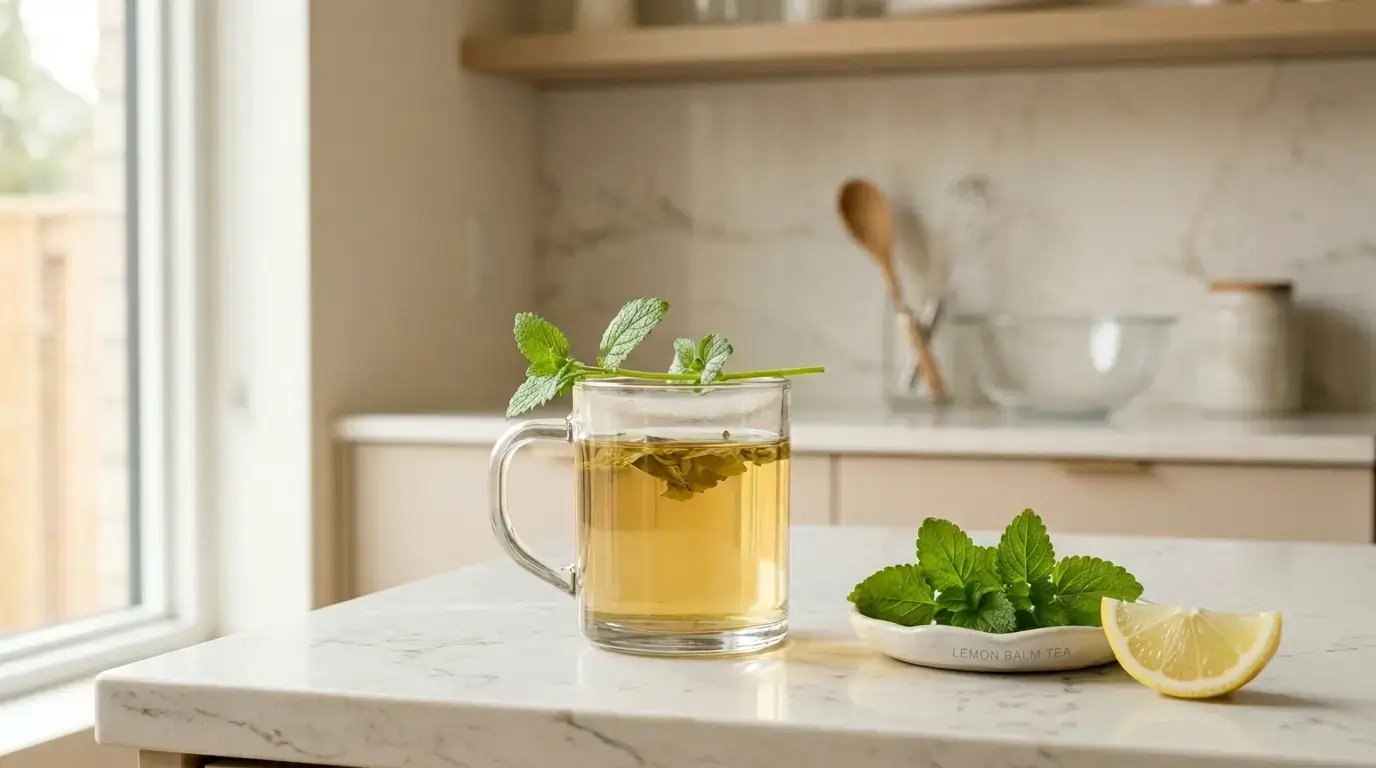
Lemon balm tea benefits center on one of the most consistent findings in herbal medicine research: genuine, clinically documented calming and sleep-supporting effects. Made from the leaves of Melissa officinalis — also known as melissa, bee balm, or sweet balm — lemon balm tea has been used in European herbal medicine for over 2,000 years primarily for its sedative and digestive properties. What sets it apart from many herbal teas is the quality of the clinical evidence: multiple randomized controlled trials have confirmed its anxiolytic and sleep-supporting effects in humans. This guide covers what lemon balm tea actually does, what the science supports, how it compares to chamomile, and what the side effects are.
What Is Lemon Balm Tea? (Including Melissa Tea)
Lemon balm tea is made from the dried or fresh leaves of Melissa officinalis, a perennial herb in the mint family (Lamiaceae) native to southern Europe and the Mediterranean region. It is widely cultivated and naturalized throughout Europe and North America.
Melissa tea is the same as lemon balm tea — “melissa” is the botanical name for lemon balm (Melissa officinalis) and is commonly used as the product name in European markets, particularly in France, Germany, and the Middle East. If you see “melissa tea” or “mélisse tea,” it is identical to lemon balm tea.
The plant gets its common name from its fresh, lemony scent — caused by the volatile compound citral — and its attractive quality to bees (melissa is the Greek word for honeybee).
Does lemon balm tea have caffeine? No. Lemon balm tea is completely caffeine-free.
The Active Compounds in Lemon Balm
Lemon balm’s therapeutic effects come from a specific set of plant compounds:
Rosmarinic acid — the primary active compound. A polyphenol with potent antioxidant, anti-inflammatory, and anxiolytic effects. Rosmarinic acid inhibits the breakdown of GABA (gamma-aminobutyric acid) — the brain’s primary inhibitory neurotransmitter — by blocking the enzyme GABA transaminase. This increases GABA activity in the brain, producing the calming, anxiolytic, and sleep-supportive effects lemon balm is known for.
Flavonoids (luteolin, apigenin, quercetin) — anti-inflammatory and mildly sedative compounds. Apigenin in particular has direct GABA receptor activity — the same mechanism as chamomile.
Volatile oils (citral, citronellal, linalool) — responsible for the characteristic lemon scent and contributing to the relaxing aromatherapeutic effect. These volatile oils are why covering the cup during steeping is essential — they escape quickly as steam.
Triterpenoids (ursolic acid, oleanolic acid) — anti-inflammatory compounds with additional antiviral and antimicrobial properties.
Lemon Balm Tea Benefits: What the Research Shows
1. Anxiety Relief — The Most Clinically Supported Benefit
Lemon balm’s anxiolytic (anxiety-reducing) effects are among the most consistently supported in herbal medicine research.
Key clinical evidence:
A double-blind, placebo-controlled trial published in Psychosomatic Medicine found that a single dose of lemon balm extract significantly reduced anxiety and improved mood in participants subjected to experimentally induced psychological stress — with effects visible within 1–3 hours of consumption.
A 2014 study in Nutrients found that lemon balm supplementation significantly reduced anxiety and insomnia in 18 volunteers with mild-to-moderate anxiety disorders after 15 days of daily use.
The mechanism: Rosmarinic acid’s inhibition of GABA transaminase increases GABAergic activity in the brain — the same mechanism targeted by benzodiazepine medications (like diazepam), but at a much gentler, non-dependency-producing level. This is a real pharmacological interaction, not placebo.
2. Sleep Support — A Genuine Evidence-Based Benefit

Lemon balm is one of the few herbal teas with direct clinical evidence for sleep improvement in human trials.
A randomized controlled trial found that a combination of lemon balm and valerian root significantly improved sleep quality in participants with mild insomnia — with 81% of participants reporting improved sleep compared to 39% in the placebo group.
Lemon balm alone: Studies specifically isolating lemon balm’s sleep effects show improvements in sleep latency (time to fall asleep) and sleep quality through the GABA mechanism. The combination with valerian is more powerful, but lemon balm alone produces measurable sleep benefit.
Timing matters: For sleep, drink lemon balm tea 30–60 minutes before bed. This gives rosmarinic acid sufficient time to be absorbed and begin its GABA-enhancing activity. For a complete guide to timing and combining sleep-supporting drinks, see our best drinks for better sleep article.
3. Cognitive Function and Mood
Several studies have found lemon balm improves cognitive performance — particularly speed of calculation, memory, and reaction time — while simultaneously reducing anxiety. This combination of calming and cognitive-enhancing effects makes lemon balm unusual among herbal teas.
A study in Neuropsychopharmacology found that lemon balm extract improved memory and mood in healthy young adults — with improvements in spatial memory, working memory, and speed of memory.
The mechanism appears to involve rosmarinic acid’s inhibition of acetylcholinesterase — the enzyme that breaks down acetylcholine, a neurotransmitter central to memory and learning.
4. Digestive Support
Lemon balm has long traditional use for digestive complaints — bloating, gas, stomach cramps, and indigestion. The antispasmodic properties of its volatile oils relax smooth muscle in the gastrointestinal tract, reducing cramping and spasm.
IBS support: A combination product containing lemon balm and peppermint showed significant improvements in IBS symptoms including bloating, cramping, and abdominal pain in a clinical trial. Lemon balm’s contribution is primarily the antispasmodic and anti-anxiety dimensions of IBS (since anxiety and gut function are directly linked through the gut-brain axis).
5. Antiviral Activity
Lemon balm has documented antiviral activity against herpes simplex virus (HSV-1 and HSV-2) in laboratory studies. A cream formulation has been clinically tested and shown to reduce healing time of cold sores. The internal antiviral mechanism from tea consumption is less direct but contributes to overall viral immune support through rosmarinic acid and triterpenoid activity.
6. Thyroid Caution
One pharmacological effect of lemon balm that requires awareness: it inhibits TSH (thyroid-stimulating hormone) receptor activity. This means it may mildly reduce thyroid stimulation — which is potentially therapeutic for people with hyperthyroidism (overactive thyroid) but a concern for people with hypothyroidism (underactive thyroid) or those on thyroid medication. See the safety section below.
Lemon Balm Tea vs Chamomile: Which Is Better for Sleep?
Both are evidence-backed sleep-supporting herbal teas, but they work through different mechanisms:
| Lemon Balm | Chamomile | |
|---|---|---|
| Primary compound | Rosmarinic acid | Apigenin |
| Sleep mechanism | GABA transaminase inhibition → more GABA | Direct GABA receptor binding |
| Anxiety | ✅ Strong evidence (multiple RCTs) | ✅ Moderate evidence |
| Sleep latency | ✅ Reduces time to fall asleep | ✅ Reduces time to fall asleep |
| Cognitive effect | ✅ Improves memory + mood | ⚠️ Mild sedation |
| Digestive | ✅ Antispasmodic | ✅ Anti-inflammatory |
| Thyroid concern | ⚠️ Hypothyroidism caution | ✅ None |
| Caffeine | None | None |
| Flavor | Mild lemon, fresh, slightly sweet | Floral, apple-like, mild |
For sleep: Both are effective — combining them in a blend covers more sleep mechanisms simultaneously. Lemon balm addresses the anxiety and GABA dimension; chamomile adds direct receptor binding. For the full chamomile profile, see our chamomile tea benefits guide.
How to Make Lemon Balm Tea
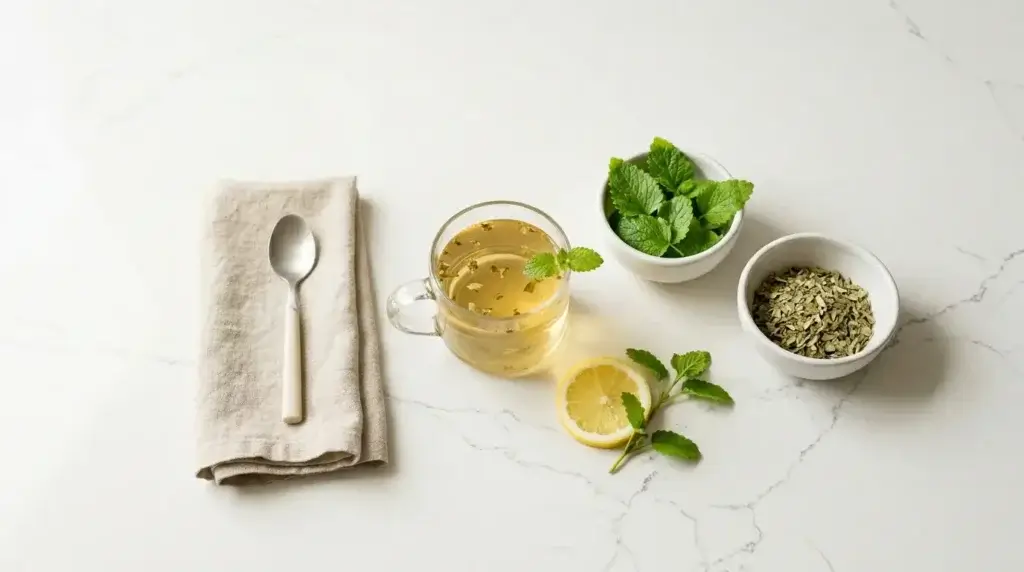
Standard hot brew:
- Add 1 tablespoon of fresh lemon balm leaves (or 1 teaspoon dried) to your cup
- Pour water heated to 85–90°C (185–195°F) — slightly below boiling preserves delicate volatile oils
- Cover the cup immediately while steeping — the volatile oils responsible for lemon balm’s calming effect escape as steam; covering is essential
- Steep for 5–10 minutes — 5 minutes produces a lighter, fresher cup; 10 minutes is stronger and more sedating
- Strain and add honey to taste
Fresh vs dried: Fresh lemon balm produces a brighter, more intensely lemony cup. Dried lemon balm is more convenient and has a more concentrated flavor. Both deliver the same active compounds.
Lemon balm and chamomile sleep blend: Combine 1 teaspoon lemon balm + 1 chamomile tea bag per cup. Steep covered for 8 minutes. The two compounds — rosmarinic acid and apigenin — work on complementary GABA mechanisms for a more complete sleep effect.
Print
Lemon Balm Tea Benefits: What Science Says About Sleep, Anxiety, and Digestion
A simple lemon balm tea using fresh or dried leaves — the right steeping time and temperature preserve the rosmarinic acid and volatile oils that deliver the calming and digestive benefits.
- Total Time: 12 minutes
- Yield: 1 cup (240ml) 1x
Ingredients
- 1 tbsp fresh lemon balm leaves (or 1 tsp dried)
- 240ml (8 oz) hot water at 85–90°C (185–195°F)
- Raw honey to taste (optional)
- Fresh lemon slice (optional)
- Ice (for iced version)
Instructions
- Add fresh lemon balm leaves or dried herb to your cup or infuser.
- Pour hot water at 85–90°C — slightly below boiling to preserve delicate volatile oils.
- Cover the cup while steeping — essential to trap aromatic compounds.
- Steep for 5–10 minutes — 5 min for lighter flavor, 10 min for stronger calming effect.
- Strain and serve hot.
- Add raw honey and a slice of fresh lemon if desired.
- For iced: brew double-strength and pour over ice.
Notes
Fresh lemon balm produces a brighter, more lemony cup than dried. Always cover while steeping — the volatile oils responsible for lemon balm’s calming effect escape quickly as steam. For best sleep results, drink 30–60 minutes before bed. Lemon balm is also known as melissa tea — same plant, same benefits.
- Prep Time: 2 minutes
- Cook Time: 10 minutes
- Category: Drinks
- Method: Steeping
- Cuisine: Universal
- Diet: Vegan
Nutrition
- Serving Size: 1 cup (240ml)
- Calories: 2
- Sugar: 0g
- Sodium: 1mg
- Fat: 0g
- Saturated Fat: 0g
- Unsaturated Fat: 0g
- Trans Fat: 0g
- Carbohydrates: 0g
- Fiber: 0g
- Protein: 0g
- Cholesterol: 0mg
Keywords: lemon balm tea benefits, how to make lemon balm tea, lemon balm tea for sleep, melissa tea recipe, fresh lemon balm tea
Cold iced version:

Brew double-strength (2 tablespoons fresh leaves), allow to cool, and pour over ice with a slice of fresh lemon. Refreshing, calming, and entirely caffeine-free — an ideal afternoon drink. For more cold herbal tea ideas, see our cold brew herbal tea recipes guide.
Lemon Balm Tea Side Effects and Safety
Lemon balm tea is safe for most healthy adults at 1–3 cups per day. Key considerations:
Thyroid conditions: Lemon balm inhibits TSH receptor activity and may reduce thyroid stimulation. People with hypothyroidism (underactive thyroid) or on thyroid medication (levothyroxine, Synthroid) should consult their doctor before making lemon balm tea a daily habit. People with hyperthyroidism may actually benefit from this effect — but still under medical supervision.
Sedatives and sleep medications: Lemon balm enhances GABA activity. Combined with prescription sedatives (benzodiazepines, sleep medications) or other GABA-enhancing herbs (valerian, kava), the additive sedative effect can be excessive. Use caution and consult your doctor.
Pregnancy: Lemon balm is generally considered low-risk in small amounts during pregnancy and is sometimes used for pregnancy-related anxiety and nausea. However, insufficient clinical safety data exists — limit to 1 cup per day and confirm with your midwife.
Glaucoma: Some sources suggest lemon balm may affect intraocular pressure. People with glaucoma should consult their ophthalmologist.
Surgery: Due to its sedative effects, some practitioners recommend stopping lemon balm tea 2 weeks before scheduled surgery to avoid interaction with anesthetic agents.
Side effects at normal doses: Generally very well tolerated. Rare reports of nausea, dizziness, or headache at high doses.
Lemon Balm Tea for Weight Loss
The search interest in “lemon balm tea for weight loss” warrants an honest answer: lemon balm is not a weight loss herb.
There is no direct clinical evidence that lemon balm causes fat loss or significantly increases metabolic rate. The indirect connection to weight management comes from:
- Reduced anxiety-driven eating (cortisol and stress are linked to weight gain)
- Better sleep quality (poor sleep is associated with increased appetite hormones)
- Calorie-free beverage replacement
These are real but indirect effects. If weight management is your primary goal, lemon balm tea is a useful supportive habit — not a targeted intervention.
Frequently Asked Questions
What are the benefits of lemon balm tea?
The main lemon balm tea benefits are anxiety relief through GABA enhancement, sleep support (reduced time to fall asleep, improved sleep quality), digestive antispasmodic relief, cognitive support (improved memory and mood), and mild antiviral activity. It is also completely caffeine-free.
What is lemon balm tea good for?
Lemon balm tea is best for anxiety and stress relief, sleep improvement, IBS-related digestive discomfort, mood support, and as a calming evening beverage. It is one of the few herbal teas with multiple human clinical trials supporting its calming effects.
Is lemon balm the same as melissa tea?
Yes. Melissa is the botanical genus name for lemon balm (Melissa officinalis). “Melissa tea” is simply the European and Middle Eastern product name for lemon balm tea — same plant, same active compounds, same benefits.
Does lemon balm tea help you sleep?
Yes — lemon balm has multiple clinical trials supporting its sleep benefits. Rosmarinic acid inhibits the enzyme that breaks down GABA, increasing the brain’s primary inhibitory neurotransmitter and reducing the time to fall asleep. Drink 30–60 minutes before bed for best results.
Does lemon balm tea have caffeine?
No. Lemon balm tea is completely caffeine-free and can be consumed at any time of day, particularly in the evening.
What are the side effects of lemon balm tea?
Lemon balm tea is well tolerated at normal doses. Key cautions: avoid or consult a doctor if you have hypothyroidism or take thyroid medication; use caution combining with sedative medications; pregnant women should limit to 1 cup per day and confirm with their midwife.
Can I drink lemon balm tea every day?
Yes — for most healthy adults, 1–3 cups per day is considered safe for long-term daily use. People with thyroid conditions, on sedative medications, or scheduled for surgery should consult their doctor before establishing a daily habit.
Is lemon balm tea better than chamomile for sleep?
Both are effective and work through complementary mechanisms. Lemon balm works via GABA transaminase inhibition (increasing available GABA); chamomile works via direct apigenin binding to GABA receptors. Combining them in a blend produces a more complete sleep-supporting effect than either alone.
Key Takeaways
- Lemon balm tea benefits are most strongly supported for anxiety relief and sleep improvement — with multiple randomized controlled trials in humans confirming these effects
- The primary active compound is rosmarinic acid, which increases GABA activity in the brain through enzyme inhibition — a real pharmacological mechanism
- Also known as melissa tea — same plant (Melissa officinalis), same benefits
- Completely caffeine-free and suitable at any time of day
- For sleep: drink 30–60 minutes before bed; combine with chamomile for maximum effect
- Always cover the cup while steeping — volatile oils escape as steam
- Key safety consideration: thyroid conditions. People with hypothyroidism or on thyroid medication should consult their doctor before daily use
- Not a weight loss tea — indirect supportive effects only through stress/sleep improvement