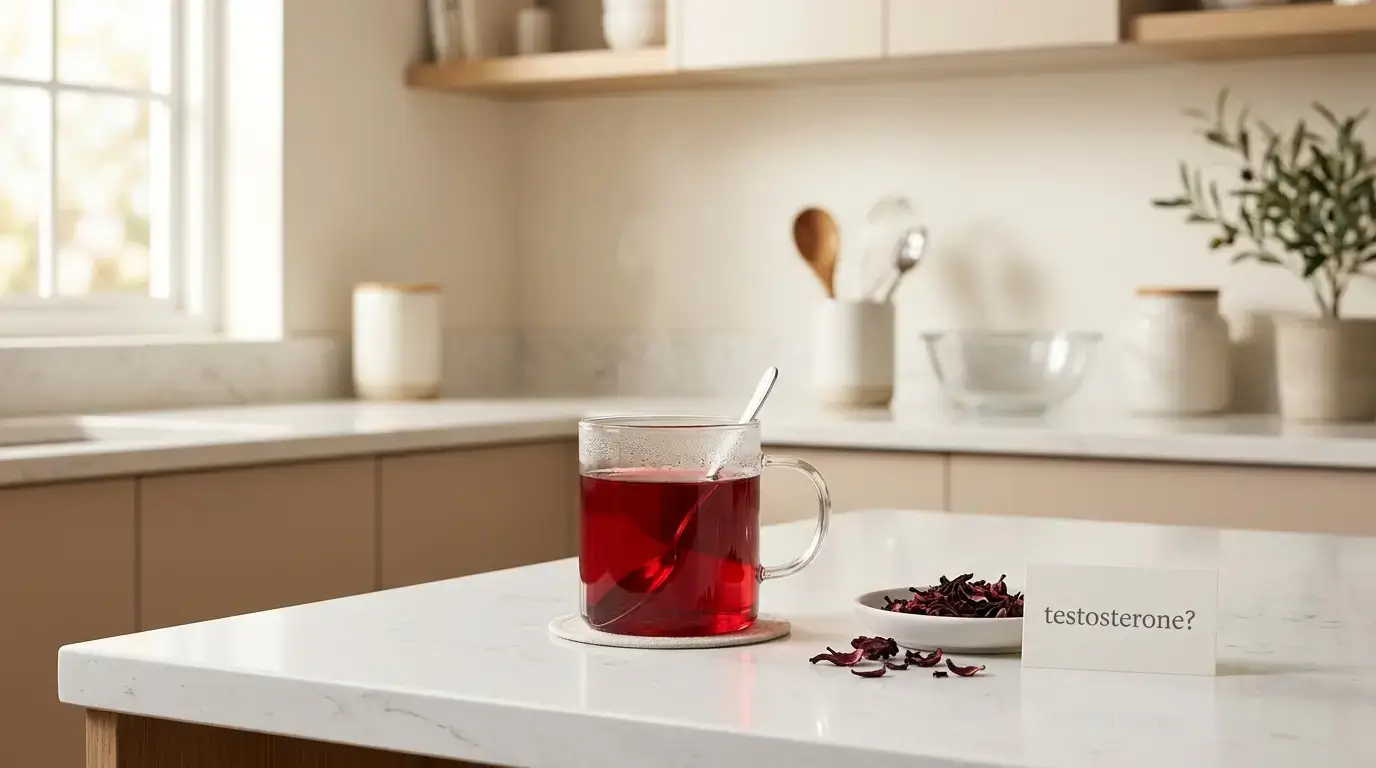
Hibiscus tea testosterone is a topic with a nuanced answer — and most wellness articles either ignore it or overstate the risk. The short answer: animal studies at high doses suggest hibiscus may reduce testosterone levels, but the evidence at normal tea-drinking doses in humans is limited and inconclusive. For men drinking 1–2 cups per day for blood pressure or general wellness, the testosterone concern is likely minimal. For women with androgen excess, hibiscus may offer mild supportive benefits. This guide covers what the research actually shows, what it doesn’t, and what this means practically for both men and women.
The Direct Answer: Does Hibiscus Tea Affect Testosterone?
| Population | Evidence | Practical verdict |
|---|---|---|
| Men — 1–2 cups/day | Limited, no human RCTs | ⚠️ Unlikely to affect testosterone at normal doses |
| Men — very high doses | Animal studies show reduction | 🔴 High-dose extracts may lower testosterone |
| Women with androgen excess | Some supportive evidence | ✅ May mildly reduce excess androgens |
| Women — general | No direct human evidence | ⚠️ Neutral at normal doses |
| Men concerned about testosterone | No proven risk at 2 cups/day | ✅ Not a reason to avoid hibiscus tea |
What the Research Shows
Animal Studies — The Origin of the Concern
The testosterone question largely originates from animal studies, primarily in rodent models. Several studies found that hibiscus extract at high doses — well above what a person would consume from drinking tea — produced:
- Reduced serum testosterone levels
- Testicular changes including reduced spermatogenic activity
- Reduced testis weight in some studies
A frequently cited Nigerian study found that Wistar rats given high doses of hibiscus extract showed significantly lower testosterone levels and testicular changes after 30 days. Similar findings appeared in other rodent studies using concentrated hibiscus extracts.
Why these studies are not directly applicable to tea drinkers:
The doses used in most animal studies are significantly higher than what you consume in 1–2 cups of brewed tea daily. Extrapolating from rodent high-dose extract studies to human tea consumption involves several leaps — animal metabolism differs from human metabolism, extract concentrations differ vastly from brewed tea, and the specific compounds responsible for any effect are not yet isolated.
Human Evidence — Limited but Relevant
Direct human clinical trials specifically examining hibiscus tea’s effect on testosterone are scarce. What exists:
One relevant observation: Hibiscus contains phytoestrogens — plant compounds with mild estrogenic activity. While hibiscus is not primarily classified as a phytoestrogenic plant (unlike red clover or soy), it does contain compounds that interact with estrogen receptors to a small degree. Elevated estrogen relative to testosterone can influence testosterone’s bioavailability.
The anti-androgenic question: Some research has examined hibiscus extracts for activity against 5-alpha-reductase — the enzyme that converts testosterone into DHT (dihydrotestosterone), the more potent androgen. Some preliminary findings suggest mild 5-alpha-reductase inhibiting activity, but this research is early-stage and not yet clinically confirmed at tea concentration.
The honest scientific position: There are no published randomized controlled trials in healthy human men demonstrating that drinking 1–2 cups of hibiscus tea per day significantly reduces testosterone levels. The concern is animal-study-derived and extrapolated, not human-clinical-trial-confirmed.
For Men: How Much Should You Worry?
The testosterone concern for men is real at very high doses — but at normal daily tea consumption, the evidence does not support significant worry.
What matters most: the dose and the form.
The animal studies showing testosterone reduction used concentrated hibiscus extract — not brewed tea. The concentration of active compounds in a cup of brewed hibiscus tea is far lower than in the extracts used experimentally. A man drinking 1–2 cups of hibiscus tea per day is consuming a very different dose of hibiscus compounds than a rat receiving a concentrated extract equivalent to human multiples.
Practical guidance for men:
- 1–2 cups per day — the evidence-based dose for blood pressure and cardiovascular benefits — is unlikely to meaningfully affect testosterone based on current evidence
- Very high intake (4+ cups per day, daily hibiscus extract supplements) — moves closer to the dose range where animal studies showed effects; more caution is warranted at this level
- Men already with low testosterone — a reasonable precaution is to mention daily hibiscus tea consumption to your doctor if you are being monitored for testosterone levels
- Men trying to optimize testosterone — given the animal study signals, choosing a different herbal tea (ginger, nettle) for daily consumption is a reasonable precautionary approach even without confirmed human risk
For the full profile of hibiscus tea’s effects on male health, see our hibiscus tea benefits for men guide.
For Women: A Different Picture
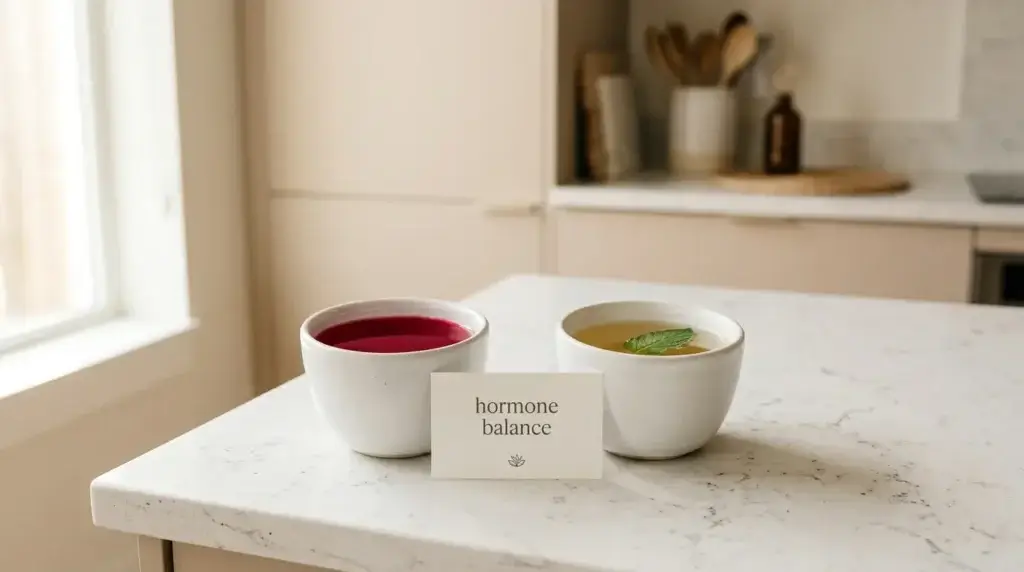
For women — particularly those with androgen excess conditions — the testosterone story is more positive.
PCOS and hyperandrogenism: Women with polycystic ovary syndrome (PCOS) often have elevated free testosterone and DHT, contributing to hirsutism (facial hair), acne, and irregular cycles. For these women, hibiscus tea’s potential mild anti-androgenic activity and its antioxidant, anti-inflammatory effects are supportive rather than concerning.
Combining hibiscus with spearmint: The most evidence-backed herbal anti-androgenic strategy for women is spearmint tea, which has demonstrated reductions in free testosterone in clinical trials. Hibiscus addresses the cardiovascular and inflammatory dimension while spearmint addresses the androgen-specific dimension — a complementary combination. See our spearmint tea benefits guide for the clinical evidence on spearmint and testosterone.
Menopausal women: After menopause, the estrogen-to-androgen ratio shifts — relative androgen excess can cause virilization symptoms. Hibiscus tea’s mild phytoestrogenic and antioxidant activity may contribute to restoring hormonal balance. See our hibiscus tea for menopause guide for the full picture.
For a complete overview of hibiscus tea’s specific benefits for women at different life stages, see our hibiscus tea benefits for women guide.
Hibiscus Tea vs Spearmint for Hormonal Balance
If hormonal balance — specifically androgen management — is your primary goal, it is worth comparing hibiscus and spearmint directly:
| Hibiscus | Spearmint | |
|---|---|---|
| Testosterone effect | ⚠️ Animal studies only, unclear in humans | ✅ Clinical human trials — reduces free T |
| Mechanism | Possible mild 5AR inhibition, phytoestrogens | Documented 5AR inhibition, anti-androgenic |
| Evidence level | Preliminary | Moderate (RCTs in PCOS women) |
| Best for | Cardiovascular + antioxidant daily support | Hormonal acne, PCOS, hirsutism |
| Men’s use | Caution at high doses | Generally not recommended |
| Combines well | ✅ With spearmint for women | ✅ With hibiscus for broader profile |
If hormonal balance is your goal, spearmint is the more targeted and better-evidenced choice for anti-androgenic effects. Hibiscus is better positioned as a cardiovascular and antioxidant complement. For women with androgen excess, using both together covers complementary mechanisms.
The Dose Question: How Much Is Too Much?
Given the dose-dependent nature of the testosterone signals in animal research, dose matters more for this question than for most hibiscus tea topics.
Low risk zone (for men): 1–2 cups brewed hibiscus tea per day at standard strength (2 tsp dried calyces per 240ml). This is consistent with the blood pressure research protocol and represents a low-dose daily exposure unlikely to produce hormonal effects.
Caution zone: 4+ cups per day, daily concentrated hibiscus extract capsules, hibiscus powder supplements. At these higher intakes, you are moving toward the dose range where animal studies showed effects. Men with testosterone concerns should avoid this level.
Standard recommendation: Stay within the evidence-based 2-cups-per-day range. For the full dosage guidance, see our how much hibiscus tea per day article.
Frequently Asked Questions
Does hibiscus tea increase testosterone?
No — if anything, the research direction is the opposite. Animal studies at high doses suggest hibiscus may reduce testosterone levels, not increase them. There is no evidence that hibiscus tea raises testosterone.
Does hibiscus tea lower testosterone?
Animal studies at high doses show reduced testosterone in rodent models. Human clinical trial evidence at normal tea-drinking doses (1–2 cups per day) is lacking — there are no published RCTs demonstrating significant testosterone reduction in men from drinking hibiscus tea at standard amounts. The animal study concern is real but not yet confirmed in human tea drinkers.
Is hibiscus tea safe for men who are worried about testosterone?
At 1–2 cups per day — the evidence-based dose — hibiscus tea is unlikely to meaningfully affect testosterone based on current evidence. Men with diagnosed low testosterone or those being monitored for hormonal levels should mention daily hibiscus tea to their doctor. Men specifically focused on optimizing testosterone might choose other herbal teas as a precaution.
Does hibiscus tea affect hormones?
Hibiscus contains phytoestrogens with mild estrogenic activity and may have some 5-alpha-reductase inhibiting properties at higher doses. At normal tea consumption levels, these hormonal effects are minor. They are more relevant for women with androgen excess (positive effect) than for healthy men (small theoretical concern at high doses).
Should men avoid hibiscus tea because of testosterone?
No — not at 1–2 cups per day. The testosterone concern comes from high-dose animal studies and does not translate into a clear contraindication for normal tea drinking. The cardiovascular and antioxidant benefits of hibiscus tea at standard doses are well-documented and outweigh a theoretical testosterone concern that has not been confirmed in human clinical trials.
Is hibiscus tea good for women’s hormones?
Yes — particularly for women with androgen excess. Hibiscus’s potential mild anti-androgenic activity, combined with its anti-inflammatory and cardiovascular effects, makes it a useful part of a women’s hormonal wellness strategy. Combining with spearmint (which has stronger documented anti-androgenic effects) creates a more complete hormonal support approach.
Key Takeaways
- Hibiscus tea may reduce testosterone at high doses — this is based primarily on animal studies, not human clinical trials
- At normal daily tea consumption (1–2 cups), there is no confirmed evidence of significant testosterone reduction in healthy men
- The animal studies used concentrated extracts at doses far exceeding what you consume from brewed tea
- For men: 1–2 cups per day is unlikely to affect testosterone; high-dose hibiscus extracts or 4+ cups per day warrants more caution
- For women with androgen excess: hibiscus may mildly support hormonal balance alongside spearmint’s stronger anti-androgenic effects
- Spearmint is the better-evidenced anti-androgenic herbal tea for women — hibiscus is a complementary cardiovascular and antioxidant layer
- Men with diagnosed low testosterone or on hormonal monitoring should mention daily hibiscus tea to their doctor as a precaution
- No evidence exists that hibiscus tea raises testosterone