
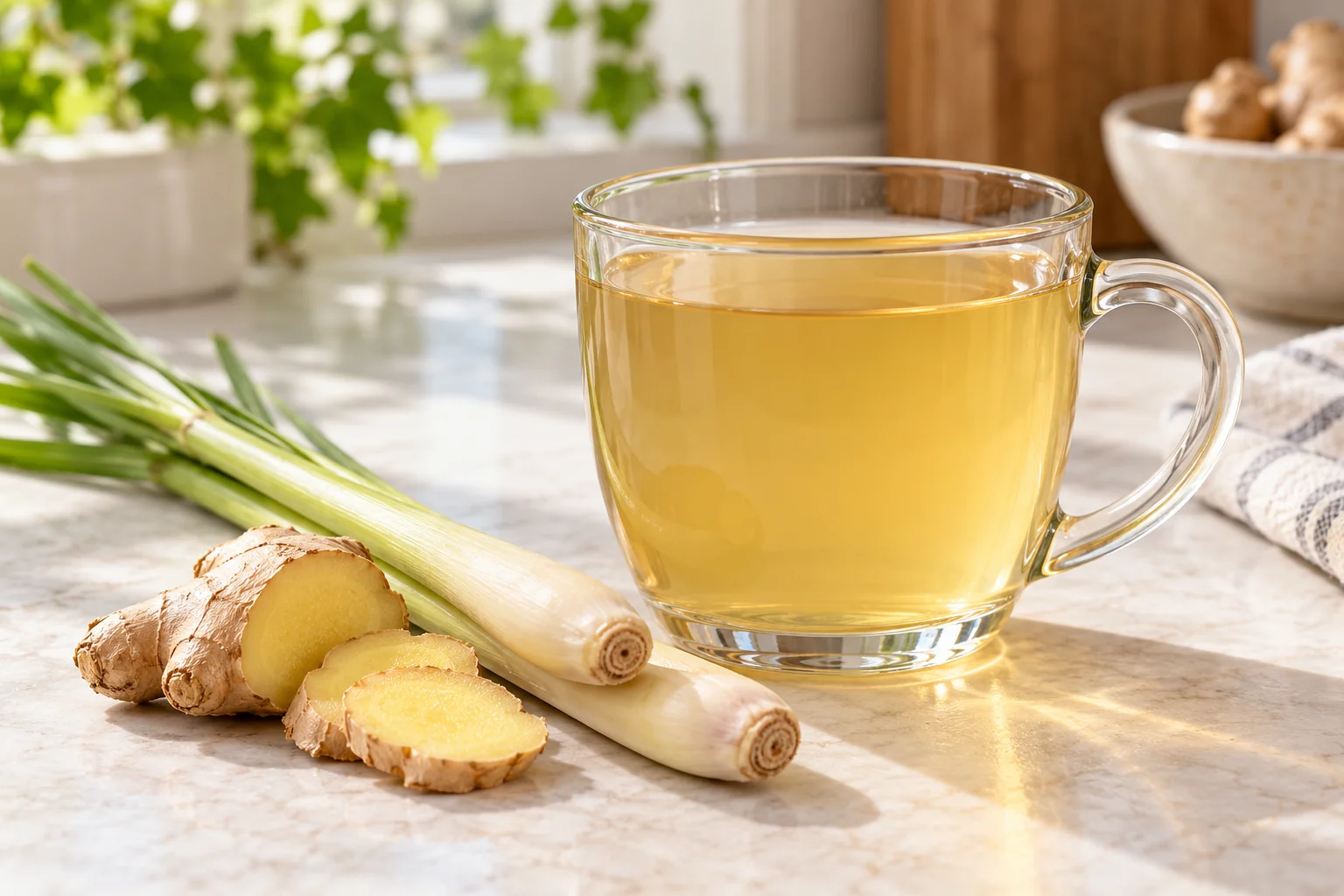
Lemongrass and ginger tea is a naturally caffeine-free infusion when made only with these plants and water. Its clearest benefits are providing fluid, offering a flavorful alternative to sweetened drinks and creating a comforting warm beverage. Ginger has been studied for certain health effects, but those findings do not establish that every homemade lemongrass–ginger infusion produces the same results.
The combination pairs the fresh, citrus-like aroma of lemongrass with ginger’s warming spice. You can prepare it with fresh ingredients, use a packaged herbal blend or chill the finished infusion for an iced drink.
Understanding the ingredients matters. A cup brewed from culinary lemongrass and sliced ginger differs from a concentrated extract, essential oil or supplement. Preparation also changes the strength and flavor of the drink.
This guide explains which benefits are reasonable to expect, where the evidence remains limited, possible precautions and how to make a simple homemade version.
What Is Lemongrass and Ginger Tea?
Lemongrass and ginger tea is an herbal infusion made by steeping or gently simmering lemongrass and ginger in water. Culinary lemongrass is commonly associated with Cymbopogon citratus. It contributes a citrus-like fragrance without requiring lemon juice. Ginger, Zingiber officinale, contributes a spicy flavor from its rhizome, the underground stem commonly called ginger root.
Neither ingredient is a traditional tea leaf. Black tea and green tea come from Camellia sinensis, while this recipe uses aromatic plants and water.
Commercial products can contain additional ingredients. Some combine lemongrass and ginger with other herbs, citrus peel, flavorings or tea leaves. The finished product therefore needs to be assessed by its complete ingredient list.
If you want a broader introduction to these preparations, see our guide to making herbal tea.
Lemongrass and Ginger Tea Benefits at a Glance
| Potential benefit or claim | What can reasonably be said |
|---|---|
| Contributing fluid | The water in the infusion contributes to fluid intake |
| Avoiding caffeine | A plain lemongrass–ginger infusion contains no tea or coffee caffeine source |
| Replacing a sweetened drink | An unsweetened version can be an alternative to a drink containing added sugar |
| Nausea relief | Ginger has supporting evidence in certain settings, but the homemade blend is not equivalent to every studied preparation |
| Digestive comfort | Some people enjoy it around meals; a reliable effect on bloating or indigestion is not established for this mixture |
| Improving sleep | The blend is not an established sleep treatment |
| Weight loss or detoxification | These effects should not be promised for an ordinary cup |
The practical benefits depend partly on how you prepare the drink and what it replaces. A heavily sweetened infusion differs from one made with only water and culinary ingredients.
1. It Provides a Flavorful Way to Drink Fluids
One straightforward benefit is that the infusion provides water. Lemongrass and ginger can make a plain drink more appealing if you enjoy citrus-like aromas and warming flavors. You can serve the infusion warm or chilled according to your preferences.
This does not establish that it hydrates better than ordinary water. Its value is mainly that it adds another beverage choice to your routine. If you are replacing a drink you enjoy, start with a light preparation. A very strong ginger flavor may make the infusion less pleasant rather than more useful.
For general fluid guidance, explore our daily water intake guide.
2. The Plain Blend Is Naturally Caffeine-Free
The recipe in this article contains lemongrass, ginger and water, with optional sweetener or lemon. It contains no black tea, green tea, coffee or added caffeine. That makes it an option when you want a warm drink without a caffeine source.
However, the same answer does not automatically apply to every product called “lemongrass ginger tea.” A blend containing green tea, black tea, yerba mate or another caffeine-containing ingredient can contain caffeine.
Check both the ingredients and any caffeine statement on the package. The word “herbal” or a picture of ginger on the box should not replace that check.
Our caffeine-free drinks guide offers other options if you want more variety.
3. Ginger Has Research Behind Some Nausea-Related Uses
Ginger is the ingredient in this combination with more substantial human research. The National Center for Complementary and Integrative Health reports evidence for ginger in some nausea-related settings, particularly pregnancy-associated nausea. It also emphasizes that most studies tested supplements rather than foods.
An unspecified cup of tea does not reproduce a measured study preparation. Adding lemongrass also does not establish that the resulting blend works better than ginger alone. It is reasonable to discuss ginger’s research background while keeping claims about this homemade drink modest.
For a broader discussion of the ingredient, see our ginger tea benefits guide.
4. It Can Be a Pleasant After-Meal Drink
The warming character of ginger and the aroma of lemongrass make this a popular choice around meals. Some people find a warm infusion comfortable after eating. Others may experience irritation from a strong ginger preparation. Personal tolerance matters.
The blend has not been established as a dependable treatment for bloating, indigestion or reflux. It should not be presented as something that will “flush out” a meal or speed digestion enough to produce weight loss.
If you enjoy it after food, choose the timing for comfort rather than following a rigid schedule. You can also drink it between meals if that suits you better.
5. An Unsweetened Version Can Replace a Sugary Beverage
You control the added sweetness when making the drink at home. A plain infusion can be an alternative to a sweetened drink you would otherwise choose. However, adding generous amounts of honey, sugar or syrup changes that comparison.
Honey contributes sweetness and its own flavor; it still counts as an added sweetener. There is no requirement to include it. Taste the strained tea first. A light preparation may be pleasant without anything added, especially if you prefer the citrus-like aroma of lemongrass to remain noticeable.
The useful distinction is what goes into your cup, rather than whether the drink is described as “natural.”
Does It Improve Sleep or Reduce Anxiety?
A caffeine-free beverage can fit into an evening routine, but that does not establish a sedative effect. An older double-blind human study investigated lemongrass tea and found no improvement in measured sleep outcomes compared with placebo. It also found no reduction in anxiety in the tested conditions. This study concerned lemongrass tea, not the ginger–lemongrass combination.
Enjoying the aroma or taking a quiet break with a warm drink may feel relaxing. That experience is different from demonstrating that the ingredients treat insomnia or an anxiety disorder. Evening comfort also depends on the amount of fluid consumed and whether the drink bothers your digestion. A caffeine-free label does not guarantee an uninterrupted night’s sleep.
What About Antioxidants and Inflammation?
Lemongrass and ginger contain compounds that have attracted scientific interest. Much of the discussion about lemongrass’s biological activity comes from laboratory, animal or concentrated-product research. Memorial Sloan Kettering notes that human evidence remains limited.
An ingredient showing activity in a laboratory does not establish the same effect from drinking a homemade infusion. The form of the ingredient, concentration and exposure matter. It is also not possible to assume that mixing two ingredients creates a stronger clinical effect. Studies on individual ingredients do not automatically validate the finished combination.
Choose the drink for its flavor and preparation qualities rather than expecting a predictable anti-inflammatory treatment from each cup.
Does Lemongrass and Ginger Tea Help With Weight Loss?
The infusion is not an established fat-burning drink. Its practical role depends on your overall beverage choices. If an unsweetened cup replaces a drink containing considerable added sugar, that substitution may change your intake. Adding large amounts of sweetener reduces that difference.
There is no established reason to drink this blend on an empty stomach, immediately after waking or before every meal to target body fat. It should also not be promoted as a way to “detox” the body. A change in bathroom habits or temporary fluid weight would not demonstrate fat loss.
For a separate discussion of the evidence and limitations, see our ginger tea and weight loss guide.
Ingredients for Homemade Lemongrass and Ginger Tea
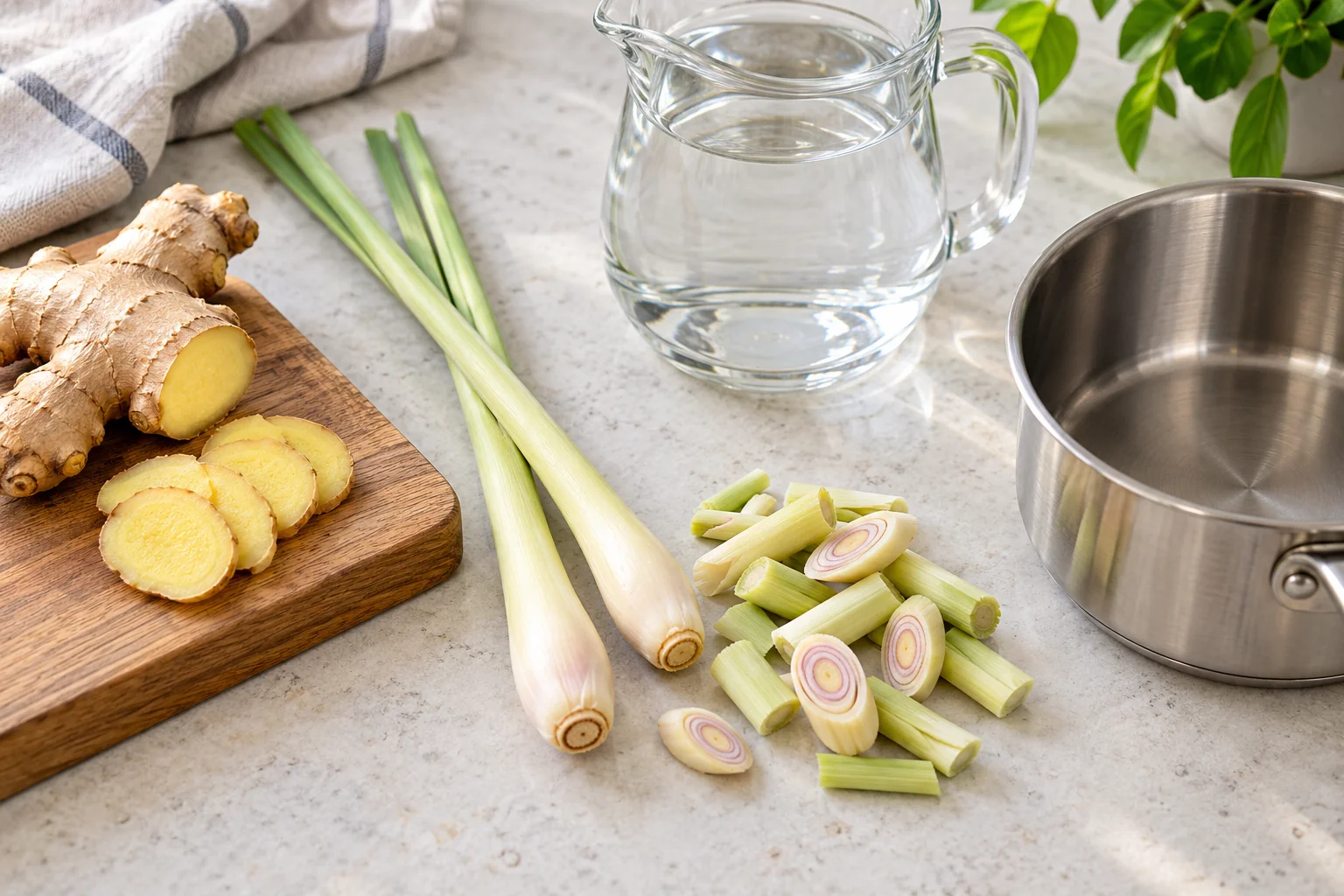
The basic recipe uses fresh culinary ingredients and water.
Fresh Lemongrass
Choose food-grade lemongrass intended for cooking. Remove damaged or very dry outer layers, trim the root end and rinse the stalks. The firm, pale lower portion is convenient for this recipe.
Lightly bruising the stalks exposes more surface area and helps release their aroma. You do not need to turn them into a paste. Use a strainer before drinking because the pieces remain fibrous.
Fresh Ginger
Wash the ginger and slice it thinly. Peeling is optional if the ginger is clean and the skin is in good condition. Remove any damaged areas.
The amount in the recipe is a starting point for flavor. Increasing it makes the drink more pungent; it does not establish greater health benefits. If you prefer a gentler cup, reduce the ginger in your next batch instead of relying on extra sweetener to cover an overly strong infusion.
Water
Use the measured amount of water as your starting point. Some liquid is lost through evaporation and retained by the strained ingredients, so the final volume varies. A partly covered saucepan helps you control evaporation while keeping an eye on the simmer.
Optional Lemon and Sweetener
Lemon juice changes the flavor, but it is not needed to give lemongrass its citrus-like aroma. Taste before adding it. A small squeeze may suit you, while another person may prefer the infusion without extra tartness.
Sugar, honey or another sweetener is also optional. Add a small amount after straining, stir thoroughly and taste again.
Lemongrass and Ginger Tea Recipe
This recipe makes approximately two small servings. The quantities are culinary starting points, not a medical dose. Allow additional cooling time for the iced version.
Print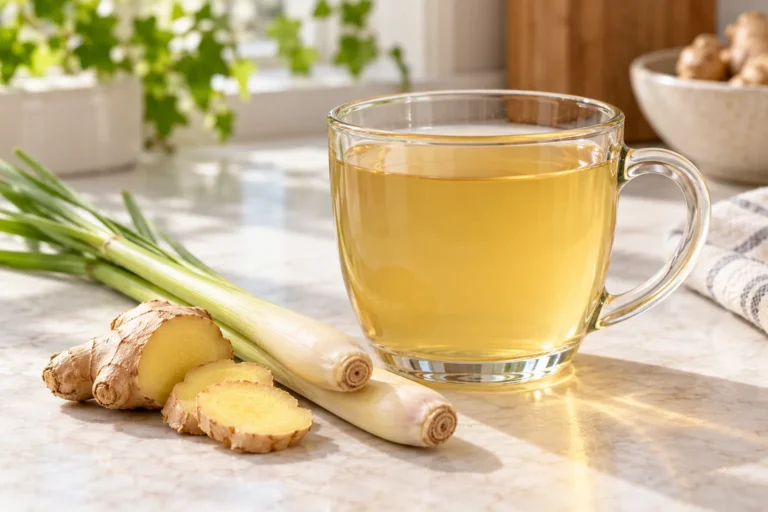
Homemade Lemongrass and Ginger Tea
A fresh lemongrass and ginger infusion with a citrus-like aroma and warming flavor. Serve warm or chill for an iced version; sweetener and lemon are optional.
- Total Time: 15 minutes
- Yield: Approximately 2 small servings 1x
Ingredients
- 2 medium fresh culinary lemongrass stalks
- 10 g fresh ginger, thinly sliced
- 500 ml water, approximately 2 cups
- 1–2 teaspoons honey, sugar or another sweetener, optional
- 1 teaspoon lemon juice, optional
- Ice, for the chilled version
Instructions
- Remove damaged outer layers from the lemongrass, trim the root ends and rinse. Lightly bruise the stalks and cut them into short pieces.
- Wash the ginger, remove damaged areas and slice it thinly.
- Put the lemongrass, ginger and water in a small saucepan.
- Bring to a gentle simmer, then simmer for approximately 7–8 minutes, partly covered.
- Strain through a fine-mesh strainer into a heatproof jug or two small cups.
- Add optional sweetener or lemon juice gradually, stirring and tasting after each addition.
- Serve warm, or cool and refrigerate before serving over ice.
Notes
The final yield depends on evaporation and liquid retained by the ingredients. Divide the finished infusion between two servings.
For a milder drink, use less ginger in a later batch or dilute the strained infusion. For stronger lemongrass flavor, use fresh, adequately bruised stalks.
Use culinary lemongrass, not essential oil. Times are estimates. The iced version requires additional cooling time. These amounts are culinary starting points, not a medical dose.
- Prep Time: 5 minutes
- Cook Time: 10 minutes
Fresh, Dried or Packaged Ingredients?
Fresh and dried products can all be convenient, but they do not produce identical cups.
| Ingredient format | Practical consideration |
|---|---|
| Fresh lemongrass stalks | Bruise and cut before simmering; strain the fibrous pieces |
| Dried culinary lemongrass | Follow the product’s brewing directions |
| Fresh ginger | Easy to slice and adjust by weight |
| Ground ginger | Can produce a cloudier drink and sediment |
| Packaged herbal blend | Check the complete formula and recommended steeping time |
Do not automatically replace fresh lemongrass stalks with the same weight of dried leaves. Drying changes the amount of water in the ingredient, and the prepared products can differ considerably.
For tea bags, start with the package instructions rather than the fresh-ingredient recipe. Some blends contain flavorings or other herbs that change both taste and brewing requirements.
How to Make the Iced Version
Prepare and strain the infusion as described in the recipe. If you want sweetener, dissolve it while the liquid is warm. Cool the infusion, refrigerate it and add ice shortly before serving.
Chilling first gives you more control than pouring the entire hot batch over a small handful of ice, which may melt quickly and dilute the drink. Taste the cold version before adding more lemon or sweetener. A drink that tastes balanced when warm can feel different after chilling.
This preparation is a heated infusion served cold. For different methods and combinations, explore our cold brew herbal tea recipes.
Best Time to Drink Lemongrass and Ginger Tea
There is no established universal time that makes this combination more effective. Choose a time that fits your routine and digestive comfort. Some people prefer it with or after food; others enjoy a small cup during an afternoon break.
If drinking it late leads to nighttime bathroom trips, try an earlier time or a smaller serving. If it feels too pungent on an empty stomach, change the strength or when you drink it.
These are practical adjustments rather than a proven treatment schedule. For more context on the ginger component, see our best time to drink ginger tea guide.
Side Effects and Who Should Be Careful
Tolerance depends on the ingredients, strength and individual circumstances.
Digestive Discomfort
Ginger can cause abdominal discomfort, heartburn, diarrhea or mouth and throat irritation. A stronger preparation may be less comfortable for some people. If the drink repeatedly causes symptoms, reduce the strength or stop drinking it. Persistent symptoms deserve assessment rather than increasingly elaborate adjustments to the recipe.
Pregnancy and Breastfeeding
Research on ginger alone does not establish the safety of adding lemongrass during pregnancy. Memorial Sloan Kettering advises caution with lemongrass in pregnancy. Discuss the complete blend with your maternity clinician before regular use; do not treat ginger’s research history as approval for every mixture.
Medicines and Medical Conditions
Tell your healthcare professional or pharmacist about regular herbal products, particularly if you use concentrated preparations. Ginger can interact with medicines, and lemongrass’s clinical interaction data are limited. The exact product and amount matter.
Concentrated or Excessive Lemongrass Intake
More is not automatically better. Memorial Sloan Kettering notes concerns about kidney function with high doses or prolonged lemongrass tea use. This does not establish that every modest serving produces harm, but it argues against promoting unlimited intake.
How Much Can You Drink?
There is no universally established daily amount for the lemongrass–ginger combination. A lightly flavored infusion and a concentrated preparation are different exposures. The recipe’s serving size describes how to divide the batch; it is not a prescribed daily intake.
Consider all the ginger or lemongrass products you use, including supplements and other drinks. Avoid using the recipe to justify a fixed number of cups for a particular health outcome.
If you enjoy the drink, choose an amount that suits your routine and tolerance. Seek individualized advice before concentrated or regular medicinal use when you have relevant health circumstances.
Common Preparation Problems
| Problem | Possible reason | Adjustment |
|---|---|---|
| Weak lemongrass aroma | Dry stalks or insufficient bruising | Use fresh stalks and expose their interior |
| Overpowering ginger | Too much ginger for your preference | Reduce it in the next batch |
| Fibrous pieces in the cup | Incomplete straining | Use a fine-mesh strainer |
| A harsh drink | Strong preparation or too much added lemon | Dilute slightly and adjust one ingredient at a time |
| Watery iced tea | Hot liquid melted the ice quickly | Chill the infusion before serving |
A balanced cup is easier to repeat when you measure the ingredients. Change one variable at a time instead of simultaneously increasing the simmer, ginger, lemongrass and sweetener.
FAQS
What are the main lemongrass and ginger tea benefits?
The clearest benefits are providing fluid, offering a flavorful caffeine-free beverage when prepared without tea leaves, and allowing control over added sweetness. Specific therapeutic benefits of the combination remain insufficiently established.
Does lemongrass and ginger tea contain caffeine?
A plain infusion made from culinary lemongrass, ginger and water contains no tea or coffee caffeine source. A packaged blend may include caffeinated ingredients, so check the complete ingredient list.
Is lemongrass and ginger tea good for digestion?
Some people enjoy it around meals, but the mixture is not an established treatment for bloating, indigestion or reflux. Its strength and your individual tolerance affect whether it feels comfortable.
Can lemongrass and ginger tea help you sleep?
It can be an evening caffeine-free beverage, but it is not an established sleep aid. A human study of lemongrass tea did not show improved sleep compared with placebo, and that study did not test this combination.
Can I drink lemongrass and ginger tea every day?
There is no universal daily recommendation for the blend. Ingredients, strength, other herbal products, medicines and health circumstances matter. The recipe’s yield should not be interpreted as a daily treatment schedule.
Does lemongrass and ginger tea help with weight loss?
It is not an established fat-burning drink. An unsweetened version can replace a sweetened beverage, but changes in body weight depend on the overall pattern of intake and other factors.
Can I use dried lemongrass or ginger tea bags?
Yes, but follow the product’s brewing instructions. Fresh ingredients, dried leaves, powders and mixed tea bags can differ in strength and formula, so they should not automatically be substituted in equal amounts.
Can I drink lemongrass and ginger tea during pregnancy?
Do not assume the combination is suitable because ginger has been studied during pregnancy. Lemongrass requires a separate assessment. Ask your maternity clinician about the complete product before regular use.
1 thought on “Lemongrass and Ginger Tea Benefits: Evidence, Recipe and Safety”