
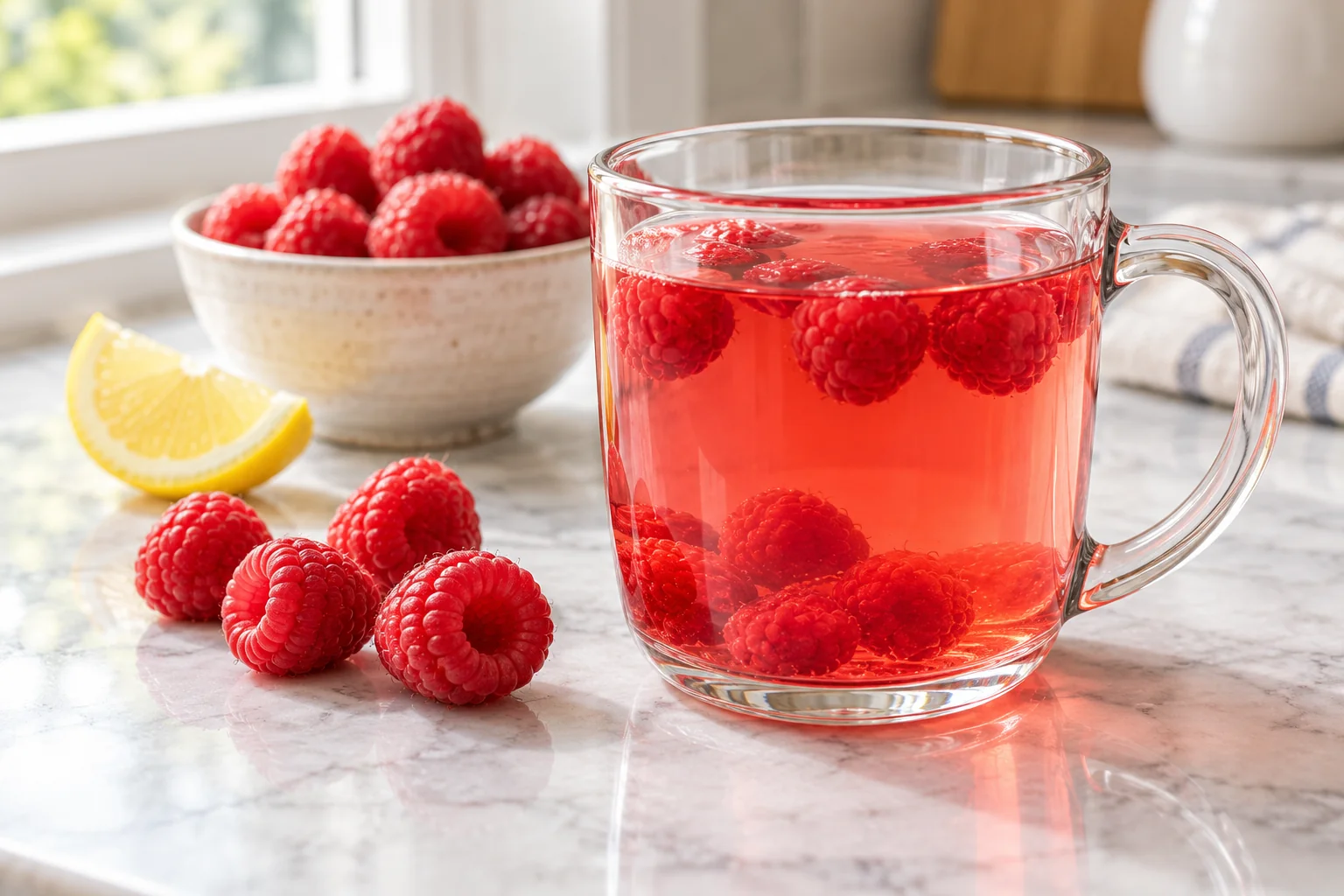
Raspberry fruit tea is a drink made with raspberries, raspberry flavoring or a fruit-based tea blend. It is different from raspberry leaf tea, which uses the leaves of the raspberry plant. Its ingredients determine its flavor, caffeine content and preparation method.
Some raspberry fruit teas are simple infusions of berries and water. Others combine raspberry flavor with hibiscus, rosehips, apple pieces or tea leaves. That explains why one raspberry tea tastes bright and tart while another has the stronger character of black tea.
This guide explains what to look for in a raspberry fruit tea, which benefits are reasonable to expect, and how to make a simple homemade version with real raspberries. The recipe can be served warm or chilled, with optional sweetener.
What Is Raspberry Fruit Tea?
“Raspberry fruit tea” describes a category of drinks rather than one standardized recipe. A homemade version can use fresh or frozen raspberries gently simmered in water. The berries release flavor and color, producing a light fruit infusion that can be strained and served on its own.
Commercial products may use a different formula. Some contain dried fruit, while others rely mainly on flavorings combined with herbs or other ingredients. A raspberry illustration on the package does not establish how much raspberry fruit the blend contains.
For example, Twinings Raspberry & Lemon lists hibiscus, rosehips, blackberry leaves and raspberry flavoring among its ingredients. It illustrates why checking the complete ingredient list is more useful than relying on the product name alone.
Is It Technically Tea?
A drink made only from fruit and water is a fruit infusion. In everyday language, these drinks are commonly called fruit teas. If the product contains black tea, green tea or another tea-leaf base, it is a flavored tea rather than a fruit-only infusion.
Both types can taste of raspberry, but they differ in their ingredients and caffeine content. This distinction becomes useful when choosing an evening drink, following brewing instructions or comparing two products with similar names.
Raspberry Fruit Tea vs Raspberry Leaf Tea
The key difference is the part of the plant used.
| Feature | Raspberry fruit tea | Raspberry leaf tea |
|---|---|---|
| Main raspberry ingredient | Fruit, fruit pieces or raspberry flavoring | Raspberry leaves |
| Typical flavor | Fruity, sometimes tart or sweet | Mild, earthy and slightly astringent |
| Appearance | Depends on the fruit and other ingredients | Usually less intensely fruit-colored |
| Caffeine | Depends on the complete blend | Plain raspberry leaf is naturally caffeine-free |
| Common preparation | Fruit infusion or a packaged blend | Steeping dried raspberry leaves |
Raspberry fruit tea does not necessarily contain raspberry leaves. Conversely, raspberry leaf tea does not usually taste strongly of the berries simply because it comes from the same plant.
Claims associated with raspberry leaf should not be transferred to a fruit drink. The ingredients are different, and a shared plant name does not establish identical effects.
For a separate discussion of the leaf preparation, see our raspberry leaf tea benefits guide.
What Are the Benefits of Raspberry Fruit Tea?
The clearest benefits are practical: flavor, variety and the ability to choose your own ingredients. More specific health claims require evidence about the actual beverage.
1. It Offers a Fruity Way to Enjoy a Drink
A raspberry infusion can add variety to your usual beverage routine. You can serve it warm, lightly chilled or over ice, depending on the weather and your preferences. If you enjoy the flavor, it may be an appealing alternative to another drink you would otherwise choose. Its suitability depends partly on the ingredients and how much sweetener you add.
2. You Can Control Added Sweetness
With a homemade recipe, you decide whether to add sugar, honey or another sweetener. Raspberries naturally contain some sugar, so an unsweetened fruit infusion should not automatically be described as sugar-free. However, you can prepare it without adding extra sweetener.
This also lets you adjust the drink after tasting. A sweeter batch of berries may need less additional sweetness than a particularly tart batch.
3. A Fruit-Only Version Avoids Tea and Coffee Caffeine Sources
The basic recipe below uses raspberries and water, with optional lemon and sweetener. It contains no black tea, green tea, coffee or added caffeine. Commercial raspberry drinks need a separate assessment. A raspberry-flavored black tea still contains its tea-leaf base, while a bottled drink may have ingredients absent from a homemade fruit infusion.
4. It Is Easy to Adapt to Your Taste
You can change the strength of the fruit flavor, serve it warm or cold, and experiment with small additions. This flexibility is useful if you prefer a light infusion rather than a very sweet fruit drink. It also makes it easier to identify which ingredients you enjoy without starting with a complicated blend.
What About Antioxidants and Vitamins?
Raspberries contain nutrients and plant compounds, but a strained infusion is not nutritionally identical to eating the whole berries. The amount transferred into the drink depends on the ingredients, preparation and straining. A raspberry-flavored product may contain little or no raspberry fruit.
Without reliable information about the prepared beverage, avoid treating every cup as a significant source of a particular vitamin or assuming it provides a specific therapeutic effect.
Ingredients for Homemade Raspberry Fruit Tea
This recipe uses a short ingredient list so the raspberry flavor remains the main feature.
Fresh or Frozen Raspberries
Either fresh or frozen raspberries can be used. Choose fresh berries that look sound and smell fresh. Rinse them gently before preparation and remove any damaged or spoiled berries.
For frozen berries, choose a product without added syrup if you want control over sweetness. Follow any preparation instructions on the package. Frozen raspberries can go into the saucepan without being thawed first.
Water
Water provides the base for this simple fruit infusion. Start with the measured amount in the recipe rather than adding a large volume immediately. You can dilute the finished drink after tasting, but correcting an overly weak infusion usually requires more fruit.
The final yield may be slightly lower than the starting water volume because of evaporation and liquid retained by the strained berries.
Optional Lemon Juice
A small amount of lemon juice can brighten the flavor. Taste the raspberry infusion first. If the berries are already tart, lemon may be unnecessary. Add it gradually rather than assuming every batch needs the same amount.
Optional Sweetener
Sugar, honey or another preferred sweetener can be added after straining. Begin with a small amount and stir thoroughly before tasting again. Sweetness can make the fruit flavor seem rounder, but too much can overwhelm the raspberry character. Honey has its own flavor, so it will produce a different result from plain sugar.
Raspberry Fruit Tea Recipe
This recipe makes a light raspberry infusion using real berries. It contains no raspberry leaves or tea leaves. The warm preparation takes about 15 minutes; the chilled version needs additional cooling time.
Print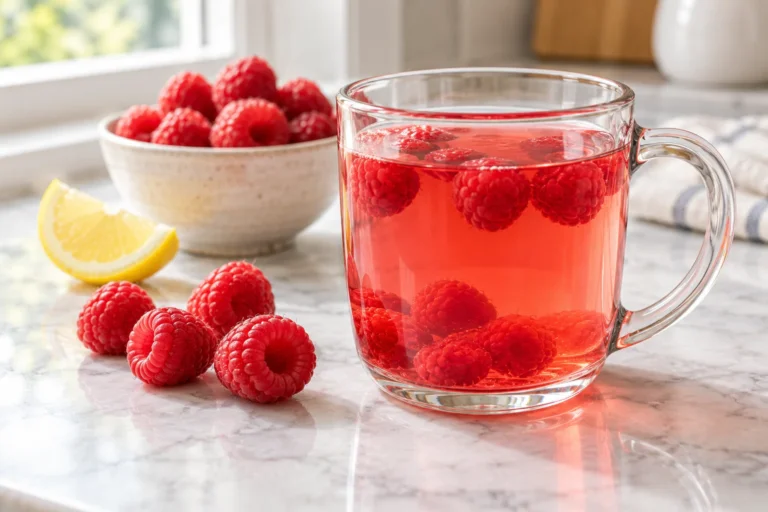
Homemade Raspberry Fruit Tea
A light raspberry fruit infusion made with fresh or frozen berries and water. Serve warm or chill for an iced version; lemon and sweetener are optional.
- Total Time: 15 minutes
- Yield: Approximately 2 small servings 1x
Ingredients
- 125 g fresh or frozen raspberries, approximately 1 cup
- 500 ml water, approximately 2 cups
- 1 teaspoon lemon juice, optional
- 1–2 teaspoons sugar, honey or another sweetener, optional
- Ice, for the chilled version
Instructions
- Gently rinse fresh raspberries and remove damaged berries. If using frozen raspberries, follow the package preparation instructions.
- Put the raspberries and water in a small saucepan.
- Bring to a gentle simmer. Lightly press some berries with the back of a spoon to release their juice.
- Simmer for approximately 5 minutes, keeping the heat gentle.
- Strain through a fine-mesh strainer into a heatproof jug or serving cups.
- Taste before adding optional lemon juice or sweetener. Stir and adjust gradually.
- Serve warm, or cool and refrigerate before serving over ice.
Notes
For a clearer drink, let the liquid drain through the strainer without firmly pressing the pulp. Pressing extracts more liquid but can make it cloudier.
The strained yield varies with evaporation and liquid retained by the fruit. Divide the finished infusion between two small cups.
For a stronger raspberry flavor, increase the fruit in a later batch. Fresh berries can be added at serving as an optional garnish.
Times are estimates. The iced version requires additional cooling time.
- Prep Time: 5 minutes
- Cook Time: 10 minutes
- Category: Drinks
- Method: Simmering
- Cuisine: Contemporary
Keywords: raspberry fruit tea, raspberry fruit tea recipe, homemade raspberry tea, iced raspberry fruit tea
How to Make the Warm Version Taste Better
The balance of fruit, water, tartness and sweetness matters more than making the drink as strong as possible.
Keep the Simmer Gentle
A gentle simmer is enough to soften the berries and release their flavor. A vigorous boil causes faster evaporation and makes the final concentration less predictable. Watch the saucepan, particularly when preparing a small quantity. If the liquid reduces more than expected, add a little water after straining and taste again.
Taste Before Adding Lemon
Raspberry tartness varies between batches. Adding lemon automatically can make an already tart infusion sharper than you intended. Begin with the fruit and water, then use lemon as an optional adjustment.
Adjust One Ingredient at a Time
If the drink seems weak, first consider whether it needs more raspberry flavor. If it tastes too sharp, consider dilution or a small amount of sweetener. Changing the fruit quantity, lemon and sweetener together makes it harder to identify the adjustment you prefer.
How to Make Iced Raspberry Fruit Tea
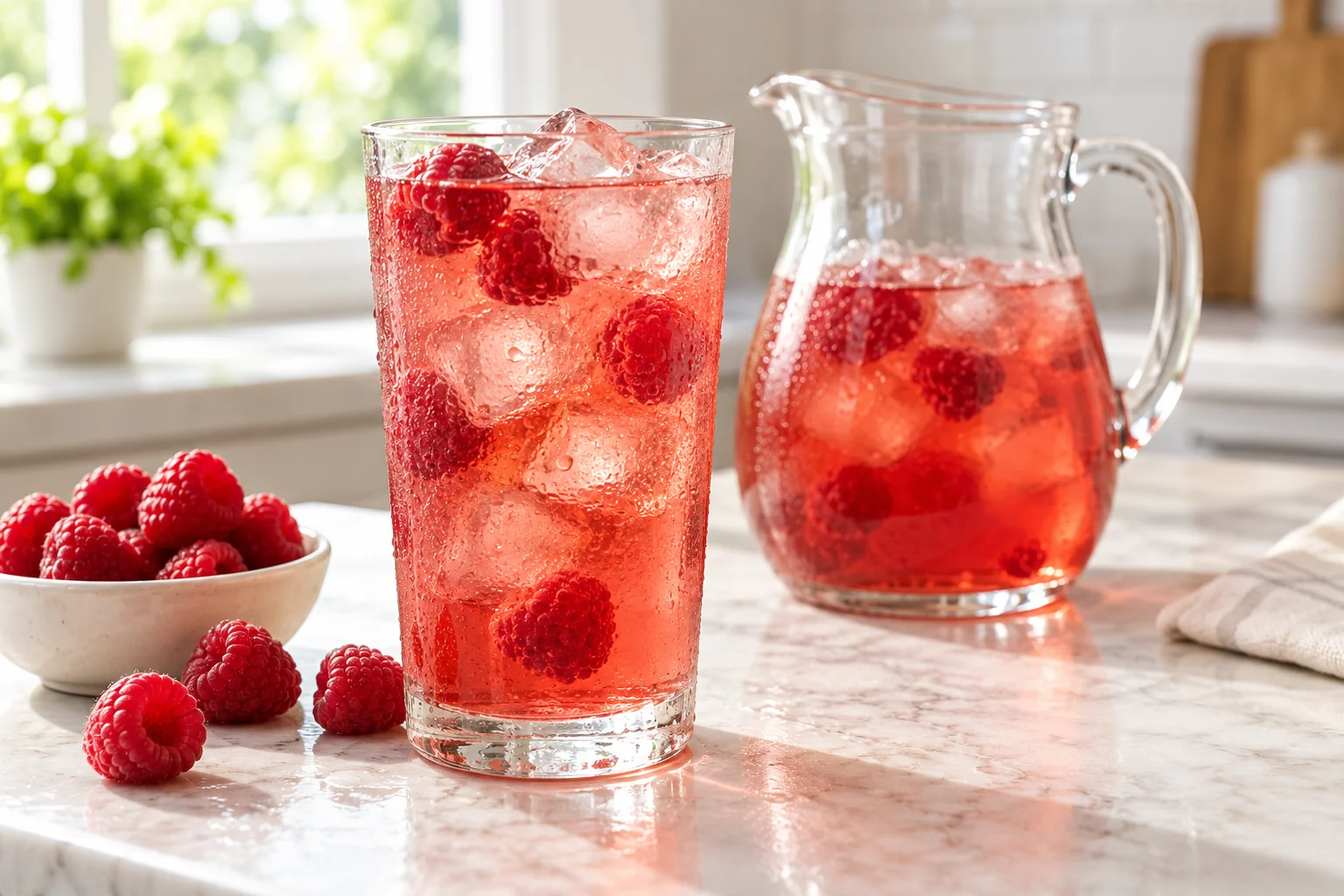
Prepare and strain the raspberry infusion using the recipe above. If you are adding sugar or honey, stir it into the warm liquid so it dissolves more easily. Allow the drink to cool, then refrigerate it before serving.
Fill a glass with ice and add the chilled infusion. Taste after the ice has begun to melt, because the drink becomes more diluted over time. For a stronger iced version, use a little less water in a future batch or serve with fewer ice cubes. Keep track of the adjustment so you can repeat it.
Pouring a very hot infusion over a small amount of ice can melt the ice quickly and produce a weaker drink. Cooling the infusion first gives you more control over the final flavor. Fresh raspberries can be added at serving as an optional garnish.
This method produces a chilled, previously heated infusion. It is different from cold brewing. For other preparation ideas, explore our cold brew herbal tea recipes.
Can You Use Raspberry Fruit Tea Bags?
Yes, but a packaged blend is not necessarily equivalent to the fresh-fruit recipe. Check the ingredients and follow the brewing instructions for that product. A blend containing tea leaves may need different preparation from a fruit-and-herb infusion.
Look for:
- Raspberry fruit or raspberry flavoring.
- Other fruit ingredients, such as apple or citrus peel.
- Herbal ingredients, such as hibiscus or rosehips.
- Black tea, green tea or other caffeine-containing ingredients.
- Added sugar or sweetening ingredients.
You can add fresh raspberries to a prepared tea for extra fruit flavor. Start with a small quantity so you can assess how they work with the existing blend.
For a broader explanation of infusion methods, see our guide to making herbal tea.
Does Raspberry Fruit Tea Have Caffeine?
The answer depends on the complete ingredient list. The raspberry-and-water recipe in this article contains no caffeine source. A commercial raspberry fruit tea may be different.
| Ingredients | What to expect |
|---|---|
| Raspberries and water | No tea or coffee caffeine source |
| Raspberry with a caffeine-free herbal base | Can be caffeine-free; check the whole formula |
| Raspberry with black or green tea | Usually contains caffeine unless the tea is decaffeinated |
| Raspberry with decaffeinated tea | May retain some caffeine |
| Bottled or café raspberry drink | Check its specific ingredients and product information |
The color of the drink does not tell you whether it contains caffeine. A red infusion may be caffeine-free, while another red-colored drink may contain a tea-leaf base.
Hibiscus is a common ingredient in fruity blends. Our hibiscus tea caffeine guide explains the same distinction between a pure herbal ingredient and a mixed product.
Raspberry Fruit Tea Variations
Make the basic infusion first so you have a reference point before changing several ingredients.
Raspberry and Lemon
Add the optional teaspoon of lemon juice after straining, then taste. This variation gives a brighter, sharper drink. If you use lemon peel as a garnish, wash it first and avoid adding large amounts of the white pith, which can contribute bitterness.
Raspberry and Mint
Add a small amount of fresh mint to the serving glass or briefly infuse it in the warm drink. Start lightly. A strong mint flavor can become the main character of the beverage rather than a background addition.
Raspberry and Vanilla
A small amount of vanilla flavor can soften the overall impression of the drink. Use a product suitable for culinary use and begin with a very small quantity. Vanilla extracts and syrups differ in flavor intensity and sweetness.
Raspberry and Hibiscus
Hibiscus can create a deeper-colored, tarter drink. Prepare the hibiscus according to its package directions, then combine a small amount with the raspberry infusion and adjust to taste. This creates a blended drink rather than the fruit-only recipe above.
Our hibiscus tea preparation guide explains its brewing methods.
Common Problems and How to Adjust Them
| Problem | Possible cause | Adjustment |
|---|---|---|
| The drink tastes weak | Too much water for the amount of fruit | Use more fruit or slightly less water in the next batch |
| It tastes too tart | Tart berries, added lemon or a tart herbal base | Omit lemon, dilute slightly or add a little sweetener |
| It is cloudy | Berry pulp pressed through the strainer | Let the liquid drain without pressing firmly |
| The iced version tastes watery | Warm liquid melted the ice quickly | Chill the infusion before serving |
| The raspberry flavor disappears | Strong herbs or flavorings dominate | Reduce the additional ingredients |
| It tastes overly sweet | Several sweetened ingredients combined | Taste before adding more sweetener |
Cloudiness does not automatically mean the recipe went wrong. A drink containing more fruit pulp will look different from a clear commercial infusion. Choose the texture you prefer. Distinguish appearance from freshness: inspect the ingredients and use normal food-handling practices rather than judging a drink only by how clear it looks.
Preparing Raspberry Fruit Tea Ahead
For the best flavor, prepare a quantity you expect to use promptly. If you are making the chilled version, cool the strained infusion and refrigerate it in a clean, covered container. Keep fresh garnishes separate until serving.
Follow the storage instructions for your ingredients. Avoid assuming that a homemade fruit drink has the same shelf life as a sealed commercial product.
You can prepare the infusion ahead of serving, but add ice shortly before drinking. Leaving the drink over ice for a long period makes its strength less predictable as the ice melts. If you make several servings, measure the fruit and water before scaling the recipe. Taste the strained batch before increasing the sweetener.
How to Choose a Commercial Raspberry Fruit Tea
First, decide which type of drink you want: a fruit-forward infusion, a tart herbal blend or a raspberry-flavored tea containing tea leaves. Then compare ingredient lists rather than choosing solely by the front of the box.
A product containing raspberry flavoring may still be enjoyable, but it is different from one made primarily with raspberry fruit. Likewise, hibiscus can provide much of the red color and tartness even when raspberry appears in the product name.
Check whether the blend is sweetened and whether it contains caffeine. Those details are more useful than broad descriptions such as “natural,” “refreshing” or “wellness.” Finally, follow the product’s brewing directions. There is no single water temperature or steeping time that applies equally to every raspberry blend.
FAQS
Is raspberry fruit tea the same as raspberry leaf tea?
No. Raspberry fruit tea uses fruit, raspberry flavoring or a fruit-based blend. Raspberry leaf tea uses the leaves of the raspberry plant. Their ingredients, flavors and commonly discussed uses differ.
What are the benefits of raspberry fruit tea?
Its practical benefits include fruity flavor, beverage variety and control over added sweetness when prepared at home. More specific health benefits cannot be assumed for every blend, particularly because ingredients and preparation methods vary.
Does raspberry fruit tea contain caffeine?
A drink made from raspberries and water contains no tea or coffee caffeine source. Commercial raspberry blends may contain black tea, green tea or other caffeinated ingredients, so check the complete formula.
Can I make raspberry fruit tea with frozen raspberries?
Yes. Choose frozen raspberries without added syrup if you want to control sweetness, and follow any preparation instructions on their package. They can be added to the saucepan without being thawed first.
Can I drink raspberry fruit tea cold?
Yes. Prepare and strain the infusion, cool it, refrigerate it and serve over ice. Allow extra cooling time beyond the preparation time for the warm recipe.
Does raspberry fruit tea taste like raspberries?
A homemade infusion made with real raspberries has a fruity flavor, although its strength depends on the fruit-to-water ratio. Commercial blends may taste more strongly of hibiscus, citrus or other ingredients.
Can I make raspberry fruit tea without sugar?
Yes. Omit the optional added sweetener and taste the drink before deciding whether it needs an adjustment. Raspberries contain natural sugar, so “without added sugar” is more accurate than automatically calling the drink sugar-free.
Can I replace raspberry leaves with raspberry fruit?
You can make a separate fruit infusion with raspberries, but it will not be the same preparation as raspberry leaf tea. Use a fruit recipe for the berries rather than treating the two ingredients as interchangeable.