
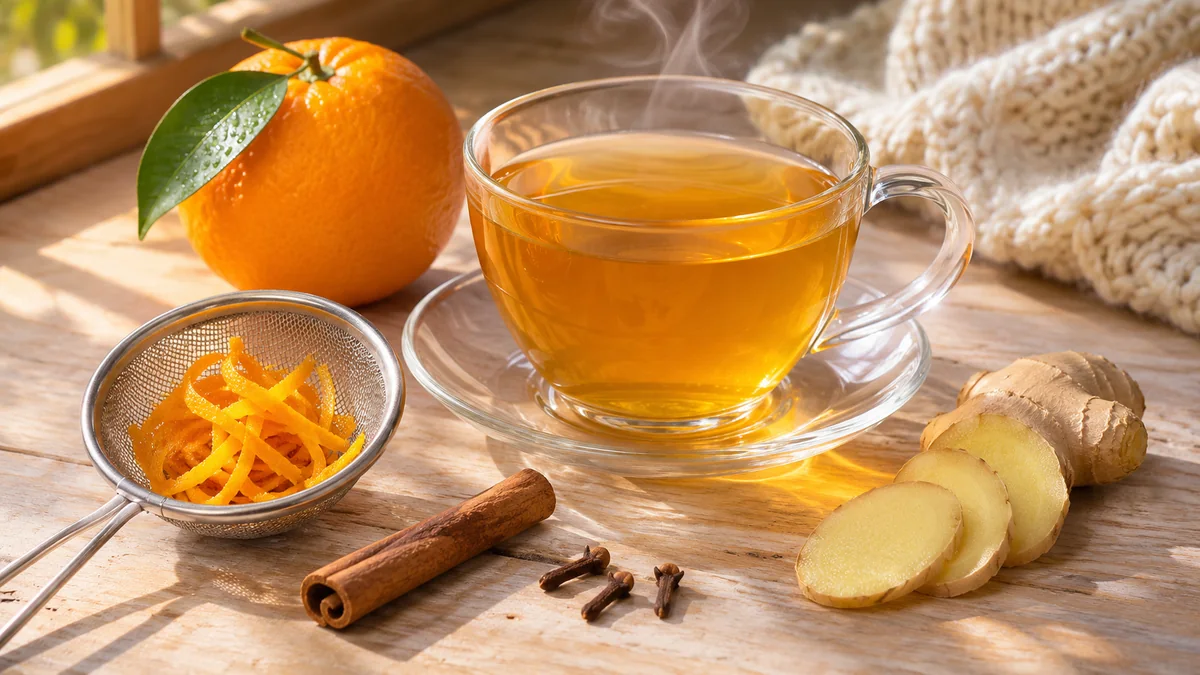
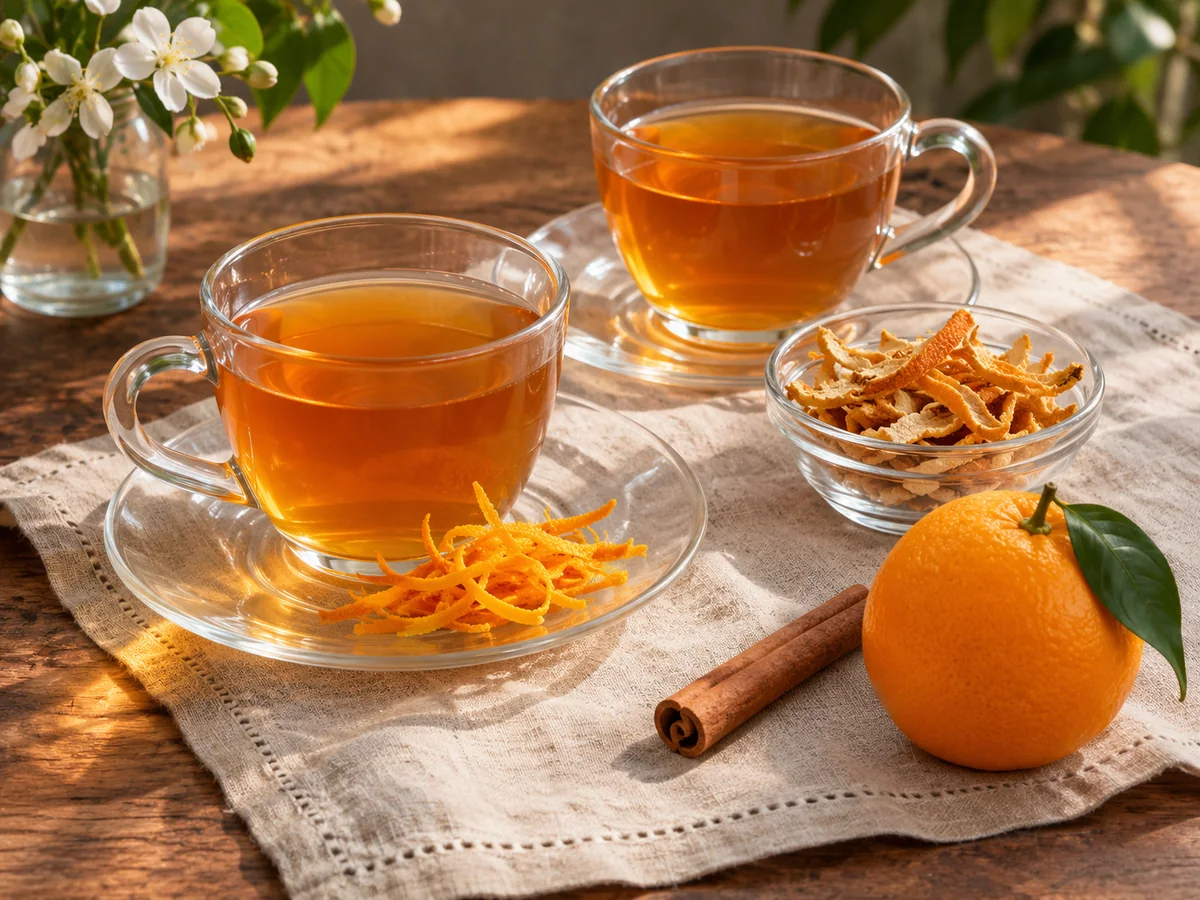
Orange peel tea is a fragrant, lightly citrusy infusion made from the outer peel of sweet oranges. You can use fresh strips or properly dried peel, simmer them with cinnamon and ginger, and strain the drink for a naturally caffeine-free cup. The biggest differences between an excellent orange peel tea and a bitter one are the peel you choose, how much white pith you leave behind and how long you simmer it.
Quick recipe: Simmer thin strips from the outer peel of one large orange in 600 ml (2½ cups) water with one cinnamon stick for 8–10 minutes. Strain, add a little fresh orange juice if you like and serve. The batch makes about two cups, depending on evaporation.
This is a specific citrus-peel recipe, not a general guide to every infusion. For broader preparation methods, start with how to make herbal tea.
What Is Orange Peel Tea?
Orange peel tea is a hot-water extraction of the scented outer rind of an orange, sometimes accompanied by warming spices. It is not the same as orange juice, and an infusion made only with orange peel contains very little of the pulp’s fiber. The fragrance comes mostly from volatile citrus oils, especially limonene, while bitterness can come from the pale inner rind and prolonged heating.
For this recipe choose sweet orange (Citrus sinensis), such as Navel or Valencia. Bitter orange and concentrated bitter-orange extracts are different ingredients and can have different safety considerations. Chinese chenpi is traditionally aged mandarin peel, not simply today’s fresh Navel orange zest dried overnight.
Orange Peel Tea Ingredients and Measurements
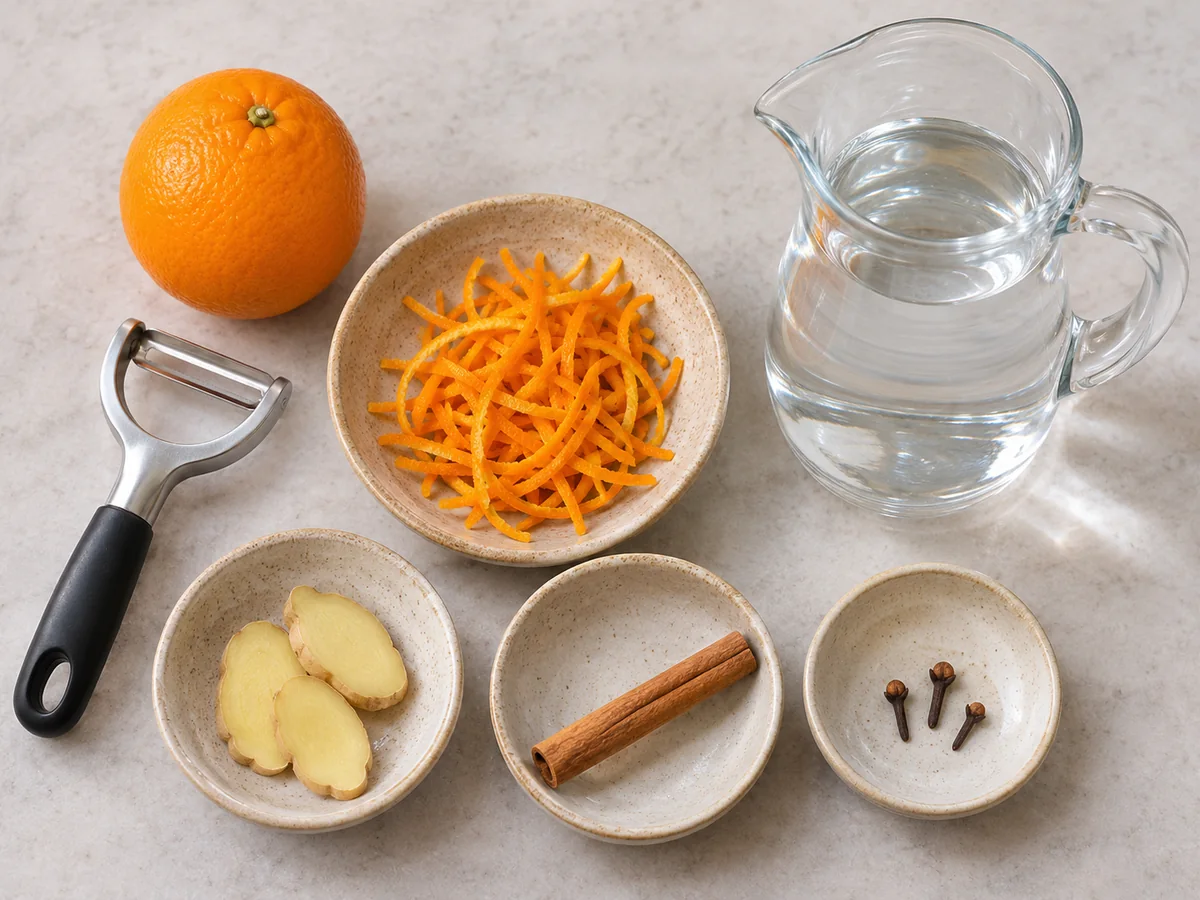
- Thin strips of colored outer peel from 1 large orange, preferably fruit sold for use of its peel and not treated with postharvest wax or fungicides
- 600 ml (2½ cups) drinking water, allowing for some evaporation
- 1 cinnamon stick
- 3 whole cloves, optional
- 3 thin slices fresh ginger, optional
- 2 cardamom pods or one small star anise, optional
- Juice of ½ orange, optional, added after cooking
- 1–2 teaspoons honey or maple syrup for the entire batch, optional
If using dried peel: begin with about 2 tablespoons of dried orange peel for the full two-cup batch. Dried-peel cut and density vary, so this is a kitchen starting point rather than a weight-equivalent conversion. Start with less if the pieces are finely ground or particularly bitter.
How to Wash and Prepare Orange Peels Safely
Because you are putting the peel itself into a drink, choose fresh, sound fruit and inspect the packaging or retailer information. Whenever possible, select oranges specifically intended for zest or whose peels are marked untreated after harvest. Organic labeling does not mean that the fruit needs no washing. Firmly rub the orange under cool running water before cutting and use a clean produce brush if needed; dry with a clean towel. The US Food and Drug Administration advises against using soap, bleach, detergents or commercial produce washes on fruit.
A baking-soda wash is sometimes suggested online with percentages drawn from pesticide experiments performed on apples. Those numbers cannot be assumed to apply to every pesticide on orange peel. Surface washing may not remove residues that penetrated the rind, which is why selecting a fruit suitable for eating the peel is particularly important. See the FDA guidance on preparing produce safely.
Use a vegetable peeler to take thin strips of the colored outer layer, or flavedo, leaving most of the thick white albedo behind. A little white pith will not ruin the tea, but heavy strips usually make it more bitter.
How to Make Fresh Orange Peel Tea
Print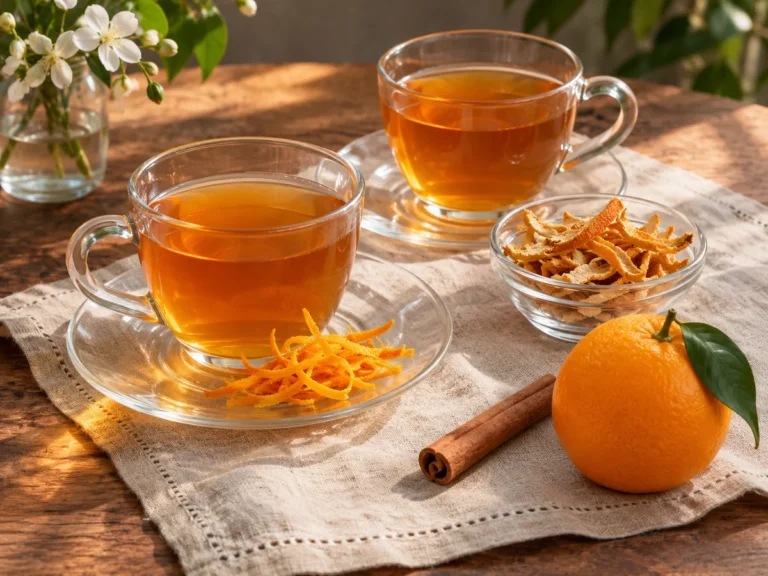
Orange Peel Tea (Fresh or Dried)
A gently simmered, fragrant orange peel tea with optional cinnamon, ginger and cloves; includes the dried-peel alternative.
- Total Time: 15 minutes
- Yield: About 2 cups (approximately 480–550 ml depending on evaporation) 1x
Ingredients
- Thin strips of colored outer peel from 1 large sweet orange, washed and suitable for zesting; OR about 2 tbsp dried orange peel
- 600 ml (2 1/2 cups) drinking water
- 1 cinnamon stick
- Optional 3 whole cloves
- Optional 3 thin slices fresh ginger
- Optional 2 cardamom pods OR 1 small star anise
- Optional juice of 1/2 orange, added after simmering
- Optional 1–2 tsp honey or maple syrup for the batch
Instructions
- Choose a sound orange suitable for using its peel. Rinse under running water while rubbing the surface, then dry; do not use detergent or soap.
- Using a vegetable peeler, remove thin strips of colored orange peel while avoiding as much bitter white pith as possible.
- Combine the peel, water, cinnamon and any optional spices in a small saucepan.
- Bring almost to a boil, reduce to a gentle simmer, cover loosely and simmer for 8–10 minutes.
- Switch off the heat and strain promptly through a fine sieve.
- Stir in optional orange juice and sweetener to taste, then serve hot.
Notes
To use dried peel, start with about 2 tbsp for the full two-cup batch; the flavor depends on peel size and dryness.
A filtered infusion does not supply the fiber contained in uneaten orange peels.
Avoid claiming that washing removes all postharvest treatment residues. Prefer fruit suitable for culinary use of its zest.
For iced tea, cool the strained infusion promptly and serve over ice. Refrigerate leftovers rather than leaving at room temperature.
Do not add medical claims such as curing infections or detoxifying the liver.
A strained unsweetened infusion is low in energy but varies with added juice and sweeteners; do not claim measurable fiber from discarded peels.
- Prep Time: 5 minutes
- Cook Time: 10 minutes
- Category: Drinks
- Method: Simmering
- Cuisine: Herbal infusion
Keywords: orange peel tea, orange zest tea, dried orange peel tea
- Prepare the orange. Wash and dry it. Remove thin ribbons of the colored outer peel, avoiding thick white pith.
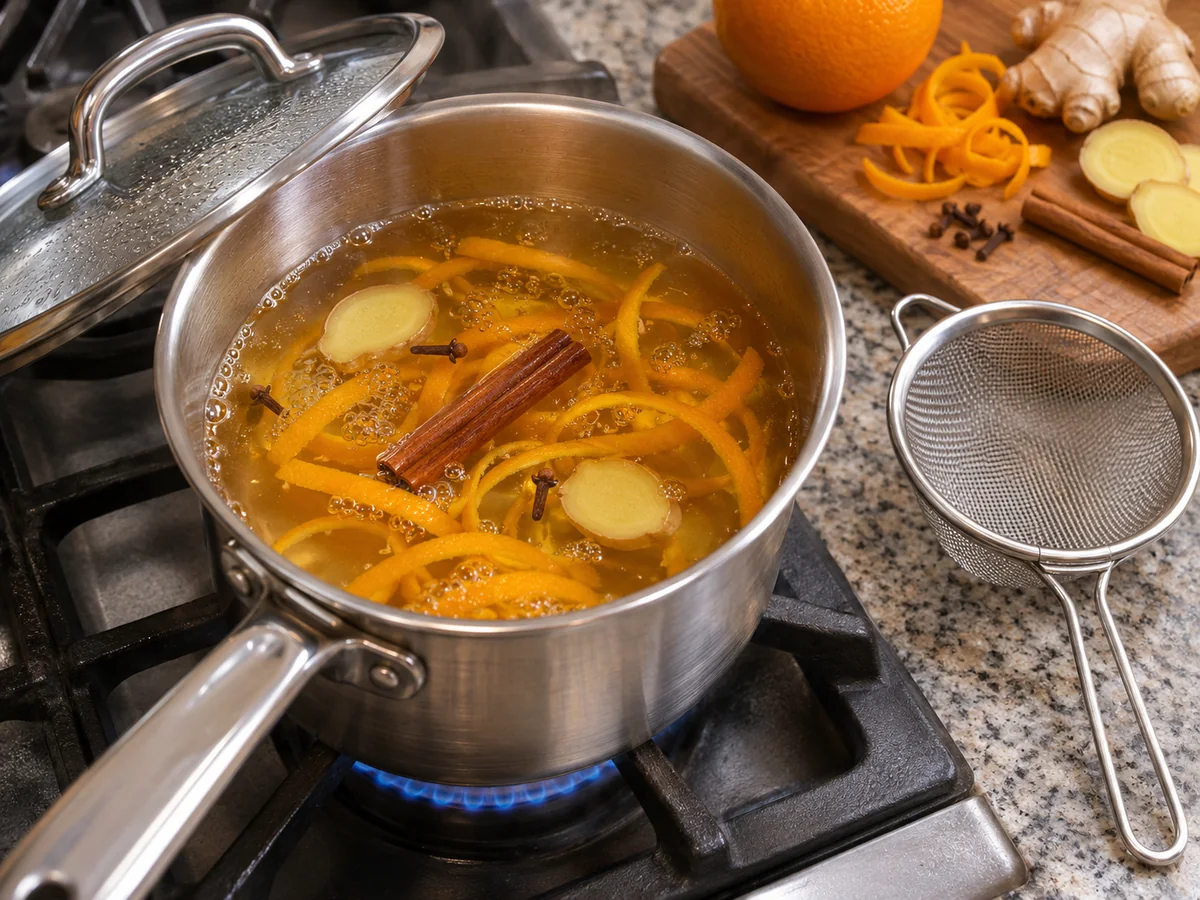
- Combine ingredients. Add the peel to a small saucepan with 600 ml water, cinnamon stick and any optional ginger, cloves or cardamom.
- Simmer gently. Bring almost to a boil, reduce the heat and cover loosely. Maintain a gentle simmer for 8–10 minutes. Vigorous boiling can drive off more aroma and reduce the liquid too far.
- Strain immediately. Turn off the heat and pour through a fine sieve. Do not leave the peel sitting in the finished tea indefinitely: prolonged steeping can intensify bitterness.
- Finish to taste. Add fresh orange juice after removing the pan from the heat if you prefer a rounder, brighter taste. Sweeten lightly only if needed. Serve hot.
The 600 ml starting water yields about 480–550 ml depending on pan size, lid position and simmer intensity. To make an iced version, prepare a more concentrated infusion, cool promptly and serve over ice instead of leaving the saucepan at room temperature for hours.
Fresh vs Dried Orange Peel Tea: What Changes?
| Characteristic | Fresh outer peel | Dried outer peel |
|---|---|---|
| Starting amount for ~2 cups | Thin outer peel of 1 large orange | About 2 tbsp dried strips, adjust to taste |
| Flavor | Bright, fresh, floral, juicy aroma | Deeper, sometimes marmalade-like, potentially more bitter |
| Preparation | Wash, peel and simmer | Inspect for dryness and spoilage, then simmer |
| Storage before brewing | Fresh fruit kept according to condition | Thoroughly dried, airtight in a cool, dry place |
| Best for | Quick tea with a vivid aroma | Convenient winter pantry infusions |
How to Dry Orange Peels for Tea
Wash the fruit first and remove narrow strips of colored zest. Arrange the strips in a single layer so air can circulate. A food dehydrator set according to its fruit/peel instructions is the most predictable method. In an oven, use a low temperature such as 80–95°C (175–200°F), if the appliance can hold it reliably, and check frequently. Depending on thickness and humidity, drying may take roughly 1½–3 hours or longer; do not use time alone as the endpoint. Let the pieces cool and confirm that they are dry and brittle without moist centers. Store only fully dried pieces in a clean airtight jar away from heat and light.
If moisture condenses inside the jar, the peel is not adequately dry and should not be stored long-term. If you see mold, discard the batch. Do not assume a home drying process makes a fruit peel suitable for consumption if it had an unsuitable postharvest treatment.
Why Is My Orange Peel Tea Bitter?
Bitterness usually comes from too much white pith, a high peel-to-water ratio, a very long simmer or leaving the peel in the pot after heating. Remove the pith with a peeler, shorten steeping to 5–7 minutes for very thin strips, and dilute the finished tea. A little juice added at the end can balance flavor without adding much sugar.
Cloves are powerful: three whole cloves are already noticeable in two cups. If you’re making the tea for someone who dislikes medicinal or spicy notes, omit them and begin with orange peel plus cinnamon alone.
Orange Peel Tea Benefits: What the Evidence Actually Says
Orange peel contains aromatic compounds and flavonoids such as hesperidin, nobiletin and tangeretin. Research on isolated compounds or concentrated peel extracts is not interchangeable with clinical evidence that a home-brewed cup of peel tea prevents colds, burns fat, treats diabetes or cures inflammation. The human evidence for those claims from ordinary orange peel tea is insufficient.
A strained infusion is mostly water, aroma and whatever compounds the brewing method extracts. Do not count the fiber in discarded peels as fiber in your finished tea. The strained drink generally provides negligible fiber; any vitamin C and calorie figures vary with the proportion of peel, added juice and sweetener. Adding fresh orange juice can increase sugar and vitamin C, but it does not transform the drink into a medical treatment.
If your priority is simply a soothing caffeine-free beverage, this tea can be one option among the drinks described in our guide to caffeine-free drinks. Anyone with citrus allergy or who notices reflux symptoms after acidic drinks should choose an alternative.
Can Orange Peel Tea Interact With Medicines?
Sweet orange peel prepared as a culinary infusion is not equivalent to grapefruit juice or concentrated bitter-orange supplements. However, citrus products differ chemically and medications vary. If your medicine has specific grapefruit or citrus warnings, or you take drugs with a narrow therapeutic range, ask a pharmacist about the actual ingredient and amount rather than relying on blanket claims that all citrus teas are safe or dangerous. Avoid substituting orange peel tea for prescribed treatment.
Storage and Make-Ahead Tips
Freshly brewed tea tastes best right away. Cool any leftover infusion promptly, refrigerate at 4°C / 40°F or below and use it within about 2–3 days; discard if odor, appearance or flavor changes. If you want to keep the peel for weeks, dry the peel thoroughly before storage instead of leaving prepared tea on the counter. For an alternative brewing style, see cold brew herbal tea recipes.
For another citrus drink that uses a sweet preserve rather than simmered peel, see our Korean honey citron tea recipe with homemade yuja cheong and hot or iced serving options.
FAQS
Can I boil orange peels and drink the water?
Yes, when using suitable, properly washed sweet orange peels. A gentle simmer makes a more fragrant drink than aggressive prolonged boiling.
Can I use regular grocery-store orange peels?
Choose fruit suitable for using the peel, check any postharvest-treatment information and wash thoroughly. Washing does not guarantee removal of all chemicals embedded in the rind.
How much dried peel replaces fresh peel?
Start with about 1 tablespoon dried strips per cup and adjust. Weight and potency vary by how finely peel is cut and how dry it is.
Does orange peel tea contain caffeine?
Plain orange peel tea has no naturally occurring tea-leaf caffeine. Adding black or green tea changes that.
Does orange peel tea provide fiber?
Not in meaningful amounts when the peel is strained out. Fiber remains chiefly in the discarded solids.
Can orange peel tea cure a cold?
No clinical evidence establishes it as a cure. It may be enjoyed as a warm drink, but serious or persistent symptoms need appropriate care.
Can I make it with mandarin peels?
Yes, but mandarin peel has a different aroma and amount of bitterness. Start with less and adjust. Traditionally aged chenpi is a different product.
Can I prepare it without cinnamon or ginger?
Absolutely. Orange peel and water alone make a fragrant, simple infusion.