
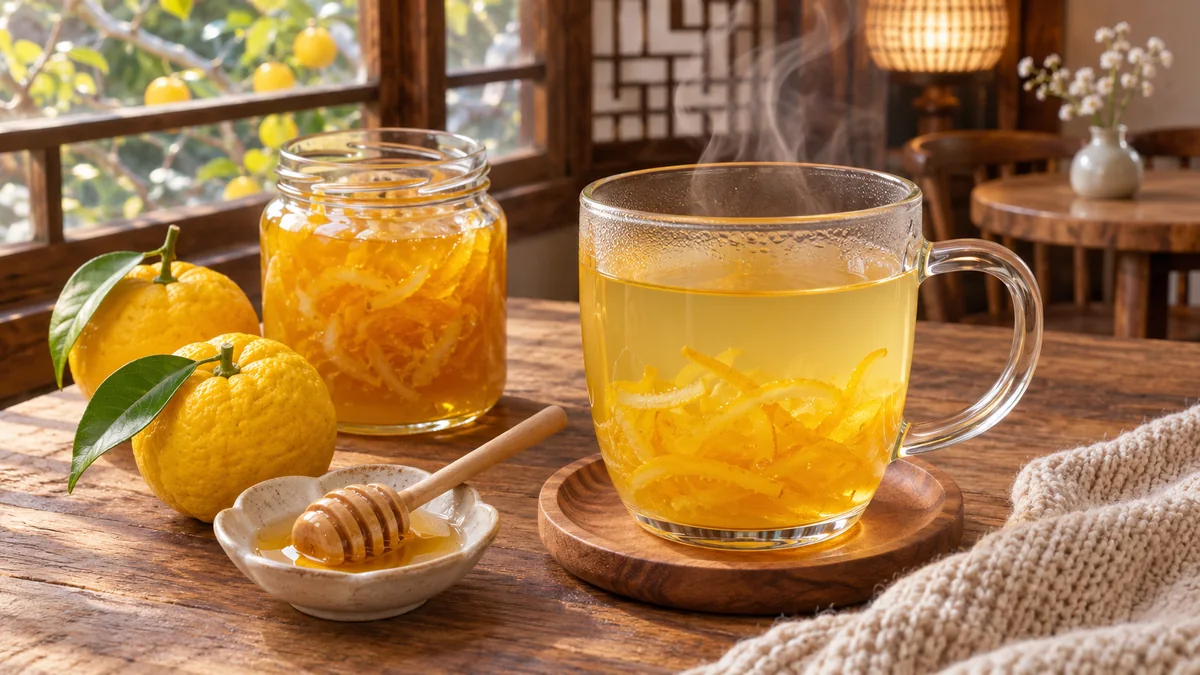
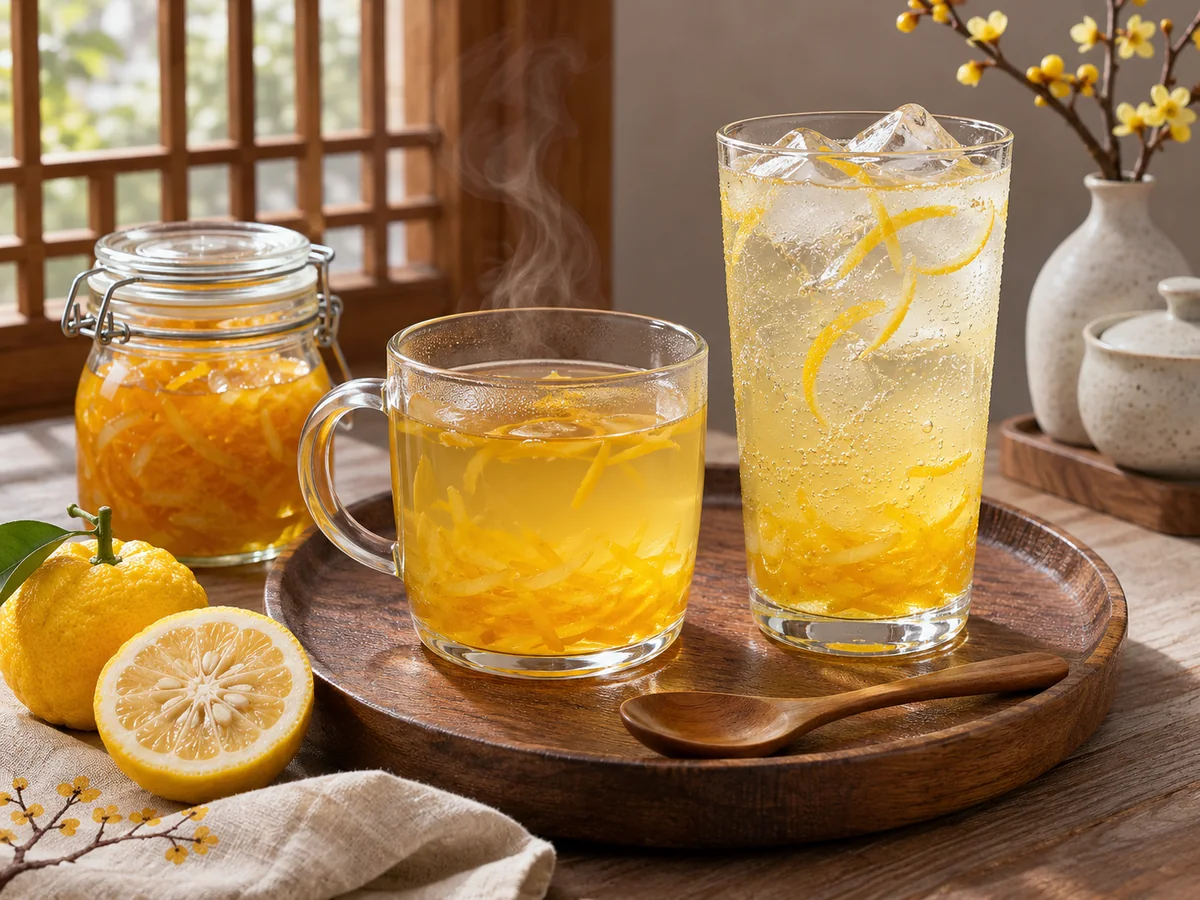
Korean honey citron tea—also called yuja cha or yujacha—is a fragrant Korean drink made by stirring a spoonful of citrus preserve into hot water. The preserve, called yuja cheong, combines thinly sliced fragrant citrus peel and pulp with sugar and honey. It also makes an excellent sparkling iced yuja ade.
Quick answer: Prepare finely sliced yuja/yuzu, including edible peel and juice, and combine it with an equal weight of sugar and honey in total. Refrigerate the mixture in a clean jar until the sugar dissolves and the fruit becomes syrupy. Dilute about 30 g of the base in a cup of hot water to serve. Because this is an uncooked fruit preserve, refrigeration and clean handling matter.
Unlike black or green tea, traditional yuja cha contains no Camellia sinensis leaves and is naturally caffeine-free unless another caffeinated ingredient is added. For other herbal infusions, see our herbal teas guide.
What Is Korean Honey Citron Tea (Yuja Cha)?
Yuja is the Korean name for the fragrant citrus known as yuzu in Japanese. Fresh fruit is sliced or minced and combined with sweetener to make cheong, a concentrated fruit-and-syrup preserve. A spoonful of that mixture can be dissolved in hot water for yuja cha or added to sparkling water for yuja ade.
Commercial jars sold as “honey citron tea” vary substantially. Some contain sugar syrups, citric acid, gelling agents or only modest amounts of honey. A homemade version lets you control the fruit and the sweetener blend, but its texture and storage properties will not be identical to a commercial, processed shelf-stable preserve.
Yuja vs Yuzu vs Meyer Lemon: What Should You Use?
| Fruit | What it is | Flavor | Best use |
|---|---|---|---|
| Yuja / yuzu | Citrus junos, Korean and Japanese names | Very fragrant, floral, tart and aromatic | Traditional yuja cheong |
| Meyer lemon | A sweeter, floral lemon variety | Gentler tartness, less intense aroma | Accessible US substitution |
| Mandarin zest | Another citrus, not yuja | Sweet, bright aromatic peel | Small accent alongside Meyer lemon |
If using regular thick-skinned lemons, remove some excess white pith to limit bitterness. Do not call an ordinary lemon preserve “authentic yuja” when yuja is not actually used; describe it as a substitution.
Ingredients for Homemade Yuja Cheong
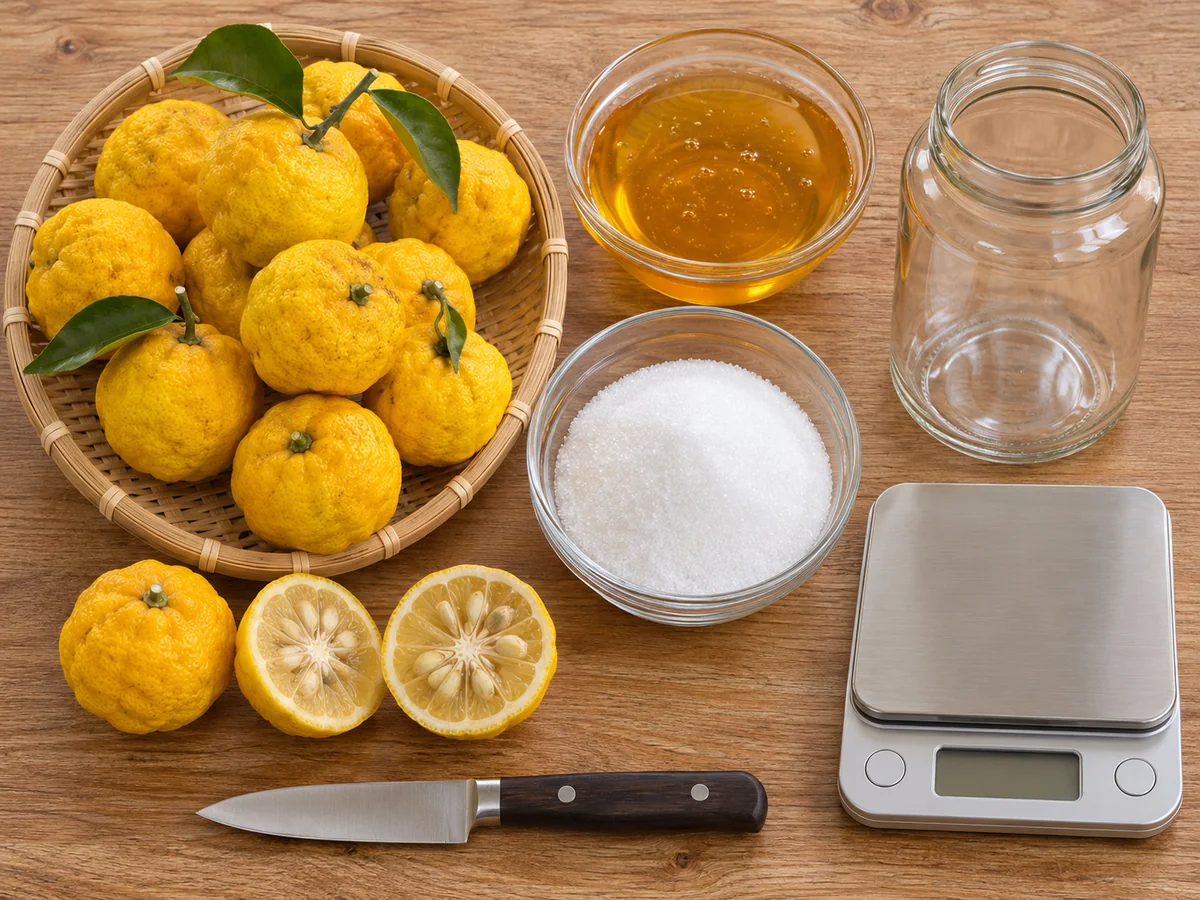
- 500 g prepared yuja or yuzu (peel, pulp and collected juice after removing seeds; purchase roughly 650–700 g whole fruit, depending on yield)
- 350 g white granulated sugar
- 150 g mild honey (acacia or floral honey)
- Optional 25 g fresh ginger, thinly sliced, plus about 25 g additional sugar or honey if you want to keep the same ingredient-weight ratio
Using 70% granulated sugar and 30% honey among the added sweeteners balances the flavor: honey alone can be very assertive and may darken the preserve. The combined sweetener weighs 500 g, matching the 500 g prepared citrus. This 1:1 ratio is a recipe proportion, not proof that a raw preserve is shelf-stable or safe for room-temperature storage. A shelf-stable preservation process would require separate validation.
Tools: kitchen scale, sharp knife, clean cutting board, clean food-safe jar with lid, citrus brush and a clean, dry spoon.
How to Make Yuja Cheong Step by Step
Print
Homemade Korean Honey Citron Tea Base (Yuja Cheong)
A fragrant refrigerated Korean-style yuja or yuzu preserve made with citrus, sugar and honey; dilute it into a hot yuja-cha or sparkling iced yuja-ade.
- Total Time: 24 hours 35 minutes
- Yield: Approximately 1 kg prepared mixture, about 33 portions of 30 g before storage losses 1x
Ingredients
- 500 g prepared yuja or yuzu (peel, pulp and juice combined, weighed after seeds and excessive pith are removed)
- 350 g white granulated sugar
- 150 g mild floral or acacia honey
- Optional 25 g thinly sliced fresh ginger and 25 g extra sugar or honey for that variation
Instructions
- Thoroughly wash a food-safe jar, lid, cutting board, knife and spoon, and dry clean utensils.
- Select sound citrus suitable for zesting, wash under running water while rubbing and dry carefully.
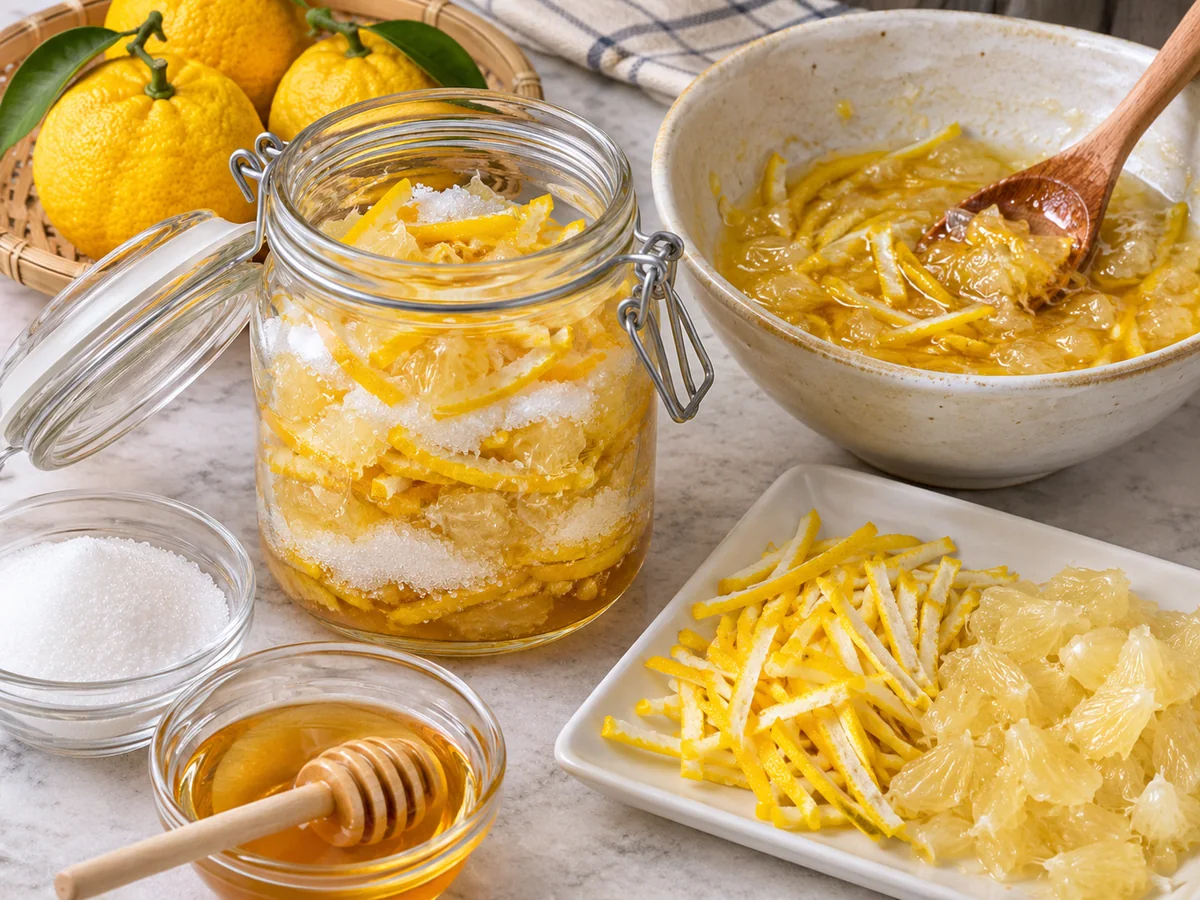
- Cut the fruit over a bowl to save juice; remove seeds and excess thick white pith, then slice the peel into fine 1–2 mm strips and chop the pulp.
- Weigh 500 g total prepared peel, pulp and juice, adjusting the combined sweetener if the prepared fruit weighs differently.
- Mix with 350 g sugar and 150 g honey until evenly coated; optionally add ginger and proportional additional sweetener.
- Transfer to a clean covered jar and refrigerate immediately at 4°C / 40°F or below.
- During the first 24–48 hours in the refrigerator, stir occasionally with a clean spoon until the sugar dissolves. Use as a chilled citrus concentrate.
Notes
For hot yuja-cha, dissolve about 30 g (1 1/2–2 tbsp) concentrate in 240 ml (1 cup) hot water and enjoy edible peel strips.
For iced yuja-ade, dissolve 30 g concentrate in 1–2 tbsp warm water, add ice and 180–240 ml cold sparkling water, then stir gently.
This is a raw refrigerator mixture, NOT a shelf-stable canned preserve. Keep cold and use small batches conservatively, aiming for about 1–2 weeks; freeze portions for longer storage.
Do not serve honey-containing foods to infants under 12 months.
Discard if mold, unexpected bubbling, unusual alcoholic smell or other spoilage occurs. Do not attempt to salvage it by brief heating.
If substituting Meyer lemon and mandarin zest, label it as a variation rather than authentic yuja.
The amount of sugar per 30-g portion depends on the distribution of fruit and syrup; no lab-tested nutrition values are available.
Refrigerated flavor-melding: 24–48 hours; keep chilled throughout.
- Prep Time: 35 minutes
- Refrigerated citrus maceration: 24 hours
- Cook Time: 0 minutes
- Category: Drink concentrate
- Method: Refrigerated maceration
- Cuisine: Korean
Keywords: yuja cheong, Korean honey citron tea, yuja cha, yuzu tea
- Prepare your jar and tools. Wash the jar, lid, board and utensils thoroughly. Make sure everything is clean and free of old residue. Follow the jar manufacturer’s sanitation guidance; boiling a jar alone does not make a raw preserve shelf-stable.
- Wash and dry the citrus. Choose sound fruit suitable for using its peel. Rinse under running water while rubbing the exterior and dry it well. Do not use soap or detergent.
- Remove seeds and trim pith. Cut the citrus over a bowl to capture the juice. Discard seeds, trim only excessive thick white pith and slice the fragrant peel into very thin 1–2 mm strips. Chop the pulp.
- Weigh after preparation. Weigh the combined sliced peel, chopped pulp and juice; use exactly 500 g for the recipe. Adjust the combined sugar and honey if your prepared citrus amount differs.
- Combine. Mix the citrus with 350 g sugar and 150 g honey using a clean spoon, until evenly coated. Add ginger and extra sweetener if using the gingery variation.
- Refrigerate immediately. Transfer to the clean jar, cover and place it in the refrigerator at 4°C / 40°F or below rather than leaving cut citrus on the counter for 24–48 hours.
- Allow flavors to meld. During the first 24–48 hours in the refrigerator, stir occasionally with a clean utensil until the sugar is dissolved. The mixture becomes more syrupy over several days.
The fruit-to-sweetener ratio and final concentration depend on how much juice is released. The batch is approximately 1 kg by ingredient weight before serving, not a precise finished 1-liter volume. Use a large enough jar for mixing.
How to Make Hot Korean Honey Citron Tea
- Put 1½–2 tablespoons (around 30 g, depending on the preserve’s texture) yuja cheong into a mug.
- Add 240 ml (1 cup) hot water, around 75–85°C / 167–185°F. Stir until dissolved.
- Taste before adding more sweetener. The edible peel strips can be enjoyed at the bottom of the mug.
Water that is comfortably hot works well; there is no health reason to insist on a precise “vitamin-preserving” serving temperature. The more important distinction is flavor and safe storage of the preserve.
How to Make Sparkling Iced Yuja Ade
- Dissolve 30 g yuja cheong in 1–2 tablespoons of warm water in the bottom of a serving glass.
- Add plenty of ice, then top with approximately 180–240 ml cold sparkling water.
- Stir gently once to keep the fizz. Add a thin citrus wheel if desired.
The iced drink makes a tangy alcohol-free citrus refresher. For another caffeine-free variation without using a raw citrus preserve, consider the drinks in our caffeine-free drinks guide.
Homemade vs Store-Bought Korean Citron Tea
| Feature | Homemade version | Store-bought jar |
|---|---|---|
| Citrus | Whole prepared yuja or substitution | Quantity varies by brand |
| Sweetener | Measured sugar and honey | Could contain sugar, corn syrup or honey in varying proportions |
| Texture | Fruit strips in syrup, often loose | May be thicker due to fruit pectin or additives |
| Storage | Always refrigerated; small batches | Follow unopened and after-opening label directions |
| Control | You choose fruit type and sweetness | Convenient, consistent, often ready to use |
Do not assume every jar sold by a particular retailer has identical ingredients or pricing. Read the exact label in front of you and compare the fruit percentage, added sugars and use-by instructions rather than relying on old product reviews.
How Long Does Homemade Yuja Cheong Last?
Because this homemade version uses raw cut fruit, honey and sugar without a validated canning or pasteurization process, do not store it at room temperature. Refrigerate immediately and make small batches. For conservative home preparation, aim to finish within roughly 1–2 weeks while keeping it continuously cold and using a fresh clean spoon for every serving. The exact safe shelf life is not established by the ingredient ratio alone. If you need longer storage, freeze small portions promptly instead of treating this recipe as shelf-stable jam.
Discard the whole batch if you notice mold, unexpected bubbling, unusual alcoholic or sour odor, or other signs of spoilage. Do not try to rescue an actively fermenting or moldy jar by briefly reheating it. For standard refrigeration principles, see CDC guidance on food-safety and refrigeration.
Honey, Infants and Other Safety Considerations
Never give any drink or food containing honey to a child under 12 months of age. Honey can expose infants to spores associated with infant botulism, even when it is marketed as pure or raw. See the CDC guidance on honey and infants. People with citrus allergies should avoid this beverage, and people who monitor dietary sugar should account for the concentrated sweetener in every spoonful.
Calories and Sugar Per Serving
The 350 g granulated sugar contributes approximately 1,400 kcal, and 150 g honey adds roughly 450 kcal before the fruit. Because extraction, moisture and the fruit solids in each spoonful vary, it is not possible to assign a precise carbohydrate count to one 30 g serving without measuring the finished mixture. An illustrative estimate of about 58 kcal and 14.5 g sugar per 30 g serving is not a laboratory measurement or a guaranteed nutrition value. For your own batch, weigh the finished preserve and calculate the nutrients from the specific ingredients and actual serving size.
Using Yuja Cheong Beyond Tea
Try a small spoonful in unsweetened yogurt, stirred into cooled herbal tea or diluted into sparkling water. It can also flavor a citrus mocktail. If you prefer a simple infusion that uses ordinary orange zest instead of a sweetened preserve, see our herbal tea brewing guide and the forthcoming orange peel tea recipe in this citrus series.
For a lighter citrus infusion without a sweet jarred base, try orange peel tea made from fresh or dried peel, which can be brewed with cinnamon and ginger.
FAQS
Is Korean honey citron tea the same as yuja cha?
Yes. “Honey citron tea” is a common English retail name for the Korean citrus drink called yuja cha or yujacha.
Is yuja the same fruit as yuzu?
Yuja and yuzu are Korean and Japanese names for Citrus junos, though marketed products can contain other citrus fruits.
Does Korean citron tea have caffeine?
Traditional fruit-and-honey yuja cha does not contain tea leaves and is naturally caffeine-free.
Can I substitute Meyer lemons?
Yes. Meyer lemons make a more accessible but different-flavored version. A touch of mandarin zest can bring additional aromatic complexity.
Can I make this with 100% honey?
Yes for flavor, but the result will taste more like honey and have different viscosity. It does not remove the need for refrigeration or guarantee safety.
Can I leave the jar on the counter to ferment?
Not with this recipe. Keep the raw fruit mixture refrigerated throughout; a home ratio alone does not establish a safe room-temperature fermentation or preserving procedure.
Can infants drink honey citron tea?
No. Any version containing honey is unsuitable for children younger than 12 months.
Why is my homemade citron tea less jelly-like than store-bought?
Commercial products may contain concentrated fruit pectin or added thickeners. A homemade raw fruit mixture is usually looser and can vary from batch to batch.