
Creatine water weight is an increase in body water that can occur after you start taking creatine, especially during a loading phase. It is different from gaining body fat. The amount varies, and a higher scale reading does not tell you how much is water, muscle, fat, or an ordinary daily fluctuation.
If your weight rose soon after adding creatine to your drink, start with the timing and context rather than assuming your eating plan stopped working. This guide explains what the research can tell you, what it cannot measure for you, and how to make sense of the change.
Creatine Water Weight at a Glance
| Question | Short answer |
|---|---|
| Does creatine cause weight gain? | It can, particularly early in supplementation. |
| How much will I gain? | There is no fixed personal prediction; not every change is water alone. |
| Is the extra weight fat? | A scale increase does not establish fat gain. |
| Will it disappear after a week? | Not necessarily; some weight can remain during use. |
| Should I try to flush it out? | Avoid dehydration, excessive water intake, or water-loss products. |
Why Does Creatine Cause Water Weight?
Creatine is stored largely in muscle and helps supply energy for short, intense efforts. Increasing muscle creatine can also affect body water. A 2021 review in the Journal of the International Society of Sports Nutrition explains that short-term fluid changes occur in some studies, while longer-term results are less uniform.
The location of that water should not be oversimplified. In a controlled study of 32 resistance-trained adults, creatine increased body mass and total body water without changing overall fluid distribution. That finding is a useful reminder: “every extra pound is water inside muscle cells” is too definite a description for an individual person.
The phrase “water weight” describes one possible contributor to a number on the scale. It does not diagnose swelling, explain every change in appearance, or tell you whether a supplement is appropriate for you.

How Much Water Weight Does Creatine Add?
The NIH Office of Dietary Supplements notes that some strength-training studies found about 1 to 2 kg of total body-weight gain in a month with creatine monohydrate. That is roughly 2 to 4 pounds, but the figure is total weight, not a measured promise of water-only gain. It should not become a rule that everyone must gain that amount.
Two people using the same product may see different scale changes. If you also changed your training, meals, or other supplements, a before-and-after weigh-in cannot isolate the contribution of creatine.
An Example of How to Interpret the Scale
Imagine that your weight is 150 pounds before starting and 152 pounds a week later. The useful conclusion is “my measured weight changed by two pounds.” It is too soon to label the entire difference either fat or new muscle. Write down what changed and keep the measurement conditions comparable.
Also resist the reverse assumption: gaining less than an online example does not prove that a supplement is ineffective. Your response is not a test you pass by reaching a certain weight.
How Long Does Creatine Water Weight Last?
A change can appear during the first days, especially with loading, but it is not necessarily a brief adjustment that disappears while you continue the same routine. The Australian Institute of Sport’s creatine guidance explains that additional body mass can remain while muscle creatine is elevated. After stopping supplementation, muscle stores and associated weight generally return toward baseline over about four to six weeks.
Treat that as a broad timeframe, not a countdown. It does not mean every pound gained during training will disappear, or that you should stop and restart repeatedly to control a daily reading.
| Stage | What it can mean | What it does not prove |
|---|---|---|
| First days of a loading phase | An early water-related increase is possible. | Every person will gain the same amount. |
| Following weeks | Your ongoing routine matters when interpreting weight. | Extra water must disappear on a set day. |
| After stopping | A gradual change over several weeks is possible. | All weight gained during training was temporary water. |
Water Weight, Bloating, or Fat Gain?
These terms are often mixed together, but they answer different questions. Water weight concerns fluid; digestive bloating describes a feeling or change around the abdomen; body fat is another component of body mass. A bathroom scale reports their combined weight rather than separating them.
Digestive symptoms deserve their own consideration. A randomized study in male soccer players compared two 5 g servings with a single 10 g serving and placebo. Its dose-related gastrointestinal findings are a reason not to treat a large single serving as equivalent to smaller portions for comfort. They do not establish a personal diagnosis or a universal dosing plan.
If your main concern is an uncomfortable stomach rather than a number, record the symptom itself: when it started, how long it lasts, and what you took. That is more useful to a professional than calling every sensation “water retention.”
How to Track Changes Without Chasing Daily Numbers
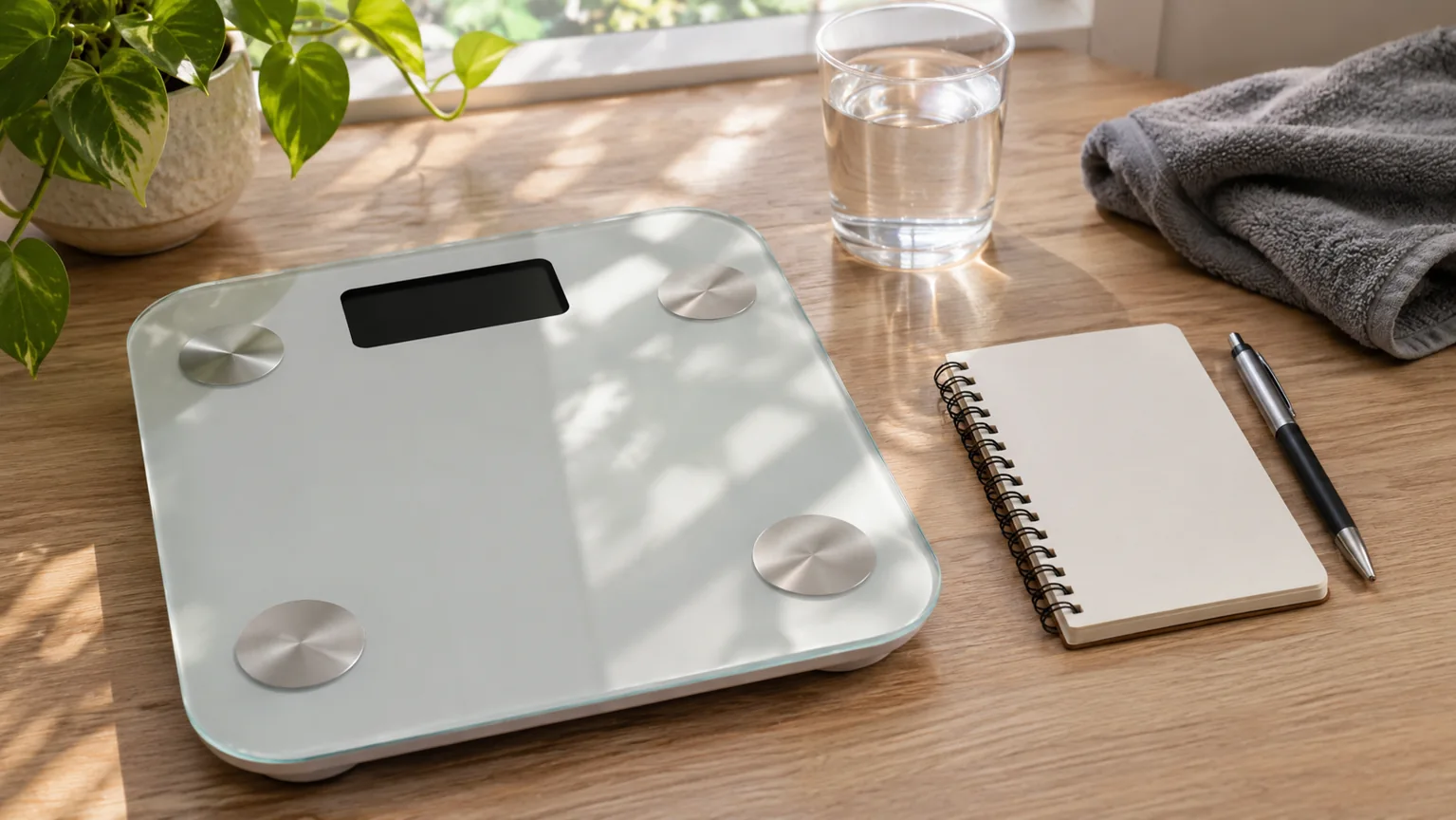
Keep a simple record rather than reacting to each weigh-in. Use the same scale, choose comparable conditions, and note the date you began the product. Include the serving information on the label and any change in your training or eating routine.
A short note can separate an observation from an interpretation: “weight up, no symptoms, started a new supplement” is clearer than “I gained fat.” You can also record the training goal that led you to consider creatine in the first place.
If weighing makes you anxious or encourages restrictive eating, you do not need to intensify tracking. A clinician or registered dietitian can help choose a more useful way to assess your goals.
Does Skipping the Loading Phase Prevent Weight Gain?
A loading phase is not the only way to increase muscle stores. In Hultman and colleagues’ muscle-loading study, 3 g per day produced a more gradual increase in muscle creatine over 28 days. This supports the distinction between fast loading and gradual accumulation; it does not prove that a lower daily amount prevents all water-related weight changes.
Do not use extra servings to speed through an uncomfortable adjustment. Bring the label and your goals to a sports dietitian or clinician if you want help deciding whether to use a loading strategy at all.
How Much Water Should You Drink With Creatine?

There is no single number of extra bottles that applies to everyone who adds creatine to a drink. Exercise conditions, sweating, and individual health still matter. Neither deliberate dehydration nor forcing large amounts of water is a sensible response to an unwanted scale increase.
Start with the broader context in our daily water-intake guide. If you are comparing beverage types, our guide to electrolyte drinks without sugar explains those options. An electrolyte drink should not be presented as a way to cancel creatine water weight.
If you want a practical drink-preparation guide rather than an explanation of scale changes, see our creatine coffee recipe, with hot, iced and protein-latte options and notes on caffeine.
If you have been prescribed a fluid restriction, follow your healthcare team’s advice. A general fitness article cannot replace an individual fluid plan.
Does Creatine Help With Weight Loss?
Creatine is not a weight-loss drink or a direct fat-burning treatment. A 2024 systematic review of body-composition trials found small average changes in body mass, fat-free mass, and body-fat percentage, with results influenced by training. Fat-free mass includes water, so it should not be read as newly built muscle alone.
Ask which goal you are actually evaluating: a lower scale number, improved training, or a change in body composition. Those are different outcomes. A supplement should be judged against a clear goal rather than a promise that it will do all three.
Likewise, protein coffee is a separate drink choice, not an interchangeable version of creatine. Keep track of what is in each product rather than treating every gym-related drink as the same supplement.
When to Get Advice Instead of Assuming It Is Water
Mayo Clinic’s creatine guidance distinguishes findings in healthy people taking recommended amounts from the more limited evidence in people with kidney disease. If you have a kidney condition, take medicines, are pregnant or breastfeeding, or are choosing a supplement for a child, get individualized advice before use.
New or persistent swelling, ongoing digestive symptoms, or a weight change that worries you should be assessed rather than automatically attributed to creatine. A sudden change accompanied by shortness of breath needs urgent medical assessment.
Operation Supplement Safety also cautions that claims for alternative creatine forms have limited support and recommends attention to product quality. Look for credible independent certification rather than paying more solely for a “no water retention” promise.
FAQS
Does creatine make you gain weight?
It can. Early scale changes may involve additional body water, especially when starting with a loading phase. Over a longer training period, muscle changes can also contribute. A higher scale reading by itself does not show that you gained fat.
How much water weight does creatine add?
There is no fixed amount. Around 1 to 2 kg, or roughly 2 to 4 pounds, is a commonly discussed body-weight change, but it is not a guaranteed water-only gain. Responses differ, and ordinary fluctuations can overlap with supplement-related changes.
How long does creatine water weight last?
It is not necessarily limited to the first week. Some additional weight can remain while muscle creatine stores stay elevated. After stopping, stores generally move back toward baseline over several weeks; the timing and size of any scale change vary.
Is creatine water weight the same as belly fat?
No. Body water, digestive bloating, and body fat are different things. A scale cannot tell them apart. A change after starting a supplement should not automatically be described as either belly fat or harmless water retention.
Does creatine help you lose weight?
Creatine is not a weight-loss treatment. It can support some training goals, but that does not mean it directly burns fat or makes scale weight fall. Consider strength, body-composition goals, and the overall eating and activity plan separately.
Can I avoid water weight by skipping the loading phase?
Skipping loading produces a slower rise in muscle creatine stores and may make early changes less abrupt. It does not guarantee zero change in body water or weight. Discuss the appropriate approach with a qualified professional instead of chasing the lowest scale reading.
How much water should I drink with creatine?
There is no universal extra-water quota for everyone taking creatine. Fluid needs depend on activity, climate, sweating, health, and any prescribed fluid restriction. Do not try to force water weight off by dehydrating yourself or drinking excessive amounts.
Should I stop creatine if the scale goes up?
A scale increase alone is not enough to make that decision. Review the timing, product, amount, symptoms, and your goal with a clinician or sports dietitian. New swelling or persistent symptoms need assessment rather than an assumption that the supplement explains them.
The Practical Takeaway
An early scale increase after starting creatine is not automatically fat gain. Keep the explanation proportionate: water may contribute, individual responses differ, and a scale does not reveal body composition. Use your goals, symptoms, and professional guidance to make decisions instead of trying to force a quick drop in water weight.
What question about creatine and drink routines would you like us to explain next? Share it in the comments.
3 thoughts on “Creatine Water Weight: How Much, How Long & Is It Fat?”