
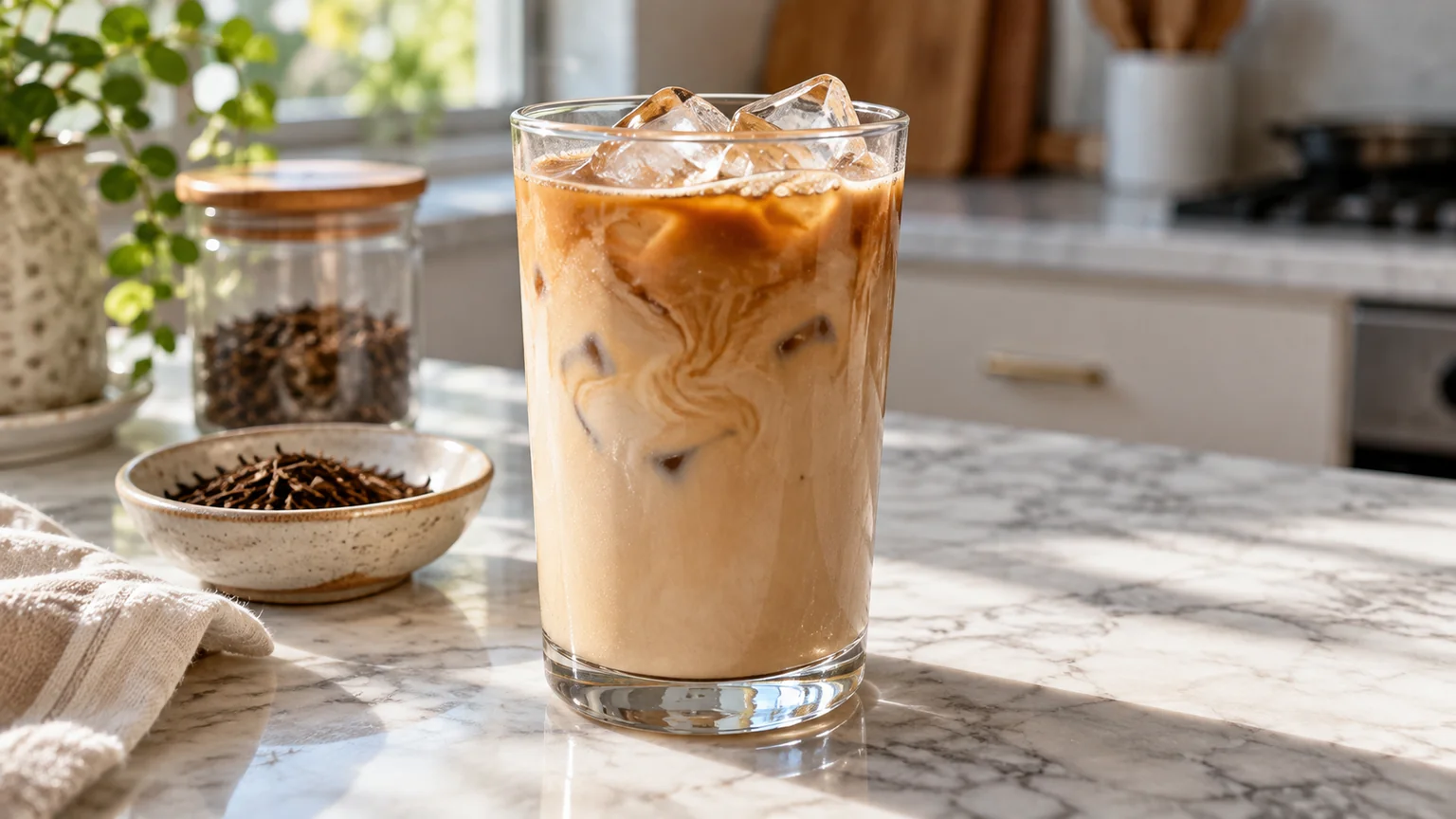
This iced hojicha latte recipe combines 3 g of roasted tea powder, ¼ cup hot water, ¾ cup cold milk and ice. Whisk the powder with the water, pour it over the milk and ice, then stir. Add a little maple syrup if you like. It takes about five minutes once your water is ready, and a handheld milk frother works in place of a bamboo whisk.
The flavor is toasted, mellow and gently earthy, with a creamy finish. Unlike an iced coffee, this latte gets its tea flavor from hojicha, a roasted Japanese tea. You can make the drink with dairy milk or oat milk, adjust the sweetness, and keep the tea flavor noticeable without loading the glass with syrup.
Jump to the recipe card, or read the ingredient and mixing tips below if you are using hojicha powder for the first time.
What Is an Iced Hojicha Latte?
An iced hojicha latte is a cold milk drink flavored with hojicha. The roasted tea is brown rather than bright green, so the finished latte usually looks tan or light brown. Its aroma is often described as toasted nuts, caramel or roasted grain. Those tasting notes do not mean the powder contains nuts, caramel or added sugar; check the actual ingredient list for allergens and additions.
Hojicha is available as loose tea, finely ground powder and instant products. This recipe uses unsweetened hojicha powder intended for drinks. The fine tea particles stay in the cup instead of being strained out. That gives a stronger tea presence than casually dropping a tea bag into a large glass of cold milk.
It is a useful next drink to try if you enjoy tea lattes but want a different flavor from matcha. Matcha generally tastes greener and more vegetal; hojicha emphasizes roast. Neither drink requires coffee, although some cafés add an espresso shot as a separate variation.
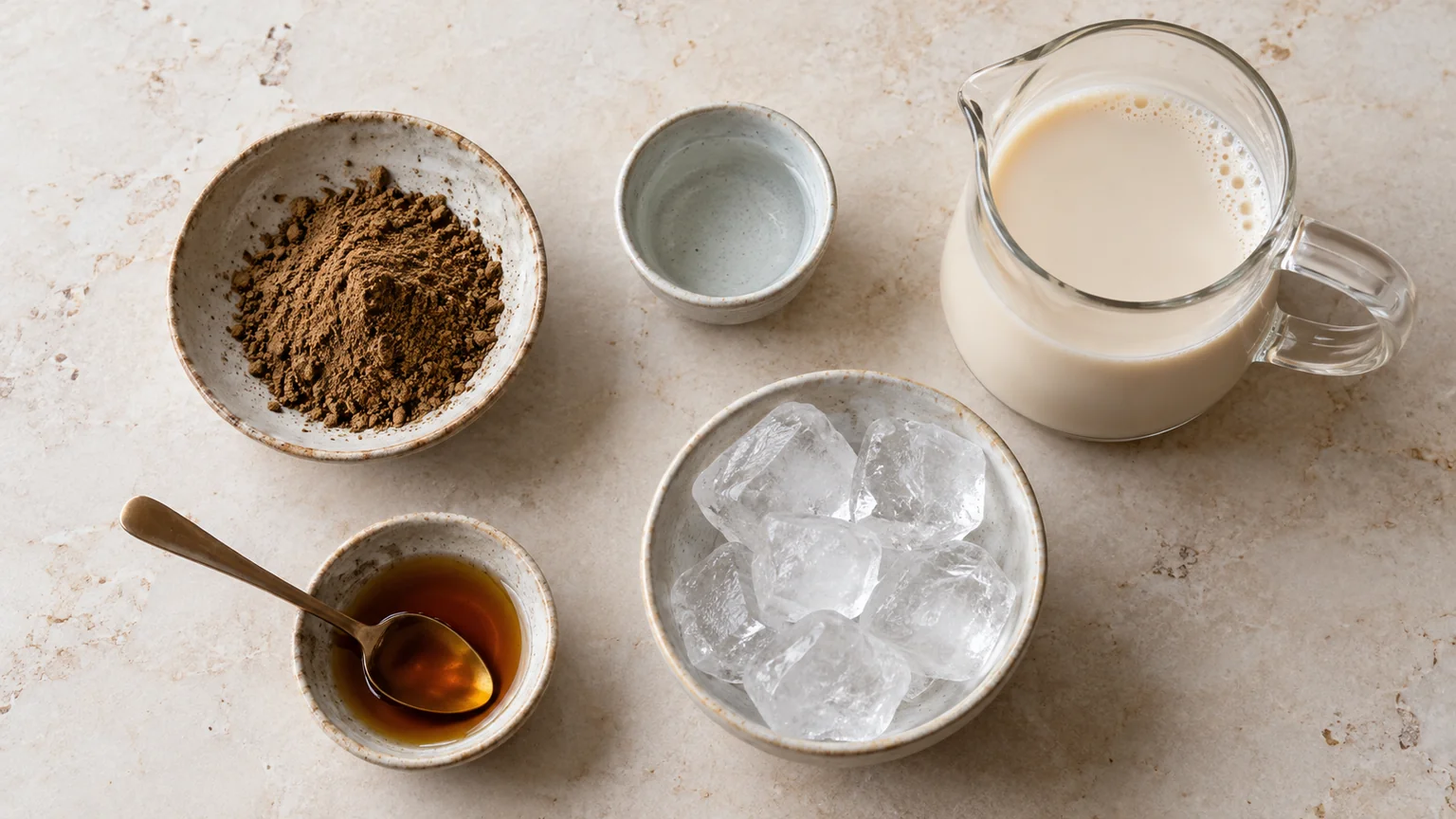
Iced Hojicha Latte Ingredients
| Ingredient | Amount for one serving | Why it matters |
|---|---|---|
| Unsweetened hojicha powder | 3 g, approximately 1½ teaspoons | Provides the roasted tea flavor; teaspoon weight varies |
| Hot water | ¼ cup / 60 ml | Helps disperse the powder before adding milk |
| Cold milk or oat milk | ¾ cup / 180 ml | Creates the creamy base |
| Ice | About ½ cup | Chills the drink; add enough to fit your glass |
| Maple syrup or simple syrup | 1 to 2 teaspoons, optional | Adds sweetness without undissolved sugar granules |
Choose Fine Hojicha Powder
Look for a product labeled as hojicha powder, with roasted tea as the ingredient rather than sugar as the first ingredient. A sweetened instant latte mix can already contain milk powder and flavorings. Using that mix in the same quantity as pure tea powder changes both the sweetness and the strength.
Weighing the powder is the most repeatable approach. Different grinds pack differently into a teaspoon, so treat the spoon measurement as approximate. Start with the measured recipe before increasing the tea: adding extra powder can make the drink thicker or dustier as well as stronger.
Pick Milk You Enjoy Drinking Cold
Whole dairy milk gives a rounded texture. Oat milk pairs comfortably with the toasted flavor and is a practical dairy-free option. A barista-style oat milk often has a fuller texture, but it may contain added ingredients or sugar. Read the package rather than assuming every carton behaves the same way.
Soy milk can give a substantial body, while almond milk often produces a lighter drink. Coconut milk adds a distinct flavor that can compete with the tea. Use a milk you already enjoy, then adjust the powder in a later glass if needed. There is no need to buy several cartons just to make the first serving.
Keep Sweetener Optional
Try the latte before adding syrup, especially if your oat milk is already sweetened. Maple syrup and simple syrup mix readily into a drink. If you prefer honey or granulated sugar, stir it into the warm tea concentrate before assembling the glass.
For a vanilla variation, replace the maple syrup with a small amount of our homemade vanilla syrup. Start with one teaspoon, stir and taste. Vanilla should support the roasted tea instead of covering it.
How to Make an Iced Hojicha Latte
1. Sift the Powder
Set a small fine-mesh strainer over a heatproof bowl or measuring jug. Add the powder and gently push it through with a dry spoon. This breaks up compacted lumps before they meet water. If your powder is already very fine and loose, you may need less effort, but sifting is a useful first step when you have had clumpy lattes.
2. Make a Smooth Tea Concentrate
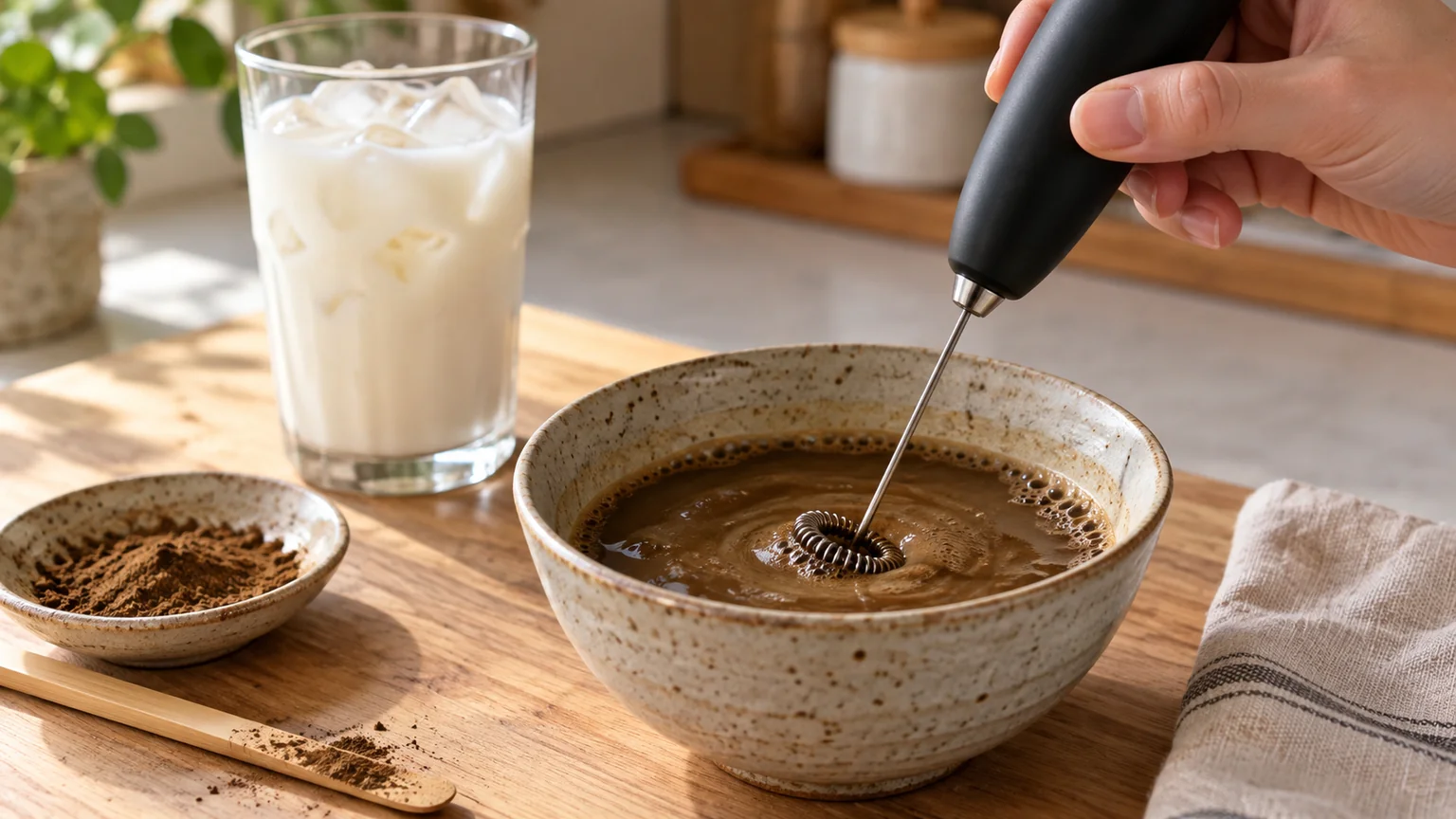
Measure ¼ cup of hot water. Around 175°F or 80°C is a useful starting point for many latte powders; follow the product directions when they differ. Add about one tablespoon of that water to the powder and stir into a paste. Gradually add the rest while whisking, scraping the bottom and sides of the bowl.
The aim is an even suspension with no dry pockets. Tea powder does not dissolve completely like sugar, so avoid chasing a perfectly clear liquid. A smooth-looking concentrate can still settle later. The tea should be thoroughly wetted and mixed, not cooked in a saucepan.
3. Add Ice and Cold Milk
Choose a glass that holds at least 12 fluid ounces so there is room for the milk, concentrate and ice. Put in roughly ½ cup of ice, then add the cold milk. The drink contains about one cup of liquid before the ice, so a small eight-ounce glass will be crowded.
Let the warm concentrate cool briefly while you arrange the glass. Pour it slowly over the ice and milk. You may see attractive brown swirls or temporary layers, but distinct layers are optional. Milk type, temperature and how fast you pour all influence their appearance.
4. Stir Before Drinking
Stir from the bottom of the glass to distribute the tea through the milk. Taste, then add optional syrup if needed. Sip while cold and give the glass another gentle stir if particles settle. Layering makes a pretty serving moment; mixing gives a more consistent flavor from the first sip to the last.
Can You Make It Without a Bamboo Whisk?
Yes. A small handheld electric milk frother is convenient. Use a tall-sided heatproof container, start with the coil submerged, and mix briefly so you do not spray the concentrate around the kitchen. Keep the frother head below the liquid surface, then stop it before lifting it out.
A small kitchen whisk also works. A teaspoon can handle the paste method, although it takes more care to smooth out lumps. Gradually pressing the paste against the side of the bowl is more useful than stirring dry powder into a full glass of cold milk.
If you prefer a shaker, first mix the powder with a little warm water in an open heatproof vessel. Let it cool before shaking with milk in a suitable container. Do not seal hot liquid in an ordinary jar or shaker. Follow the equipment instructions and leave room for the liquid to move.
Iced Hojicha Latte Recipe
Iced Hojicha Latte
A creamy iced hojicha latte made with roasted tea powder, cold milk and ice. Use oat milk if preferred and sweeten to taste.
- Total Time: 5 minutes
- Yield: 1 serving (about 240 ml before ice) 1x
Ingredients
- 3 g unsweetened hojicha powder (about 1 1/2 teaspoons; density varies by brand)
- 1/4 cup (60 ml) hot water, approximately 175 F (80 C), or as directed on the powder package
- 3/4 cup (180 ml) cold milk or oat milk
- 1/2 cup ice cubes, or enough to fill the glass loosely
- 1 to 2 teaspoons maple syrup or simple syrup, optional
Instructions
- Sift the hojicha powder into a small heatproof bowl or measuring jug.
- Add 1 tablespoon of the measured hot water and stir into a smooth paste. Whisk in the remaining water until evenly mixed.
- If using a handheld frother, keep the coil submerged and blend briefly. Stir in optional syrup.
- Put the ice in a 12-ounce or larger glass and pour in the cold milk.
- Let the concentrate cool briefly, then slowly pour it over the milk and ice. Stir well before drinking.
- Taste and adjust the sweetness. Serve immediately; stir again if the tea particles settle.
Notes
Use unsweetened finely ground hojicha powder, not loose leaves or a sweetened instant latte mix. Powder settles naturally; it does not dissolve like sugar. Teaspoon weights vary, so weigh 3 g when possible. Follow package guidance if the manufacturer recommends a different water temperature. Preparation takes about 5 minutes once the water is ready. Use cold milk for assembly. No precise caffeine or nutrition amount is claimed because products vary.
- Prep Time: 5 minutes
- Cook Time: 0 minutes
- Category: Drinks
- Method: Whisking
- Cuisine: Japanese-inspired
Keywords: iced hojicha latte recipe, hojicha latte with oat milk, how to make iced hojicha latte
How to Adjust the Strength
| What you want | Adjustment | What to keep in mind |
|---|---|---|
| A milder first glass | Use 2 g powder with the same milk and water | Roast intensity differs by product |
| A creamier drink | Use a fuller-bodied milk | Adding more milk also softens the tea flavor |
| A stronger tea flavor | Try 4 g powder in a later serving | More powder may increase sediment and caffeine |
| Less sweetness | Omit syrup and choose unsweetened milk | The powder itself should also be unsweetened |
Change one variable at a time. If you increase powder, reduce water and switch milk all at once, it becomes difficult to identify why the next drink tastes different. The basic recipe gives you a starting point to compare with your own preferred balance.
Large ice cubes melt more slowly than small pieces under similar conditions. However, ice size cannot rescue a weak concentrate poured over warm milk. Start with cold milk and serve promptly. If your latte tastes watery only after sitting for a while, dilution is a more likely issue than the initial powder amount.
Easy Variations
Iced Hojicha Latte With Oat Milk
Use ¾ cup cold oat milk in the main recipe. Shake the carton according to its label before measuring because some products separate during storage. Taste before adding sweetener. The oat flavor can complement the tea without needing another syrup.
Vanilla Cold Foam Topping
Make the latte first, then spoon a small amount of foam over the mixed drink. Our cold foam without heavy cream guide explains the milk-based method. Keep the topping modest so the drink remains tea-forward. A foam layer changes the total milk amount and any nutrition calculation.
Pumpkin Spice Hojicha Latte
For a seasonal version, whisk one teaspoon of pumpkin purée, a small pinch of pumpkin pie spice and one teaspoon of maple syrup into the concentrate. Add the milk and ice as usual. Taste before increasing the purée because extra pumpkin can make the texture heavier and more sediment-prone.
This is a homemade variation, not a verified copy of a café formula. Pumpkin spice alone gives spice aroma; pumpkin purée adds actual pumpkin and body. They do different jobs, so choose the variation you want rather than adding large amounts of both.
Can You Use Loose-Leaf Hojicha Instead?
You can make a hojicha milk drink from leaves, but loose tea is not a spoon-for-spoon replacement for powder. Powder stays in the beverage; leaves are steeped and strained. The resulting flavor and strength can differ even when both products are labeled hojicha.
For a leaf-based variation, follow the supplier’s brewing directions and use the resulting tea as a concentrate suited to a milk drink. Cool it before pouring over cold milk and ice. Do not grind coarse leaves and assume the texture will match a finely milled latte powder. If you want to reproduce this recipe closely, use the specified powder.
Does an Iced Hojicha Latte Have Caffeine?
Yes, hojicha is made from tea and should not be assumed caffeine-free. The amount depends on the product, plant material, serving size and how much powder you use. This recipe does not assign an exact caffeine figure to an unspecified brand.
Do not infer the caffeine level from the drink’s brown color or smooth taste. Roasting, flavor and caffeine are different characteristics. If you need to limit caffeine closely, ask the supplier for information about the exact powder and your intended quantity.
Our matcha versus coffee comparison explains why serving details matter when comparing drinks. For this latte, adding more powder changes the tea amount even when the glass size stays the same.
For serving-size comparisons and measured reference data, read our hojicha caffeine content guide. It explains the difference between brewed hojicha, whole tea powder and lattes.
Calories and Sweetness: What Changes the Numbers?
The main variables are milk, sweetener and toppings. A latte made with unsweetened almond milk and no syrup will have a different nutrition profile from one made with sweetened oat milk, maple syrup and cold foam. A single generic calorie figure would hide those differences.
For a more useful estimate, calculate the quantity of your chosen milk from its nutrition label, then add the actual sweetener and toppings you use. Account for the powder if its label provides information. Ice changes dilution, not the amount of milk or syrup originally added.
Enjoy it as a beverage rather than a weight-loss treatment. Choosing less syrup can reduce added sugar compared with your own sweeter version, but that does not establish a special fat-burning effect from hojicha.
Troubleshooting Your Latte
| Problem | Likely explanation | Try this |
|---|---|---|
| Dry clumps | Powder was not evenly wetted | Sift, make a paste, then add the remaining water |
| Gritty texture | Coarse powder or an overly heavy serving | Use beverage-grade fine powder and weigh the amount |
| Weak flavor | Too much milk or melted ice for the tea amount | Keep the measured ratio and start with cold milk |
| Bitter or harsh taste | Powder amount, roast style or product preparation | Follow the package and try a smaller powder serving |
| Tea at the bottom | Natural settling of suspended particles | Stir before drinking and occasionally while sipping |
| No visible layers | Pouring, temperature or milk differences | Serve mixed; layers are not a measure of recipe success |
Make-Ahead and Serving Tips
For the best texture, assemble one glass just before drinking. You can measure the dry powder in advance and keep it dry in a small sealed container. Keep the milk refrigerated according to its label, then mix the concentrate when you are ready.
If you prepare a concentrate ahead, cool it promptly, cover and refrigerate it. Rewhisk before use because powder can settle. For a simple home routine, prepare only what you plan to use that day rather than relying on a long storage promise for every powder and container.
Add ice when serving. Storing an assembled latte over ice makes the next glass less predictable because melting changes the ratio. Follow safe handling guidance for your chosen milk, and do not leave a milk-based drink sitting at room temperature for extended periods.
If you want another café-style tea drink with a different flavor, try our osmanthus milk tea or peach oolong tea. Each uses a different tea or flavor base, so follow its own preparation method rather than substituting ingredients blindly.
Sources and Ingredient Guidance
Powder quantity and milk ratios vary by supplier. Hojicha Co.’s iced latte directions illustrate whisking powder separately before adding it to cold milk, and PAPER & TEA’s preparation guide provides another powder-based method. This article uses its own stated ratio; follow the package if your product requires different handling.
FAQS
What does an iced hojicha latte taste like?
It has a roasted, gently earthy tea flavor with creamy milk. Depending on the tea, its aroma may suggest toasted nuts or caramel. Those tasting notes do not establish that nuts, caramel or sugar are ingredients.
How much hojicha powder should I use for an iced latte?
This recipe starts with 3 g powder, 60 ml hot water and 180 ml cold milk. Teaspoon weights vary by brand. Weigh the powder when possible, then adjust a later serving to your taste.
Can I make an iced hojicha latte without a bamboo whisk?
Yes. Use a handheld frother or a small kitchen whisk. Making a paste with a little of the measured water first helps prevent dry lumps. Do not seal hot liquid in an ordinary shaker.
Is oat milk good in an iced hojicha latte?
Oat milk is a practical option for a creamy dairy-free version. Use a product you enjoy cold and check whether it is sweetened before adding syrup. Different cartons give different textures.
Is hojicha powder the same as matcha?
No. Both are tea products, but hojicha is roasted and usually brown, while matcha is green with a different flavor profile. Use the powder specified by the recipe for the intended taste.
Is an iced hojicha latte caffeine-free?
No. Hojicha is tea and should not be assumed caffeine-free. The amount varies with the product and quantity used. Ask the supplier for information about your exact powder if caffeine limits matter to you.
Why does hojicha settle at the bottom?
Fine tea particles remain suspended rather than dissolving like sugar, so some settling is normal. Mix thoroughly before assembly, stir before drinking and stir again while sipping if necessary.
Can I use loose-leaf hojicha instead of powder?
You can make a leaf-based milk drink, but leaves need steeping and straining and are not a spoon-for-spoon substitute for powder. Follow the supplier’s brewing directions and adjust the milk to the resulting concentrate.
Can I make it without added sugar?
Yes. Omit syrup and choose an unsweetened milk and unsweetened hojicha powder. The finished nutrition profile still depends on the ingredients you use.
Can I prepare this latte in advance?
It is best assembled just before serving. Measure dry ingredients ahead if useful, keep milk refrigerated and add ice at serving time. Rewhisk a refrigerated concentrate before using because tea particles can settle.