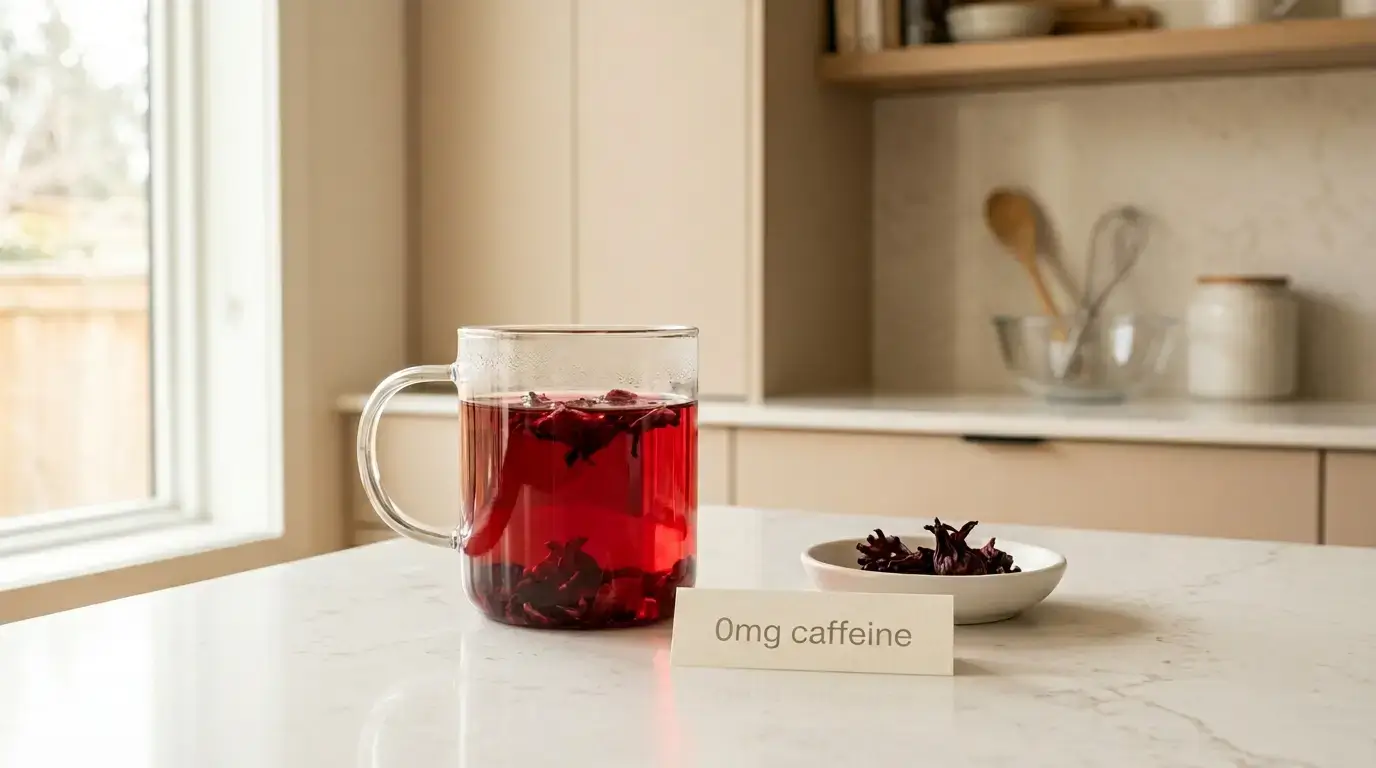
No — hibiscus tea contains zero caffeine. This is true regardless of preparation method, steeping time, or whether you drink it hot or cold. Hibiscus tea is a true herbal infusion made from the dried calyces of the Hibiscus sabdariffa flower — not from tea leaves — and caffeine is only found in plants that produce it as a natural pesticide. Hibiscus sabdariffa is not one of them.
Why Hibiscus Tea Has No Caffeine
Understanding why hibiscus tea is caffeine-free requires a simple but important distinction: the difference between true teas and herbal infusions.
True teas — black tea, green tea, white tea, oolong, and pu-erh — all come from the leaves of Camellia sinensis, a plant that naturally produces caffeine. This is why all true teas contain caffeine regardless of how they are processed.
Herbal infusions — also called tisanes — are made from any plant that is not Camellia sinensis. Hibiscus tea is made from the dried calyces (the fleshy red structures at the base of the flower) of Hibiscus sabdariffa. This plant produces no caffeine whatsoever. No part of the plant — not the flowers, calyces, leaves, or roots — contains caffeine.
This means hibiscus tea is caffeine-free at the source — not because caffeine has been removed (as in decaffeinated coffee), but because the plant never contained it in the first place.
Hibiscus Tea Caffeine Content: Exactly 0mg
| Drink | Caffeine per 240ml cup |
|---|---|
| Hibiscus tea | 0 mg |
| Chamomile tea | 0 mg |
| Rooibos tea | 0 mg |
| White tea | 15–30 mg |
| Green tea | 25–45 mg |
| Black tea | 47–90 mg |
| Matcha | 70–140 mg |
| Coffee (drip) | 95–200 mg |
| Espresso (30ml) | 63–90 mg |
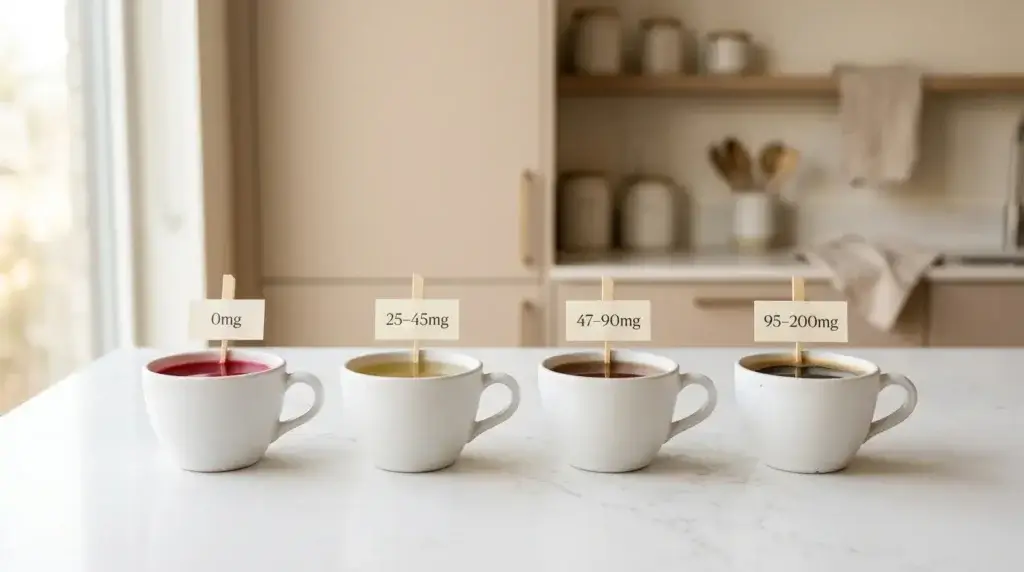
Hibiscus tea sits at the very bottom of this table alongside other true herbal infusions like chamomile and rooibos. No steeping technique, no preparation method, and no amount of hibiscus calyces will introduce caffeine into the brew — because the caffeine simply does not exist in the plant.
What About Hibiscus Tea Blends?
Important caveat: While pure hibiscus tea is caffeine-free, some commercial hibiscus tea products are blends that combine hibiscus with caffeinated ingredients.
Common caffeine-containing additions in hibiscus blends:
- Green tea — adds 25–45mg caffeine per cup
- Black tea — adds 47–90mg caffeine per cup
- Yerba mate — adds 80–90mg caffeine per cup
- Guarana — adds variable but significant caffeine
If you are drinking a hibiscus blend rather than pure hibiscus tea, always check the ingredient list. If it contains any Camellia sinensis derivative (green tea, black tea, white tea, oolong) or any other caffeinated plant, the tea will contain caffeine.
Pure hibiscus products to look for: “100% hibiscus flowers,” “hibiscus calyces,” “flor de jamaica” — these are consistently caffeine-free.
What This Means for You Practically
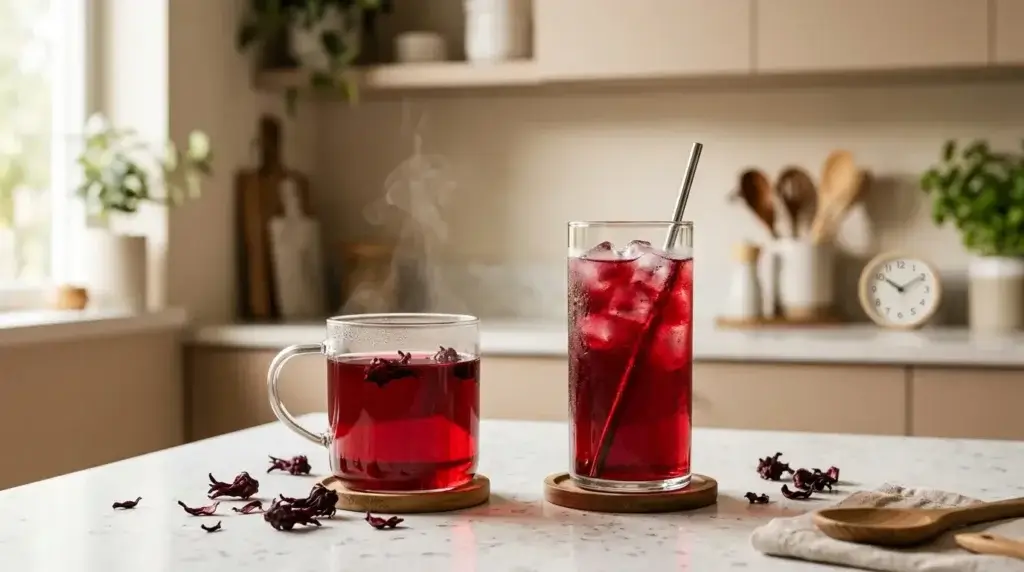
The fact that hibiscus tea is completely caffeine-free has several practical implications that matter for daily use:
You can drink it at any time of day: Unlike coffee or true teas, hibiscus tea can be consumed in the morning, afternoon, or evening without affecting your sleep quality or disrupting your body’s natural sleep-wake cycle. This makes it one of the most flexible wellness drinks available. For timing guidance on when to drink it for specific health goals, see our guide on the best time to drink hibiscus tea.
It will not give you an energy boost: Hibiscus tea has no stimulant effect. It will not increase alertness, improve concentration, or provide the energy kick that caffeine delivers. If you are switching from coffee to hibiscus tea expecting a similar energy effect, you will be disappointed. For caffeine-free drinks that do provide functional energy support, our coffee alternatives for wellness guide covers the options.
It is safe for caffeine-sensitive individuals: People with caffeine sensitivity, heart arrhythmias, anxiety disorders, insomnia, or those who are pregnant and limiting caffeine can drink hibiscus tea without concern about caffeine-related side effects.
It is suitable for children: Because hibiscus tea contains no caffeine, it is one of the few flavorful wellness beverages suitable for children in moderate amounts — though its acidity and other active compounds still warrant moderation.
It will not interfere with sleep: Hibiscus tea before bed does not disrupt sleep through caffeine stimulation. The considerations for evening consumption are its mild diuretic effect and high acidity — not caffeine. Our full guide on hibiscus tea before bed covers what you do need to be aware of for evening consumption.
Hibiscus Tea vs Caffeinated Teas: Key Differences
| Hibiscus Tea | Green Tea | Black Tea | |
|---|---|---|---|
| Caffeine | 0 mg | 25–45 mg | 47–90 mg |
| Suitable any time | ✅ Yes | ⚠️ Avoid evening | ❌ Avoid afternoon/evening |
| Suitable for pregnancy | ⚠️ Avoid (other reasons) | ⚠️ Limit | ⚠️ Limit |
| Sleep impact | ✅ None from caffeine | ⚠️ If drunk late | ❌ Disrupts sleep |
| Caffeine withdrawal | ✅ No risk | ⚠️ Possible | ⚠️ Possible |
| Iron absorption | ✅ Does not inhibit | ⚠️ Inhibits | ❌ Significantly inhibits |
For a full comparison of herbal teas and caffeinated teas across all health dimensions, see our herbal tea vs green tea benefits guide.
Is Hibiscus Tea a Good Coffee Alternative?
For people trying to reduce or eliminate caffeine, hibiscus tea is one of the most satisfying herbal replacements — not because it mimics coffee’s stimulant effect (it does not), but because:
- Its deep, bold flavor is more complex and satisfying than most herbal teas
- It can be served hot or iced, fitting into most coffee rituals
- Its health benefits (blood pressure, antioxidants) are among the most documented of any herbal drink
- It is naturally low in calories and sugar-free when unsweetened
For the full picture on transitioning from coffee to functional alternatives, see our coffee alternatives for wellness guide and our matcha vs coffee comparison.
Frequently Asked Questions
Does hibiscus tea have caffeine?
No. Hibiscus tea contains zero caffeine. It is made from the dried calyces of Hibiscus sabdariffa — a plant that produces no caffeine. This is true regardless of steeping time, temperature, or preparation method.
Is hibiscus tea caffeine-free?
Yes — completely. Hibiscus tea is one of the most popular naturally caffeine-free beverages available. It can be consumed at any time of day without stimulant effects.
Can I drink hibiscus tea before bed?
Yes — caffeine is not a concern with hibiscus tea before bed. The considerations for evening drinking are its mild diuretic effect (drink 2 hours before lying down) and its high acidity (use modified preparation for sensitive stomachs). Full guidance in our hibiscus tea before bed article.
Does karkade have caffeine?
No. Karkade is the Arabic and Egyptian name for hibiscus tea (made from Hibiscus sabdariffa). Like all pure hibiscus tea, karkade contains zero caffeine.
Is hibiscus tea safe during pregnancy because it has no caffeine?
Being caffeine-free does not make hibiscus tea safe during pregnancy. Hibiscus tea has emmenagogue properties — it can stimulate uterine contractions — and is generally not recommended during pregnancy regardless of its caffeine-free status. Always consult your doctor or midwife.
Do hibiscus tea bags have caffeine?
Pure hibiscus tea bags contain zero caffeine. However, some commercial hibiscus tea bag products are blends that include green tea, black tea, or other caffeinated ingredients. Always read the ingredient list — if it lists any Camellia sinensis variety, the product contains caffeine.
Does hibiscus tea give you energy?
Not through caffeine — hibiscus tea has no stimulant effect. Any sense of energy or refreshment from hibiscus tea comes from hydration and the ritual of drinking, not from caffeine or any other stimulant compound.
Can children drink hibiscus tea?
Hibiscus tea is caffeine-free, which removes one concern for children. However, its high acidity (pH 2.5–3.5) and its active compounds (anthocyanins, organic acids) mean it should be consumed in moderation by children — weakly brewed and well diluted.
Key Takeaways
- Hibiscus tea contains zero caffeine — it is made from flower calyces, not tea leaves
- This is true for all pure hibiscus tea regardless of preparation: hot brew, cold brew, iced, or concentrated
- Check blends: commercial hibiscus products that include green or black tea will contain caffeine — read the ingredient list
- Being caffeine-free means hibiscus tea can be consumed at any time of day without affecting sleep or energy cycles
- The concerns with evening hibiscus tea are its diuretic effect and high acidity — not caffeine
- Caffeine-free does not mean pregnancy-safe — hibiscus has other properties that make it unsuitable during pregnancy
- For the full health profile of hibiscus tea, see our complete hibiscus tea benefits guide