
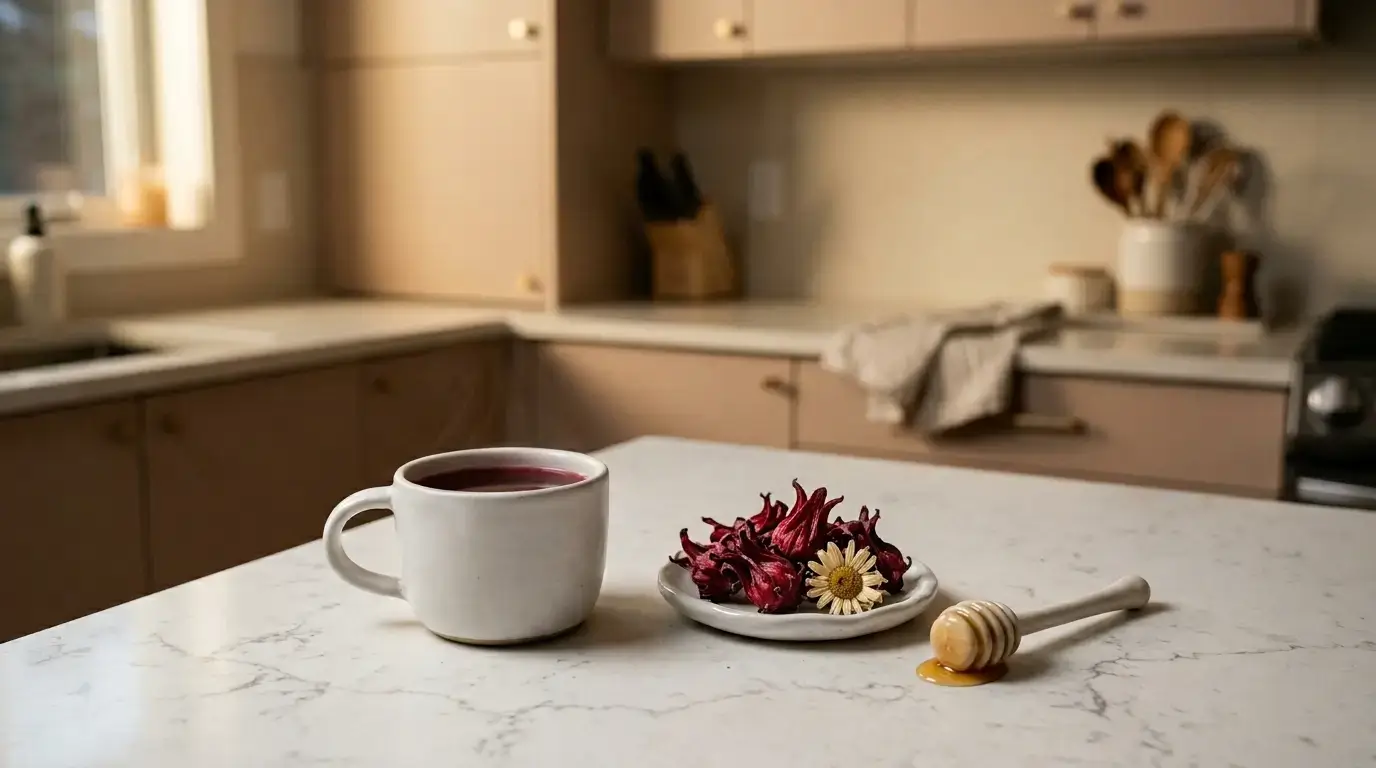
Hibiscus tea before bed is neither universally good nor bad — it depends entirely on how you time it and how you prepare it. Hibiscus tea is caffeine-free, which makes it an obvious candidate for an evening drink. But it also has a mild diuretic effect that can disrupt sleep with nighttime bathroom trips, and its high acidity can trigger or worsen acid reflux when consumed close to lying down. With the right timing and a modified preparation, most people can enjoy hibiscus tea in the evening without any negative sleep effects. This guide covers everything you need to know.
Is Hibiscus Tea Good Before Bed?
Yes — with conditions. Here is the direct answer by factor:
| Factor | Effect on Sleep | Verdict |
|---|---|---|
| Caffeine | None — hibiscus is caffeine-free | ✅ Good |
| Diuretic effect | Mild — may cause nighttime urination | ⚠️ Time it correctly |
| Acidity (pH 2.5–3.5) | Can worsen acid reflux lying down | ⚠️ Use low-acid method |
| Blood pressure lowering | May promote relaxation before sleep | ✅ Good |
| Anti-inflammatory effect | Supports general relaxation | ✅ Good |
| Volume (large cup) | Increases bladder pressure | ⚠️ Use smaller serving |
The verdict: Hibiscus tea before bed is fine for most healthy adults when drunk 2–3 hours before lying down and prepared as a smaller, lower-acidity cup. Drinking it right before bed — or in a large hot serving — is where problems arise.
Why Timing Is Everything: The 2-Hour Rule
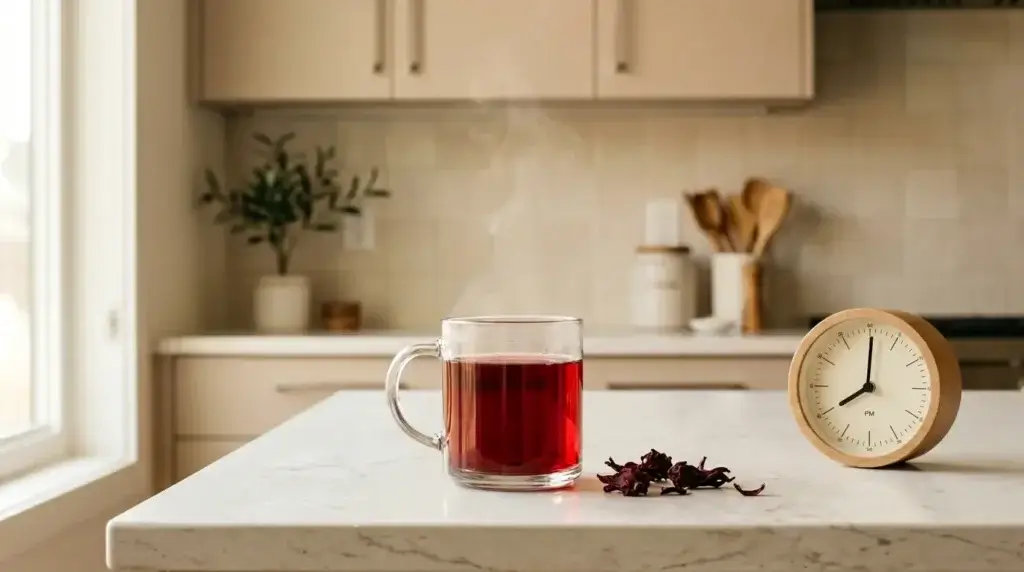
The single most important factor in whether hibiscus tea helps or hurts your sleep is when you drink it relative to when you lie down.
Why 2 hours before bed is the optimal window:
Diuretic clearance: Hibiscus tea has a mild diuretic effect — it increases urinary output. If you drink it right before lying down, this diuretic effect peaks during your early sleep cycle, causing nighttime waking to use the bathroom. Drinking it 2 hours before bed allows most of the diuretic effect to complete before you lie down.
Acid reflux prevention: Hibiscus tea is acidic (pH 2.5–3.5). When you lie down, gravity no longer helps contain stomach contents — any acidic beverage consumed close to bedtime increases the risk of acid reflux during the night. Allowing 2 hours of upright digestion time before bed significantly reduces this risk. Our full guide on hibiscus tea and acid reflux covers this in detail.
Absorption timing: The blood pressure-lowering and anti-inflammatory compounds in hibiscus are absorbed and circulating within 30–60 minutes of consumption. Drinking 2 hours before bed means these compounds are active during the early stages of your sleep preparation and first sleep cycles.
Practical schedule example:
- Bedtime: 10:00 PM
- ✅ Drink hibiscus tea: 7:30–8:00 PM
- ❌ Avoid drinking after: 9:00 PM
Does Hibiscus Tea Help You Sleep?
Hibiscus tea is not a direct sleep aid in the way chamomile is. It does not contain apigenin or other compounds that directly bind to sleep-related receptors in the brain. However, it contributes to better sleep conditions through several indirect mechanisms:
Blood pressure reduction: High blood pressure and cardiovascular stress are associated with poorer sleep quality. Hibiscus tea’s well-documented blood pressure-lowering effect — 7–13 mmHg systolic with consistent daily use — contributes to the cardiovascular calm that supports deep, restorative sleep.
Anti-inflammatory effect: Systemic inflammation disrupts sleep architecture. Hibiscus’s anthocyanins and organic acids reduce inflammatory markers that, at elevated levels, are associated with more fragmented sleep and reduced deep sleep stages.
Magnesium content: Hibiscus calyces contain a small but meaningful amount of magnesium — a mineral directly involved in the regulation of the nervous system and sleep quality. Magnesium deficiency is strongly associated with insomnia and poor sleep.
Ritual effect: The act of preparing and drinking a warm, flavorful beverage in the evening is a powerful behavioral cue for sleep preparation. The ritual of making hibiscus tea can be part of a consistent wind-down routine that signals to the body and brain that sleep is approaching.
For the most evidence-backed sleep-supporting drinks, our comprehensive guide on the best drinks for better sleep covers the full comparison — including how hibiscus ranks against chamomile, valerian, and tart cherry juice.
The Best Evening Hibiscus Tea Preparation
Standard hot hibiscus tea (pH 2.5–2.8) is not ideal for evening consumption due to its high acidity. A modified preparation reduces this significantly.
3 adjustments that make hibiscus tea more evening-friendly:
1. Use cooler water (80°C instead of 90°C): Lower temperature extracts less acid from the hibiscus calyces. This raises the final pH without eliminating the flavor or health compounds.
2. Steep for only 5 minutes: Shorter steeping time = less acid extraction. The flavor will be slightly lighter but the acidity will be meaningfully lower.
3. Use a smaller serving (6 oz instead of 8 oz): Less volume reduces both the diuretic load and the total acid consumed — two of the main concerns for evening drinking.
The hibiscus + chamomile bedtime blend: Adding chamomile to your hibiscus tea transforms it from a general wellness drink into a genuinely sleep-supportive beverage. Chamomile’s apigenin directly binds to benzodiazepine receptors in the brain — producing mild sedation and reduced anxiety. Combined with hibiscus’s blood pressure-lowering and anti-inflammatory effects, the blend addresses sleep from multiple angles simultaneously.
See our chamomile tea benefits guide for the full science on chamomile and sleep.
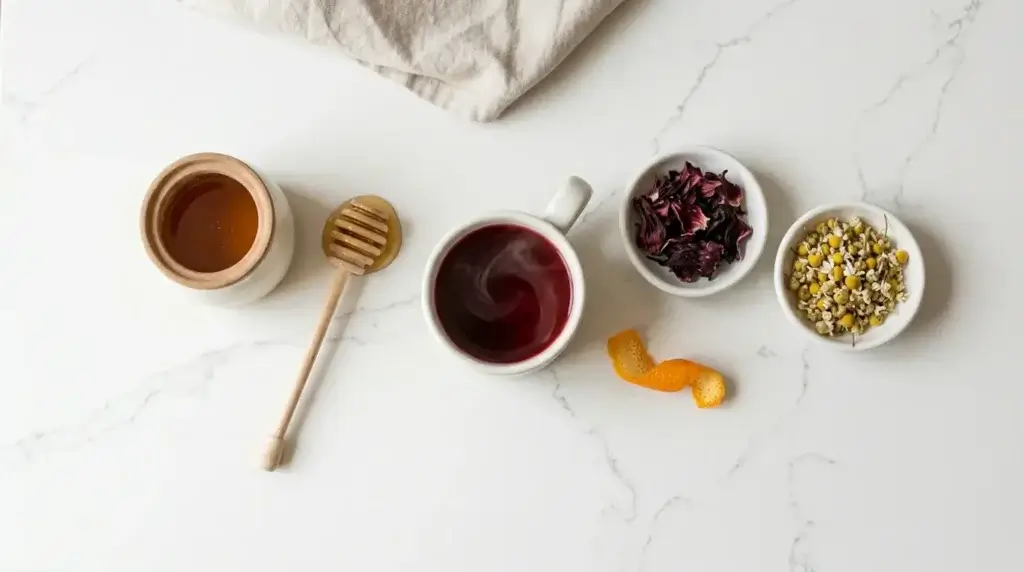
Best evening preparation: Use 1 teaspoon hibiscus + 1 chamomile tea bag per 180ml of water at 80°C. Steep covered for 5 minutes. Strain, add honey, and drink 2 hours before bed.
Print
Hibiscus Tea Before Bed: What It Does to Your Sleep and How to Time It
A gentle evening hibiscus tea optimized for nighttime use — cold brew method for lower acidity, small serving, and optional additions that enhance the relaxation effect without disrupting sleep.
- Total Time: 7 minutes
- Yield: 1 small cup (180ml) 1x
Ingredients
- 1 tsp dried hibiscus calyces
- 180ml (6 oz) warm water — not boiling
- 1 tsp raw honey
- 1 small chamomile tea bag or 1 tsp dried chamomile (optional — enhances sleep)
- 1 small strip of fresh orange peel (optional — adds softness)
Instructions
- Heat water to 80°C (175°F) — below normal steeping temperature to reduce acid extraction from the hibiscus
- Add dried hibiscus calyces (and chamomile if using) to a small cup
- Pour warm water over them
- Cover and steep for 5 minutes only — shorter steep = less acidity
- Strain through a fine mesh
- Add raw honey while warm and stir
- Drink 2 hours before lying down — not right before bed
Notes
Keeping the serving small (6 oz rather than 8 oz), using slightly cooler water, and steeping for only 5 minutes significantly reduces the acidity of this tea compared to a standard hot brew. The chamomile addition enhances the sleep benefit through apigenin’s mild sedative effect. Never drink hibiscus tea right before lying down — the diuretic effect will disrupt sleep. 2 hours before bed is the optimal window.
- Prep Time: 2 minutes
- Cook Time: 5 minutes
- Category: Drinks
- Method: Steeping
- Cuisine: Universal
Nutrition
- Serving Size: 1 cup (180ml)
- Calories: 3
- Sugar: 0g
- Sodium: 1mg
- Fat: 0g
- Carbohydrates: 1g
- Fiber: 0g
- Protein: 0g
- Cholesterol: 0mg
Keywords: hibiscus tea before bed, evening hibiscus tea, hibiscus tea for sleep, nighttime hibiscus tea recipe
Who Should Avoid Hibiscus Tea Before Bed
People with acid reflux or GERD: Even with modified preparation, hibiscus is one of the more acidic herbal teas (pH 2.5–3.5). If you have GERD or nighttime reflux, hibiscus tea before bed carries a real risk of worsening symptoms. Better evening alternatives are chamomile (pH 6–7) or rooibos (near-neutral). Our hibiscus tea and acid reflux guide covers safer alternatives in detail.
People with overactive bladder or nocturia: If you already wake frequently to urinate, adding a diuretic beverage in the evening will worsen this. For these individuals, hibiscus tea is better consumed in the morning or early afternoon.
People on blood pressure medication: Hibiscus lowers blood pressure. Taken in the evening alongside antihypertensive medication, the combined effect may cause blood pressure to drop too low overnight — potentially causing dizziness upon waking. Consult your doctor about timing. Full guidance in our hibiscus tea side effects article.
Pregnant women: Hibiscus has emmenagogue properties and should be avoided during pregnancy at any time of day, including evenings.
Hibiscus Tea vs Other Evening Herbal Teas
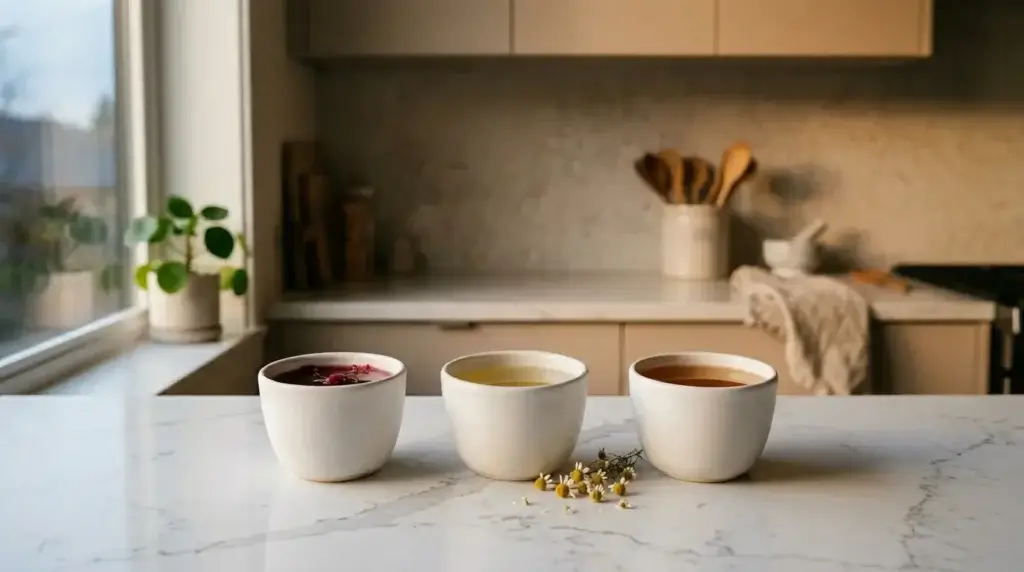
| Hibiscus | Chamomile | Rooibos | |
|---|---|---|---|
| Caffeine | None | None | None |
| Direct sleep effect | ❌ Indirect only | ✅ Apigenin → sedation | ⚠️ Mild |
| Acid reflux safe | ⚠️ Modified prep only | ✅ Yes | ✅ Yes |
| Diuretic effect | ⚠️ Mild | ✅ Minimal | ✅ Minimal |
| Blood pressure | ✅ Lowers BP | ⚠️ Neutral | ⚠️ Mild |
| Best for evening | When BP support is the goal | Best general sleep tea | Best for acid reflux + sleep |
| Optimal timing | 2–3 hours before bed | 30–45 min before bed | 30–60 min before bed |
The honest ranking for sleep:
- Chamomile — the only one with a direct, clinically proven sleep mechanism (apigenin)
- Rooibos — mild sedative flavonoids, completely acid-safe, no diuretic concern
- Hibiscus — genuinely useful but requires timing discipline and modified preparation
For a full guide to evening and sleep-supporting drinks, see our best drinks for better sleep article.
How to Build an Evening Hibiscus Tea Habit
If you want to include hibiscus tea as part of your evening routine, here is the simplest sustainable approach:
7:30–8:00 PM — Prepare and drink your evening hibiscus tea (1 small cup, modified preparation)
8:30–9:00 PM — Optional chamomile tea 30–45 minutes before your target bedtime if you want direct sleep support
10:00–10:30 PM — Bedtime
This schedule allows the diuretic effect of hibiscus to complete well before sleep, avoids acid reflux risk from lying down too soon, and uses chamomile’s direct sleep mechanism in its optimal timing window.
For a complete daily hibiscus tea schedule across all health goals, our guide on the best time to drink hibiscus tea covers morning, afternoon, and evening windows in detail. For dosage guidance, see our article on how much hibiscus tea per day.
Frequently Asked Questions
Is hibiscus tea good before bed?
Yes, with conditions. Hibiscus tea is caffeine-free and can be part of an evening routine. Drink it 2–3 hours before lying down (not right before bed) to avoid its mild diuretic effect disrupting sleep. Use a smaller serving (6 oz) and lower steeping temperature to reduce acidity.
Can hibiscus tea help you sleep?
Not directly — hibiscus does not contain sedative compounds like chamomile’s apigenin. However, its blood pressure-lowering effect, anti-inflammatory properties, and small magnesium content create conditions that support better sleep quality indirectly. Blending with chamomile adds a direct sleep mechanism.
What happens if you drink hibiscus tea right before bed?
Drinking hibiscus tea immediately before lying down increases the risk of two sleep disruptions: nighttime urination from its diuretic effect, and acid reflux from its high acidity (pH 2.5–3.5) when you’re horizontal. Always allow 2 hours between drinking and lying down.
How long before bed should I drink hibiscus tea?
2–3 hours before your target bedtime is the optimal window. This allows the diuretic effect to complete, reduces acid reflux risk, and still allows the blood pressure and anti-inflammatory compounds to be active during your sleep preparation and early sleep stages.
Does hibiscus tea keep you awake?
No. Hibiscus tea is completely caffeine-free and does not have stimulating properties. It will not keep you awake. The concern with nighttime hibiscus tea is not wakefulness from stimulation but wakefulness from diuretic effect or acid reflux.
Is hibiscus tea before bed good for blood pressure?
Yes — for people managing blood pressure through lifestyle, drinking hibiscus tea in the evening can contribute to lower overnight blood pressure readings. Nighttime hypertension is particularly damaging, and hibiscus tea’s vasodilatory and ACE-inhibiting effects may provide overnight cardiovascular benefit.
What is the best evening herbal tea for sleep?
Chamomile is the most evidence-backed choice for sleep specifically — its apigenin directly activates GABA receptors. Rooibos is the best choice for people with acid reflux. Hibiscus is best when blood pressure support is the evening goal. A hibiscus + chamomile blend covers both bases.
Does hibiscus tea cause insomnia?
No — hibiscus tea contains zero caffeine and has no stimulating compounds. It cannot cause insomnia through a pharmacological mechanism. If someone experiences difficulty sleeping after drinking hibiscus tea, the most likely causes are drinking it too close to bedtime (diuretic effect causing nighttime waking) or drinking a large hot cup that raises body temperature before sleep. The fix is simple: drink it 2–3 hours before lying down, not right before bed.
Will hibiscus tea keep you awake?
No. Hibiscus tea is completely caffeine-free and contains no stimulants. It will not increase alertness, raise heart rate, or interfere with your ability to fall asleep. The only sleep-related concern with hibiscus tea is its mild diuretic effect — if consumed too close to bedtime, it may cause a nighttime bathroom trip. Drinking it at least 2 hours before bed eliminates this concern entirely.
Key Takeaways
- Hibiscus tea before bed is suitable for most healthy adults — but only when drunk 2–3 hours before lying down, not right before bed
- The two main concerns are its mild diuretic effect (nighttime urination) and high acidity (acid reflux risk when horizontal)
- Both concerns are significantly reduced by correct timing, smaller serving size (6 oz), and lower steeping temperature (80°C for 5 minutes)
- Hibiscus does not directly promote sleep like chamomile does — it supports sleep conditions indirectly through blood pressure reduction and anti-inflammatory effects
- Blending with chamomile creates a more complete sleep-supporting evening tea
- People with acid reflux, overactive bladder, or on blood pressure medication should be particularly careful with evening timing
- The optimal evening routine: hibiscus tea at 7:30–8:00 PM, chamomile at 9:00–9:30 PM, sleep at 10:00 PM