
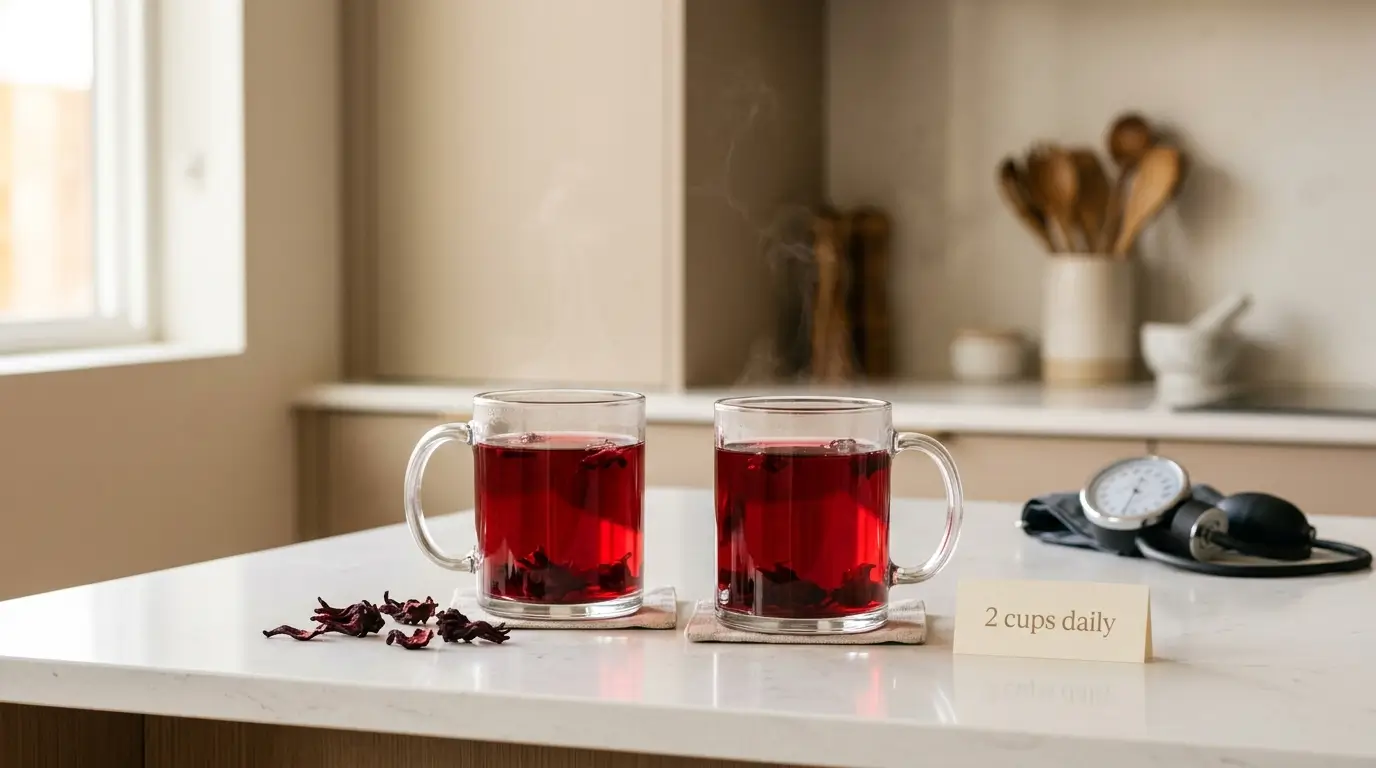
The evidence-based answer: 2 cups of hibiscus tea per day, brewed at standard strength (2 teaspoons of dried calyces per cup), consumed consistently for at least 4–6 weeks. This is the protocol used across the clinical trials that documented 7–13 mmHg reductions in systolic blood pressure. This guide covers the exact dosage, the right preparation strength, the optimal timing, and what you can realistically expect.
The Direct Answer: How Many Cups Per Day?
2 cups per day is the clinically supported dose for blood pressure reduction.
| Cups per day | Evidence | Expected effect |
|---|---|---|
| 1 cup | Below clinical doses | Mild antioxidant benefit only |
| 2 cups | Matches clinical trial protocol | 7–13 mmHg systolic reduction over 4–6 weeks |
| 3 cups | Above clinical doses | No additional BP benefit; increased risk of side effects |
| 4+ cups | Not recommended | Risk of excessive BP drop, diuretic overdose |
The research is consistent: two cups per day is the sweet spot. Drinking more does not accelerate the benefit — and for people with already-low blood pressure or those on antihypertensive medication, higher doses carry real risk.
How Strong Should Each Cup Be?
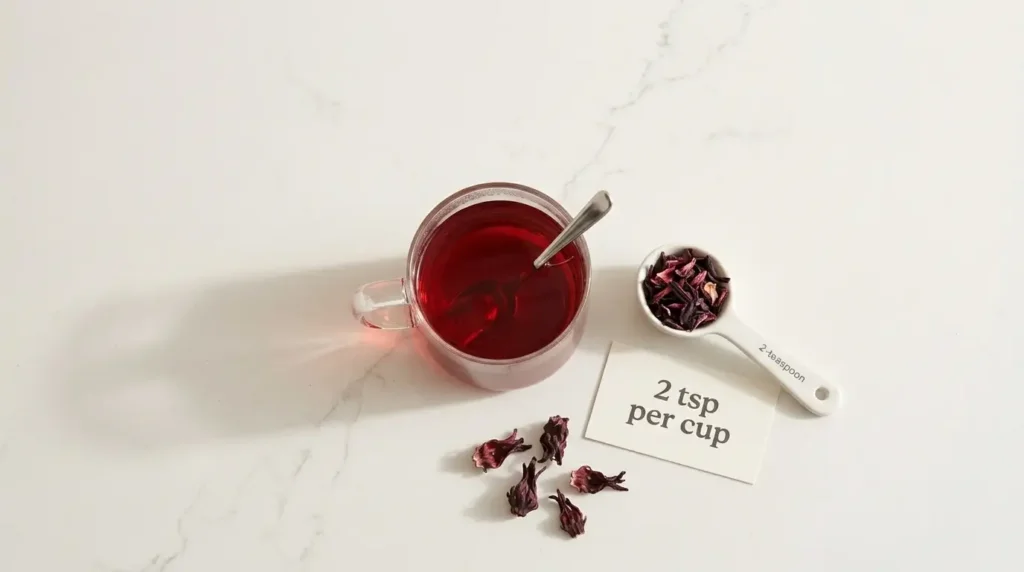
Dose matters as much as cup count. The strength of your brew determines how much of the active compounds — anthocyanins, hibiscus acid, and ACE-inhibiting flavonoids — you actually consume per cup.
Evidence-based brewing strength:
- 2 teaspoons (approximately 4g) of dried hibiscus calyces per 240ml (8 oz) of water
- Steep for 5–10 minutes in hot water (90°C / 195°F)
- Strain immediately after steeping
This is the preparation strength used in the studies showing blood pressure reduction. A weaker brew — 1 teaspoon per cup, or a commercial tea bag with minimal hibiscus — contains less of the active compounds and may produce a smaller effect.
What to look for on the label: If you are using commercial tea bags, check whether the bag contains pure dried hibiscus (Hibiscus sabdariffa calyces) or a blend. Blends with other herbs dilute the hibiscus concentration and reduce the per-cup dose of active compounds.
For full guidance on preparation methods and their effect on active compound extraction, see our how to make hibiscus tea guide.
Timing: When to Drink the 2 Cups
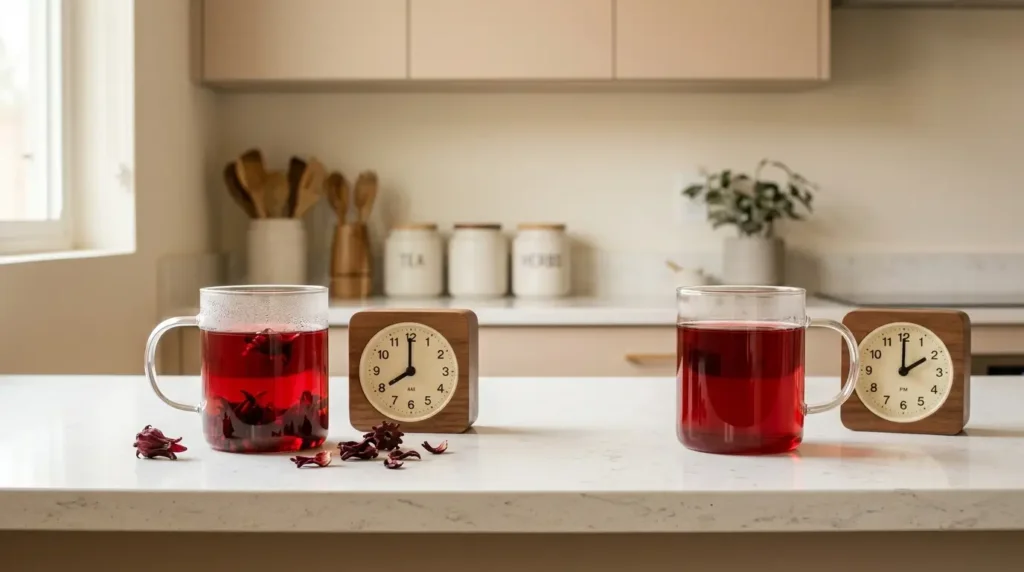
The timing of your two daily cups affects how consistently the active compounds are present in your bloodstream throughout the day.
Optimal schedule:
Cup 1: After breakfast (7:00–9:00 AM) Morning blood pressure follows a natural surge pattern — it rises sharply after waking and peaks in mid-morning. Drinking hibiscus tea after breakfast (never on an empty stomach due to its acidity) delivers the ACE-inhibiting compounds during the period of highest cardiovascular activity.
Cup 2: Early afternoon or before dinner (2:00–6:00 PM) Blood pressure rises again in the late afternoon for many people. A second cup during this window maintains compound levels in the bloodstream throughout the rest of the day and into the evening.
What to avoid:
- Drinking both cups back-to-back in the morning — compounds metabolize over hours, spacing them out maintains more consistent plasma levels
- Drinking the second cup right before bed — the diuretic effect can disrupt sleep
For the full timing guide including evening considerations, see our article on the best time to drink hibiscus tea.
How Long Before You See Results?
This is the most important expectation to set correctly. Hibiscus tea does not lower blood pressure after one cup or even after one week.
| Timeframe | What to expect |
|---|---|
| Days 1–7 | No measurable change |
| Weeks 2–3 | Possible mild effects in some people |
| Weeks 4–6 | Clinically meaningful reduction in most studies |
| Weeks 6–12 | Maximum sustained benefit |
The clinical trials that showed 7–13 mmHg systolic reduction ran for a minimum of 4 weeks, with most showing the strongest results at 6 weeks of consistent daily consumption. For the full explanation of why the effect is gradual, see our guide on does hibiscus tea lower blood pressure immediately.
The most important variable is consistency. Two cups every day for 6 weeks produces far better results than 4 cups one day and nothing for two days. Consistent daily intake is more important than any other factor.
Hot Brew vs Cold Brew for Blood Pressure
Does the preparation method affect how much hibiscus tea you need for blood pressure?
Hot brew extracts more anthocyanins and organic acids per cup — making each cup slightly more potent for blood pressure. If blood pressure management is your primary goal and you tolerate the acidity, hot brew at standard strength is the most efficient preparation.
Cold brew extracts less per cup but is significantly less acidic (pH 3.0–3.5 vs 2.5–2.8 for hot brew). For people with acid reflux or sensitive stomachs, cold brew is the more sustainable daily option — and the most important factor is sustainability. Two cups of cold brew every day beats occasional hot brew.
Our full comparison is in the hibiscus tea hot or cold for blood pressure guide.
Who Should Be Careful With This Dose
People on antihypertensive medication: The combination of prescribed medication and 2 cups of hibiscus tea daily can cause blood pressure to drop too low — particularly overnight. Signs of excessive lowering: dizziness when standing, lightheadedness, unusual fatigue. Consult your doctor before adding daily hibiscus tea to a medicated routine.
People with already-low blood pressure: If your systolic pressure is below 100 mmHg, the additional lowering from hibiscus tea may cause symptomatic hypotension.
People with kidney conditions: Hibiscus tea has mild diuretic effects and contains moderate oxalate levels. People with CKD or kidney stone history should review our hibiscus tea and kidneys guide before establishing a daily habit.
For the complete safety profile including all drug interactions, see our hibiscus tea side effects article.
What Blood Pressure Reduction Can You Expect?
With 2 cups per day at standard strength, consistently for 6 weeks, the clinical data shows:
- Systolic pressure: 7–13 mmHg reduction
- Diastolic pressure: 3–7 mmHg reduction
To put this in context: A reduction of 5 mmHg systolic is associated with a 14% reduction in stroke risk. The upper end of what hibiscus tea achieves (13 mmHg systolic) is comparable to what many single antihypertensive medications produce at low doses.
For people with mild hypertension (stage 1, systolic 130–139 mmHg), this reduction can be clinically significant — potentially bringing readings into the normal range without medication. For moderate to severe hypertension, hibiscus tea is a supportive complement to medical treatment, not a replacement.
Complete Protocol Summary
| Variable | Evidence-based value |
|---|---|
| Cups per day | 2 |
| Hibiscus per cup | 2 tsp dried calyces (4g) |
| Water temperature | 90°C (195°F) |
| Steeping time | 5–10 minutes |
| Cup 1 timing | After breakfast (7–9 AM) |
| Cup 2 timing | Early afternoon (2–6 PM) |
| Minimum duration | 4 weeks |
| Optimal duration | 6–8 weeks |
| Expected result | 7–13 mmHg systolic reduction |
Frequently Asked Questions
How much hibiscus tea should I drink to lower blood pressure?
2 cups per day of standard-strength hibiscus tea (2 teaspoons of dried calyces per 240ml cup), consumed consistently every day for at least 4–6 weeks. This is the protocol used across clinical trials showing 7–13 mmHg systolic reduction.
How many cups of hibiscus tea a day for blood pressure?
2 cups per day — one after breakfast and one in the early afternoon. Drinking more than 2 cups does not produce additional blood pressure benefit and increases the risk of excessive lowering, particularly for people on antihypertensive medication.
How long does it take for hibiscus tea to lower blood pressure?
Meaningful reduction typically appears after 4–6 weeks of consistent daily consumption at 2 cups per day. The effect is cumulative — it does not occur after one cup or one week.
Does 1 cup of hibiscus tea a day lower blood pressure?
One cup per day is below the clinical dose used in blood pressure trials. It provides antioxidant and anti-inflammatory benefits but is unlikely to produce a measurable blood pressure reduction. Two cups per day is the minimum evidence-based dose for cardiovascular effects.
Is hibiscus tea as effective as blood pressure medication?
For mild hypertension (stage 1), the reduction from consistent daily hibiscus tea consumption (7–13 mmHg systolic) is comparable to low-dose antihypertensive medication. For moderate to severe hypertension, hibiscus tea is a supportive complement to prescribed treatment — not a substitute.
Can I drink hibiscus tea if I’m on blood pressure medication?
Not without consulting your doctor first. The combination of antihypertensive medication and daily hibiscus tea can cause blood pressure to drop excessively. Your doctor may need to adjust your medication dose if you add hibiscus tea to your daily routine.
How strong should hibiscus tea be for blood pressure?
Use 2 teaspoons (4g) of dried hibiscus calyces per 240ml of water, steeped for 5–10 minutes. This is the preparation strength that matches the clinical trial protocol. A weaker brew — 1 teaspoon or a diluted commercial blend — provides fewer active compounds per cup and may produce a smaller effect.
Key Takeaways
- The evidence-based dose is 2 cups per day — not 1, not 4
- Each cup should be brewed at standard strength: 2 teaspoons (4g) of dried hibiscus per 240ml
- Timing matters: one cup after breakfast + one cup early afternoon maintains consistent compound levels
- Consistency is the most important variable — daily use for 6+ weeks produces the documented effect
- Results take 4–6 weeks to become measurable — there is no shortcut
- Expected reduction with full protocol: 7–13 mmHg systolic, 3–7 mmHg diastolic
- People on antihypertensive medication must consult their doctor before adding daily hibiscus tea