
Hibiscus tea for menopause is not a phytoestrogen and does not address hot flashes the way red clover does. This distinction is important — and it is the reason why understanding hibiscus tea’s specific role in menopause is more useful than treating it as a general “women’s herb.” What hibiscus tea does extremely well is address several of the most clinically significant secondary effects of menopause: the cardiovascular changes, the weight management challenges, the skin aging acceleration, and the sleep disruption. These are real, documented, and meaningful contributions to menopausal quality of life. This guide explains exactly where hibiscus fits, what it cannot do, and how to combine it with other herbal teas for a more complete menopause support strategy.
What Hibiscus Tea Does and Does Not Do for Menopause
| Menopausal concern | Hibiscus effect | Evidence level |
|---|---|---|
| Hot flashes | ❌ No direct effect | No clinical data |
| Blood pressure rise | ✅ 7–13 mmHg systolic reduction | Strong (multiple RCTs) |
| Weight management | ✅ Metabolic support, beverage replacement | Moderate |
| Skin aging | ✅ Antioxidant + collagen support | Moderate |
| Sleep disruption | ✅ Indirect (blood pressure, acidity managed) | Mild |
| Bone density | ⚠️ Mild antioxidant support only | Preliminary |
| Hormonal balance | ❌ Not a phytoestrogen | No relevant mechanism |
| Vaginal dryness | ❌ No effect | No clinical data |
The honest summary: Hibiscus tea is not a hormonal herb for menopause. It does not contain phytoestrogens (unlike red clover or soy) and will not reduce hot flash frequency. Where it excels is in the cardiovascular and metabolic dimension of menopause — which is, medically speaking, the most dangerous dimension.
Why Cardiovascular Health Is Hibiscus Tea’s Most Important Menopausal Benefit
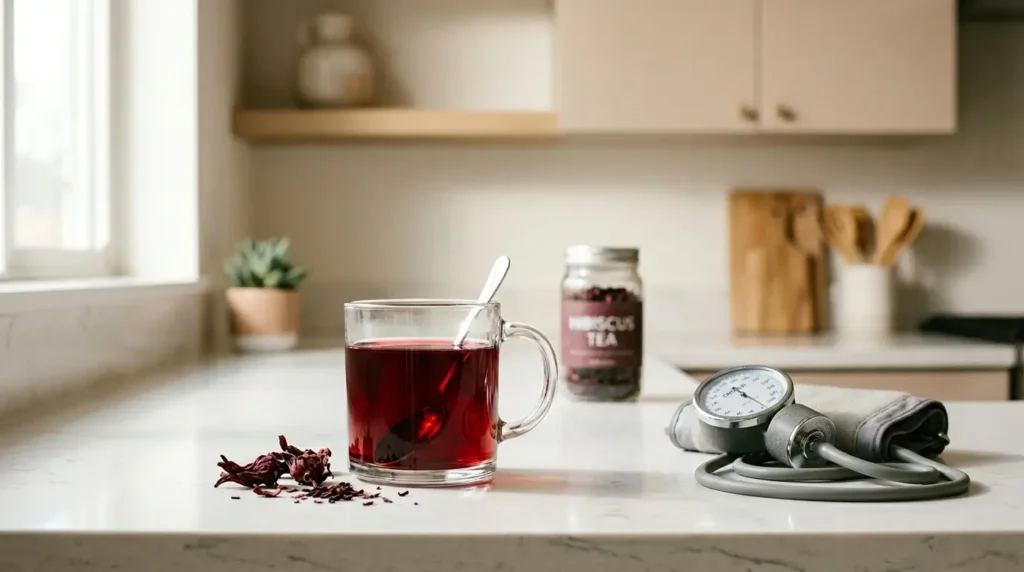
Before menopause, estrogen provides significant cardiovascular protection — it maintains arterial flexibility, keeps LDL cholesterol in check, and supports endothelial function. When estrogen declines at menopause, this protection disappears rapidly. The result:
- Systolic blood pressure rises by an average of 5–7 mmHg in the first year after menopause
- LDL cholesterol increases by 10–15%
- Cardiovascular disease risk doubles within 10 years of menopause
- Hypertension prevalence in women surpasses men by age 65
This is where hibiscus tea provides its most clinically meaningful menopausal benefit. Clinical trials have documented 7–13 mmHg reductions in systolic blood pressure with 2 cups of hibiscus tea per day for 4–6 weeks — directly counteracting the postmenopausal blood pressure rise.
A 7–13 mmHg systolic reduction is associated with a 14% reduction in stroke risk and a 9% reduction in cardiovascular mortality. For postmenopausal women, whose cardiovascular risk is dramatically elevated, this is not a trivial effect.
Additionally, hibiscus’s anthocyanins have demonstrated LDL cholesterol-reducing effects and protection against LDL oxidation — addressing the lipid changes that accelerate after menopause.
For the full clinical protocol (how much, when, hot vs cold), see our guides on hibiscus tea and blood pressure and the best time to drink hibiscus tea.
Hibiscus Tea for Menopausal Weight Management
Weight gain during menopause — particularly the shift toward abdominal fat accumulation — is driven by the hormonal changes that reduce metabolic rate and change fat distribution patterns. Hibiscus tea supports weight management through three mechanisms:
Amylase inhibition: Hibiscus compounds inhibit alpha-amylase — an enzyme that breaks down dietary carbohydrates. Drinking hibiscus tea 20–30 minutes before meals slows carbohydrate absorption and reduces post-meal blood sugar spikes, which is particularly relevant for the increased insulin resistance that often accompanies menopause.
Anti-adipogenic activity: Hibiscus polyphenols have shown activity against adipogenesis (fat cell formation) in laboratory studies — potentially slowing the accumulation of new fat tissue.
Calorie-free beverage replacement: The most practically impactful weight management benefit — replacing sweetened drinks with unsweetened hibiscus tea eliminates 500–1400 calories per week from a single change, without sacrificing flavor satisfaction.
Hibiscus Tea for Menopausal Skin Health
Declining estrogen after menopause accelerates skin aging rapidly — collagen production drops by approximately 30% in the first 5 years after menopause, skin thickness decreases, and hydration declines. Hibiscus tea addresses skin aging through:
Vitamin C content: Hibiscus is a meaningful source of vitamin C — an essential cofactor for collagen synthesis. Regular daily consumption supports the collagen production that estrogen decline is reducing.
Anthocyanin antioxidants: The deep red anthocyanins in hibiscus protect skin cells from oxidative damage — the mechanism behind UV-induced skin aging and free radical-driven collagen degradation. This antioxidant protection is cumulative with daily consumption.
Anti-inflammatory effects: Chronic low-grade inflammation (“inflammaging”) accelerates visibly after menopause. Hibiscus’s anti-inflammatory compounds reduce this inflammatory baseline over time.
These skin benefits are cumulative — they develop over months of consistent daily consumption, not days. For the full profile of hibiscus benefits specific to women at different life stages, see our guide on hibiscus tea benefits for women.
Hibiscus Tea and Sleep During Menopause
Sleep disruption is one of the most universally reported menopausal complaints — driven by night sweats, temperature dysregulation, anxiety, and the loss of estrogen’s sleep-supporting effects. Hibiscus tea contributes to better menopausal sleep through indirect mechanisms:
Blood pressure normalization: Nighttime hypertension is associated with more fragmented sleep. Hibiscus tea’s blood pressure-lowering effect may improve sleep architecture for women with elevated postmenopausal blood pressure.
Anti-inflammatory effect: Systemic inflammation at elevated menopausal levels is associated with poorer sleep quality. Hibiscus’s anti-inflammatory compounds may reduce this contributor to sleep disruption.
Caffeine-free evening ritual: A warm beverage ritual before bed — without caffeine — contributes to sleep preparation through behavioral conditioning.
Important: Hibiscus tea is not a direct sedative. For active sleep support, chamomile’s apigenin (which directly binds to GABA receptors) is the more targeted option. The best evening approach for menopausal sleep combines hibiscus tea 2–3 hours before bed with chamomile tea 30–45 minutes before bed.
For the specific guidance on timing hibiscus tea in the evening, see our hibiscus tea before bed guide. For the best sleep-supporting drinks including chamomile, see our best drinks for better sleep article.
Building a Complete Herbal Menopause Strategy
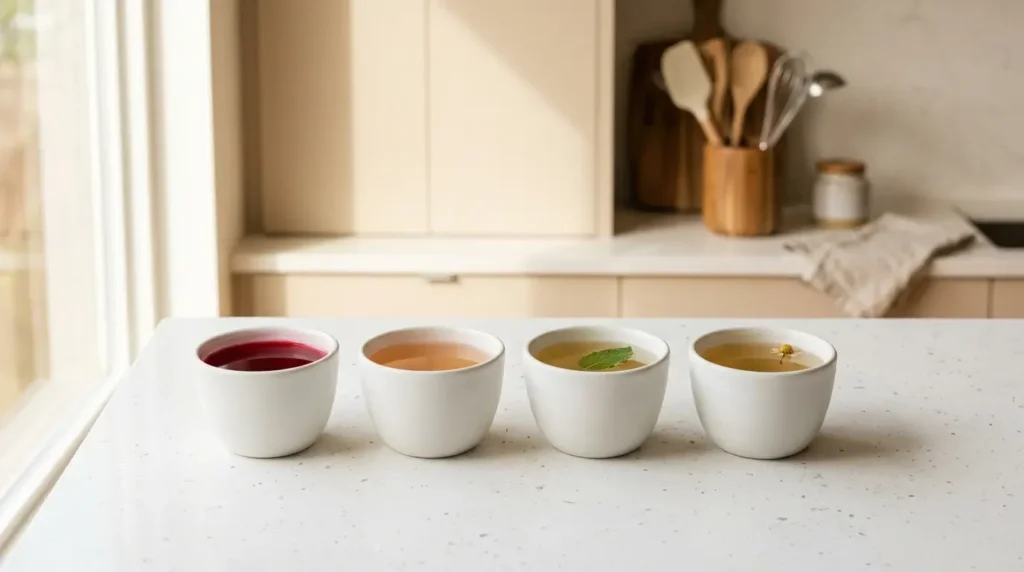
No single herbal tea addresses all menopausal symptoms. The most effective herbal approach combines teas that target different mechanisms simultaneously.
The Complete Four-Tea Menopause Protocol
Red clover tea (1–2 cups daily): The phytoestrogenic foundation. Red clover isoflavones directly address hot flashes (40–44% reduction in clinical trials), bone density loss, and some of the hormonal changes driving menopausal symptoms. This is the closest herbal equivalent to mild estrogen replacement for hot flash management. See our full red clover tea benefits guide.
Hibiscus tea (2 cups daily): The cardiovascular and metabolic layer. Addresses the most medically serious menopausal changes — blood pressure rise, LDL changes, weight shift, and skin aging acceleration.
Spearmint tea (2 cups daily): The androgen management layer. After menopause, the estrogen-to-androgen ratio shifts — many women experience increased facial hair (hirsutism), acne, and androgenic hair thinning. Spearmint’s anti-androgenic compounds directly reduce free testosterone, addressing these symptoms. See our spearmint tea benefits guide.
Chamomile tea (1 cup before bed): The sleep and anxiety layer. Chamomile’s apigenin directly activates GABA receptors — providing genuine sedative and anxiolytic effects for the sleep disruption and mood changes common in menopause. See our chamomile tea benefits guide.
Practical Daily Schedule
| Time | Tea | Purpose |
|---|---|---|
| Morning after breakfast | Hibiscus (cup 1) | Blood pressure, antioxidants |
| Before lunch | Hibiscus (cup 2) or red clover | Metabolic, isoflavones |
| Afternoon | Red clover or spearmint | Isoflavones, androgen management |
| Spearmint | Evening cup | Androgen management |
| 30–45 min before bed | Chamomile | Sleep, anxiety |
Important Safety Notes for Menopausal Women
On hormone replacement therapy (HRT): Hibiscus tea itself does not have significant phytoestrogenic activity and does not interact with HRT in the way red clover might. However, its blood pressure-lowering effect should be considered if you are on antihypertensive medication — additive hypotension is possible. Discuss with your doctor.
Red clover and HRT: If you choose to add red clover tea to your routine while on HRT, the additive phytoestrogenic effect warrants a conversation with your doctor.
Blood pressure medication: If you are already on antihypertensive medication, daily hibiscus tea may lower your blood pressure further. Monitor your readings and consult your doctor before establishing a daily habit.
For the complete safety profile of hibiscus tea including all drug interactions, see our hibiscus tea side effects guide.
Frequently asked questions
Key Takeaways
- Hibiscus tea for menopause is most valuable for cardiovascular protection, weight management, skin health, and sleep support — not hot flash reduction
- The cardiovascular benefit (7–13 mmHg systolic reduction) directly addresses the most medically serious menopausal change — the post-estrogen blood pressure rise
- Hibiscus is not a phytoestrogen and does not bind to estrogen receptors — it complements rather than replaces red clover for hormonal symptoms
- The most complete herbal menopause strategy combines four teas: hibiscus + red clover + spearmint + chamomile
- 2 cups per day consistently for 4–6 weeks produces the documented blood pressure benefit
- Safe for most menopausal women — caution for those on antihypertensive medication or blood thinners
- Combine with red clover for hot flashes, spearmint for androgenic changes, and chamomile for sleep