
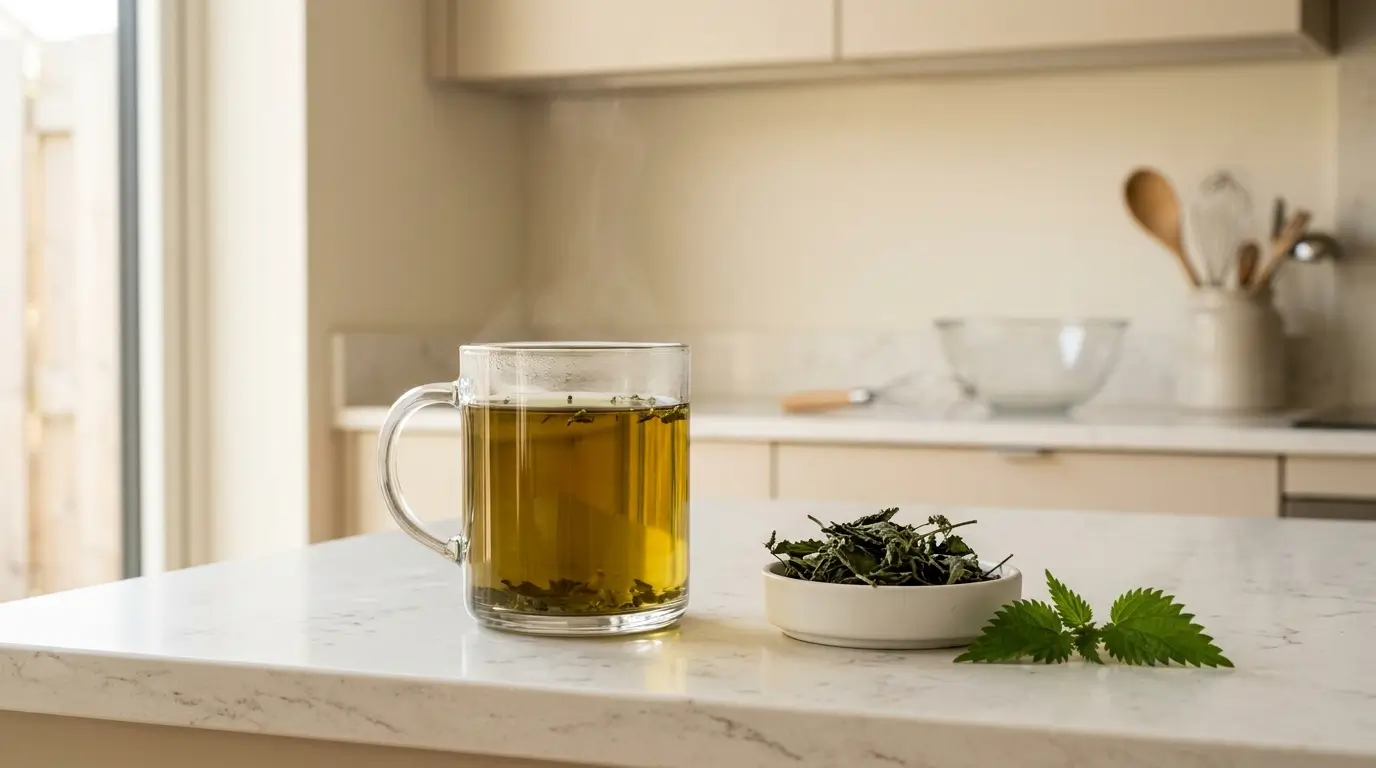
Nettle tea benefits are more specific and clinically supported than most people expect from a “weed tea.” Made from the leaves of stinging nettle (Urtica dioica), nettle tea is one of the most nutritionally dense herbal teas available and one of the few with clinical trial evidence specifically for seasonal allergy relief. It is caffeine-free, rich in iron, magnesium, calcium, and vitamins K and C, and has documented anti-inflammatory and antihistamine properties. This guide covers what nettle tea actually does, what the evidence supports, who benefits most, and how it differs from purple dead nettle — a separate plant that is currently trending for different reasons.
What Is Nettle Tea?
Nettle tea is made from the dried leaves of Urtica dioica — the common stinging nettle. Despite the plant’s reputation for painful skin contact when fresh, drying or heating the leaves completely neutralizes the stinging compounds (formic acid and histamine-like compounds in the tiny hollow hairs). Dried or cooked nettle is completely safe to handle and consume.
Stinging nettle has been used in traditional European, Middle Eastern, and North American herbal medicine for centuries — for joint pain, urinary health, allergies, and as a nutritional supplement. Modern research is confirming and refining these traditional uses.
Does nettle tea have caffeine? No — nettle tea is completely caffeine-free and can be consumed at any time of day.
Nettle Tea Benefits: What the Research Shows
1. Natural Antihistamine for Allergies — The Most Searched Benefit
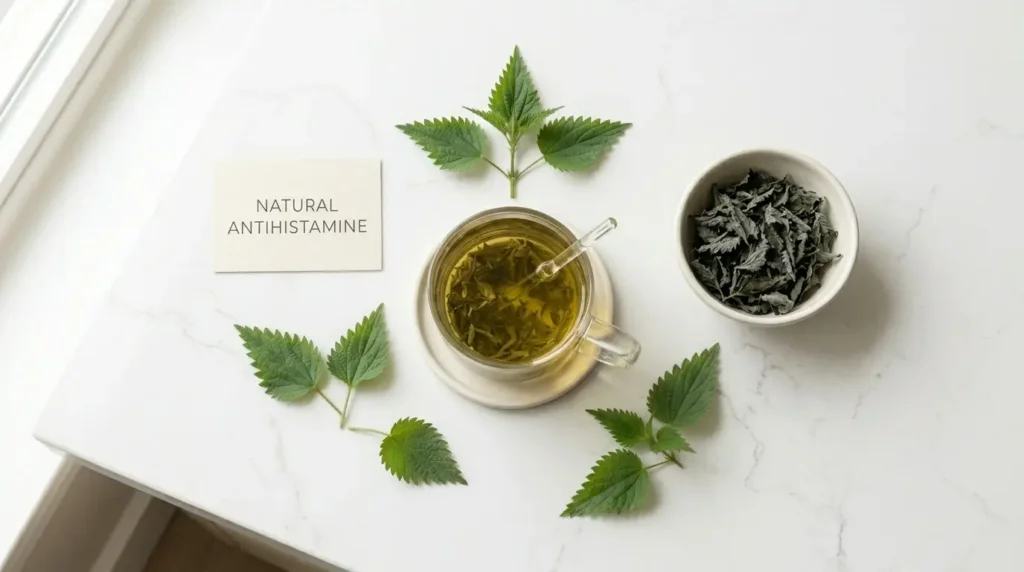
“Nettle tea for allergies” is trending at +180% — and for good reason. This is one of the most clinically interesting and practically useful benefits of stinging nettle.
Nettle leaf has demonstrated antihistamine activity through several mechanisms:
Histamine receptor inhibition: Nettle extract has been shown to inhibit H1 histamine receptors — the same receptors blocked by antihistamine medications like loratadine (Claritin) and cetirizine (Zyrtec). This directly reduces the histamine-mediated symptoms of allergic rhinitis: sneezing, itchy eyes, runny nose, and nasal congestion.
Inhibition of inflammatory enzymes: Nettle inhibits cyclooxygenase (COX-1 and COX-2) enzymes and 5-lipoxygenase — the same enzyme targets of both NSAIDs and leukotriene-blocking allergy medications. This gives nettle a dual mechanism against allergic inflammation that goes beyond simple histamine blocking.
Clinical evidence: A randomized double-blind trial published in Planta Medica found that freeze-dried nettle leaf was rated as more effective than placebo and moderately effective compared to antihistamine medication for hay fever symptoms by 58% of participants. Freeze-dried nettle extract is more potent than brewed tea — but the active compounds are present in both.
Practical use: For seasonal allergy relief, drink 2–3 cups of strong nettle tea daily during allergy season, starting 2–3 weeks before peak pollen season to build preventive levels. Fresh or freeze-dried nettle provides stronger antihistamine activity than dried leaf tea — if allergies are severe, consider a freeze-dried nettle supplement alongside regular tea consumption.
2. Exceptional Nutritional Density
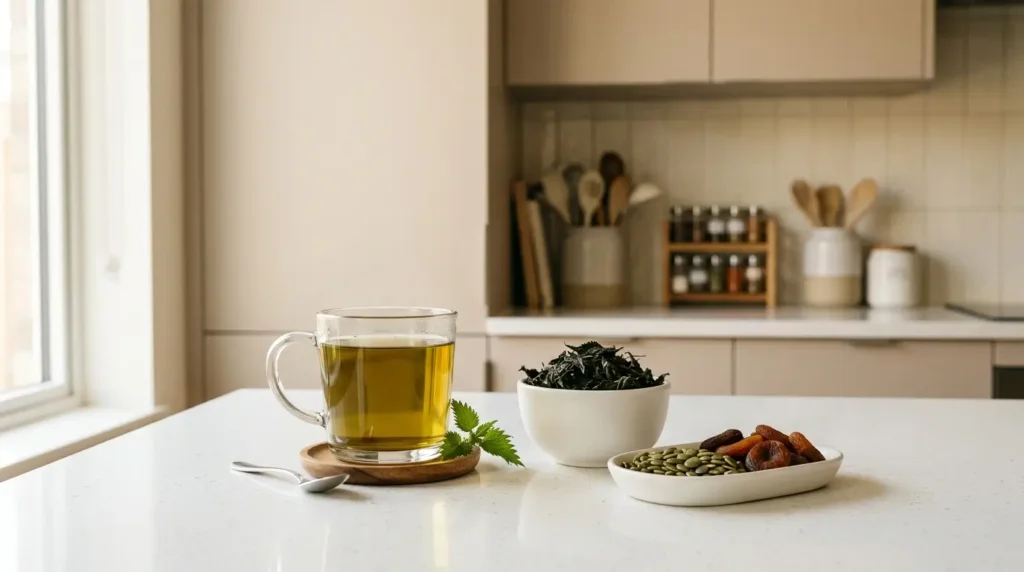
Nettle leaf is one of the most nutrient-dense plants available — it is essentially a multivitamin in herbal form. The dried leaf contains:
- Iron — significantly higher than most plant sources, including spinach
- Magnesium — important for muscle function, sleep, and nervous system health
- Calcium — meaningful amounts per cup, relevant for bone health
- Vitamin K — one of the richest herbal tea sources; important for blood clotting and bone mineralization
- Vitamin C — supports iron absorption and immune function
- Potassium — electrolyte balance and blood pressure regulation
- Folate — important for cell division and particularly relevant in pregnancy
The iron content makes nettle tea particularly valuable for women of reproductive age, vegetarians and vegans, and anyone managing iron-deficiency tendencies. Unlike pharmaceutical iron supplements, nettle provides iron alongside vitamin C (which enhances iron absorption) and without the gastrointestinal side effects.
Important caveat: Brewed nettle tea contains significantly less of these nutrients than eating the whole leaf — much is left in the strained plant material. For maximum nutritional benefit, drink the tea daily and consider also eating cooked nettle (sautéed like spinach) when available.
3. Anti-Inflammatory Effects
Nettle’s anti-inflammatory activity is broad and well-documented across multiple studies. The key compounds responsible include lectins, polysaccharides, and phenolic acids that collectively suppress the production of pro-inflammatory cytokines including TNF-alpha, IL-1 beta, and IL-6.
A study published in the Journal of Rheumatology found that daily stewed nettle leaf significantly reduced the need for anti-inflammatory medication (diclofenac) in patients with acute arthritis — suggesting a clinically meaningful anti-inflammatory effect.
This anti-inflammatory activity is relevant for:
- Joint pain and osteoarthritis
- Seasonal allergic inflammation
- General chronic inflammation management
- Post-exercise muscle recovery
4. Joint and Arthritis Support
Beyond its general anti-inflammatory effects, nettle has been specifically studied for arthritis. A 2009 study found that topical nettle leaf application reduced joint pain in osteoarthritis patients. Oral consumption of nettle leaf has shown anti-arthritic effects in multiple animal models and preliminary human studies.
The mechanism involves nettle’s ability to inhibit NF-kB — a key transcription factor that regulates the production of inflammatory compounds in joint tissue. This is a similar mechanism to some pharmaceutical anti-inflammatory drugs.
5. Prostate Health (BPH)
Stinging nettle root — not the leaf used in most teas — has the strongest evidence for benign prostatic hyperplasia (BPH). However, nettle leaf also contributes to prostate health through its anti-inflammatory effects.
Several clinical trials have tested nettle root extract for BPH symptoms (urinary frequency, incomplete bladder emptying, reduced flow) and found meaningful improvements compared to placebo. This benefit is from the root, so if prostate health is the primary goal, look for products that include nettle root rather than leaf only.
6. Blood Sugar Regulation
Multiple studies have found that nettle extract reduces blood glucose levels and improves insulin sensitivity in diabetic animal models. A small human study found that nettle extract supplementation significantly reduced fasting blood glucose and HbA1c in people with type 2 diabetes.
The mechanism involves stimulation of insulin secretion and inhibition of alpha-glucosidase (similar to the amylase inhibition seen with hibiscus and dandelion). At tea concentration, this effect is modest — but regular daily consumption contributes to blood sugar management as part of a broader dietary strategy.
7. Kidney and Urinary Health
Nettle leaf is a gentle diuretic that increases urinary output and flow. Unlike dandelion leaf, which provides potassium to replace what is lost through diuresis, nettle’s diuretic effect is milder and less potassium-depleting.
Traditional use for urinary tract health is supported by nettle’s anti-inflammatory effects on the urinary mucosa and its mild antimicrobial activity. Increased urinary flow from nettle tea helps flush bacteria from the urinary tract, contributing to UTI prevention.
8. Women’s Health — Iron, Hormones, and Menstrual Support
Nettle tea is particularly relevant for women for several reasons that complement the benefits of other herbal teas in your routine:
Iron replenishment: For women with heavy menstrual periods who lose significant iron monthly, regular nettle tea consumption helps replenish iron stores naturally alongside dietary sources.
Mild hormonal support: Nettle contains compounds that interact with sex hormone-binding globulin (SHBG) — the protein that binds testosterone and estrogen in the blood. By binding to SHBG itself, nettle may slightly increase free hormone availability. This is a mild effect but potentially relevant for women managing hormonal imbalances.
Pregnancy nutrition: Nettle’s rich folate, iron, calcium, and vitamin K content makes it one of the more nutritionally supportive herbal teas during pregnancy — though it should be used in moderation and discussed with a midwife (see safety section).
For a full picture of herbal teas and women’s hormonal health, our guide on hibiscus tea benefits for women and spearmint tea benefits cover complementary angles.
Purple Dead Nettle Tea Benefits: A Completely Different Plant
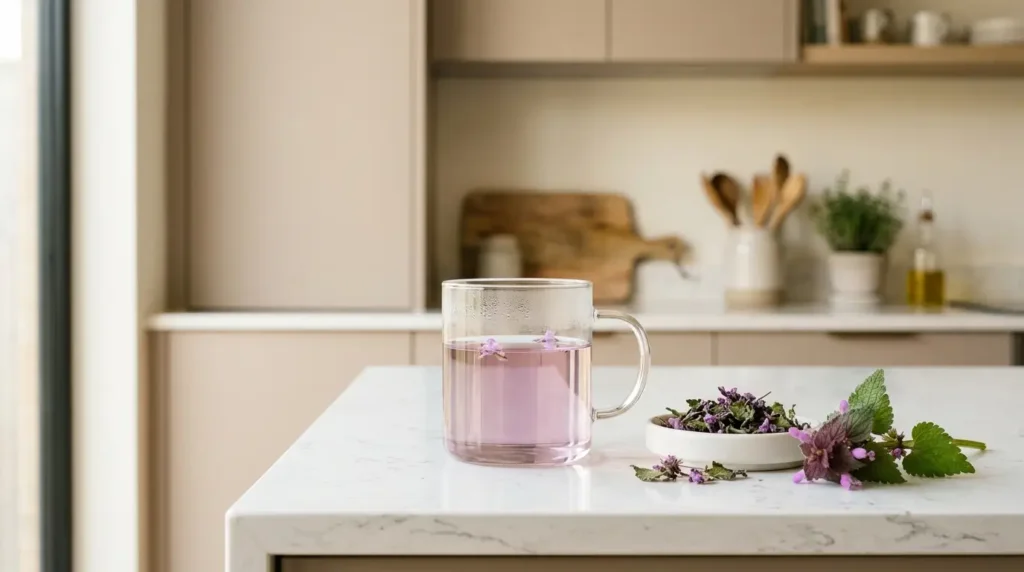
“Purple dead nettle tea benefits” is trending at +100% — and it needs its own section because purple dead nettle is not related to stinging nettle despite the similar name.
Purple dead nettle (Lamium purpureum) is a small flowering plant in the mint family (Lamiaceae) — not the nettle family (Urticaceae). It does not sting, has a different nutritional profile, and different health properties. It is one of the first edible plants to appear in spring, making it a traditional spring tonic herb.
What Purple Dead Nettle Tea Does
Antioxidant and anti-inflammatory: Purple dead nettle contains flavonoids including quercetin and kaempferol, as well as rosmarinic acid — the same anti-inflammatory compound found in spearmint and rosemary. These provide meaningful antioxidant and anti-inflammatory activity.
Antihistamine properties: Like stinging nettle, purple dead nettle also has mild antihistamine activity — making it a spring ally for allergy season (which conveniently coincides with its peak growth period).
Astringent and wound-healing: Purple dead nettle has been used in folk medicine as an astringent and mild antimicrobial for wound healing. Internally, these astringent properties may support gut lining integrity.
Mild diuretic: Purple dead nettle has gentle diuretic properties that support fluid balance without significant electrolyte disruption.
How to Make Purple Dead Nettle Tea
Purple dead nettle is foraged rather than commercially sold in most markets. If you have access to it (common in gardens, roadsides, and fields in early spring):
- Harvest the purple tops (flowers + upper leaves) — these contain the highest concentration of active compounds
- Rinse thoroughly
- Steep 2 tablespoons of fresh plant material (or 1 tablespoon dried) in 240ml of hot water for 10 minutes
- Strain and serve — flavor is mild, slightly minty and earthy
Safety note: Correctly identify the plant before consuming. Purple dead nettle has distinctive purple-tinged upper leaves and small pink-purple flowers. It is not toxic, but correct identification is important with any foraged herb.
How to Make Nettle Tea
From dried nettle leaf (most common):
- 1–2 teaspoons of dried nettle leaf per 240ml of hot water
- Steep at 90–95°C for 5–10 minutes
- Strain well — nettle particles can be very fine
- Serve plain or with honey and lemon
- Flavor: earthy, slightly grassy, mild — similar to green tea but softer
From fresh nettle (stronger, more nutrients):
- Wear gloves when handling fresh nettle
- Rinse thoroughly under running water
- Place a generous handful (10–15 leaves) in a teapot
- Pour boiling water directly over — the heat instantly neutralizes the sting
- Steep 5–8 minutes, strain, serve
Cold infusion (maximum mineral extraction):
- Add 2 tablespoons dried nettle to 500ml of cold water
- Leave at room temperature or refrigerate for 4–8 hours
- Strain and drink — cold infusion extracts more minerals than hot brewing
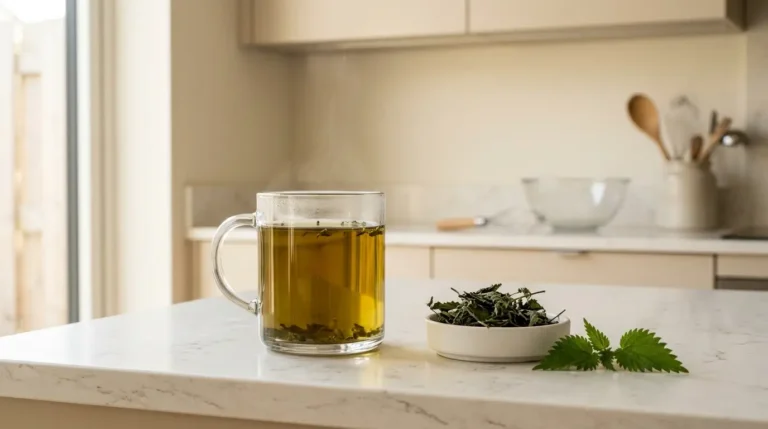
Nettle Tea Benefits: What Science Says About Allergies, Iron, and Inflammation
Learn how to make nettle tea from dried leaves, fresh nettle, or cold infusion. Each method produces a different flavor and nutrient profile — this guide covers the exact steps, ratios, and tips for the best cup every time.
- Total Time: 15 minutes
- Yield: 1 cup (240ml) 1x
Ingredients
- 1–2 tsp dried nettle leaf per 240ml water (dried method)
- 10–15 fresh nettle leaves per 240ml water (fresh method)
- 2 tbsp dried nettle per 500ml cold water (cold infusion)
- Raw honey to taste (optional)
- Fresh lemon juice (optional)
Instructions
- Heat water to 90–95°C (194–203°F) — do not boil
- Add 1–2 teaspoons dried nettle leaf to your cup or teapot
- Pour hot water over the leaves
- Steep for 5–10 minutes
- Strain well and serve with honey or lemon if desired
- Wear gloves when handling fresh nettle
- Rinse 10–15 fresh leaves thoroughly under running water
- Place leaves in a teapot or heatproof cup
- Pour boiling water directly over the leaves — the heat neutralizes the sting instantly
- Steep for 5–8 minutes, strain and serve
- Add 2 tablespoons dried nettle to 500ml cold water
- Leave at room temperature or refrigerate for 4–8 hours
- Strain thoroughly and drink
Notes
The cold infusion method extracts the most minerals (iron, calcium, magnesium) from the nettle leaf — ideal for nutritional purposes. Hot brewing extracts more of the anti-inflammatory and antihistamine compounds. For allergy relief, drink 2–3 cups daily during allergy season. Always strain well — nettle particles can be very fine.
- Prep Time: 5 minutes
- Cook Time: 10 minutes
- Category: Drinks
- Method: Steeping / Cold Infusion
- Cuisine: Universal
- Diet: Vegan
Nutrition
- Serving Size: 1 cup (240ml)
- Calories: 5 kcal
- Sugar: 0g
- Sodium: 3mg
- Fat: 0g
- Saturated Fat: 0g
- Unsaturated Fat: 0g
- Trans Fat: 0g
- Carbohydrates: 1g
- Fiber: 0g
- Protein: 0g
- Cholesterol: 0mg
Keywords: how to make nettle tea, nettle leaf tea recipe, stinging nettle tea, fresh nettle tea, cold infusion nettle
For more herbal tea preparation techniques, our herbal teas guide covers the full range.
Nettle Tea Side Effects and Safety
Nettle tea is safe for most healthy adults. Key considerations:
Diuretic effect: Can increase urination — avoid before long trips or overnight if you are sensitive.
Blood pressure medications: Nettle’s mild diuretic and blood pressure-lowering effects can add to antihypertensive medication. Monitor blood pressure if combining.
Blood thinners: Nettle’s high vitamin K content may interfere with warfarin therapy — consistent daily intake of high-vitamin K foods/teas requires dose monitoring.
Diabetes medications: Nettle’s blood sugar-lowering effect can add to diabetes medication — monitor glucose if combining.
Allergies: Nettle is generally well tolerated, but people with severe plant allergies should start with a small amount.
Pregnancy: Nettle leaf in moderate amounts (1–2 cups per day) is traditionally considered safe and nutritionally beneficial during pregnancy due to its iron, folate, and calcium content. However, it has historically been used to stimulate uterine contractions at medicinal doses — as a precaution, limit to 1–2 cups per day and consult your midwife. Nettle root should be avoided during pregnancy.
For the general herbal tea safety framework, our hibiscus tea side effects guide covers principles applicable across herbal teas.
Nettle Tea vs Other Herbal Teas
| Nettle | Chamomile | Spearmint | Rooibos | |
|---|---|---|---|---|
| Caffeine | None | None | None | None |
| Best for | Allergies, iron, inflammation | Sleep, anxiety, digestion | PCOS, hormones | Antioxidants, sleep |
| Iron content | ✅ High | ❌ Low | ❌ Low | ❌ Low |
| Antihistamine | ✅ Yes | ⚠️ Mild | ❌ No | ❌ No |
| Acid reflux safe | ✅ Yes | ✅ Yes | ✅ Yes | ✅ Yes |
| Pregnancy safe | ✅ Moderate | ✅ Moderate | ⚠️ Moderate | ✅ Yes |
| Flavor | Earthy, grassy | Sweet, floral | Fresh, minty | Sweet, earthy |
For a full comparison of herbal teas see our herbal tea vs green tea benefits guide.
Frequently Asked Questions
What are the benefits of nettle tea?
The main nettle tea benefits are natural antihistamine activity for allergy relief, exceptional nutritional density (iron, magnesium, calcium, vitamins K and C), anti-inflammatory effects relevant for joint pain and arthritis, blood sugar regulation, kidney and urinary health support, and women’s health support through iron replenishment and mild hormonal activity.
Does nettle tea help with allergies?
Yes — this is one of nettle’s most clinically supported benefits. Stinging nettle inhibits histamine receptors and inflammatory enzymes, reducing hay fever and allergic rhinitis symptoms. A randomized trial found freeze-dried nettle leaf rated more effective than placebo by 58% of participants. Drink 2–3 cups daily during allergy season, ideally starting 2–3 weeks before peak pollen.
What is nettle tea good for?
Nettle tea is particularly good for seasonal allergy relief, iron replenishment (especially for women with heavy periods), anti-inflammatory support for joint pain, blood sugar management, and kidney flushing. It is also one of the most nutrient-dense herbal teas available.
Does nettle tea have caffeine?
No. Nettle tea is completely caffeine-free and can be consumed at any time of day.
What is purple dead nettle tea good for?
Purple dead nettle (Lamium purpureum) — not related to stinging nettle — contains antioxidant flavonoids, anti-inflammatory rosmarinic acid, and mild antihistamine compounds. It is a spring foraged herb used as an antioxidant and allergy-season tonic. It is safe, mild in flavor, and one of the first edible plants of spring.
Is nettle tea safe during pregnancy?
Nettle leaf tea in moderate amounts (1–2 cups per day) is traditionally considered safe and nutritionally beneficial during pregnancy — its iron, folate, calcium, and vitamin K content make it one of the more supportive herbal teas for pregnancy. Limit to moderate consumption and consult your midwife. Avoid nettle root during pregnancy.
How much nettle tea should I drink per day?
One to three cups per day is the typical range for most health benefits. For allergy relief specifically, 2–3 cups daily during allergy season is the recommended amount. Consistent daily use over weeks provides more benefit than occasional consumption.
Is nettle tea the same as stinging nettle tea?
Yes — nettle tea, stinging nettle tea, and nettle leaf tea all refer to the same thing: tea made from the dried leaves of Urtica dioica. The “stinging” is neutralized by drying or heating.
Key Takeaways
- Nettle tea benefits are anchored by its natural antihistamine activity — one of the most clinically supported uses of any herbal tea for allergy relief
- It is also one of the most nutrient-dense herbal teas available — high in iron, magnesium, calcium, vitamin K, and vitamin C
- For allergy relief, drink 2–3 cups daily starting 2–3 weeks before peak pollen season
- Purple dead nettle is a completely different plant (mint family) with its own antioxidant and antihistamine profile — currently trending as a spring foraged herb
- Completely caffeine-free and safe for most adults at 1–3 cups per day
- Particularly relevant for women due to its iron content, hormonal activity, and pregnancy-safe nutritional profile
- Key interactions: vitamin K content affects warfarin; blood sugar and blood pressure-lowering effects may add to medications