
Hibiscus tea side effects are real — and often overlooked because hibiscus is widely marketed as a purely beneficial wellness drink. For most healthy adults drinking 1–2 cups per day, hibiscus tea is safe and well-tolerated. But for specific populations — people on blood pressure medication, those with kidney disease, pregnant women, and people with acid reflux — hibiscus tea carries meaningful risks that deserve serious attention. This guide covers every known side effect, who is most at risk, and exactly how much is too much.
Are Hibiscus Tea Side Effects Common?
At moderate doses, hibiscus tea side effects are uncommon in healthy adults. The majority of people who drink 1–2 cups per day report no adverse effects whatsoever. The side effects that do occur tend to fall into three categories:
- Dose-dependent effects — problems that only arise when you drink too much
- Population-specific risks — serious concerns for people with certain health conditions or on certain medications
- Preparation-related issues — problems caused by drinking it hot, on an empty stomach, or with acidic additions
Understanding which category applies to you is the key to drinking hibiscus tea safely. For a complete overview of its benefits alongside its risks, start with our guide on hibiscus tea benefits.
8 Known Hibiscus Tea Side Effects
1. Blood Pressure Drop (Hypotension)
This is the most clinically significant hibiscus tea side effect for a large portion of the population.
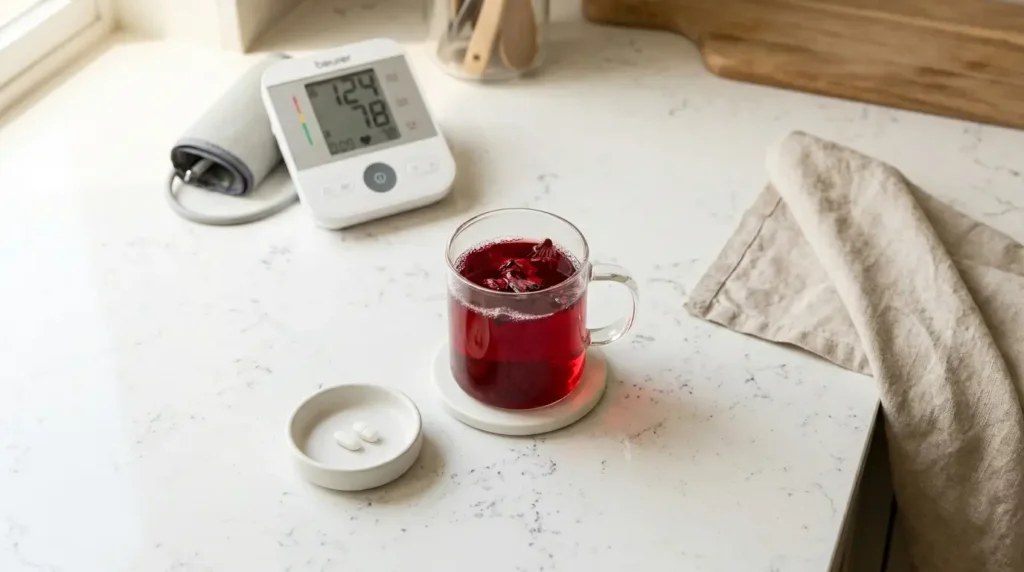
Hibiscus is one of the most effective herbal remedies for lowering blood pressure — multiple clinical trials show it can reduce systolic blood pressure by 7–13 mmHg with regular consumption. This is genuinely beneficial for people with hypertension. But for people who already have normal or low blood pressure, or for those already taking antihypertensive medication, this effect becomes a risk.
Drinking hibiscus tea on top of blood pressure-lowering medication can cause additive hypotension — blood pressure dropping lower than intended, leading to dizziness, lightheadedness, fainting, or in severe cases, dangerous falls. This is particularly risky for elderly individuals.
Who is at risk: People taking ACE inhibitors, calcium channel blockers, beta blockers, diuretics, or any antihypertensive medication. Also people with naturally low blood pressure (below 90/60 mmHg).
Our full guide on hibiscus tea and blood pressure explains this interaction in detail.
2. Drug Interactions
Beyond blood pressure medication, hibiscus tea has documented interactions with several other drug classes:
Chloroquine (antimalarial): Research shows hibiscus extract significantly reduces the bioavailability of chloroquine, meaning the medication becomes less effective when taken alongside hibiscus tea. This is a clinically important interaction for anyone using antimalarial treatment.
Diuretics: Hibiscus has mild diuretic properties on its own. Combined with prescription diuretics, excessive urination and electrolyte depletion can result.
Immunosuppressants: There is limited but concerning evidence suggesting high-dose hibiscus extract may interact with cyclosporine, used by organ transplant recipients. Transplant patients should avoid hibiscus tea entirely unless cleared by their transplant team.
Diabetes medication: Hibiscus may have mild blood sugar-lowering effects. People on insulin or oral hypoglycemics should monitor their blood glucose more carefully if adding hibiscus tea to their routine.
Rule of thumb: If you take any prescription medication daily, check with your doctor or pharmacist before making hibiscus tea a regular habit.
3. Acid Reflux and Heartburn Aggravation
Hibiscus tea has a pH of 2.5–3.5 — making it one of the most acidic herbal teas available. For people with gastroesophageal reflux disease (GERD), esophagitis, or a sensitive stomach, this acidity can directly irritate the esophageal lining and trigger or worsen heartburn.
This is not a minor consideration. With 522+ monthly searches for “is hibiscus tea acidic” in our data, it is clearly one of the most searched concerns about this drink.
The full breakdown of this side effect — including who is at risk, safe preparation methods, and cold brew alternatives — is in our dedicated guide on hibiscus tea and acid reflux. For a scientific breakdown of exactly why hibiscus tea is acidic, see our article on whether hibiscus tea is acidic or alkaline.
4. Kidney Stress (in Vulnerable Individuals)
For healthy kidneys, moderate hibiscus tea consumption poses no risk. But hibiscus tea contains two compounds that can affect the kidneys under specific circumstances:
- Oxalic acid: A precursor to oxalate, which contributes to calcium oxalate kidney stones in predisposed individuals
- Potassium: Present in meaningful amounts — a concern for CKD patients who struggle to excrete excess potassium
People with chronic kidney disease (stage 3 and above) should avoid hibiscus tea. People with a history of calcium oxalate kidney stones should limit consumption and always drink it with plenty of water.
Our comprehensive guide on hibiscus tea and kidneys covers all of this in detail, including safe intake by CKD stage.
5. Liver Toxicity at Very High Doses
This side effect requires important context: it has only been observed in animal studies using very high doses of concentrated hibiscus extract — far beyond what you would consume from drinking 1–3 cups of tea per day.
There are no documented cases of liver toxicity from normal hibiscus tea consumption in humans. However, hibiscus supplements, concentrated hibiscus powders, and hibiscus extract capsules carry a different risk profile than brewed tea. If you use hibiscus in supplement form, dose matters significantly.
For tea drinkers: This side effect is not a practical concern at normal consumption levels. For supplement users: stick to the manufacturer’s recommended dose and consult a doctor if you have any history of liver disease.
6. Nausea and Stomach Discomfort
Some people — particularly those with sensitive stomachs — experience mild nausea or stomach discomfort when drinking hibiscus tea, especially when:
- Consumed on an empty stomach
- Brewed at high concentration
- Drunk in large quantities (more than 3 cups per day)
- Consumed hot (heat intensifies the perception of acidity)
The solution is straightforward: drink hibiscus tea after eating, at lower concentration, and consider cold brew for a gentler preparation. The best time to drink hibiscus tea guide covers optimal timing to minimize stomach discomfort.
7. Hormonal Effects — Estrogen Interaction
Hibiscus contains compounds that may weakly mimic estrogen activity in the body. The evidence here is preliminary and largely based on animal studies, but it raises a flag for specific populations:
- People with hormone-sensitive conditions (certain types of breast cancer, uterine fibroids, endometriosis) should consult their doctor before consuming hibiscus tea regularly
- People taking hormonal contraceptives or hormone replacement therapy should be aware of this potential interaction, even though clinical evidence in humans remains limited
This does not mean hibiscus tea is dangerous for women in general — it is consumed safely by millions of women worldwide. It means people with hormone-sensitive health conditions should discuss it with their healthcare provider.
8. Pregnancy and Breastfeeding Risk
Pregnant women should avoid hibiscus tea entirely. This is one of the clearest and most consistent contraindications in the herbal medicine literature.
Hibiscus has been shown in multiple studies to have emmenagogue effects — meaning it can stimulate blood flow to the uterus and potentially induce uterine contractions. This property has been used in traditional medicine as an herbal remedy to stimulate menstruation, which also means it carries a risk of miscarriage during pregnancy, particularly in the first trimester.
Breastfeeding women should also avoid hibiscus tea as a precaution, since insufficient safety data exists for this population.
Who Should Avoid Hibiscus Tea
Based on the side effects above, the following groups should either avoid hibiscus tea entirely or consult a doctor before drinking it:
| Population | Risk | Recommendation |
|---|---|---|
| Pregnant women | Uterine stimulation, miscarriage risk | ❌ Avoid entirely |
| Breastfeeding women | Insufficient safety data | ❌ Avoid to be safe |
| CKD stage 3+ / dialysis | Potassium accumulation, hyperkalemia | ❌ Avoid entirely |
| On antihypertensives | Additive blood pressure drop | ⚠️ Doctor consultation required |
| On antimalarials (chloroquine) | Reduced drug efficacy | ⚠️ Avoid concurrent use |
| Organ transplant recipients | Immunosuppressant interaction | ⚠️ Avoid without medical clearance |
| History of calcium oxalate stones | Oxalate load | ⚠️ Limit to 1 cup/day with water |
| Hormone-sensitive conditions | Weak estrogen-like activity | ⚠️ Doctor consultation recommended |
| Acid reflux / GERD | High acidity (pH 2.5–3.5) | ⚠️ Cold brew only, after meals |
| Low blood pressure | Hypotension risk | ⚠️ Avoid or limit to small amounts |
How Much Hibiscus Tea Is Too Much?
The dose makes the poison — this is as true for hibiscus tea as for any other functional beverage. Here is what the evidence suggests:
Safe for healthy adults: 1–3 cups per day of standard-strength hibiscus tea. This is the range used in most clinical studies on blood pressure and antioxidant effects with no reported adverse effects.
Upper threshold: Most herbalists and researchers suggest keeping intake below 4 cups per day of standard brew. Beyond this, the cumulative oxalate load, acidity, and potassium intake begin to increase meaningfully.
Hibiscus supplements and extracts: Follow manufacturer guidelines strictly. Concentrated extracts are not equivalent to brewed tea — the dose-effect curve is much steeper and the liver toxicity concern becomes more relevant above therapeutic doses.
Standard brew concentration: 1–2 teaspoons of dried hibiscus per 8 oz of water, steeped 5–10 minutes. For detailed guidance, see our article on how much hibiscus tea per day.
How to Minimize Hibiscus Tea Side Effects
For people who want to enjoy hibiscus tea while reducing the risk of side effects, these five practices cover most of the common issues:
Drink cold brew instead of hot. Cold brewing extracts fewer acids and produces a higher-pH drink. It is gentler on the esophagus, stomach, and kidneys. Our hibiscus tea hot or cold guide explains the full difference in extraction and effect.
Never drink it on an empty stomach. Food buffers the acidity and reduces the risk of stomach irritation, nausea, and esophageal discomfort.
Limit to 1–2 cups per day. The sweet spot for benefits without risk. More is not better with hibiscus.
Drink a full glass of water alongside each cup. This dilutes urinary oxalate concentration, reducing kidney stone risk, and helps maintain blood pressure stability.
Check your medications first. If you take any daily prescription drug — especially antihypertensives, diabetes medication, or immunosuppressants — consult your pharmacist before adding hibiscus tea to your daily routine.
For a broader reference on how hibiscus compares to other herbal teas in terms of safety profile, our herbal teas guide covers the full spectrum.
Frequently Asked Questions
What are the side effects of hibiscus tea?
The main hibiscus tea side effects include blood pressure reduction (a risk when combined with antihypertensive medication), acid reflux aggravation due to its high acidity, kidney stress from oxalate and potassium content, nausea at high doses, and uterine stimulation in pregnant women.
Is it safe to drink hibiscus tea every day?
Yes, for most healthy adults at 1–2 cups per day. People with low blood pressure, kidney disease, acid reflux, hormone-sensitive conditions, or who are pregnant should avoid it or consult a doctor first.
Can hibiscus tea be harmful?
At normal consumption levels (1–3 cups/day of brewed tea), hibiscus is not harmful for healthy adults. It becomes harmful for specific populations — pregnant women, CKD patients, people on certain medications — and at very high doses from concentrated supplements.
Does hibiscus tea affect the liver?
Liver toxicity has only been observed in animal studies using very high doses of concentrated hibiscus extract — not from drinking tea at normal amounts. Brewed hibiscus tea at 1–3 cups per day poses no documented liver risk in healthy individuals.
Who should not drink hibiscus tea?
Pregnant women, women who are breastfeeding, people with CKD stage 3 or above, people on antihypertensive or antimalarial medication (without medical clearance), organ transplant recipients on immunosuppressants, and people with hormone-sensitive conditions should avoid or strictly limit hibiscus tea.
Can hibiscus tea cause stomach problems?
Yes, in some people — particularly when consumed on an empty stomach, at high concentration, or in large amounts. The high acidity (pH 2.5–3.5) can irritate the stomach lining and worsen acid reflux. Cold brew and post-meal consumption significantly reduce this risk.
Does hibiscus tea interact with medications?
Yes. Documented interactions include antihypertensives (additive blood pressure lowering), chloroquine antimalarials (reduced drug efficacy), diuretics (excess fluid and electrolyte loss), immunosuppressants (possible reduced efficacy), and diabetes medication (possible additive blood sugar lowering).
Can too much hibiscus tea hurt your kidneys?
For people with healthy kidneys, excessive consumption (4+ cups per day long-term) may increase oxalate load and raise kidney stone risk. For people with existing kidney disease, even moderate amounts can be dangerous due to potassium accumulation.
Key Takeaways
- Hibiscus tea side effects are uncommon at 1–2 cups per day for healthy adults — but real and serious for specific populations
- The most clinically significant side effect is blood pressure reduction, which becomes dangerous when combined with antihypertensive medication
- Pregnant women should avoid hibiscus tea entirely due to uterine stimulation risk
- People with CKD stage 3+ should avoid it due to potassium accumulation risk
- Acid reflux sufferers should use cold brew only, after meals, never on an empty stomach
- Drug interactions exist with antihypertensives, chloroquine, immunosuppressants, and diabetes medication
- Liver toxicity is only a concern with high-dose concentrated supplements — not with brewed tea at normal amounts
- Drinking 1–2 cups per day with food and adequate water eliminates most side effect risks for healthy adults