
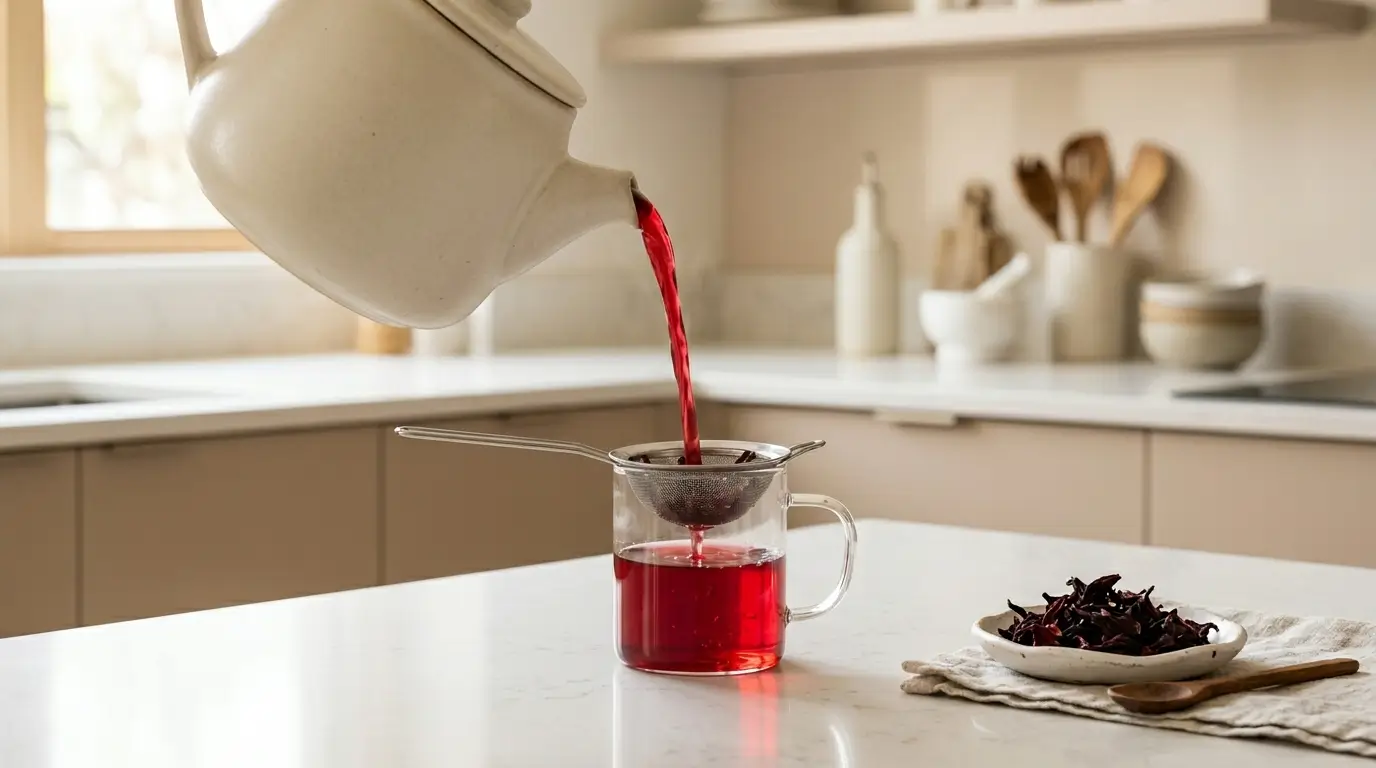
How to make hibiscus tea is simpler than most people expect — dried hibiscus calyces, hot or cold water, and a strainer are all you need. But the method you choose — hot brew, cold brew, iced, or concentrated syrup — significantly affects the flavor, acidity, and health benefits you get from each cup. This guide covers every method with exact ratios, steeping times, and the adjustments that make the difference between a flat cup and a vivid, perfectly balanced hibiscus tea.
What You Need to Make Hibiscus Tea
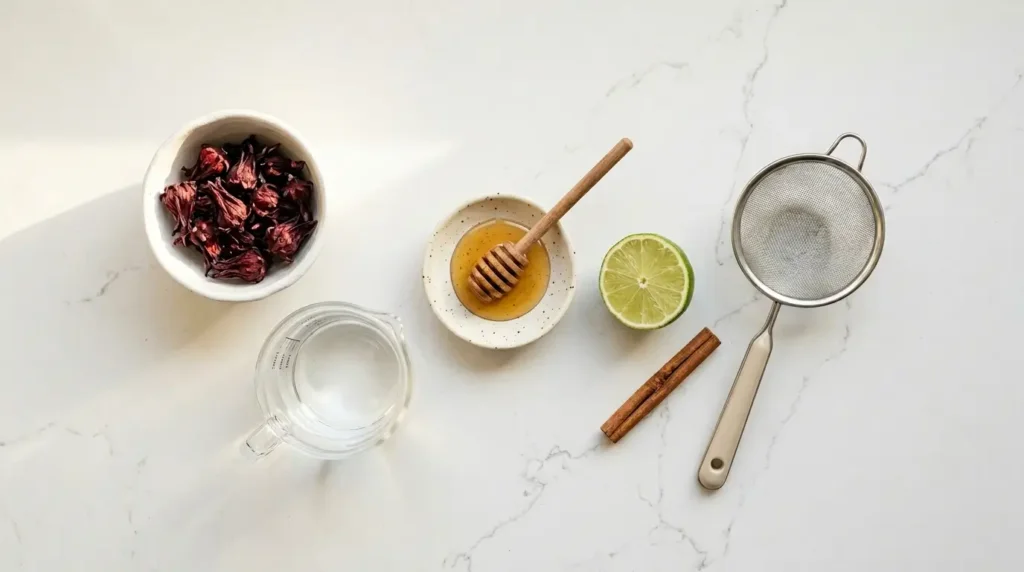
The essential ingredient: Dried Hibiscus sabdariffa calyces — the fleshy red structures at the base of the hibiscus flower. These are sold as “dried hibiscus flowers,” “flor de jamaica,” or “karkade” depending on the brand and cultural origin. They are the same ingredient regardless of the name.
What to look for when buying:
- Deep, vivid red color — pale or brownish calyces have lost potency and flavor
- Whole calyces or large cut pieces — avoid fine powder which produces a muddy brew
- USDA Organic certified if possible — hibiscus is grown in regions where pesticide standards vary
- No added ingredients — dried hibiscus should contain nothing but hibiscus
You will also need:
- A fine mesh strainer — hibiscus particles are small and need fine filtering
- A glass pitcher or teapot — glass shows the beautiful color; avoid reactive metals
- A kettle or saucepan for hot water
For guidance on drying hibiscus calyces at home from fresh flowers, our complete guide on how to dry hibiscus flowers for tea covers all three drying methods.
Method 1: Hot Brew Hibiscus Tea (Standard Method)
Best for: Maximum antioxidant extraction, deeper flavor, traditional preparation
Ratio: 2 teaspoons (4g) dried hibiscus per 240ml (8 oz) of water
Step-by-step:
- Heat water to 90°C (195°F) — just below a rolling boil. Boiling water (100°C) can degrade some of the delicate volatile compounds in hibiscus and slightly increase bitterness
- Add dried hibiscus calyces to your cup, teapot, or infuser
- Pour hot water over the calyces
- Steep for 5–10 minutes — 5 minutes produces a lighter, brighter cup; 10 minutes produces a deeper, more concentrated, tarter brew
- Strain immediately — leaving the calyces in longer than 10–12 minutes continues extracting acid and produces bitterness without improving flavor
- Sweeten while hot if desired — sweetener dissolves much better in hot liquid
- Serve hot, or allow to cool and pour over ice
Flavor tip: Add a cinnamon stick during steeping for warmth and depth. Add fresh lime juice after straining for brightness — never add citrus before or during steeping as it changes the color and chemical extraction.
Why hot brew extracts more: Hot water extracts anthocyanins and organic acids more efficiently than cold water. This gives hot brew a more concentrated flavor and higher antioxidant content per cup — but also makes it more acidic (pH 2.5–2.8). For a full explanation of why this matters, see our guide on hibiscus tea hot or cold.
Print
How to Make Hibiscus Tea: 4 Methods for the Perfect Cup
The complete guide to making hibiscus tea at home — hot brew for maximum antioxidants, cold brew for lower acidity, or iced for warm weather. Each method uses simple ingredients and produces a vivid ruby-red cup with a bold, cranberry-like flavor.
- Total Time: 15 minutes
- Yield: 1 cup (hot) · 4 cups (cold brew) 1x
Ingredients
- 2 tsp dried hibiscus calyces per 240ml water (hot brew)
- 3 tbsp dried hibiscus calyces per 1 liter water (cold brew)
- Raw honey or cane sugar to taste (optional)
- Fresh lemon or lime juice (optional)
- Ice cubes (for iced versions)
- 1 cinnamon stick (optional — adds warmth)
Instructions
- Hot brew (standard method): Heat water to 90°C (195°F) — just below boiling.
- Add 2 teaspoons dried hibiscus calyces per 240ml to your cup or teapot.
- Pour hot water over the calyces.
- Steep for 5–10 minutes — longer steeping = deeper color and more tart flavor.
- Strain immediately after steeping.
- Sweeten while hot if desired.
- Serve hot or allow to cool and pour over ice.
- Cold brew (low acidity method): Add 3 tablespoons dried hibiscus to 1 liter of cold filtered water in a glass pitcher.
- Add cinnamon stick if using.
- Cover and refrigerate for 8–12 hours (overnight is ideal).
- Strain through a fine mesh strainer.
- Sweeten to taste and serve over ice with a squeeze of lime.
- Concentrated syrup (for batch preparation): Simmer 1 cup dried hibiscus in 2 cups water for 15 minutes.
- Strain and stir in ½ cup honey or sugar while hot.
- Store in a sealed jar in the refrigerator for up to 2 weeks.
- Add 2–3 tablespoons to a glass of cold water or sparkling water to serve.
Notes
Use Hibiscus sabdariffa (dried calyces) — not ornamental hibiscus. Cold brew is recommended for people with acid reflux (higher pH, less acidic). Do not over-steep hot brew — leaving calyces in longer than 15 minutes increases bitterness without adding flavor benefit. Store cold brew in the refrigerator for up to 5 days. For the traditional Mexican agua de jamaica, add fresh lime juice and increase the sweetener slightly.
- Prep Time: 5 minutes
- Cook Time: 10 minutes
- Category: Drinks
- Method: Steeping / Cold Infusion
- Cuisine: Universal
- Diet: Vegan
Nutrition
- Serving Size: 1 cup (240ml)
- Calories: 5
- Sugar: 0g
- Sodium: 2mg
- Fat: 0g
- Saturated Fat: 0g
- Unsaturated Fat: 0g
- Trans Fat: 0g
- Carbohydrates: 1g
- Fiber: 0g
- Protein: 0g
- Cholesterol: 0mg
Keywords: how to make hibiscus tea, hibiscus tea recipe, cold brew hibiscus, iced hibiscus tea, flor de jamaica recipe
Method 2: Cold Brew Hibiscus Tea (Low Acidity Method)
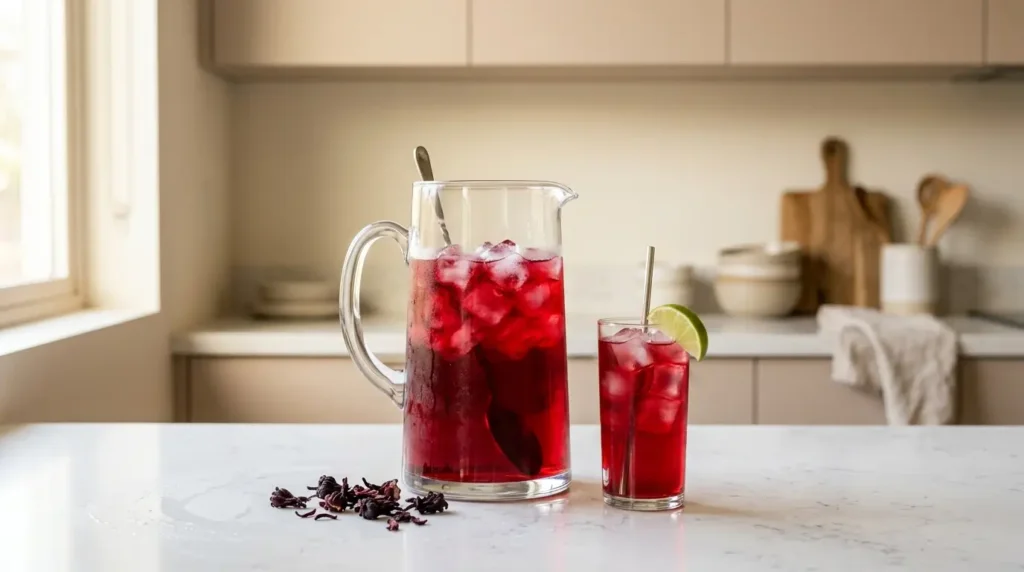
Best for: Sensitive stomachs, acid reflux, daily hydration, large batches
Ratio: 3 tablespoons (15g) dried hibiscus per 1 liter of cold water
Step-by-step:
- Add dried hibiscus calyces to a large glass pitcher
- Add a cinnamon stick or fresh ginger slices if desired
- Pour cold filtered water over the calyces
- Cover the pitcher and refrigerate for 8–12 hours — overnight is the most practical
- Strain through a fine mesh strainer
- Sweeten to taste (add sweetener to a small amount of warm water first to make a simple syrup, then stir in — cold water doesn’t dissolve granular sugar well)
- Add fresh lime juice and serve over ice
Storage: Cold brew hibiscus keeps in a sealed pitcher in the refrigerator for 4–5 days. Flavor is best within the first 2 days.
Why cold brew is less acidic: Cold water extracts fewer organic acids from the calyces over the long infusion time. The result is a pH of approximately 3.0–3.5 — significantly less acidic than hot brew’s 2.5–2.8. This makes cold brew the recommended method for people with acid reflux or GERD. See our full guide on hibiscus tea and acid reflux for more detail.
For more cold brew herbal tea variations and combinations, our cold brew herbal tea recipes guide covers the full range.
Method 3: Hibiscus Iced Tea (Hot-Brewed and Chilled)
Best for: When you want iced tea quickly without overnight cold brewing
Ratio: 3 teaspoons (6g) dried hibiscus per 240ml of hot water (concentrated), then dilute with cold water and ice
Step-by-step:
- Brew a concentrated batch of hot hibiscus tea — use 50% more hibiscus than normal (3 tsp per 240ml instead of 2 tsp)
- Steep for 8 minutes, strain immediately
- Sweeten the hot concentrate while still hot
- Pour the hot concentrate directly over a tall glass filled with ice
- The ice chills the tea instantly and dilutes the concentration to the right strength
- Add a squeeze of lime and serve
Why brew concentrated first: If you pour standard-strength hot tea over ice, the melting ice over-dilutes it. Brewing double-concentrated and pouring over ice produces a perfectly balanced iced tea.
Method 4: Hibiscus Concentrate / Syrup (Batch Method)
Best for: Meal prep, large gatherings, cocktails, sparkling hibiscus drinks
Ratio: 1 cup dried hibiscus + 2 cups water + ½ cup sweetener
Step-by-step:
- Combine dried hibiscus and water in a saucepan
- Bring to a simmer over medium heat and simmer for 15 minutes
- Remove from heat and strain immediately
- While still hot, stir in honey or sugar until fully dissolved
- Allow to cool, then transfer to a sealed jar
- Refrigerate for up to 2 weeks
To serve: Add 2–3 tablespoons of concentrate to a glass of cold water, sparkling water, or lemonade. This is also the base for the traditional agua de jamaica preparation.
Hibiscus Tea Ratios — Quick Reference
| Method | Hibiscus | Water | Time | Result |
|---|---|---|---|---|
| Hot brew (single cup) | 2 tsp | 240ml | 5–10 min | Bold, tart, hot |
| Hot brew (large batch) | 4 tbsp | 1 liter | 10 min | Strong concentrate |
| Cold brew | 3 tbsp | 1 liter | 8–12 hours | Smooth, less acidic |
| Iced tea (concentrated) | 3 tsp | 240ml | 8 min + ice | Iced, balanced |
| Concentrate/syrup | 1 cup | 2 cups | 15 min simmer | Syrup base |
How to Sweeten Hibiscus Tea
Hibiscus tea is naturally tart — most people find it benefits from a touch of sweetener. Options from best to worst for health:
Raw honey — best option. Slightly alkaline, adds mild floral notes that complement hibiscus, and contains enzymes and trace compounds that refined sugar lacks. Add while tea is still warm for best dissolution.
Coconut sugar or cane sugar — good neutral sweetener. Add while hot.
Stevia or monk fruit — zero calorie, zero glycemic impact. Ideal for diabetics or weight management goals. Some people find the aftertaste noticeable in the tartness of hibiscus — test your tolerance.
Agave syrup — liquid, dissolves easily in cold drinks. Higher fructose content than other options.
Avoid: Artificial sweeteners with aspartame — the tartness of hibiscus amplifies certain artificial sweetener aftertastes significantly.
For cold brew: Make a simple syrup first (equal parts sweetener + warm water, stirred to dissolve) before adding to cold hibiscus — granular sugar does not dissolve in cold liquid.
Hibiscus Tea Flavor Variations
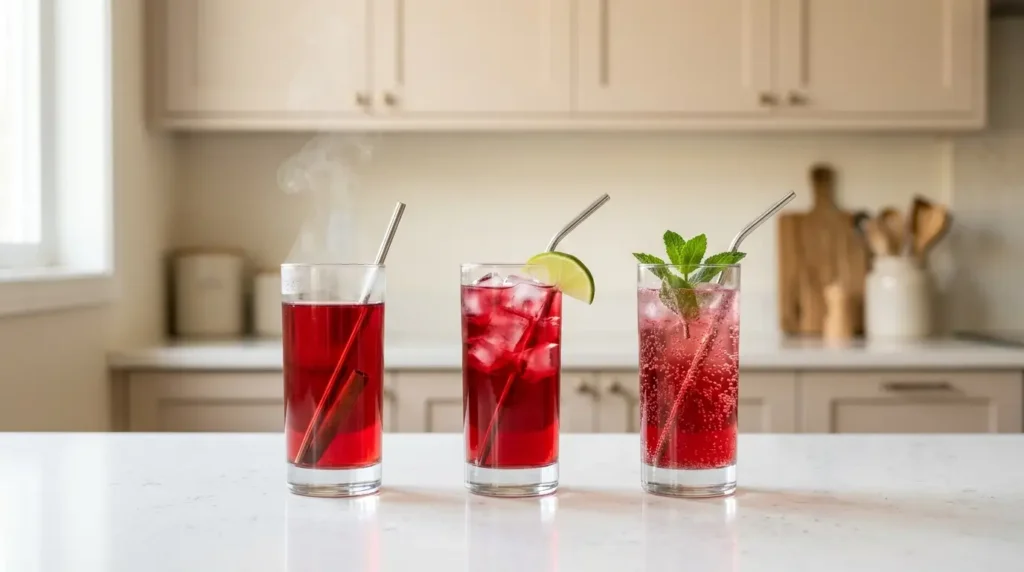
Once you have the base recipe, hibiscus tea is one of the most versatile herbal teas for flavor experimentation:
Classic hibiscus with lime: The most popular preparation worldwide — the slight citrus sharpness of lime complements and brightens the cranberry tartness of hibiscus perfectly.
Hibiscus cinnamon: Steep a cinnamon stick with the hibiscus for a warm, slightly spiced brew. Works especially well in the hot version during cooler months.
Hibiscus ginger: Add 3–4 thin slices of fresh ginger to the steep. Adds warmth, an anti-inflammatory boost, and a gentle heat that balances the tartness.
Hibiscus mint: Add fresh mint leaves after straining while still warm, or add to cold brew. Cooling and refreshing.
Sparkling hibiscus: Replace the cold water in cold brew with sparkling water added after straining. Effervescent, visually stunning, and naturally flavored — an excellent base for functional mocktail recipes.
Hibiscus lemonade: Mix cold brew hibiscus with fresh lemon juice and a simple syrup. One of the most popular summer drinks.
Common Mistakes When Making Hibiscus Tea
Over-steeping hot brew: Leaving calyces in longer than 10–12 minutes makes the tea progressively more bitter and very acidic without adding flavor benefit. Always strain promptly.
Using boiling water (100°C): Just below boiling preserves more of hibiscus’s delicate volatile compounds. Not critical, but noticeable in flavor quality.
Adding lemon during steeping: Citrus changes the chemical environment of the brew and alters the color to a lighter pink. Add citrus after straining for the best flavor and color.
Sweetening cold brew with granular sugar: Sugar won’t dissolve in cold water. Make a simple syrup or use liquid sweetener for cold preparations.
Not straining finely enough: A standard kitchen strainer may let through fine hibiscus particles that make the tea gritty. Use a fine mesh strainer or line your strainer with cheesecloth for the clearest result.
How Much Hibiscus Tea Should You Drink?
Once you have your tea made, the question of how much to drink depends on your health goals. Our complete guide on how much hibiscus tea per day covers the evidence-based recommendations for different populations and health goals. For timing guidance, see our article on the best time to drink hibiscus tea. For the full range of health benefits, see our hibiscus tea benefits guide.
Frequently Asked Questions
How do you make hibiscus tea from dried flowers?
Add 2 teaspoons of dried hibiscus calyces to a cup, pour 240ml of hot water (90°C/195°F) over them, steep for 5–10 minutes, strain immediately, and sweeten to taste. For cold brew, use 3 tablespoons per liter of cold water and refrigerate overnight.
What is the ratio of hibiscus to water?
For hot brew: 2 teaspoons per 240ml (8 oz). For cold brew: 3 tablespoons per 1 liter. For concentrate: 1 cup dried hibiscus per 2 cups water simmered for 15 minutes.
How long do you steep hibiscus tea?
Hot brew: 5–10 minutes. Less than 5 minutes produces a light, pale cup. More than 12 minutes increases bitterness without improving flavor. Cold brew: 8–12 hours in the refrigerator.
Why is my hibiscus tea bitter?
Over-steeping is the most common cause — remove the calyces promptly at 5–10 minutes. Using too much hibiscus relative to water can also produce bitterness. Reduce steeping time and use 2 teaspoons per 240ml as a starting ratio.
Can you use fresh hibiscus flowers to make tea?
Yes — use the fresh calyces (the fleshy red part at the base of the flower), not the petals. Steep 4–5 fresh calyces in hot water for 10–15 minutes. Fresh hibiscus produces a lighter, slightly less concentrated tea than dried. For guidance on drying fresh hibiscus at home, see our how to dry hibiscus flowers for tea guide.
Should I make hibiscus tea hot or cold?
Hot brew extracts more antioxidants and produces a bolder flavor but is more acidic (pH 2.5–2.8). Cold brew is smoother, less acidic (pH 3.0–3.5), and better for people with acid reflux. Both deliver the health benefits of hibiscus — the best method is the one you will drink daily.
How long does hibiscus tea last in the fridge?
Cold brew hibiscus tea keeps for 4–5 days in a sealed glass pitcher in the refrigerator. Flavor is best within the first 2 days. Hot brewed tea that has been cooled keeps for 3–4 days.
Does hibiscus tea need to be refrigerated?
Brewed hibiscus tea (any method) should be refrigerated once cooled. Dried hibiscus calyces should be stored in an airtight container at room temperature away from light and heat — not in the refrigerator, as temperature fluctuation causes condensation.
Key Takeaways
- How to make hibiscus tea depends on your goal: hot brew for maximum antioxidants and bolder flavor, cold brew for lower acidity and sensitive stomachs, iced for warm weather, concentrate for batch preparation
- Standard hot brew ratio: 2 teaspoons per 240ml, steeped 5–10 minutes at 90°C
- Cold brew ratio: 3 tablespoons per 1 liter, refrigerated 8–12 hours
- Always strain promptly — over-steeping causes bitterness
- Add citrus after straining, not during steeping
- Sweeten with honey while hot; use simple syrup for cold preparations
- Cold brew keeps 4–5 days refrigerated; hot brew keeps 3–4 days
- Use only Hibiscus sabdariffa (dried calyces) — not ornamental hibiscus varieties