
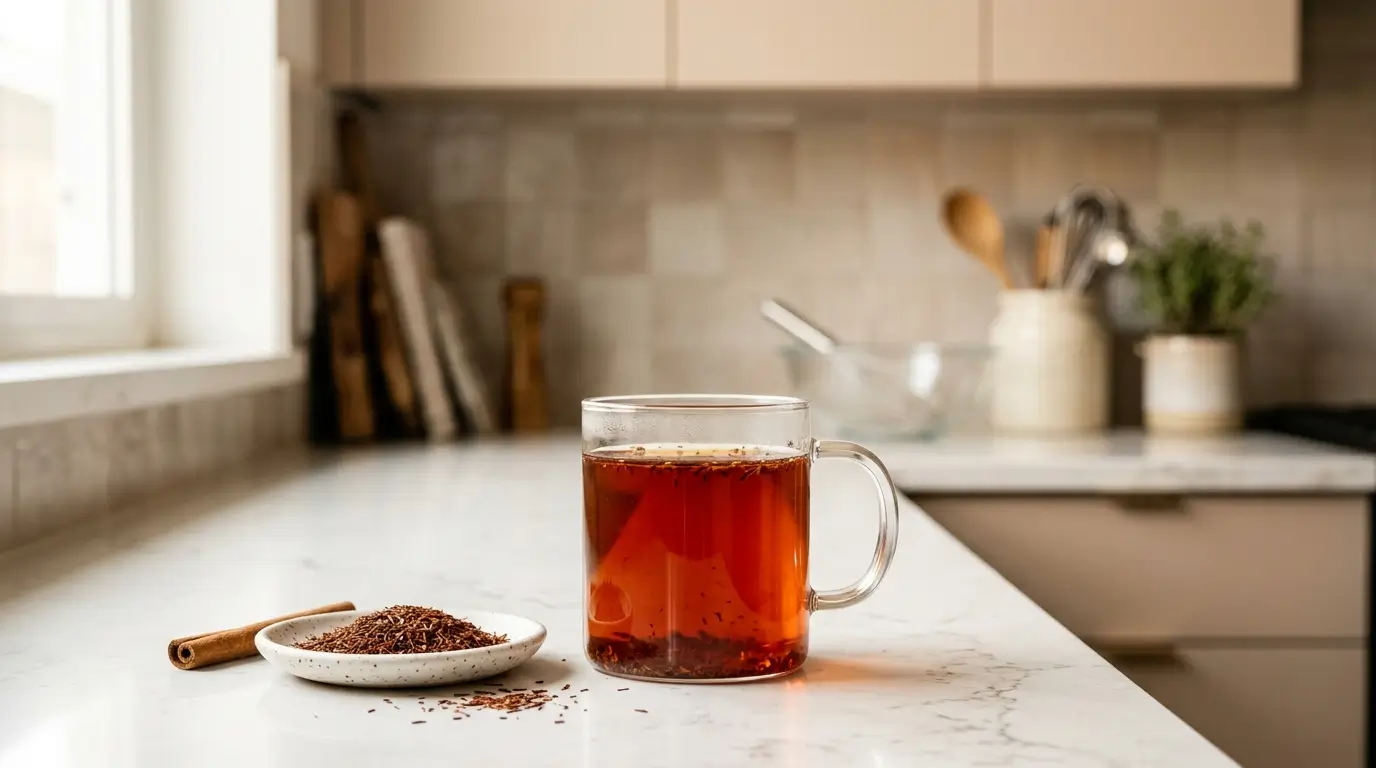
Rooibos tea benefits are uniquely compelling for one specific reason: aspalathin. This antioxidant compound is found exclusively in the rooibos plant (Aspalathus linearis) and nowhere else in the food supply — making rooibos one of the few herbal teas that offers compounds you literally cannot get from any other dietary source. Add to this its complete caffeine-free status, exceptionally low tannin content, and neutral pH, and you have one of the most broadly accessible and distinctive wellness teas available. This guide covers what rooibos tea is, what its benefits are, what the science supports, and how to get the most from it.
What Is Rooibos Tea?
Rooibos (pronounced ROY-boss) — also called red bush tea or red tea — is an herbal infusion made from the needle-like leaves of Aspalathus linearis, a plant that grows exclusively in the Cederberg region of the Western Cape in South Africa. It has been consumed by the indigenous Khoisan people of South Africa for centuries as a medicinal and everyday beverage.
The tea is naturally:
- Caffeine-free — no stimulant effect whatsoever
- Very low in tannins — unlike black tea or green tea, rooibos does not inhibit iron absorption
- Near-neutral in pH — gentle on the stomach and esophagus
- Slightly sweet — naturally, without added sweeteners
There are two main types: red rooibos (the traditional fermented version, with its characteristic amber-red color and earthy sweetness) and green rooibos (unfermented, lighter in color, higher in antioxidants, and slightly more grassy in flavor). Most commercial rooibos tea is the red fermented variety.
Rooibos Tea Benefits: What the Research Shows
1. Unique Antioxidants Found Only in Rooibos
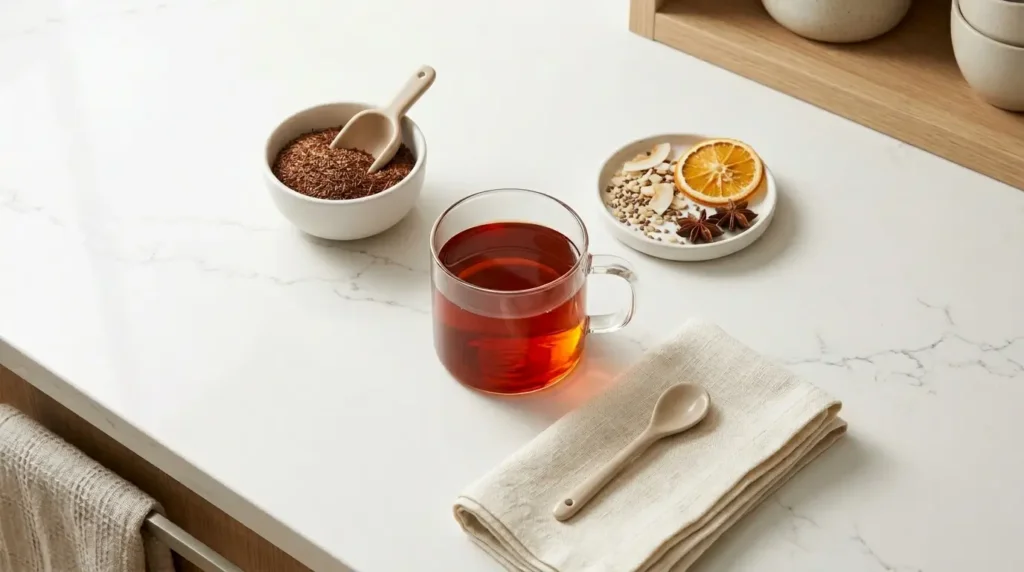
This is rooibos’s most scientifically distinctive feature. The plant contains two flavonoids that are exclusive to it:
Aspalathin — the dominant antioxidant in rooibos and one of the most studied. It has demonstrated antioxidant, anti-inflammatory, anti-diabetic, and cardioprotective effects in laboratory and animal studies. Because it is found only in rooibos, you cannot get aspalathin from any other food or drink.
Nothofagin — also exclusive to rooibos, with similar antioxidant and anti-inflammatory properties. It works synergistically with aspalathin.
Beyond these unique compounds, rooibos contains quercetin, luteolin, rutin, and orientin — a broad array of polyphenols that contribute to its overall antioxidant activity. The total antioxidant capacity of rooibos, while lower than green tea, is meaningful and delivered in a caffeine-free, low-acid format that many people tolerate better.
Important note on green vs red rooibos: Fermentation significantly reduces the aspalathin content of red rooibos. Green (unfermented) rooibos retains substantially more aspalathin — up to 10 times more in some analyses. If maximum antioxidant benefit is your goal, green rooibos is the better choice.
2. Heart and Cardiovascular Health
Several studies have found that rooibos tea consumption supports cardiovascular health through multiple mechanisms:
ACE inhibition: Like hibiscus, rooibos contains compounds that inhibit angiotensin-converting enzyme (ACE), contributing to blood pressure management. A 2011 study in the Journal of Ethnopharmacology found that six cups of rooibos per day for six weeks significantly reduced LDL cholesterol and triglycerides while increasing HDL cholesterol in adults at risk for cardiovascular disease.
Lipid management: The aspalathin and other polyphenols in rooibos have demonstrated anti-atherogenic effects — reducing the oxidation of LDL cholesterol that initiates plaque formation in arterial walls. Oxidized LDL is more dangerous than LDL alone — rooibos addresses this specific mechanism.
Anti-inflammatory vascular effects: Chronic vascular inflammation is a primary driver of heart disease. Rooibos’s flavonoids reduce inflammatory cytokine production in vascular tissue, contributing to a less inflammatory arterial environment over time.
3. Blood Sugar Regulation
Aspalathin is one of the most interesting compounds in nutritional research for diabetes management. Multiple studies have found that it:
- Enhances insulin secretion from the pancreas
- Improves glucose uptake in muscle cells
- Reduces fasting blood glucose in diabetic animal models
A 2013 study published in Phytomedicine found that aspalathin improved glucose homeostasis in diabetic rats through several complementary mechanisms. Human clinical evidence is still developing, but the mechanistic evidence for blood sugar support is strong.
For people managing blood sugar through diet and lifestyle, rooibos tea — consumed unsweetened — is one of the most kidney-friendly and stomach-friendly beverage options available. For those with kidney concerns, see our guide on hibiscus tea and kidneys for a comparison of herbal teas and their kidney safety profiles.
4. Bone Health Support
Rooibos contains a meaningful profile of minerals relevant to bone density:
- Calcium — essential for bone structure
- Manganese — supports bone formation and enzymatic activity
- Fluoride — in trace amounts, supports tooth enamel integrity
- Luteolin and orientin — flavonoids that have shown bone cell-stimulating activity in laboratory studies, potentially supporting osteoblast function
While rooibos is not a primary source of these minerals compared to dietary food, it provides them in a bioavailable form as part of a daily beverage that is also free from the tannins that would inhibit mineral absorption — an advantage over black and green tea.
5. Kidney Stone Prevention
Rooibos is exceptionally kidney-friendly compared to many other herbal teas. Critically, it contains very low levels of oxalate — the compound responsible for calcium oxalate kidney stones. People with a history of kidney stones who need to avoid high-oxalate foods and drinks can typically consume rooibos freely.
In contrast, hibiscus tea contains moderate oxalate levels and requires careful management for stone formers. Rooibos is one of the safest high-antioxidant beverages available for this population.
6. Digestive Health
Rooibos’s antispasmodic compounds — particularly quercetin — relax smooth muscle in the digestive tract. Traditional South African medicine has used rooibos for centuries to treat colic in infants (one of the few herbal teas considered safe for babies in moderation) and digestive cramping in adults.
Its near-neutral pH makes it one of the most acid-reflux-friendly herbal teas available — a strong advantage over hibiscus (pH 2.5–3.5) and even some green teas.
7. Sleep and Relaxation
Rooibos is completely caffeine-free and contains quercetin, luteolin, and chrysoeriol — flavonoids with documented mild sedative activity through interaction with GABA receptors. Regular evening consumption supports relaxation without any stimulant interference.
Its slight natural sweetness makes it pleasant without any added sugar, which is an advantage for evening consumption when avoiding blood sugar spikes before bed is useful. It pairs well with a small amount of honey or warm oat milk for an exceptionally soothing evening ritual. For a comprehensive comparison of sleep-supporting drinks, see our guide on the best drinks for better sleep.
8. Skin and Anti-Aging
Rooibos’s polyphenols — particularly quercetin and aspalathin — reduce systemic oxidative stress that accelerates skin aging. Quercetin specifically has documented photoprotective properties, helping protect skin cells from UV-induced oxidative damage when consumed regularly.
Alpha-hydroxy acid (AHA) content in rooibos is minimal compared to hibiscus, but its zinc content may support skin healing and sebum regulation. The anti-inflammatory effects also contribute to reduced skin redness and reactivity in people with sensitive skin.
Red Rooibos vs. Green Rooibos
| Red Rooibos | Green Rooibos | |
|---|---|---|
| Processing | Fermented | Unfermented |
| Color | Deep amber-red | Pale golden-green |
| Flavor | Sweet, earthy, woody | Grassy, lighter, more delicate |
| Aspalathin content | Lower (reduced by fermentation) | Much higher |
| Availability | Very widely available | Specialty stores, online |
| Best for | Evening ritual, lattes, baking | Maximum antioxidant benefit |
How to Make Rooibos Tea
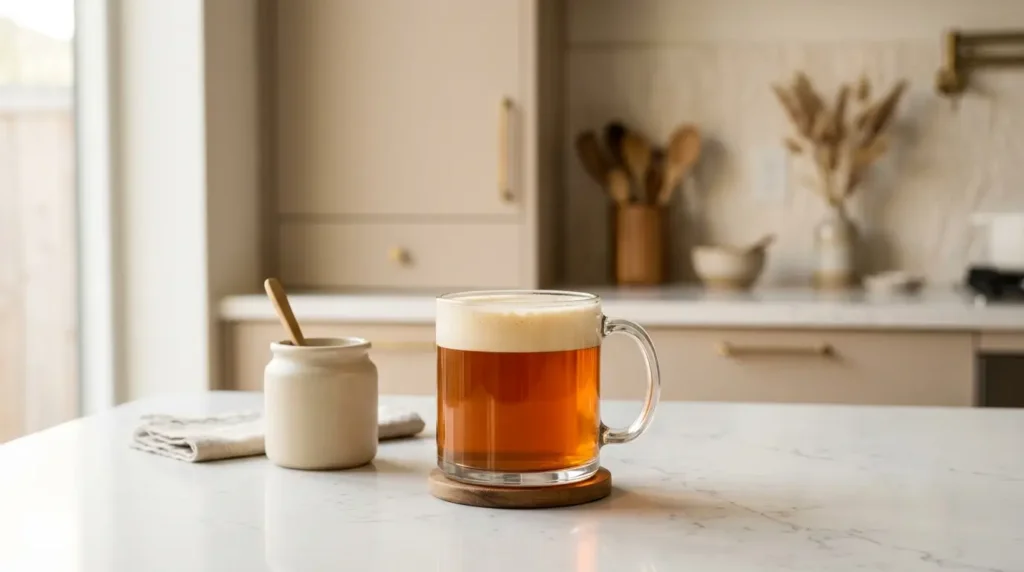
Rooibos is one of the most forgiving teas to brew — it does not become bitter with long steeping times, unlike green tea or black tea.
Standard hot brew:
- 1–2 teaspoons of loose rooibos (or 1 tea bag) per 240ml (8 oz) of water
- Steep in boiling water for 5–10 minutes
- The longer you steep, the deeper the flavor and color — unlike green tea, over-steeping does not produce bitterness
- Strain and enjoy plain, with honey, or with a splash of milk
Rooibos latte (most popular preparation):
- Brew a strong cup of rooibos (2 teaspoons, 8 minutes)
- Steam or heat 120ml of oat milk or whole milk
- Pour the brewed rooibos into a mug and add the milk
- Optional: add cinnamon, vanilla extract, or a small amount of honey
- This creates a warm, slightly sweet, naturally caffeine-free latte — one of the most satisfying coffee alternatives available
Cold brew rooibos:
- Add 3 tablespoons of loose rooibos to 1 liter of cold water
- Refrigerate for 8–12 hours
- Strain and serve over ice
- Cold brew rooibos has a smooth, slightly sweet flavor that works beautifully as an iced drink
For more cold herbal tea preparation ideas, our cold brew herbal tea recipes guide covers the full range.
Rooibos Tea vs. Other Herbal Teas
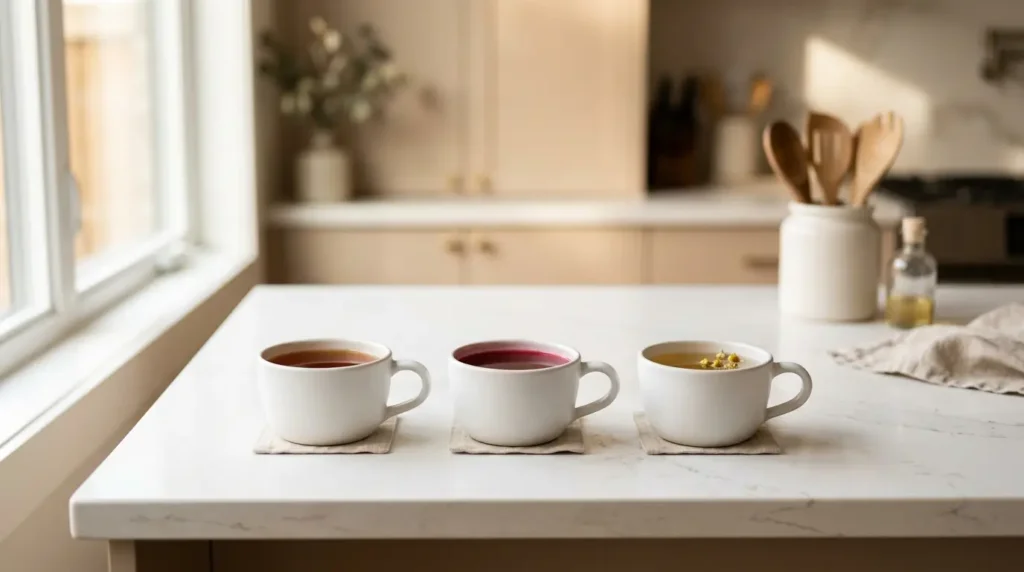
| Rooibos | Hibiscus | Chamomile | Spearmint | |
|---|---|---|---|---|
| Caffeine | None | None | None | None |
| pH | Near-neutral | Very acidic (2.5–3.5) | Near-neutral | Near-neutral |
| Tannin content | Very low | Low | Very low | Low |
| Iron absorption | ✅ Does not inhibit | ✅ Does not inhibit | ✅ Does not inhibit | ✅ Does not inhibit |
| Unique compounds | Aspalathin, nothofagin | Hibiscus acid, ternatins | Apigenin | Carvone, rosmarinic acid |
| Best for | Antioxidants, sleep, heart | Blood pressure, weight | Sleep, anxiety | Hormones, PCOS |
| Kidney stone safe | ✅ Very low oxalate | ⚠️ Moderate oxalate | ✅ Yes | ✅ Yes |
| Acid reflux safe | ✅ Yes | ⚠️ Cold brew only | ✅ Yes | ✅ Yes |
For the full comparison of herbal vs. green tea across all these dimensions, see our herbal tea vs green tea benefits guide.
Rooibos Tea Side Effects and Safety
Rooibos is one of the safest herbal teas available. Documented side effects are extremely rare:
Generally safe for: healthy adults, children (in moderate amounts), people with kidney stones, people with acid reflux, pregnant women (moderate consumption — no known uterotonic properties unlike hibiscus), and people sensitive to caffeine.
Cautions:
- Hormone-sensitive conditions: Some preliminary evidence suggests rooibos may have mild estrogenic activity. People with hormone-sensitive cancers should consult their doctor, though the evidence is far less established than with hibiscus or soy
- Iron overload (hemochromatosis): Rooibos’s low tannin content means it does not inhibit iron absorption — a benefit for most people, but a consideration for those with iron overload conditions
- Very high consumption: Extremely large amounts (many liters per day) have been associated with elevated liver enzymes in isolated case reports — irrelevant at normal 1–3 cups per day consumption
For general herbal tea safety principles and a broader comparison, our hibiscus tea side effects guide covers the key frameworks.
Frequently Asked Questions
What are the benefits of rooibos tea?
The main rooibos tea benefits include unique antioxidant protection from aspalathin and nothofagin (found nowhere else), cardiovascular support through ACE inhibition and lipid management, blood sugar regulation, bone health from its mineral content, kidney stone prevention (very low oxalate), digestive antispasmodic effects, sleep and relaxation support, and skin anti-aging through polyphenol activity.
Is rooibos tea good for you?
Yes — rooibos is widely considered one of the safest and most beneficial caffeine-free herbal teas available. Its unique antioxidants, near-neutral pH, very low tannin content, and broad safety profile make it suitable for almost everyone, including pregnant women, people with acid reflux, and kidney stone formers.
Does rooibos tea have caffeine?
No. Rooibos is completely caffeine-free. It can be consumed at any time of day including evenings without affecting sleep quality.
What does rooibos tea taste like?
Red rooibos has a naturally sweet, earthy, slightly woody flavor with hints of vanilla and honey. It has no bitterness even when steeped for a long time. Green rooibos is lighter and more grassy. Most people find it very easy to drink plain without sweetener.
Is rooibos tea good for sleep?
Yes. Rooibos is caffeine-free and contains flavonoids (quercetin, luteolin) with mild sedative properties through GABA receptor interaction. An evening cup of warm rooibos — plain or as a latte — is one of the more pleasant and evidence-consistent options for a sleep-supporting bedtime ritual.
Is rooibos tea safe for kidneys?
Yes — rooibos is one of the most kidney-safe herbal teas available. It contains very low levels of oxalate (the compound linked to kidney stones) and is safe for people with a history of calcium oxalate kidney stones. This contrasts with hibiscus tea, which contains moderate oxalate levels.
What is the difference between rooibos and red tea?
Red tea and rooibos tea are the same thing — both refer to brewed Aspalathus linearis. Note: “red tea” is also sometimes used to refer to Chinese pu-erh tea, which is fermented black tea. In the herbal tea context, red tea typically means rooibos.
How much rooibos tea should I drink per day?
One to three cups per day is the range used in most research studies and generally recommended. There is no strict upper limit for healthy adults, but most of the documented cardiovascular benefits in studies used 6 cups per day — which is higher than most people’s daily consumption.
Key Takeaways
- Rooibos tea benefits are anchored by two exclusive antioxidants — aspalathin and nothofagin — found nowhere else in the food supply
- Completely caffeine-free, near-neutral pH, and very low in tannins — one of the broadest safety profiles of any herbal tea
- Documented benefits include cardiovascular health, blood sugar regulation, bone support, kidney stone prevention, digestive relief, and sleep support
- Green rooibos retains significantly more aspalathin than red rooibos — choose green for maximum antioxidant benefit
- One of the safest herbal teas for pregnant women, people with acid reflux, and kidney stone formers
- Works beautifully as a latte with oat milk — one of the most satisfying caffeine-free coffee alternatives
- Does not inhibit iron absorption — an advantage over black and green tea for people monitoring iron levels