

Hibiscus tea and kidneys have a complicated relationship — and understanding the hibiscus tea kidneys connection is essential before making it part of your daily routine. For most healthy adults, drinking hibiscus tea in moderate amounts poses no risk to kidney health — and may even offer protective antioxidant benefits. But for people with existing kidney disease, a history of kidney stones, or those taking certain medications, the picture changes significantly. This guide breaks down exactly what the science says, who should be cautious, and how much is safe to drink.
What Happens When Hibiscus Tea Reaches Your Kidneys?
Your kidneys filter roughly 200 liters of blood per day, removing waste products, regulating fluid balance, and managing electrolyte levels. When you drink hibiscus tea, its compounds — primarily anthocyanins, organic acids, and minerals — are absorbed into the bloodstream and eventually processed by the kidneys before being excreted in urine.
For healthy kidneys, this process is straightforward. The antioxidants in hibiscus tea may actually reduce oxidative stress in kidney tissue. But two specific components of hibiscus tea deserve closer attention when kidney health is a concern: oxalic acid and potassium.
Hibiscus Tea and Kidney Stones: The Oxalate Connection
The most common type of kidney stone — accounting for about 80% of all cases — is the calcium oxalate stone. These form when oxalate, a naturally occurring compound found in many plant foods, binds with calcium in the urine and crystallizes.
Hibiscus flowers contain oxalic acid, which the body converts to oxalate. The exact oxalate content of hibiscus tea varies depending on the concentration of the brew, steep time, and whether it’s hot or cold brewed, but it is considered a moderate-oxalate beverage.
Does This Mean Hibiscus Tea Causes Kidney Stones?
Not automatically. Oxalate-containing foods are a risk factor for kidney stones, but they only become a significant problem when:
- You have a personal or family history of calcium oxalate kidney stones
- Your daily oxalate intake is consistently high (above 100–150 mg/day from all sources combined)
- You have low urine volume — meaning you’re not drinking enough water to dilute the oxalate
- You have a vitamin B6 deficiency, which impairs oxalate metabolism
- You consume high amounts of hibiscus tea (more than 3 cups per day regularly)
For people with no history of kidney stones and healthy kidney function, the oxalate in 1–2 cups of hibiscus tea per day is unlikely to cause problems, especially when combined with adequate water intake. You can find detailed guidance on how much hibiscus tea is safe per day in our dosage guide.
If You’ve Had Kidney Stones Before
If you have a history of calcium oxalate kidney stones, you should treat hibiscus tea the same way you’d treat other moderate-oxalate foods like spinach, nuts, or chocolate — consume it occasionally and in small amounts, and always with a full glass of water. Drinking hibiscus tea on an empty stomach without adequate hydration increases urinary oxalate concentration and raises your risk.
Hibiscus Tea and Chronic Kidney Disease (CKD)
The hibiscus tea kidneys risk for CKD patients comes primarily from potassium accumulation.
For people with chronic kidney disease (CKD), especially at stage 3 or beyond, hibiscus tea requires more caution — for a different reason than kidney stones.
Damaged kidneys lose their ability to efficiently filter and excrete potassium. When potassium builds up in the blood (a condition called hyperkalemia), it can cause dangerous heart rhythm abnormalities. Hibiscus tea contains potassium — not in extreme amounts, but enough to matter when kidneys are impaired.
If you have CKD, here’s what the evidence suggests:
- CKD stage 1–2 (mild): Hibiscus tea in small amounts (1 cup/day) is generally considered safe, but consult your nephrologist
- CKD stage 3–4 (moderate to severe): Avoid hibiscus tea or consume only with your doctor’s explicit approval, as potassium management becomes critical
- CKD stage 5 / dialysis: Hibiscus tea is typically contraindicated — dialysis patients follow strict potassium and fluid restrictions
Research on herbal tea consumption in CKD patients found that many patients were unaware of the potassium content of herbal teas and consumed them without physician guidance, contributing to electrolyte imbalances.
Can Hibiscus Tea Actually Protect Kidney Health?
For people with healthy kidneys, there is a positive side to the story.
Hibiscus flowers are exceptionally rich in anthocyanins — the same class of antioxidants that give blueberries and red grapes their color and health benefits. Oxidative stress is one of the primary mechanisms behind kidney cell damage, and antioxidants counteract this process.
Several animal studies have shown that hibiscus extract reduced kidney damage markers in subjects exposed to nephrotoxic substances. Human research is more limited, but the antioxidant profile of hibiscus tea is well-established. The same hibiscus tea benefits that support cardiovascular health — reduced inflammation, lower oxidative stress — extend to kidney tissue as well.
Additionally, hibiscus tea’s well-documented blood pressure-lowering effect is indirectly beneficial for the kidneys. High blood pressure is one of the leading causes of chronic kidney disease, and anything that sustainably reduces blood pressure reduces long-term kidney damage risk. If you’re interested in timing hibiscus tea for blood pressure, our guide on hibiscus tea for blood pressure hot or cold covers this in detail.
How Much Hibiscus Tea Is Safe for Your Kidneys?
Safe intake depends entirely on your kidney health status:
| Health Status | Safe Daily Amount | Notes |
|---|---|---|
| Healthy kidneys, no stone history | 2–3 cups/day | Drink with adequate water |
| History of calcium oxalate stones | Max 1 cup/day | Always with a full glass of water |
| CKD stage 1–2 | Max 1 cup/day | Consult your doctor first |
| CKD stage 3–5 / dialysis | Avoid | High potassium risk |
| Taking blood pressure medication | 1–2 cups/day | Monitor BP — hibiscus may amplify effects |
The most important habit regardless of kidney status: never drink hibiscus tea dehydrated or without water. Concentrated urine + oxalate = significantly higher stone risk. For context on total fluid needs, our guide on how much water per day is a useful starting point.
Hibiscus Tea and Medications: What to Watch For
Hibiscus tea has a meaningful interaction profile that matters for kidney patients specifically, since many kidney-related conditions involve medication:
Antihypertensive drugs (blood pressure medications): Hibiscus tea independently lowers blood pressure. Combined with medication like ACE inhibitors, calcium channel blockers, or diuretics, the effect can be additive — potentially causing blood pressure to drop too low (hypotension). If you’re on blood pressure medication, read our full breakdown of hibiscus tea and blood pressure before adding it to your routine.
Diuretics: Hibiscus has mild diuretic properties. Stacking it with prescription diuretics can increase urinary output and risk electrolyte depletion — a concern for anyone managing kidney function.
Immunosuppressants (post-transplant): There is limited but concerning evidence that high doses of hibiscus extract may interact with certain immunosuppressant drugs including cyclosporine. Kidney transplant patients should avoid hibiscus tea without explicit clearance from their transplant team.
Does Hibiscus Tea Color Your Urine?
Yes, and this surprises many people. The deep red pigment from hibiscus anthocyanins can temporarily turn urine pink or reddish after consumption — particularly if you drink a strong brew or a large amount. This is completely harmless and simply reflects the excretion of the pigment through the kidneys.
However, if you notice red or pink urine and haven’t had hibiscus tea, that warrants medical evaluation — it could indicate blood in the urine (hematuria), which is a symptom of several kidney conditions.
The Acid Reflux Connection
Hibiscus tea’s acidity — which we covered in depth in our article on hibiscus tea and acid reflux — is also relevant to kidney health. Understanding whether hibiscus tea is acidic or alkaline matters because highly acidic urine can increase the risk of certain types of kidney stones. People who already have acidic urine should be mindful of adding large amounts of acidic beverages to their diet.
Kidney-Safe Alternatives to Hibiscus Tea
If you need to limit or avoid hibiscus tea for kidney health reasons, these alternatives offer hydration and wellness benefits without the oxalate or potassium concerns:
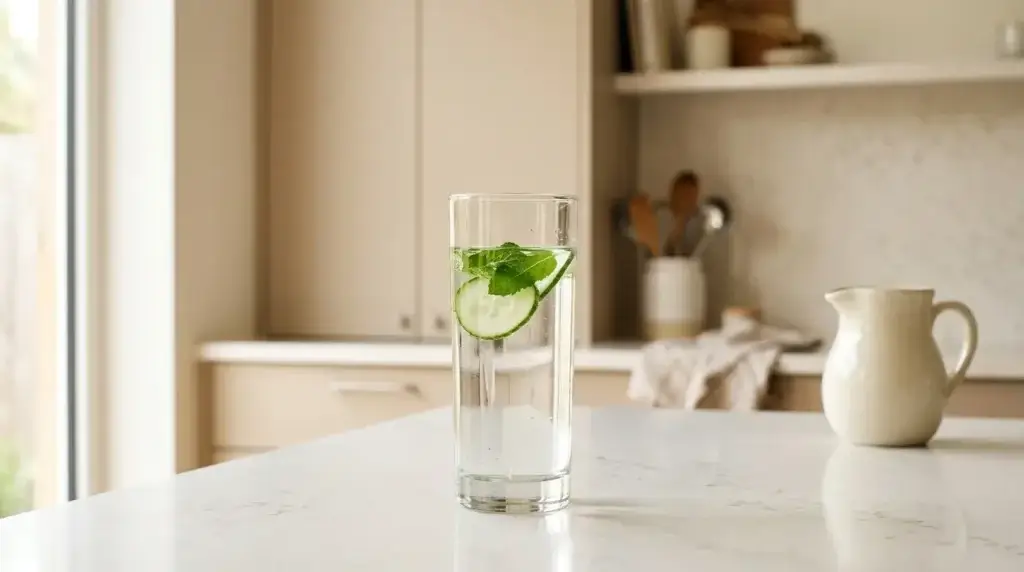
Plain water with cucumber and mint: The most kidney-friendly option available. Low in oxalate, low in potassium, and excellent for urine dilution — the single most effective way to prevent kidney stones. Check our guide on the best morning hydration drinks for practical routines.
Chamomile tea: Very low oxalate, near-neutral pH, and gentle on both the kidneys and the digestive system. A reliable substitute for anyone who drinks hibiscus tea for its relaxation effects.
Rooibos tea: Naturally caffeine-free and low in oxalate, rooibos is one of the most kidney-friendly herbal teas available. It also contains antioxidants, making it a reasonable alternative to hibiscus for general wellness.
Lemon water (diluted): Counterintuitively, diluted lemon water can actually help prevent calcium oxalate kidney stones. The citrate in lemon juice binds with calcium in the urine, preventing it from binding with oxalate. Use diluted — not concentrated — lemon juice in plenty of water.
Sugar-free electrolyte drinks: For people with kidney disease who need to manage fluid and electrolyte balance carefully, a low-potassium sugar-free electrolyte drink formulated for kidney health may be more appropriate than any herbal tea.
The information in this section is for general educational purposes only and does not constitute medical advice. Dietary decisions for people with chronic kidney disease should always be made in consultation with a nephrologist or registered renal dietitian.
Hibiscus Tea and Chronic Kidney Disease: A Stage-by-Stage Overview
Whether hibiscus tea is appropriate for someone with kidney disease depends largely on their specific CKD stage and overall health picture. This is the distinction most general wellness articles skip — and it is the most important one to understand.
GFR and CKD Stages: A Quick Reference
Kidney function is measured by eGFR (estimated Glomerular Filtration Rate) — a number that reflects how well your kidneys are filtering waste. The higher the number, the better the kidney function.
| CKD Stage | eGFR (ml/min/1.73m²) | Kidney function | General position on hibiscus tea |
|---|---|---|---|
| Stage 1 | 90+ | Normal or high | ✅ Generally considered safe |
| Stage 2 | 60–89 | Mildly reduced | ✅ Generally considered safe with monitoring |
| Stage 3a | 45–59 | Mildly to moderately reduced | ⚠️ Worth discussing with your nephrologist |
| Stage 3b | 30–44 | Moderately to severely reduced | ⚠️ Caution recommended — consult your doctor |
| Stage 4 | 15–29 | Severely reduced | 🔴 Most nephrologists recommend avoiding |
| Stage 5 | Below 15 | Kidney failure / dialysis | 🔴 Generally not recommended |
These are general positions — your nephrologist’s guidance for your specific situation always takes precedence.
Hibiscus Tea at CKD Stage 3b (eGFR 30–44)
Stage 3b is often the point where nephrologists begin to place more restrictions on herbal teas and certain foods. At this level of kidney function, the body’s ability to filter and excrete certain compounds is meaningfully reduced.
Three reasons nephrologists flag hibiscus tea at stage 3b:
Oxalates: Hibiscus calyces contain moderate levels of oxalic acid. In healthy kidneys, dietary oxalates are filtered and excreted efficiently. At stage 3b, reduced filtration capacity means oxalates can accumulate more easily — a concern particularly for people already managing oxalate intake.
Potassium: Hibiscus tea contains a small amount of potassium per cup. At stage 3b, maintaining healthy potassium levels becomes more complex, and additional potassium sources — including herbal teas — are typically reviewed as part of the overall dietary plan.
Diuretic interaction: Hibiscus has a mild diuretic effect that can interact with fluid management strategies, which become increasingly important in later CKD stages.
If your eGFR is in the 30–44 range, the most appropriate step is to raise hibiscus tea with your nephrologist or renal dietitian, who can evaluate it alongside your complete dietary picture and medication list.
Hibiscus Tea at CKD Stage 4 (eGFR 15–29)
Stage 4 represents severe kidney impairment, and most nephrology dietary guidelines become significantly more restrictive at this stage. Many herbal teas — including hibiscus — are typically limited or excluded from stage 4 dietary plans, primarily because the kidneys’ ability to process oxalates, potassium, and plant compounds is severely compromised.
An additional consideration at stage 4: many patients are on ACE inhibitors, ARBs, and diuretics. Hibiscus tea has documented ACE-inhibiting and mild diuretic properties of its own — combining these effects with prescription medication can cause blood pressure to drop more than intended or disrupt fluid balance.
If you are at stage 4, the standard guidance from most renal nutrition resources is to check with your nephrologist before consuming hibiscus tea regularly.
Specific Questions About GFR and Hibiscus Tea
“Is hibiscus tea safe with a GFR of 38?” A GFR of 38 falls in stage 3b. At this level, most renal dietitians would recommend discussing hibiscus tea with your nephrologist before making it a daily habit. Occasional consumption at low frequency is generally considered a lower concern than a daily 2-cup routine — but your specific potassium levels, medication list, and overall oxalate intake all factor into the decision.
“Can someone at CKD stage 3b drink hibiscus tea?” There is no universal yes or no — it depends on the individual’s potassium levels, medications, and overall dietary management plan. This is exactly the kind of question your nephrologist or renal dietitian is best placed to answer for your specific situation.
“Is hibiscus tea beneficial for early-stage CKD?” For stages 1–2, hibiscus tea’s blood pressure-lowering properties may actually be relevant — hypertension is both a major cause and a consequence of CKD, and blood pressure management is central to slowing CKD progression. Some research suggests the antioxidant and anti-inflammatory effects of hibiscus compounds may also have protective kidney properties at early stages. This is an area of ongoing research rather than settled clinical guidance.
Hibiscus Tea and Kidney Stones
This is a separate concern from CKD, but worth addressing clearly.
Hibiscus calyces contain oxalic acid, which is one of the compounds that contributes to calcium oxalate kidney stones — the most common kidney stone type. For people with normal kidney function and no history of kidney stones, daily hibiscus tea at standard amounts does not pose a meaningful oxalate risk, particularly when combined with adequate hydration.
For people with a history of calcium oxalate stones, most renal dietary guidance suggests being mindful of total oxalate intake from all food sources. Hibiscus tea would count as a moderate-oxalate item in that context — worth limiting to 1 cup per day and ensuring high daily fluid intake to dilute urinary oxalate concentration.
Summary: Hibiscus Tea and Kidney Health
| Situation | General guidance |
|---|---|
| Healthy kidneys, no history of stones | ✅ 2 cups/day is appropriate |
| CKD stage 1–2 | ✅ Generally appropriate · monitor BP |
| CKD stage 3a (GFR 45–59) | ⚠️ Worth discussing with nephrologist |
| CKD stage 3b (GFR 30–44) | ⚠️ Consult nephrologist before daily use |
| CKD stage 4 (GFR 15–29) | 🔴 Most guidelines recommend avoiding |
| CKD stage 5 / dialysis | 🔴 Generally not recommended |
| History of calcium oxalate stones | ⚠️ Limit to 1 cup/day · stay well hydrated |
| On ACE inhibitors or diuretics | ⚠️ Discuss with doctor — additive effects possible |
Always follow the guidance of your nephrologist or renal dietitian — these are general reference points, not individual medical recommendations.
Frequently Asked Questions
Is hibiscus tea good or bad for your kidneys?
For people with healthy kidneys, moderate consumption of hibiscus tea (1–2 cups per day) is generally safe and may even offer antioxidant protection. For people with chronic kidney disease, kidney stones, or hyperkalemia risk, hibiscus tea should be avoided or consumed only under medical supervision.
Can hibiscus tea cause kidney damage?
There is no evidence that hibiscus tea causes kidney damage in healthy individuals at moderate intake levels. However, extremely high doses of hibiscus extract (as used in some supplements) have shown nephrotoxic effects in animal studies. Stick to 1–2 cups of tea per day, not concentrated extracts.
Does hibiscus tea cause kidney stones?
Hibiscus tea contains oxalic acid, which can contribute to calcium oxalate kidney stones in predisposed individuals. If you have a history of calcium oxalate stones, limit consumption and always drink plenty of water alongside hibiscus tea.
Can people with kidney disease drink hibiscus tea?
People with mild CKD (stage 1–2) may be able to drink small amounts with their doctor’s guidance. People with moderate to severe CKD or those on dialysis should avoid hibiscus tea due to its potassium content and the risk of hyperkalemia.
What does hibiscus tea do to your kidneys?
In healthy individuals, hibiscus tea’s antioxidants may reduce oxidative stress in kidney tissue. Its mild diuretic effect increases urine output. In people with impaired kidney function, the oxalate and potassium content can place additional stress on already compromised kidneys.
Does hibiscus tea affect kidney function tests?
There is no strong evidence that moderate hibiscus tea consumption significantly alters standard kidney function markers (creatinine, GFR, BUN) in healthy people. However, very high consumption in people with existing kidney disease may worsen results.
How much hibiscus tea is safe for kidneys?
For healthy adults with no kidney issues or stone history, up to 2–3 cups per day is considered safe when combined with adequate water intake. For those with any kidney concerns, keep it to 1 cup per day maximum and consult your doctor.
Why does my urine turn pink after drinking hibiscus tea?
This is caused by the red anthocyanin pigments in hibiscus being excreted through the kidneys. It is completely harmless. If you notice pink or red urine without having consumed hibiscus tea, consult a doctor.
Is hibiscus tea safe for stage 4 CKD?
Most nephrology dietary guidelines recommend avoiding hibiscus tea at stage 4 CKD (eGFR 15–29) unless cleared by your nephrologist. At this stage of kidney impairment, the kidneys’ ability to process oxalates, potassium, and plant compounds is severely reduced. Hibiscus tea also has mild diuretic and ACE-inhibiting properties that can interact with medications commonly prescribed at stage 4. Always follow your nephrologist’s specific guidance.
Can someone with CKD stage 3b drink hibiscus tea?
There is no universal answer — it depends on your potassium levels, medications, and overall dietary management plan. Stage 3b (eGFR 30–44) is the threshold where many renal dietitians begin reviewing herbal tea intake. An occasional cup carries less concern than a daily habit at standard doses. Raise the question with your nephrologist or renal dietitian, who can assess it alongside your complete health picture.
Is hibiscus tea safe with a GFR of 38?
A GFR of 38 is stage 3b CKD — the caution zone for herbal teas. The appropriate step is to discuss hibiscus tea with your nephrologist before making it a daily habit. Key factors they will consider include your current potassium and oxalate levels, whether you take ACE inhibitors or diuretics, and your fluid management plan.
Does hibiscus tea cause kidney stones?
Hibiscus contains oxalic acid, which contributes to calcium oxalate kidney stones — the most common type. For people with healthy kidneys and no stone history, daily hibiscus tea at standard amounts does not meaningfully increase kidney stone risk when accompanied by adequate hydration. People with a history of calcium oxalate stones should limit hibiscus tea to 1 cup per day and maintain high fluid intake throughout the day to dilute urinary oxalate concentration.
Key Takeaways
Understanding the hibiscus tea kidneys relationship comes down to one variable: your baseline kidney health.
- Hibiscus tea and kidneys are compatible for most healthy adults at 1–2 cups per day
- The main kidney risks are oxalate content (kidney stone risk) and potassium content (dangerous for CKD patients)
- People with a history of calcium oxalate kidney stones should limit hibiscus tea and always drink it with plenty of water
- CKD stage 3 and above: avoid hibiscus tea or only consume with explicit medical guidance
- Hibiscus tea’s antioxidants and blood pressure-lowering effects are indirectly beneficial for kidney health in healthy individuals
- Never drink hibiscus tea dehydrated — urine dilution is the most effective kidney stone prevention tool
- Pink urine after drinking hibiscus tea is harmless and caused by anthocyanin pigment