
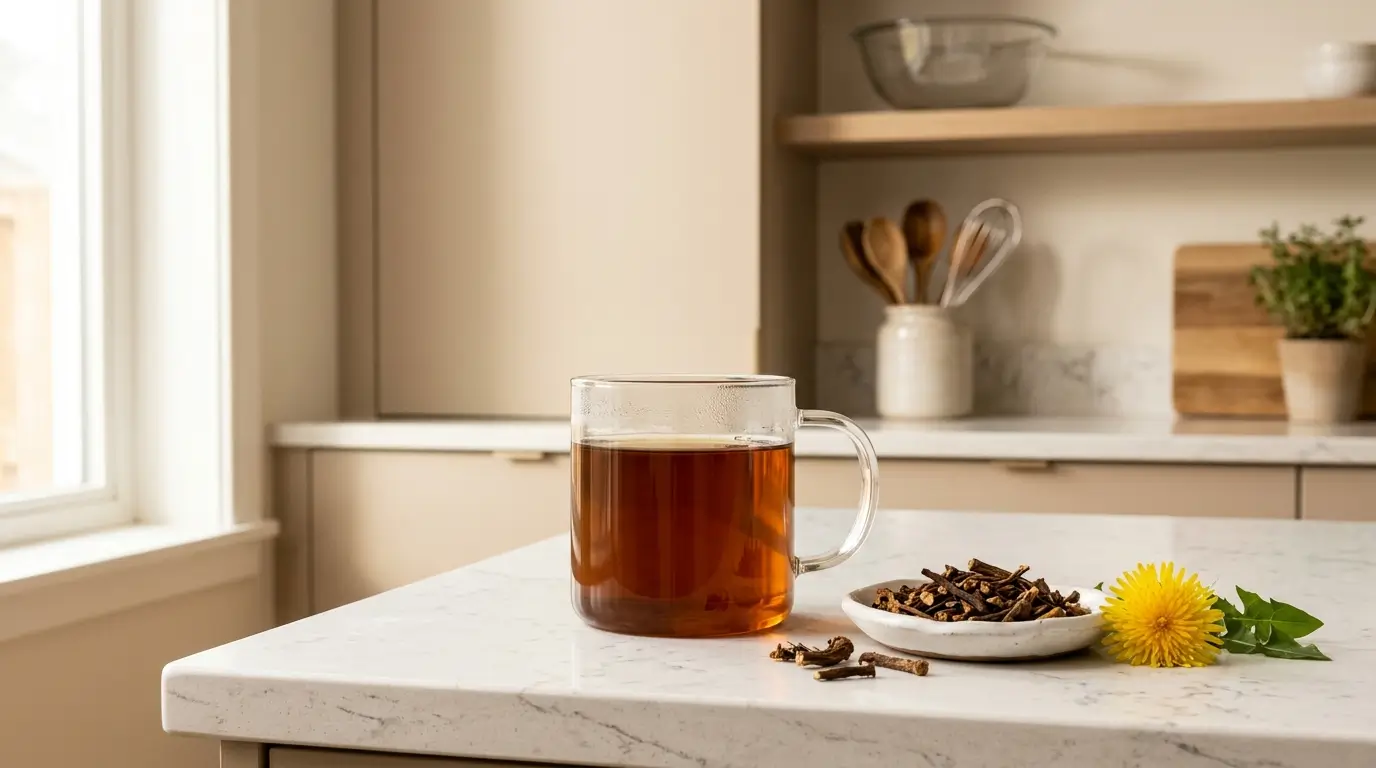
Dandelion tea benefits vary significantly depending on which part of the plant you use. Root, leaf, and flower each produce a different tea with a different flavor, a different nutritional profile, and a different set of health effects. Most articles treat “dandelion tea” as a single thing — it is not. This guide breaks down exactly what each part does, what the science supports, whether dandelion tea has caffeine, the best way to make it at home, and which brands are worth buying.
What Is Dandelion Tea?
Dandelion tea is an herbal infusion made from one or more parts of the common dandelion plant (Taraxacum officinale) — the same plant most people consider a lawn weed. Every part of it is edible and medicinal: the root, the leaves, and the flowers are all used to make distinct teas with different properties.
Dandelion has been used in traditional Chinese medicine, European herbalism, and Native American medicine for centuries — primarily for liver support, digestive health, and as a diuretic. Modern research is beginning to validate many of these traditional uses while adding new dimensions to the plant’s health profile.
Does dandelion tea have caffeine? No — dandelion tea is completely caffeine-free. However, roasted dandelion root tea closely resembles coffee in color, flavor, and body — making it one of the most convincing caffeine-free coffee alternatives available. The absence of caffeine is consistent across all three types: root, leaf, and flower.
The 3 Types of Dandelion Tea: Root vs Leaf vs Flower
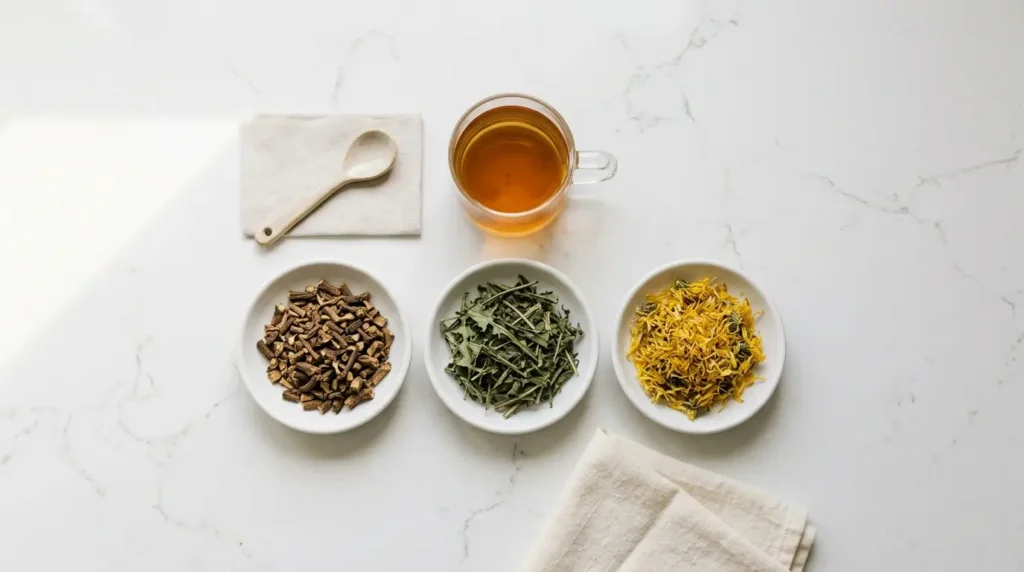
| Dandelion Root | Dandelion Leaf | Dandelion Flower | |
|---|---|---|---|
| Flavor | Earthy, bitter, slightly sweet | Grassy, bitter, green | Mild, slightly sweet, honey-like |
| Color | Deep amber to dark brown | Pale green-yellow | Pale golden yellow |
| Caffeine | None | None | None |
| Best for | Liver, gut health, coffee alternative | Diuretic, kidney, vitamins | Antioxidants, skin, mild taste |
| Strongest benefit | Prebiotic inulin, liver support | Potassium-sparing diuretic | Antioxidant, anti-inflammatory |
| Roasted version | ✅ Yes (most popular) | ❌ No | ❌ No |
Dandelion Root Tea Benefits
Dandelion root is the most studied part of the plant and the most commonly sold in commercial teas. It contains inulin — a prebiotic fiber that selectively feeds beneficial gut bacteria — along with sesquiterpene lactones (the compounds responsible for its characteristic bitterness) and a range of polyphenols.
Liver and Digestive Support
The most consistent traditional and modern use of dandelion root is liver support. Dandelion root extract has been shown to increase bile flow from the gallbladder, which supports fat digestion and helps the liver process and excrete waste compounds more efficiently.
A 2011 study published in Evidence-Based Complementary and Alternative Medicine found that dandelion extract significantly increased the rate of fatty acid oxidation in liver cells — suggesting a genuine hepatoprotective mechanism relevant to people managing fatty liver disease or supporting liver detoxification.
The bitterness of dandelion root — from taraxacin and taraxacerin compounds — directly stimulates digestive enzyme and bile production when consumed before meals. This is the mechanism behind dandelion’s traditional use as a “digestive bitter.”
If you’re comparing options for post-meal digestive discomfort, our best tea for digestion guide places dandelion alongside peppermint, ginger, and chamomile.
Gut Health and Prebiotic Activity
Dandelion root is one of the richest food sources of inulin — a type of fructan fiber that is not digested by the human digestive system but selectively feeds Lactobacillus and Bifidobacterium bacteria in the colon. Regular inulin consumption is associated with improved gut microbiome diversity, reduced constipation, and enhanced mineral absorption.
This prebiotic activity is what makes roasted dandelion root tea one of the most gut-health-relevant caffeine-free beverages available. For more on functional drinks for gut health, our gut health drinks guide covers the full landscape.
Blood Sugar Management
Several studies have found that dandelion root compounds — particularly chicoric acid and taraxasterol — reduce alpha-glucosidase activity (similar to the amylase inhibition seen with hibiscus tea), slowing carbohydrate absorption and reducing post-meal blood sugar spikes. A 2016 review identified multiple mechanisms through which dandelion compounds improve insulin sensitivity.
Roasted Dandelion Root Tea: The Coffee Alternative

Roasted dandelion root tea deserves its own section because it is categorically different from unroasted dandelion root tea in both flavor and partly in composition.
When dandelion root is roasted, the inulin partially caramelizes, producing a dark, rich brew with a flavor profile remarkably similar to coffee — slightly bitter, earthy, with a depth that no other herbal tea quite matches. It is completely caffeine-free.
Why people choose roasted dandelion root tea:
- Coffee flavor and ritual without caffeine or the associated cortisol spike
- Suitable for drinking in the evening without affecting sleep
- Retains prebiotic inulin for gut health
- Can be prepared in a French press, pour-over, or as an espresso-style concentrate
How to make roasted dandelion root tea (coffee-style):
- Add 2 tablespoons of roasted dandelion root to a French press
- Pour over 240ml of near-boiling water
- Steep for 5–7 minutes
- Press and pour — the result is a dark, rich brew
- Add oat milk for a dandelion latte
Best roasted dandelion brands: Traditional Medicinals Roasted Dandelion Root is the most widely available and consistently quality option. Teeccino Dandelion Dark Roast combines dandelion root with chicory for a deeper coffee flavor.
Dandelion Leaf Tea Benefits
Dandelion leaf tea is the most nutritionally dense of the three preparations. The leaves contain:
- Vitamin K — one of the highest plant sources per gram
- Vitamin A (as beta-carotene)
- Vitamin C
- Potassium — more than bananas per gram of dried leaf
- Calcium, iron, and magnesium
Diuretic Effect — Potassium-Sparing
The most well-documented pharmacological property of dandelion leaf is its diuretic effect. A small human clinical trial published in the Journal of Alternative and Complementary Medicine found that dandelion leaf extract significantly increased urinary frequency and volume in healthy volunteers.
What makes dandelion leaf’s diuretic effect valuable compared to pharmaceutical diuretics is that it is potassium-sparing — the high potassium content of the leaf replaces what is lost through increased urination. Most pharmaceutical diuretics deplete potassium (requiring supplementation), while dandelion leaf naturally replenishes it as it promotes fluid excretion.
This makes dandelion leaf tea relevant for people managing water retention, bloating, high blood pressure through fluid management, or those seeking a natural complement to kidney health. For kidney-specific guidance, see our article on hibiscus tea and kidneys for a comparison of herbal teas and their kidney safety profiles.
Anti-Inflammatory Effects
Dandelion leaf contains luteolin, quercetin, and beta-carotene — all well-studied anti-inflammatory compounds. Regular consumption contributes to reduced systemic inflammation through multiple complementary pathways.
Dandelion Flower Tea Benefits
Dandelion flower tea is the least commonly discussed but most visually appealing of the three. The bright yellow petals brew into a pale golden tea with a mild, slightly sweet, honey-like flavor — far more approachable than the bitterness of root or leaf preparations.

Antioxidant Profile
Dandelion flowers contain polyphenols including luteolin, quercetin, and beta-sitosterol, as well as carotenoids — the pigments responsible for the yellow color. These compounds are potent antioxidants that protect cells from oxidative damage and reduce inflammation.
Skin and Eye Health
The carotenoids in dandelion flowers — including beta-carotene and lutein — are associated with skin health (UV protection and collagen support) and eye health (macular degeneration prevention and retinal protection). These fat-soluble nutrients are absorbed more effectively when the tea is consumed alongside a meal containing some dietary fat.
Mood and Seasonal Wellness
Dandelion flower tea has been used traditionally as a spring tonic — the first flowers appearing in early spring were consumed as a gentle liver cleanse and mood lifter after winter. The mild flavor and visual brightness of the tea make it one of the most pleasant seasonal herbal teas available.
How to Make Dandelion Tea From Fresh Dandelions
If you have access to fresh dandelions — from your garden, a farmers market, or wild foraging — making tea from scratch is simple. The same principles covered in our guide on drying hibiscus flowers for tea apply here.
Critical: Only use dandelions from areas you know are pesticide-free and herbicide-free. Roadside dandelions and lawn-treated dandelions are not safe to consume.
Fresh dandelion root tea:
- Dig up the roots, wash thoroughly, and chop into small pieces
- Optional: roast in the oven at 150°C (300°F) for 20–40 minutes until dark brown
- Simmer 1 tablespoon of root pieces in 2 cups of water for 20 minutes
- Strain and serve
Fresh dandelion leaf tea:
- Wash leaves thoroughly
- Steep 4–6 fresh leaves in 240ml of near-boiling water for 10 minutes
- Strain and serve — add honey to balance the bitterness
Fresh dandelion flower tea:
- Pick fully open flowers in the morning — remove green sepals (they are very bitter)
- Rinse gently
- Steep 8–10 flower heads in 240ml of hot water for 10 minutes
- Strain and serve — the flavor is naturally mild and slightly sweet
How to dry dandelion flowers for tea: Spread clean flowers on a mesh drying rack in a warm, ventilated spot away from direct sunlight. Allow to dry for 3–5 days until completely dry and slightly crispy. Store in an airtight glass jar away from light and heat — shelf life of 6–12 months.
Dandelion Tea Side Effects and Safety
Dandelion tea is safe for most healthy adults. Key considerations:
Allergies: Dandelion belongs to the Asteraceae family (same as ragweed, chrysanthemums, and daisies). People with known allergies to these plants should avoid dandelion tea or start with a very small amount to test tolerance.
Diuretic effect: The leaf preparation specifically can cause increased urination. Avoid drinking large amounts before long trips or overnight.
Medication interactions:
- Diuretics: Additive effect — may cause excessive fluid loss
- Lithium: Dandelion’s diuretic effect can alter lithium excretion, potentially raising lithium levels
- Antibiotics (quinolones): Dandelion may reduce absorption of certain antibiotics — take at least 2 hours apart
- Blood thinners: High vitamin K content in dandelion leaf may interfere with warfarin
Gallstones or bile duct obstruction: Dandelion root increases bile flow — people with active gallstones or bile duct blockage should avoid dandelion root tea without medical guidance.
Pregnancy: Culinary amounts are generally considered safe. Medicinal doses should be avoided in pregnancy due to the diuretic effect and insufficient safety data.
For a broader reference on herbal tea safety, our guide on hibiscus tea side effects covers the general frameworks that apply across herbal teas.
Best Dandelion Tea Brands
Based on the Trends data showing “best dandelion tea” at +10%, here is an honest comparison:
Traditional Medicinals Roasted Dandelion Root — The most widely recommended. Organic, sustainably sourced, consistent quality, widely available in health food stores and Amazon. The roasted version produces the best coffee-like brew.
Alvita Dandelion Root Tea — Good value for loose-leaf equivalent in bag form. Unroasted, lighter flavor, more focused on the digestive bitter effect.
Buddha Teas Dandelion Root Tea — Bleach-free tea bags, organic, clean ingredient list. Good option for people sensitive to packaging chemicals.
Starwest Botanicals Organic Dandelion Root (loose) — For people who want to brew loose root in a French press or teapot. Most cost-effective per serving, highest quality control as whole dried root pieces.
Dandelion Tea vs Other Herbal Teas
| Dandelion Root | Hibiscus | Rooibos | Spearmint | |
|---|---|---|---|---|
| Caffeine | None | None | None | None |
| Best for | Liver, gut, coffee alt. | Blood pressure | Antioxidants, sleep | Hormones, PCOS |
| Diuretic | Mild | Mild | None | None |
| Acid reflux safe | ✅ Yes | ⚠️ Cold brew | ✅ Yes | ✅ Yes |
| Coffee alternative | ✅ Roasted version | ❌ | ❌ | ❌ |
| Prebiotic | ✅ Inulin | ❌ | ❌ | ❌ |
For a broader comparison of herbal teas and their health profiles, our herbal tea vs green tea benefits guide and our herbal teas guide cover the full landscape.
Frequently Asked Questions
What are the benefits of dandelion tea?
Dandelion tea benefits depend on which part you use. Root tea supports liver health, gut health through prebiotic inulin, and blood sugar regulation. Leaf tea is a potassium-sparing diuretic rich in vitamins K, A, and C. Flower tea provides antioxidants, carotenoids, and a mild, approachable flavor. All three are caffeine-free.
Does dandelion root tea have caffeine?
No. Dandelion root tea — including roasted dandelion root tea — is completely caffeine-free. Roasted dandelion root closely resembles coffee in flavor and color but contains zero caffeine.
Is dandelion tea good for you?
Yes — for most healthy adults. Dandelion is nutritionally dense, particularly the leaf (high in vitamins K, A, C, and potassium). The root provides prebiotic inulin and liver-supporting compounds. The flower offers antioxidants and carotenoids. It is one of the most nutritionally complete herbal teas available from a single plant.
What does dandelion tea taste like?
Root tea is earthy, slightly bitter, and reminiscent of coffee — especially when roasted. Leaf tea is grassy and quite bitter, similar to strong green tea. Flower tea is the mildest — slightly sweet, honey-like, and pleasant without any sweetener. Most people find the flower version the most immediately approachable.
What is dandelion tea good for?
The main documented uses are liver and digestive support (root), fluid retention and kidney health (leaf), and antioxidant protection (all three parts). It also serves as one of the best caffeine-free coffee alternatives when the root is roasted.
Can I drink dandelion tea every day?
Yes, for most healthy adults at 1–3 cups per day. People on blood thinners, diuretics, antibiotics, or lithium should consult their doctor due to documented interactions. People with Asteraceae family allergies should test tolerance first.
Is roasted dandelion root tea a good coffee alternative?
It is one of the best. The roasted preparation produces a dark, rich, slightly bitter brew that closely resembles the flavor, color, and body of black coffee — with zero caffeine, prebiotic gut benefits, and liver-supporting compounds. Brew in a French press for the best result.
How do you make dandelion tea from fresh flowers?
Pick fully open flowers, remove the green sepals, rinse gently, and steep 8–10 flower heads in 240ml of hot water for 10 minutes. Strain and serve. The flavor is naturally mild and slightly sweet — no sweetener needed.
Key Takeaways
- Dandelion tea benefits differ significantly depending on whether you use root, leaf, or flower — they are effectively three different teas from one plant
- Dandelion root is best for liver support, gut health (prebiotic inulin), and blood sugar management — and makes the best caffeine-free coffee alternative when roasted
- Dandelion leaf is the most nutritionally dense preparation — rich in vitamins K, A, C, potassium, and calcium — and works as a potassium-sparing diuretic
- Dandelion flower tea is the mildest and sweetest — best for antioxidants, carotenoids, and skin health
- All three are completely caffeine-free
- Medication interactions exist with blood thinners, diuretics, lithium, and certain antibiotics — check with your doctor if relevant
- Traditional Medicinals Roasted Dandelion Root is the most consistently recommended commercial brand