
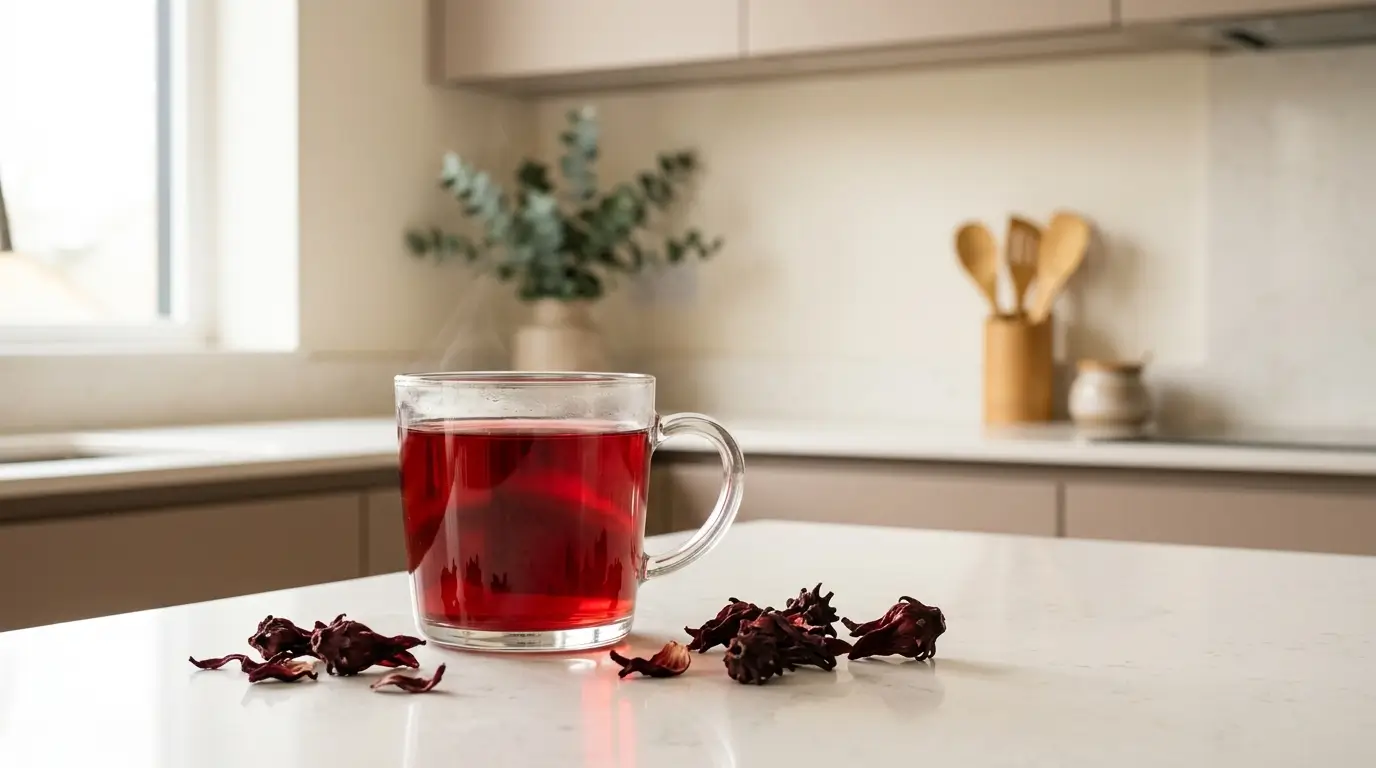
Can pregnant women drink hibiscus tea? No — hibiscus tea is not considered safe during pregnancy and should be avoided entirely from conception through delivery. This is one of the most consistent contraindications in herbal medicine literature, supported by both traditional knowledge across multiple cultures and modern scientific research. Hibiscus contains compounds that stimulate uterine contractions, which carries a real risk of miscarriage — particularly in the first trimester. This guide explains exactly why, what the research shows, and which herbal teas are safe to drink instead.
Why Can Pregnant Women Not Drink Hibiscus Tea?
The core reason is straightforward: hibiscus has emmenagogue properties. An emmenagogue is a substance that stimulates or increases menstrual blood flow by increasing circulation to the pelvic area and uterus. This is the same mechanism that makes hibiscus tea a traditional remedy for irregular menstruation and menstrual cramps in non-pregnant women.
During pregnancy, uterine stimulation is dangerous. The uterus needs to remain relaxed and undisturbed to maintain the pregnancy — particularly in the first trimester when the embryo is implanting and the placenta is forming. Anything that increases uterine contractility or blood flow to the uterus during this period raises the risk of spontaneous abortion.
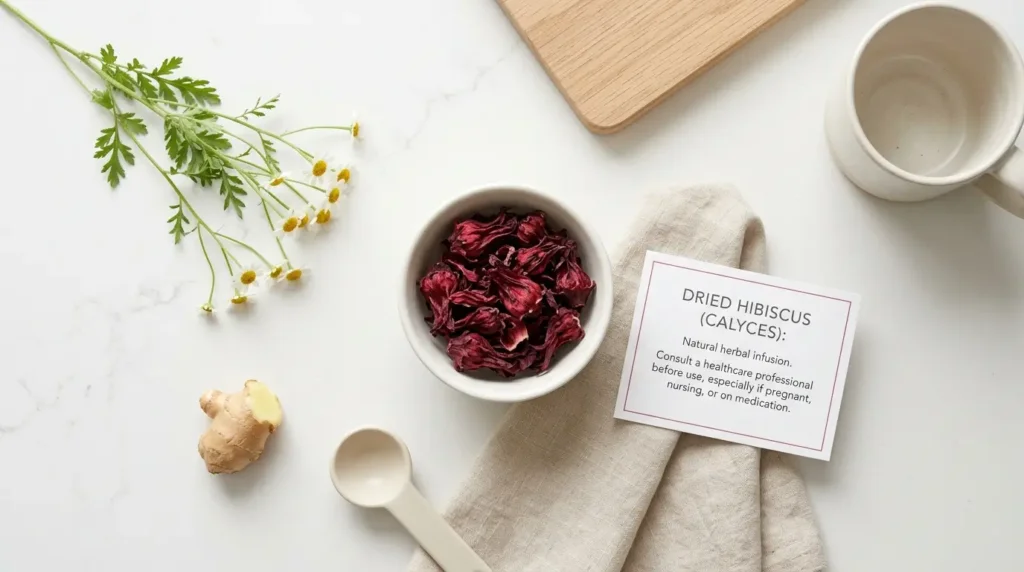
What Compounds Are Responsible?
The emmenagogue effect of hibiscus is attributed primarily to:
Hibiscus acid (hydroxycitric acid lactone): The dominant organic acid in hibiscus calyces, this compound has been shown in animal studies to stimulate uterine muscle contractions. It is structurally related to compounds used in pharmaceutical oxytocic agents — drugs that induce labor by stimulating uterine contractions.
Phytoestrogens: Hibiscus contains plant-based compounds with mild estrogenic activity. Estrogen plays a central role in regulating the menstrual cycle and uterine function. In pregnancy, the hormonal balance is delicately maintained — introducing exogenous estrogenic compounds can disrupt this balance.
Anthocyanins and flavonoids: While primarily known for their antioxidant properties, some of these compounds also influence vascular tone and blood flow, potentially contributing to increased uterine perfusion.
What Does the Research Say?
The human clinical evidence specifically on hibiscus tea and pregnancy outcomes is limited — conducting randomized controlled trials on pregnant women with a known risk substance is ethically impossible. The evidence base comes from:
- Animal studies: Multiple studies in rodent models have shown that hibiscus extract at varying doses causes uterine contractions, embryo resorption (equivalent to miscarriage), and fetal abnormalities at higher doses
- Traditional medical knowledge: Across Egyptian, Sudanese, Mexican, and West African traditional medicine, hibiscus has been used intentionally as an abortifacient and to stimulate menstruation — a convergent warning across completely independent cultural traditions spanning centuries
- Pharmacological analysis: The identified compounds with uterotonic (uterine-contracting) activity provide a plausible biological mechanism consistent with the observed traditional uses
The convergence of animal data, traditional warning across multiple independent cultures, and a plausible pharmacological mechanism is considered sufficient by obstetric and herbal medicine guidelines worldwide to classify hibiscus as contraindicated in pregnancy.
Is Hibiscus Tea Dangerous in All Trimesters?
The risk is highest in the first trimester — when uterine stimulation is most likely to disrupt implantation or cause early miscarriage. However, the recommendation to avoid hibiscus tea applies throughout the entire pregnancy, for two reasons:
Second trimester: The placenta is fully formed and the pregnancy is more stable, but uterine contractions remain dangerous and can cause premature labor. The emmenagogue mechanism does not disappear after the first trimester.
Third trimester: Uterine contractions in the third trimester can trigger premature birth. While some practitioners consider hibiscus lower-risk late in pregnancy, the conservative and widely accepted medical position is to avoid it entirely until after delivery.
There is no established “safe” dose of hibiscus tea during pregnancy. Even small amounts carry theoretical risk, and there is no clinical evidence demonstrating a minimum threshold below which hibiscus is safe for a developing pregnancy.
Is Roselle Tea the Same as Hibiscus Tea During Pregnancy?
Yes — roselle, karkade, agua de jamaica, bissap, and sorrel drink are all names for the same plant: Hibiscus sabdariffa. The contraindication in pregnancy applies to all preparations made from this plant, regardless of the name used:
- Roselle tea (Hibiscus sabdariffa) — same plant, same compounds ❌
- Agua de jamaica — the Mexican cold-drink preparation of hibiscus ❌
- Karkade — the Egyptian and Sudanese hot preparation ❌
- Bissap — the West African name for the same drink ❌
- Sorrel drink — the Caribbean Christmas drink made from H. sabdariffa calyces ❌
- Hibiscus flower tea from ornamental varieties (Hibiscus rosa-sinensis) — not the same plant; ornamental hibiscus has not been specifically contraindicated, but for safety during pregnancy all hibiscus preparations are best avoided unless confirmed safe by your midwife
The name of the drink does not change its composition. If it is made from the dried red calyces of Hibiscus sabdariffa — the same plant used in hibiscus tea — it carries the same emmenagogue risk and should be avoided during pregnancy.
This also applies to hibiscus supplements, hibiscus extract capsules, and concentrated hibiscus syrups — all of which deliver even higher concentrations of the active uterotonic compounds than brewed tea.
Our full guide on agua de jamaica covers the traditional preparation — and explicitly notes the pregnancy contraindication.
What Do Medical Institutions Say About Hibiscus in Pregnancy?
The concern about hibiscus tea in pregnancy is not limited to herbal medicine — it is acknowledged by mainstream medical institutions:
Memorial Sloan Kettering Cancer Center (MSKCC): The MSKCC Integrative Medicine service includes hibiscus in its list of herbs that “may stimulate menstruation or uterine contractions” and advises pregnant women to avoid it.
National Institutes of Health (NIH) — MedlinePlus: Lists hibiscus as “possibly unsafe” when taken by mouth in medicinal amounts during pregnancy, noting the potential to cause miscarriage.
European Medicines Agency (EMA): Hibiscus preparations are not approved for medicinal use during pregnancy by the EMA, with uterine stimulation cited as a precautionary reason.
Traditional obstetric practice: Across Egyptian, Sudanese, Mexican, and West African traditional medicine — cultures where hibiscus has been consumed for centuries — its use as an abortifacient is historically documented. This convergent cross-cultural warning from completely independent traditions, spanning centuries, is taken seriously by ethnobotanists and obstetric herbal medicine specialists.
The consistency of this recommendation across folk traditions, pharmacological research, and modern medical institutions is unusually strong for a plant compound — most herbal contraindications during pregnancy are more ambiguous.
What About Hibiscus Tea in Early Pregnancy Before You Knew?
This is a common concern for women who drank hibiscus tea before discovering they were pregnant.
One or two cups of hibiscus tea in early pregnancy — especially before implantation was established — is unlikely to cause harm in most cases. The risk from hibiscus tea is probabilistic rather than certain: it increases the risk of miscarriage, it does not guarantee it.
If you drank hibiscus tea in early pregnancy before knowing you were pregnant, the recommended course of action is:
- Stop drinking it immediately upon learning of the pregnancy
- Mention it to your midwife or OB at your next appointment
- Do not panic — the majority of early pregnancies proceed normally even after limited exposure to mild herbal emmenagogues
Your healthcare provider is the right person to assess your specific situation based on how much you consumed and at what gestational stage.
Can Breastfeeding Women Drink Hibiscus Tea?
The guidance for breastfeeding is more conservative than definitive — there is simply insufficient safety data on hibiscus compounds in breast milk and their effects on nursing infants.
The general recommendation from most herbal medicine and lactation authorities is to avoid hibiscus tea while breastfeeding as a precaution, particularly in the early months when the infant’s liver enzyme systems are still maturing and their ability to process plant compounds is limited.
After the baby is weaned, most healthy women can return to drinking hibiscus tea safely. For the full benefits available once breastfeeding is complete, our guide on hibiscus tea benefits for women covers everything relevant to women’s health at different life stages.
Which Herbal Teas Are Safe During Pregnancy?
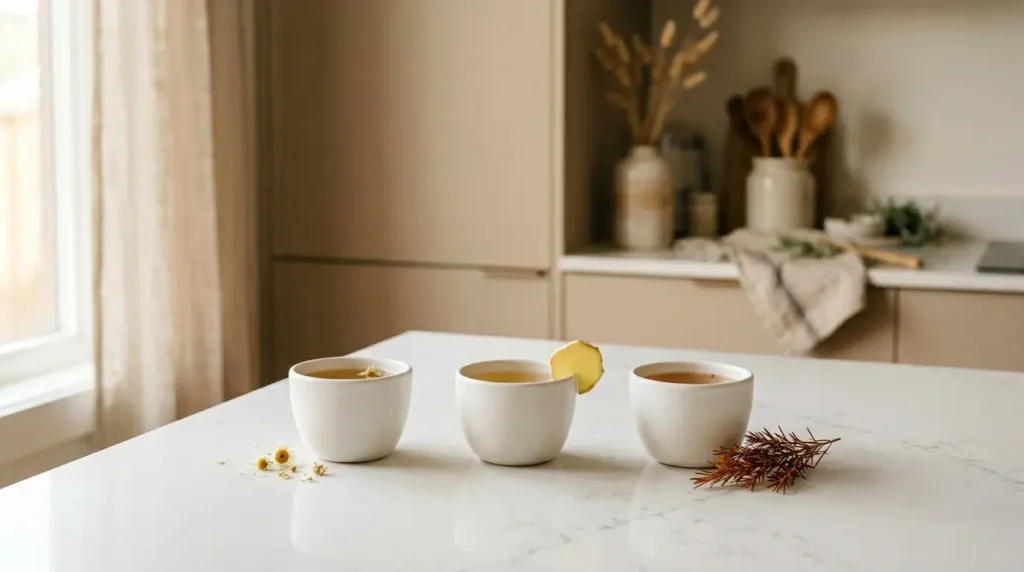
This is the most practically useful section for pregnant women who enjoy herbal tea as part of their daily routine. The important caveat: no herbal tea is 100% proven safe during pregnancy, because rigorous clinical trials on pregnant women are rarely conducted. The teas listed below are considered low-risk based on long traditional use, absence of known harmful compounds, and lack of adverse reports — but always confirm with your midwife or OB before making any herbal tea a regular habit during pregnancy.
Ginger tea — widely considered safe in moderation Ginger is one of the most studied herbs in pregnancy, primarily for its effectiveness against morning sickness and nausea. Multiple studies confirm safety at culinary doses (1–1.5g of dried ginger per day). Avoid very high doses. Our guide on ginger tea benefits covers its full profile.
Chamomile tea — generally considered safe in moderation Chamomile is mild, anti-inflammatory, and widely used to ease anxiety and promote sleep during pregnancy. Most authorities consider occasional consumption safe. Avoid very large amounts — chamomile belongs to the ragweed family and has been associated with allergic reactions in sensitive individuals. For pregnancy-safe sleep drinks, our best drinks for better sleep guide is a useful reference.
Rooibos tea — considered safe Rooibos (red bush tea from South Africa) is naturally caffeine-free, low in tannins, and free from known uterotonic compounds. It is one of the most consistently recommended herbal teas for pregnant women by midwives and nutritionists.
Peppermint tea — considered safe in small amounts Peppermint is commonly used for digestive discomfort and nausea in pregnancy. Large amounts should be avoided as peppermint can relax the lower esophageal sphincter (worsening reflux, which is already common in pregnancy) and there are theoretical concerns about very high doses in early pregnancy.
Lemon balm tea — generally considered safe Lemon balm is calming and mild, with no known uterotonic properties. It is often recommended for pregnancy-related anxiety and sleep disturbances.
Herbal Teas to Avoid During Pregnancy
Beyond hibiscus, several other common herbal teas carry risks during pregnancy and should be avoided:
| Herbal Tea | Risk | Reason |
|---|---|---|
| Hibiscus | ❌ Avoid entirely | Emmenagogue, uterine stimulation |
| Licorice root | ❌ Avoid | Glycyrrhizin linked to preterm labor |
| Sage (medicinal amounts) | ❌ Avoid | Uterotonic at high doses |
| Nettle (very high amounts) | ⚠️ Limit | Uterine stimulant at medicinal doses |
| Raspberry leaf | ⚠️ Avoid first trimester | Traditionally used to stimulate labor — third trimester only under supervision |
| Black/green tea | ⚠️ Limit | Caffeine — max 200mg/day in pregnancy |
| Chamomile | ✅ Moderate | Generally safe, confirm with provider |
| Ginger | ✅ Moderate | Evidence-backed for nausea |
| Rooibos | ✅ Safe | No known risks |
| Peppermint | ✅ Small amounts | Avoid very large quantities |
When Can You Start Drinking Hibiscus Tea Again After Pregnancy?
Once your baby is delivered and breastfeeding is complete (or if you choose not to breastfeed), most healthy women can return to drinking hibiscus tea without concern.
The postpartum period brings its own health considerations where hibiscus tea may actually be particularly beneficial — including blood pressure management (which can remain elevated for weeks after delivery in some women), antioxidant recovery after the physical demands of pregnancy and childbirth, and supporting a return to hormonal balance.
Our complete guide on hibiscus tea benefits for women covers the specific benefits relevant to women across all life stages, including postpartum.
For safe daily intake once you return to hibiscus tea, our how much hibiscus tea per day guide covers the recommended amounts. And for the full safety picture including all other populations who should limit or avoid hibiscus tea, see our comprehensive hibiscus tea side effects guide.
A Note on Hibiscus in Food During Pregnancy
The concern about hibiscus tea during pregnancy applies primarily to concentrated herbal tea preparations — where you are steeping a significant amount of dried hibiscus in hot water and consuming it regularly as a beverage.
Small amounts of hibiscus as a flavoring in food — a small amount of hibiscus jam, a hibiscus-flavored candy, or a light hibiscus vinaigrette — are generally considered much lower risk due to the much smaller concentration of active compounds involved. The dose makes the risk: a concentrated hibiscus tea consumed daily is categorically different from an occasional small culinary use.
That said, if you are pregnant, the safest approach is to avoid hibiscus in all concentrated forms — teas, syrups, supplements, and extracts — until after delivery and the completion of breastfeeding.
Frequently Asked Questions
Can pregnant women drink hibiscus tea?
No. Hibiscus tea is not safe during pregnancy. It contains emmenagogue compounds that stimulate uterine contractions and increase blood flow to the uterus, raising the risk of miscarriage — particularly in the first trimester. The recommendation to avoid it applies throughout the entire pregnancy.
What happens if you drink hibiscus tea while pregnant?
Drinking hibiscus tea during pregnancy increases the risk of uterine contractions and miscarriage. This risk is highest in the first trimester. One or two cups consumed before a pregnancy was known is unlikely to cause harm in most cases, but hibiscus should be stopped immediately upon learning of a pregnancy.
Is hibiscus tea safe in the third trimester?
No. While the risk of miscarriage is specific to early pregnancy, uterine stimulation in the third trimester can trigger premature labor. Hibiscus tea should be avoided throughout all three trimesters.
Can you drink hibiscus tea while breastfeeding?
The conservative and widely recommended position is to avoid hibiscus tea while breastfeeding due to insufficient safety data on its compounds in breast milk and their effects on nursing infants. After weaning, most healthy women can safely return to drinking hibiscus tea.
What herbal teas can pregnant women drink?
The most widely considered safe options are ginger tea (for nausea, in moderation), rooibos tea, chamomile tea (in moderate amounts), peppermint tea (small amounts), and lemon balm tea. Always confirm any herbal tea use with your midwife or OB during pregnancy.
Why is hibiscus tea not safe during pregnancy?
Hibiscus contains compounds — primarily hibiscus acid and phytoestrogens — that stimulate uterine contractions (emmenagogue effect). This property has been recognized in traditional medicine across Egypt, Mexico, and West Africa for centuries, where hibiscus has been used intentionally to stimulate menstruation. During pregnancy, this effect raises the risk of miscarriage.
Is a small amount of hibiscus tea safe during pregnancy?
There is no established safe dose of hibiscus tea during pregnancy. The recommendation is to avoid it entirely. Occasional very small culinary uses of hibiscus as a flavoring (not as a concentrated tea) are generally considered much lower risk, but concentrated hibiscus tea should be avoided.
When can you drink hibiscus tea again after pregnancy?
Most healthy women can safely return to drinking hibiscus tea after delivery and once breastfeeding is complete. At 1–2 cups per day, hibiscus tea has documented benefits for blood pressure, antioxidant protection, and hormonal balance that are particularly relevant in the postpartum period.
Is roselle tea safe during pregnancy?
No. Roselle tea is made from Hibiscus sabdariffa — the exact same plant as hibiscus tea. The name roselle does not change the composition or the risk. Roselle tea contains the same emmenagogue compounds that stimulate uterine contractions and should be avoided entirely during pregnancy.
Can I drink agua de jamaica while pregnant?
No. Agua de jamaica is made from dried Hibiscus sabdariffa calyces — the same hibiscus used in hibiscus tea. The cold preparation and added sugar or lime do not change the active compounds. Agua de jamaica should be avoided throughout pregnancy for the same reasons as hibiscus tea.
Does Memorial Sloan Kettering say hibiscus is unsafe in pregnancy?
Yes. The Memorial Sloan Kettering Cancer Center’s integrative medicine resources list hibiscus among herbs that may stimulate uterine contractions and explicitly advise pregnant women to avoid it. This recommendation is consistent with the NIH MedlinePlus guidance and the European Medicines Agency’s position.
Is hibiscus tea dangerous in all forms during pregnancy?
Yes — the contraindication applies to all concentrated hibiscus preparations: hibiscus tea (hot or cold), cold brew hibiscus, agua de jamaica, karkade, roselle tea, hibiscus supplements, hibiscus extract capsules, and concentrated hibiscus syrups. Small trace amounts in flavored foods or beverages are generally considered lower risk due to the minimal concentration, but all concentrated preparations should be avoided.
Key Takeaways
- Can pregnant women drink hibiscus tea? No — hibiscus tea should be avoided entirely throughout pregnancy
- The risk comes from hibiscus’s emmenagogue properties: compounds that stimulate uterine contractions and increase pelvic blood flow
- This contraindication applies to all trimesters — the risk is highest in the first trimester but uterine stimulation is dangerous at any stage
- There is no established safe dose of hibiscus tea during pregnancy
- Breastfeeding women should also avoid it as a precaution due to insufficient safety data
- Women who drank hibiscus tea before knowing they were pregnant should stop immediately and mention it to their healthcare provider — occasional early exposure is unlikely to cause harm in most cases
- Safe herbal tea alternatives during pregnancy include ginger (for nausea), rooibos, chamomile, and peppermint in moderation
- After delivery and the completion of breastfeeding, most healthy women can safely return to hibiscus tea at 1–2 cups per day