
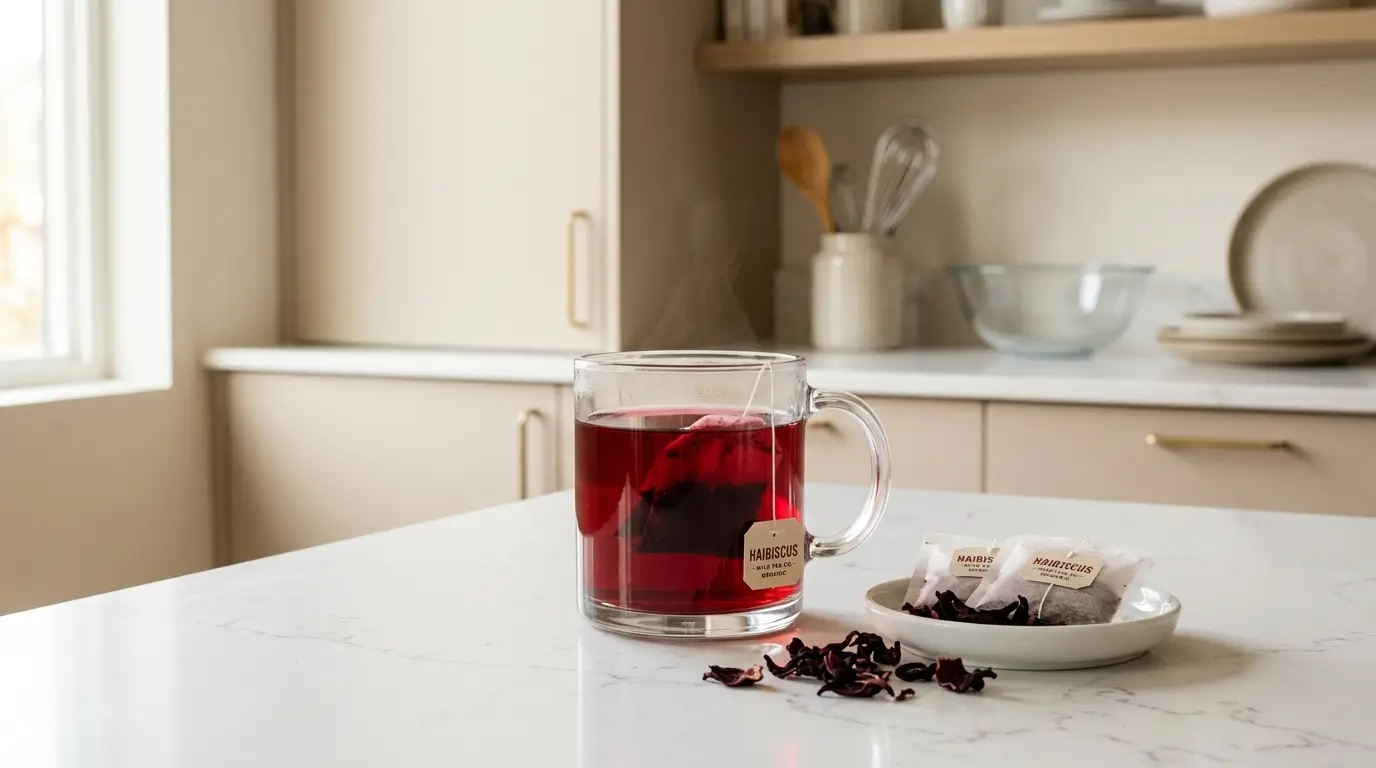
Pipi Tea is a brand — not a new type of tea, not a special blend, and not a secret ingredient. It is an organic hibiscus tea company that sells tea bags and loose leaf hibiscus through its website and Amazon. The rapid rise in searches for “pipi tea” and “pipi hibiscus tea” reflects a successful social media marketing campaign, likely driven by paid advertising on platforms like TikTok and Instagram. If you’ve seen it trending and want to know what it actually is, what’s in it, and whether it’s worth buying — this is the guide you need.
What Is Pipi Tea Made Of?
Pipi Tea contains one ingredient: dried Hibiscus sabdariffa calyces — the same plant used to make hibiscus tea, agua de jamaica, karkade, and bissap worldwide for centuries.
The product is marketed as USDA Organic certified, non-GMO, vegan, and free from artificial additives, preservatives, and caffeine. It is available in tea bag format and as loose leaf dried hibiscus, sold in 30-bag and larger quantities.
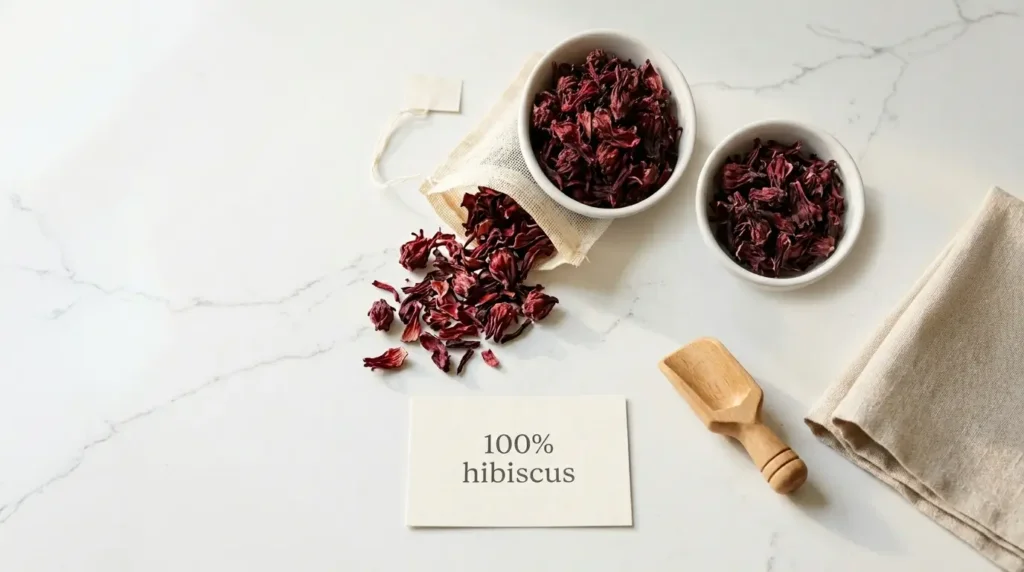
This is standard organic hibiscus tea. The ingredient is not unique to Pipi Tea — it is the same botanical sold by dozens of brands and used in traditional preparations across Egypt, Mexico, West Africa, and Southeast Asia. What differentiates brands in this category is sourcing quality, processing method, and freshness — not the ingredient itself.
What Are the Benefits of Pipi Tea?
Since Pipi Tea is 100% hibiscus, its benefits are identical to those of any quality hibiscus tea. The brand’s marketing highlights blood pressure support, antioxidant protection, cholesterol management, and metabolic benefits — all of which are backed by independent research on hibiscus, not on the brand specifically.
Here is what the science actually supports for hibiscus tea in general:
Blood pressure reduction: Multiple clinical trials show that 2 cups of hibiscus tea daily over 4–6 weeks reduces systolic blood pressure by 7–13 mmHg in people with mild to moderate hypertension. This is the most robustly studied benefit of hibiscus. For full detail on how this works and how preparation method affects it, see our guide on hibiscus tea and blood pressure.
Antioxidant protection: Hibiscus calyces contain extremely high concentrations of anthocyanins — the pigments responsible for the deep ruby-red color and one of the most powerful classes of dietary antioxidants. These compounds reduce oxidative stress and have anti-inflammatory effects at the cellular level.
Cholesterol and triglyceride support: Several studies have found modest reductions in LDL cholesterol and triglycerides with regular hibiscus consumption over 4–8 weeks.
Weight and metabolic support: Hibiscus extract inhibits pancreatic alpha-amylase, slowing carbohydrate absorption and reducing post-meal blood sugar spikes. Unsweetened hibiscus tea is essentially calorie-free.
Zero caffeine: Hibiscus is naturally caffeine-free, making it suitable at any time of day including evenings. There is no stimulant effect, no jitters, and no sleep disruption.
For the complete breakdown of every documented benefit, our guide on hibiscus tea benefits covers the full research picture.
Is Pipi Tea Safe? Are There Side Effects?
Yes, Pipi Tea is safe for most healthy adults at the recommended serving of 1–2 cups per day. But because it is hibiscus tea, the same precautions that apply to all hibiscus preparations apply here too.
Who should be cautious:
- People taking blood pressure medication — hibiscus can amplify the effect and cause blood pressure to drop too low
- Pregnant women — hibiscus has emmenagogue properties and should be avoided during pregnancy
- People with CKD stage 3+ — the potassium content poses risks for impaired kidneys
- People with acid reflux or GERD — hibiscus is highly acidic (pH 2.5–3.5)
The full safety guide — including drug interactions, dosage limits, and population-specific guidance — is in our article on hibiscus tea side effects.
For people with digestive sensitivity, hibiscus tea’s acidity is the most relevant concern. Our guide on hibiscus tea and acid reflux explains who should avoid it and how to prepare it more gently. And for kidney-related questions, see our comprehensive article on hibiscus tea and kidneys.
Pipi Tea vs. Other Hibiscus Tea Brands
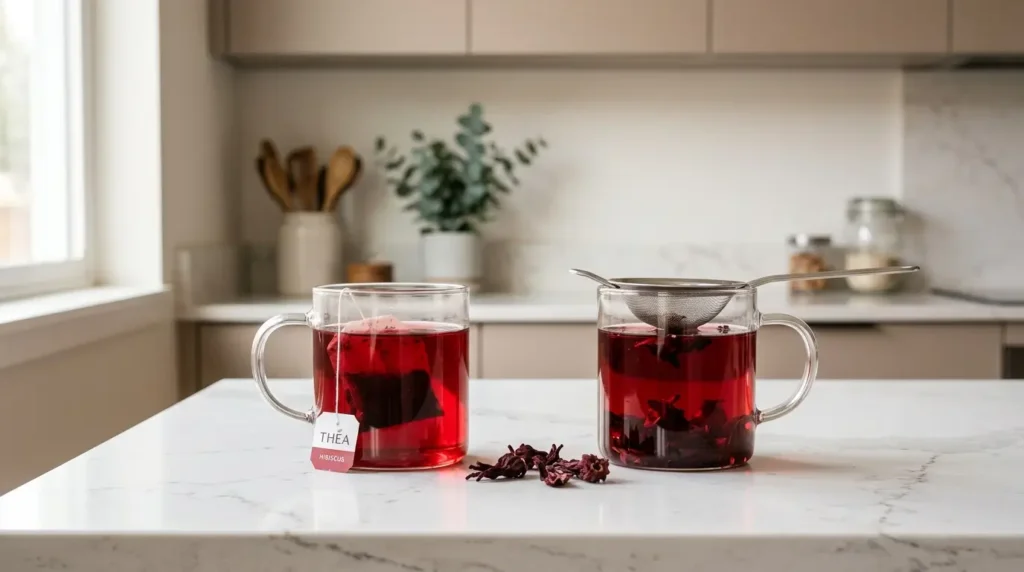
Pipi Tea competes in a market with dozens of hibiscus tea brands. Since the ingredient is identical across quality brands, the key differentiators are:
| Factor | What to look for |
|---|---|
| Certification | USDA Organic or equivalent — ensures no pesticide residue |
| Third-party testing | Heavy metals, pesticides, and contaminant testing |
| Ingredient list | Should say “hibiscus” or “Hibiscus sabdariffa” — nothing else |
| Form | Whole calyces or cut calyces — not powder (lower quality) |
| Sourcing | Egypt, Sudan, Mexico, and West Africa are the primary quality sources |
Pipi Tea meets most of these criteria based on their published claims — organic certified and tested for contaminants. This puts it in the same tier as other reputable organic hibiscus brands.
The most important factor that no brand can control for you: freshness. Dried hibiscus loses color, flavor, and antioxidant potency over time. Whether you buy Pipi Tea or any other brand, check the production or best-by date and store in an airtight container away from light and heat once opened.
Is Pipi Tea a Legitimate Company?
Yes, in the sense that matters most: Pipi Tea is a real, operating company selling a real product. It is not a scam or an empty dropshipping storefront — the hibiscus tea itself matches its description (organic, single-ingredient, third-party tested), and it’s sold through both Amazon and the brand’s own site, pipitea.com.
That said, “legitimate business” and “problem-free buying experience” are two different questions, and it’s worth being clear-eyed about both.
What supports its legitimacy as a company:
- A functioning storefront, an active Amazon presence, and a product that matches its own marketing claims
- USDA Organic certification, which requires third-party audits to maintain
- The company responds to customer complaints (see below), which a pure scam operation typically does not bother doing
What’s worth knowing before you order: customer reviews on Trustpilot show a recurring pattern of complaints, mainly centered on the checkout and subscription process — customers reporting they were enrolled in a recurring subscription without clearly intending to, extra express-shipping charges added during checkout, and an ordering flow that pushes upsells with limited ability to edit the order before payment. Several reviewers also described slow or unsatisfying responses when trying to resolve billing issues directly with the company, though at least one review noted the issue was eventually resolved with a partial refund after contacting support.
How to protect yourself if you decide to order:
- Read every screen carefully at checkout — look for pre-checked boxes for “subscribe and save,” “expedited shipping,” or bundled add-ons before entering payment details
- Consider ordering through Amazon rather than the brand’s own site — Amazon’s standardized checkout and buyer-protection policies reduce the risk of the checkout-flow issues reported above
- Pay with a card or payment method that makes disputing a charge straightforward, just as you would with any newer direct-to-consumer brand
- If you do order directly from pipitea.com, screenshot the order summary before submitting payment, so you have a clear record if the charge doesn’t match
None of this means Pipi Tea is untrustworthy as a company — plenty of direct-to-consumer brands have messy checkout flows without being fraudulent. But if you’ve seen “is Pipi Tea legit” as a search suggestion, this — not an outright scam — is almost certainly what people are reacting to.
Is Pipi Tea Worth the Price?
This is the most practical question. Pipi Tea is sold at a premium price point relative to loose dried hibiscus. Here is the honest cost comparison:
Pipi Tea (bags): Approximately $1+ per serving depending on the package
Loose dried organic hibiscus calyces: Typically $0.10–0.30 per serving when bought in bulk from a quality supplier
Homemade dried hibiscus (from your own garden or fresh market flowers): Virtually free per serving once you have the flowers
The tea bag format offers convenience — no measuring, no strainer needed, consistent serving size every time. If convenience matters to you and you like the product, the premium is justified. If you want maximum value for money and are willing to measure a teaspoon of loose calyces, bulk loose hibiscus from a certified organic supplier delivers the same benefits at a fraction of the cost.
If you want to take the most hands-on approach of all, our guide on how to dry hibiscus flowers for tea walks you through drying your own from fresh flowers — the most cost-effective and freshest option available.
Where to Buy Pipi Tea
Pipi Tea is sold through two channels:
- Amazon — search “Pipi Tea” or “PiPi Tea” directly; multiple listings exist for hibiscus and oolong varieties. Given the checkout and subscription complaints noted above about the brand’s own site, buying through Amazon is the lower-friction option for most people, since Amazon’s standard checkout doesn’t include the same upsell/subscription flow and its buyer-protection policies apply automatically.
- The brand’s own website (pipitea.com / shop.pipitea.com) — offers the full product range and occasional bundle deals, but checkout carefully: review every line item before paying, and watch for pre-selected subscription or expedited-shipping options.
If you’d rather skip the brand entirely: any certified organic loose dried hibiscus from a reputable retailer or health food store gives you the identical product — see the price comparison above for why this is often the better-value option, without any of the checkout considerations above.
How to Make Pipi Tea (and Any Hibiscus Tea)
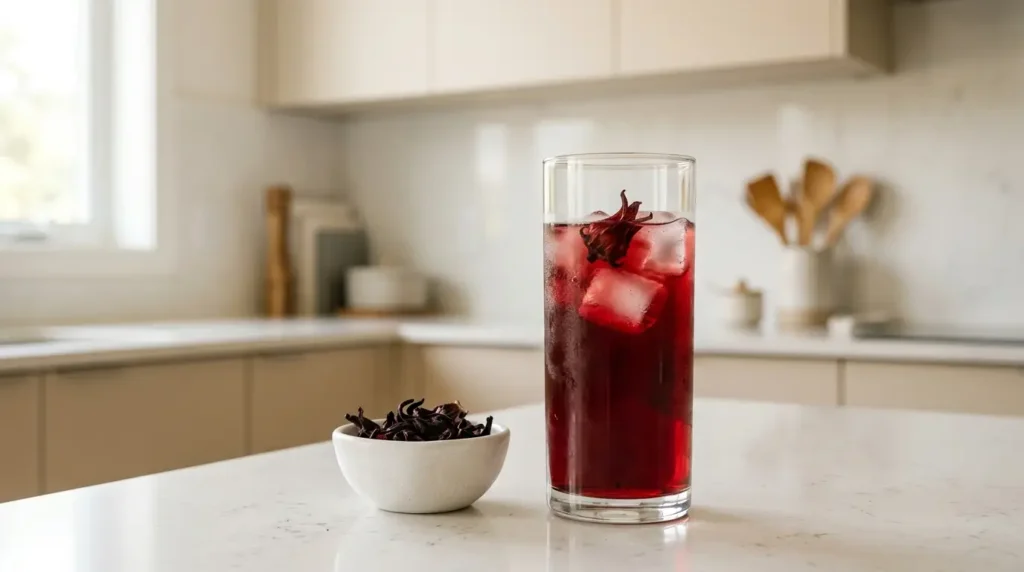
Whether you use Pipi Tea bags or loose dried hibiscus, the preparation is identical:
Hot brew:
- Place 1 tea bag or 1–2 teaspoons of dried hibiscus in a cup
- Pour near-boiling water (90°C / 195°F) over it
- Steep for 5–7 minutes
- Remove the bag or strain, sweeten to taste with honey
- Drink hot or pour over ice
Cold brew (lower acidity, smoother flavor):
- Place 3–4 tea bags or 3 tablespoons of loose hibiscus in 1 liter of cold water
- Refrigerate for 8–12 hours
- Remove bags or strain and serve over ice
Cold brew is particularly recommended for people with a sensitive stomach, as it produces a less acidic drink. For a full explanation of why, see our guide on is hibiscus tea acidic or alkaline.
How much per day: For most healthy adults, 1–2 cups daily is the evidence-based range for health benefits. Our guide on how much hibiscus tea per day covers optimal amounts for specific health goals.
Best time to drink: Our full timing guide at best time to drink hibiscus tea explains when to drink it for blood pressure benefits, weight management, and sleep.
The Bottom Line on Pipi Tea
Pipi Tea is a legitimate organic hibiscus tea brand with a clean ingredient list and proper certifications. The product is what it claims to be: pure dried hibiscus, well-sourced and tested.
What Pipi Tea is not: a proprietary formula, a unique blend, or a product with benefits that other quality hibiscus teas don’t share. Every benefit claimed by the brand is a benefit of hibiscus itself — a plant that has been consumed for centuries and studied in over 100 peer-reviewed clinical trials.
If you have seen Pipi Tea advertised and want to try hibiscus tea for the first time, it is a reasonable starting point. If you are already familiar with hibiscus tea and want the most value and freshness, loose dried hibiscus calyces from a certified organic supplier — or dried at home — will serve you just as well at a lower cost.
The ingredient is the same. The benefits are the same. The choice is about convenience versus cost.
Frequently Asked Questions
What is Pipi Tea?
Pipi Tea is an American organic hibiscus tea brand that sells tea bags and loose leaf hibiscus through its website and Amazon. It contains one ingredient — dried Hibiscus sabdariffa calyces — and is USDA Organic certified and caffeine-free.
Is Pipi Tea the same as hibiscus tea?
Yes. Pipi Tea is hibiscus tea in branded tea bag form. The ingredient, benefits, and preparation are identical to any quality hibiscus tea product. The brand name refers to the company, not a unique type of tea.
What are the benefits of Pipi Tea?
Since Pipi Tea is 100% hibiscus, its benefits are those of hibiscus tea: blood pressure reduction, antioxidant protection, cholesterol and triglyceride support, metabolic benefits, and zero caffeine. These benefits are backed by independent research on hibiscus, not on the brand specifically.
Is Pipi Tea safe to drink every day?
Yes, for most healthy adults at 1–2 cups per day. People on blood pressure medication, pregnant women, people with kidney disease, and those with acid reflux should follow specific guidelines. See our full hibiscus tea side effects guide for details.
Why is Pipi Tea trending?
Pipi Tea’s rapid rise in search volume reflects a successful social media marketing campaign, particularly on platforms like TikTok and Instagram. The product itself is straightforward hibiscus tea — the trending is about brand awareness, not a new or unique ingredient.
Is Pipi Tea a legitimate company?
Yes, it’s a real company selling a genuine organic hibiscus product, not a scam. However, customer reviews report a pattern of checkout and subscription issues on the brand’s own website — unexpected recurring charges and added shipping fees are the most common complaints. Buying through Amazon avoids most of these issues thanks to its standardized checkout and buyer protections.
Where can I buy Pipi Tea?
Pipi Tea is available on Amazon and through the brand’s own website, pipitea.com. Amazon is the simpler option for most buyers; if ordering directly from the brand’s site, review the checkout screen carefully for pre-selected subscription or shipping add-ons before paying.
Is Pipi Tea worth the price?
It depends on your priorities. The tea bag format is convenient and the product is well-sourced. However, loose dried organic hibiscus calyces deliver the same benefits at a significantly lower cost per serving. If convenience matters, Pipi Tea is a reasonable choice. If value matters, buy loose hibiscus in bulk.
Does Pipi Tea help with blood pressure?
Hibiscus tea — including Pipi Tea — has strong clinical evidence for modest blood pressure reduction. Studies show 2 cups daily over 4–6 weeks can reduce systolic pressure by 7–13 mmHg. People on antihypertensive medication should consult their doctor before adding it to their routine.
Can you make Pipi Tea cold?
Yes. Cold brewing hibiscus tea bags in cold water for 8–12 hours in the refrigerator produces a smooth, less acidic version of the drink. This method is gentler on the stomach and is recommended for people with acid sensitivity.
Key Takeaways
- Pipi Tea is a brand name, not a unique type of tea — it is organic hibiscus tea in tea bag form
- The ingredient is 100% dried Hibiscus sabdariffa calyces, the same plant used in hibiscus tea worldwide
- Its benefits are those of hibiscus tea generally: blood pressure support, antioxidants, cholesterol management, and zero caffeine
- The same safety precautions apply as with any hibiscus tea: avoid during pregnancy, be cautious with blood pressure medication, and note the high acidity for reflux sufferers
- Loose dried organic hibiscus delivers identical benefits at a fraction of the cost per serving
- The trending search volume for Pipi Tea reflects marketing reach, not a unique or superior product
- Whether you use Pipi Tea bags or loose hibiscus, the preparation and benefits are exactly the same