
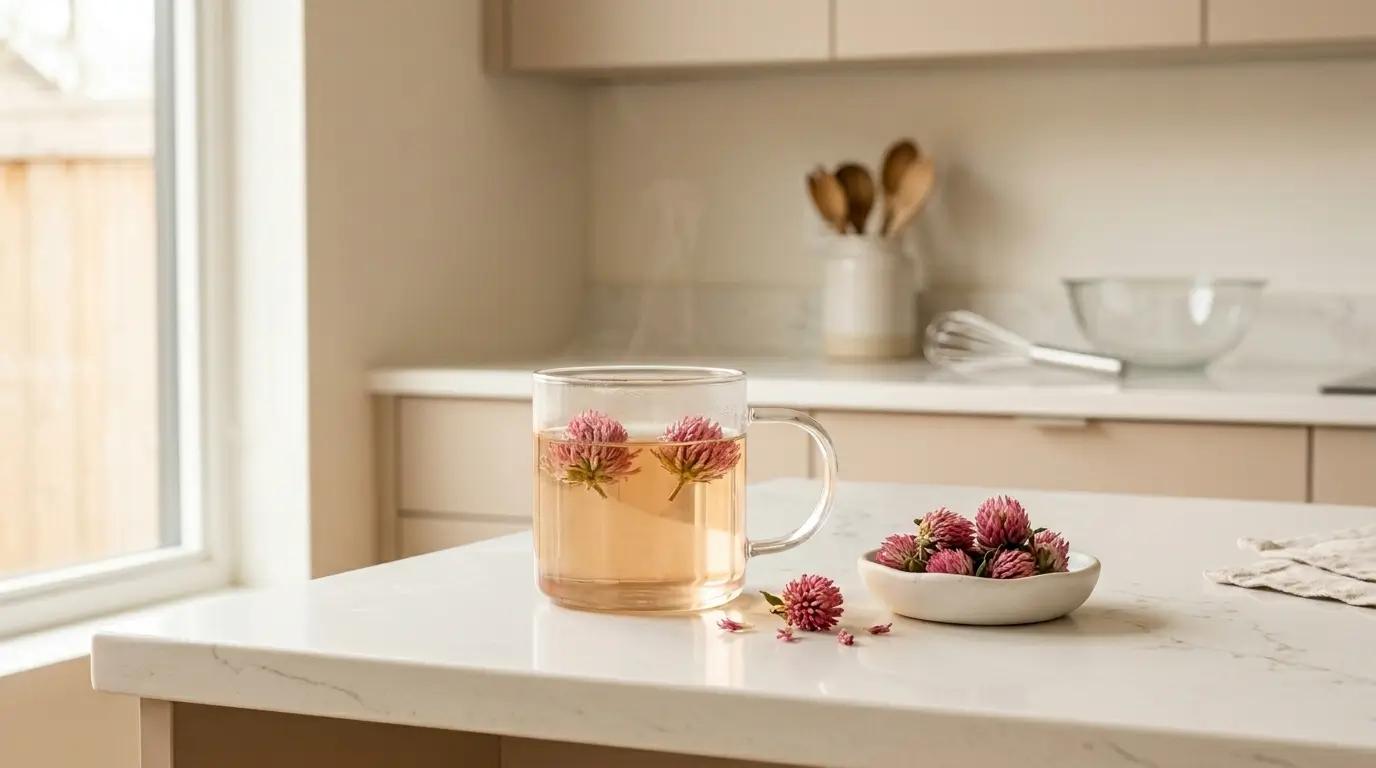
Red clover tea benefits are among the most specifically studied herbal benefits for women’s health. Made from the dried flowers of Trifolium pratense, red clover is one of the richest plant sources of isoflavones — phytoestrogens that mimic the effects of estrogen in the body. This makes red clover tea particularly relevant for women navigating menopause, perimenopause, bone density loss, and hormonal imbalances. Multiple clinical trials have specifically tested red clover isoflavones for menopausal symptoms, with consistently meaningful results. This guide covers what red clover tea does, what the research supports, who benefits most, and who should avoid it.
What Is Red Clover Tea?
Red clover tea is brewed from the dried flower heads of Trifolium pratense — the common red clover, a flowering plant in the legume family (Fabaceae) found throughout Europe, Asia, and naturalized across North America. It has been used in traditional European and Native American medicine for centuries, primarily for respiratory conditions, skin health, and — most notably in modern herbal medicine — hormonal support in women.
The tea has a mild, slightly sweet, earthy flavor with a gentle floral note. Most people find it pleasant and easy to drink without any sweetener. The color brews to a pale golden-pink.
Does red clover tea have caffeine? No. Red clover tea is completely caffeine-free.
The Active Compounds: Isoflavones
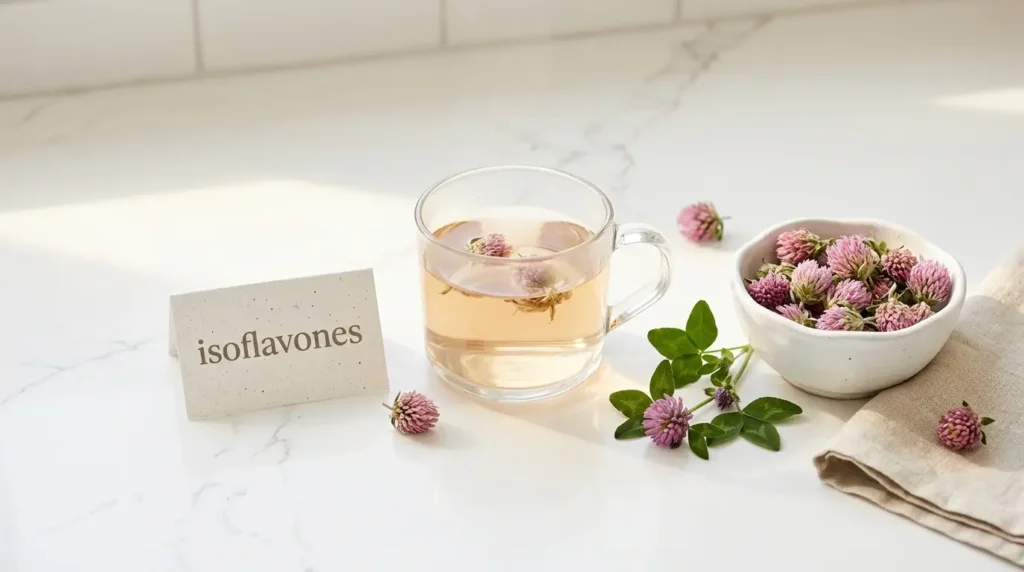
Red clover’s distinctive health properties come from its exceptionally high concentration of isoflavones — a class of phytoestrogens (plant compounds that interact with estrogen receptors in the human body). Red clover contains four primary isoflavones:
- Biochanin A — the dominant isoflavone, with documented anti-inflammatory and phytoestrogenic activity
- Formononetin — converted by gut bacteria into daidzein, a potent phytoestrogen
- Daidzein — directly active on estrogen receptors; also found in soy
- Genistein — the most studied soy isoflavone, also present in red clover
Red clover contains significantly more total isoflavones than soy — often cited as containing 10–40 times more isoflavones per gram than soy foods. This is why red clover extracts are the most widely used plant-based isoflavone supplement in clinical research on menopause.
How isoflavones work: Isoflavones are selective estrogen receptor modulators (SERMs) — they bind to estrogen receptors (both ERα and ERβ subtypes) but produce weaker effects than the body’s own estrogen. This allows them to provide mild estrogenic activity when estrogen levels are low (as in menopause) without the risks associated with hormone replacement therapy (HRT) at clinical doses.
Red Clover Tea Benefits: What the Research Shows
1. Menopause Symptom Relief — The Strongest Evidence
This is red clover’s most clinically studied and consistently supported benefit. Multiple randomized controlled trials have tested red clover isoflavone supplementation for menopausal symptoms.
Hot flashes: A systematic review published in Maturitas analyzed 17 randomized controlled trials and found that red clover isoflavones significantly reduced the frequency of hot flashes compared to placebo — with some trials showing reductions of 40–44% in hot flash frequency after 8–12 weeks of daily use.
A 2007 double-blind RCT in 109 menopausal women found that red clover extract (80mg isoflavones per day) reduced hot flash frequency by 44% over 12 weeks — a clinically meaningful result.
Night sweats, mood, and sleep: Beyond hot flashes, red clover isoflavone studies have documented improvements in mood stability, sleep quality, and reduced night sweats — the constellation of symptoms that collectively most affect quality of life during menopause.
At tea concentration vs extract doses: The clinical trials used standardized extracts at doses of 40–160mg isoflavones per day. A cup of red clover tea brewed at standard strength contains a fraction of this — estimates suggest 5–25mg of isoflavones per cup depending on the quantity of dried flowers used and steeping time. Longer steeping (15 minutes) and more generous flower quantities increase the isoflavone content meaningfully. For therapeutic menopause management, standardized red clover extract supplements are more reliable than tea alone — but daily tea provides a meaningful supplementary dose.
2. Bone Health and Osteoporosis Prevention
After menopause, declining estrogen levels accelerate bone density loss — increasing the risk of osteoporosis and fractures. Red clover isoflavones may help slow this process through their estrogen receptor activity in bone tissue.
A randomized controlled trial published in the European Journal of Clinical Nutrition found that women taking red clover isoflavones for 12 weeks showed significantly less bone density loss in the lumbar spine compared to placebo.
The mechanism: estrogen receptors in osteoblasts (bone-building cells) respond to isoflavones similarly to natural estrogen — maintaining the balance between bone formation and resorption. At tea concentration this effect is mild but cumulative — daily consumption over months contributes to the overall bone-supportive effect.
3. Cardiovascular Health
Menopausal estrogen decline also increases cardiovascular risk — LDL cholesterol rises, arterial flexibility decreases, and blood pressure tends to climb after menopause. Red clover isoflavones have been studied for cardiovascular protection through several mechanisms:
Arterial flexibility (endothelial function): Multiple trials have found that red clover isoflavones improve flow-mediated dilation — a measure of arterial flexibility and endothelial health — in postmenopausal women.
Cholesterol management: A meta-analysis found significant reductions in LDL cholesterol and triglycerides with red clover isoflavone supplementation. The mechanism involves both estrogen receptor-mediated effects on hepatic cholesterol metabolism and direct antioxidant protection of LDL particles from oxidation.
4. Skin Health and Collagen Support
Declining estrogen in menopause is directly associated with reduced skin collagen, decreased skin thickness, and accelerated skin aging. Red clover isoflavones, by providing mild estrogenic activity through skin estrogen receptors, may support collagen synthesis and skin hydration.
A small clinical trial found improvements in skin moisture, elasticity, and reduced wrinkle depth in postmenopausal women taking red clover isoflavone extract for 90 days.
5. Anti-Inflammatory and Antioxidant Activity
Beyond the isoflavone-mediated effects, red clover contains quercetin, kaempferol, and other flavonoids with documented anti-inflammatory and antioxidant properties. These compounds reduce systemic oxidative stress — a general health benefit applicable to all adults, not just those managing hormonal changes.
6. Hair and Scalp Health
Androgenic alopecia — hormonally driven hair thinning — affects a significant proportion of postmenopausal women due to the shift in estrogen-to-androgen ratio. Red clover’s isoflavones, particularly biochanin A, have shown 5-alpha-reductase inhibiting activity — the same mechanism as finasteride (a pharmaceutical hair loss drug). By reducing DHT production in the scalp, red clover may slow androgenic hair thinning.
This benefit is emerging in the research and not yet confirmed by large clinical trials, but the mechanism is compelling and consistent with other 5-alpha-reductase inhibitors used for hair loss.
Red Clover Tea for Women: A Complete Picture
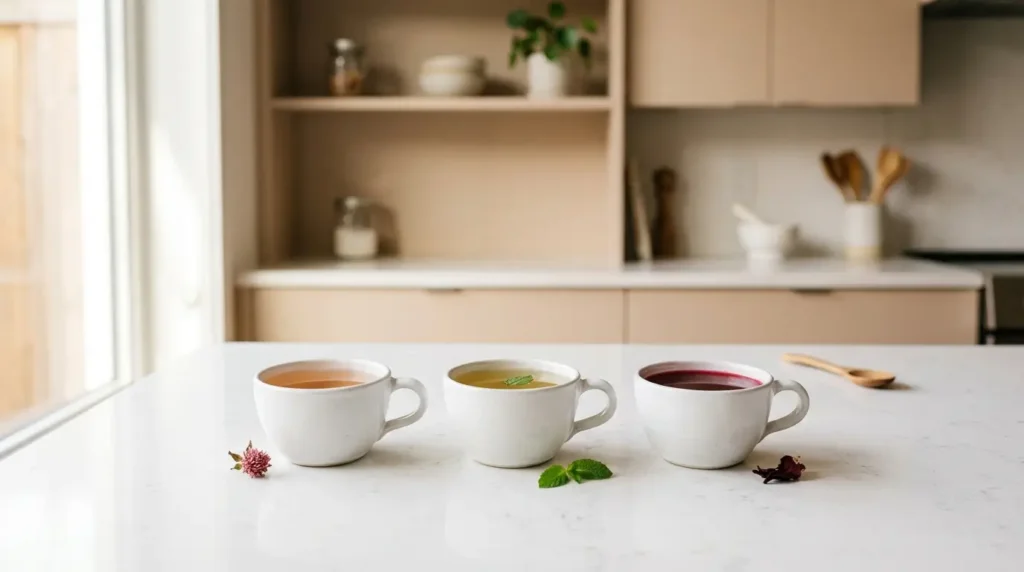
Red clover tea fits into a complementary herbal strategy for women’s health alongside other teas that target different mechanisms:
| Tea | Primary mechanism | Best for |
|---|---|---|
| Red clover | Isoflavones → estrogen receptors | Menopause, bone density, skin |
| Spearmint | Carvone → anti-androgenic | PCOS, hirsutism, hormonal acne |
| Hibiscus | Anthocyanins, ACE inhibition | Blood pressure, antioxidants |
| Chamomile | Apigenin → GABA receptors | Sleep, anxiety, PMS cramps |
| Nettle | Iron, antihistamine | Iron replenishment, allergies |
For the full profiles of these teas, see our guides on hibiscus tea benefits for women, spearmint tea benefits, chamomile tea benefits, and nettle tea benefits.
How to Make Red Clover Tea
Standard hot brew:
- Add 1–2 teaspoons of dried red clover flowers to your cup or infuser
- Pour water heated to 90°C (195°F) — not boiling
- Cover while steeping — preserves volatile aromatic compounds
- Steep for 10–15 minutes — longer than most herbal teas to maximize isoflavone extraction
- Strain through a fine mesh
- Add honey to taste if desired
- Serve hot or allow to cool over ice

Cold version: Brew double-strength (2 tablespoons dried flowers per 240ml), allow to cool, and pour over ice with a slice of lemon. The pale pink color is particularly striking over ice.
Red clover and spearmint blend: Combine 1 teaspoon red clover flowers + 1 teaspoon dried spearmint leaves per cup. Steep 10 minutes. This blend combines red clover’s phytoestrogenic activity with spearmint’s anti-androgenic properties — a complementary combination for women managing hormonal imbalances. See our spearmint tea benefits guide for more on spearmint’s hormonal profile.
Where to buy: Look for organic dried red clover flowers from quality herbal suppliers. The most commonly available commercial options include Traditional Medicinals (Red Clover blend) and loose dried flowers from Starwest Botanicals or Mountain Rose Herbs.
For more herbal tea cold brew ideas, our cold brew herbal tea recipes guide covers the full range of options.
Red Clover Tea Side Effects and Safety
Red clover tea is safe for most healthy adults. However, its phytoestrogenic activity creates specific considerations:
Hormone-sensitive conditions: People with hormone-sensitive cancers (estrogen receptor-positive breast cancer, uterine cancer, ovarian cancer), endometriosis, or uterine fibroids should consult their oncologist or gynecologist before consuming red clover tea regularly. The phytoestrogenic activity, while much weaker than pharmaceutical estrogens, may still be relevant in these conditions.
Blood thinners (warfarin): Red clover contains coumarin derivatives — compounds with natural anticoagulant activity. People on warfarin or other anticoagulants should consult their doctor before drinking red clover tea regularly, as it may enhance the anticoagulant effect.
Hormone replacement therapy (HRT): Combining red clover isoflavones with pharmaceutical HRT may produce additive estrogenic effects. Discuss with your doctor if you are on HRT.
Pregnancy: Red clover has mild estrogenic and uterotonic properties. Avoid during pregnancy as a precaution.
Breastfeeding: Insufficient safety data — avoid as a precaution.
Men: Red clover’s isoflavones may mildly reduce testosterone at high doses. At 1–2 cups per day of tea, this is unlikely to be a significant concern for most men, but it is worth noting.
For a broader reference on herbal tea safety, our hibiscus tea side effects guide covers the general safety framework applicable to herbal teas.
Frequently asked questions
Key Takeaways
- Red clover tea benefits are anchored by isoflavones — phytoestrogens found at higher concentrations in red clover than in soy
- Most clinically supported benefit: menopausal symptom relief, particularly hot flash reduction (40–44% in some trials)
- Also supports: bone density, cardiovascular health, skin collagen, and potentially androgenic hair thinning
- Clinical trials used standardized extracts at higher doses than brewed tea provides — tea delivers a supportive daily dose; supplements provide therapeutic doses
- Steep for 10–15 minutes to maximize isoflavone extraction
- Key safety cautions: avoid with hormone-sensitive cancers, blood thinners, HRT, and during pregnancy
- Complements spearmint (anti-androgenic), hibiscus (cardiovascular), and chamomile (sleep) for a complete women’s wellness herbal strategy
- Completely caffeine-free