
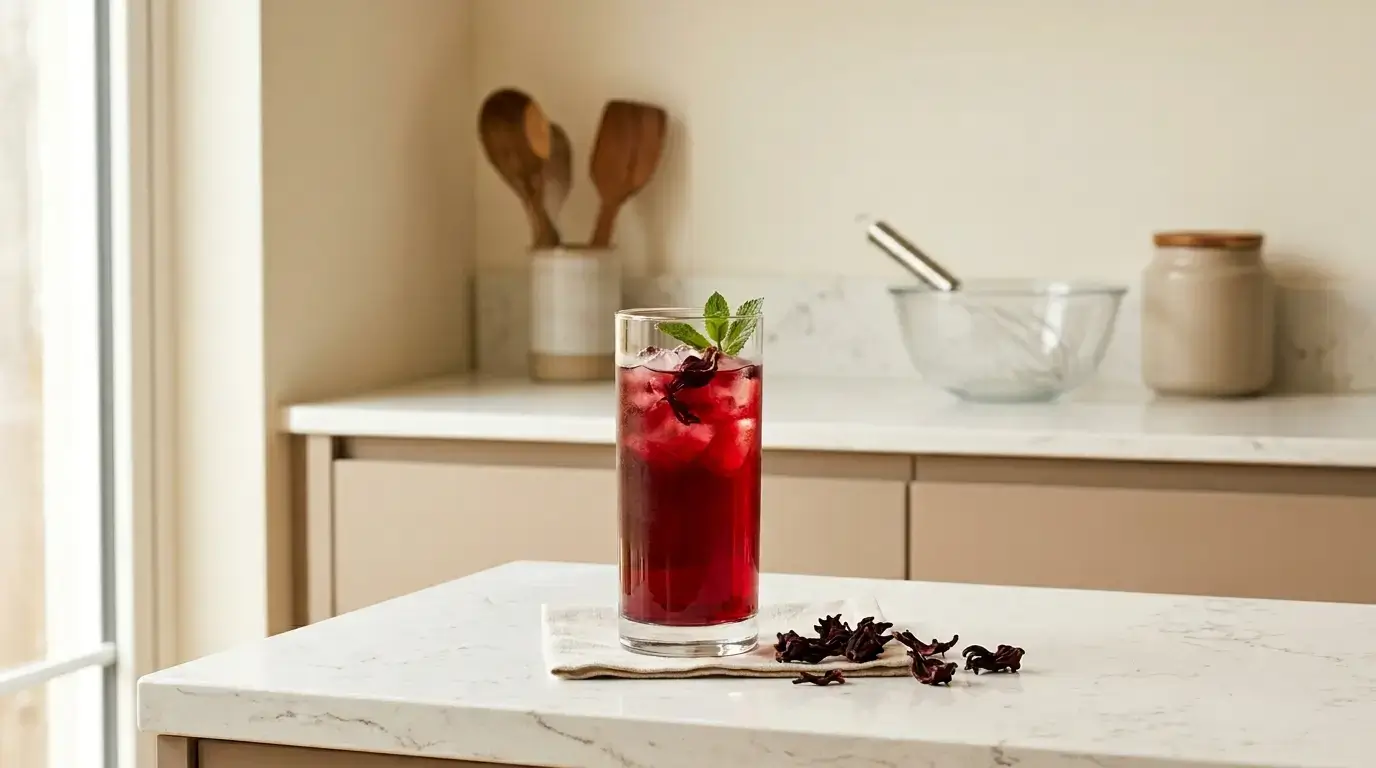
Quick answer: Hibiscus tea and acid reflux don’t mix well for most people — hibiscus tea is naturally acidic, with a pH between 2.5 and 3.5, similar to orange juice.. For people with acid reflux or GERD, this acidity can trigger or worsen symptoms. That said, many people with mild reflux can still enjoy hibiscus tea safely by adjusting how they prepare and drink it. This guide explains exactly who should avoid it, and how to drink it without discomfort.
What Makes Hibiscus Tea Acidic?
Hibiscus tea gets its deep red color and tart, cranberry-like flavor from the dried calyces of the Hibiscus sabdariffa plant. This tartness is a direct sign of its acidity. For a deeper breakdown of its chemistry, read our full guide on the exact pH of hibiscus tea and whether it’s acidic or alkaline.
The plant is naturally rich in three organic acids:
- Citric acid — the same acid found in lemons and limes
- Malic acid — found in apples, responsible for a sharp, clean tartness
- Hibiscus acid (hydroxycitric acid) — unique to hibiscus, contributing to its distinct flavor
Together, these acids give hibiscus tea a pH of approximately 2.5 to 3.5, making it one of the most acidic herbal teas available. Black coffee sits around pH 5, and green tea around pH 7 to 10. Hibiscus tea is closer to vinegar (pH 2.5) than to water (pH 7).
pH of Common Drinks vs. Hibiscus Tea
| Drink | pH Range | Acidity Level |
|---|---|---|
| Lemon juice | 2.0 – 2.6 | Very high |
| Hibiscus tea | 2.5 – 3.5 | Very high |
| Vinegar | 2.5 – 3.0 | Very high |
| Orange juice | 3.3 – 4.0 | High |
| Black coffee | 4.5 – 5.5 | Moderate |
| Green tea | 7.0 – 10.0 | Low / alkaline |
| Water | 7.0 | Neutral |
How Acid Reflux and GERD Work
Acid reflux occurs when stomach acid flows backward into the esophagus — the tube connecting your mouth to your stomach. The valve that’s supposed to prevent this backflow, called the lower esophageal sphincter (LES), either weakens or relaxes at the wrong moment. The result: a burning sensation in the chest (heartburn), regurgitation, or a sour taste in the back of the throat.
When acid reflux happens more than twice a week, or causes persistent discomfort, it’s classified as GERD (Gastroesophageal Reflux Disease) — a chronic condition requiring medical management.
Certain acidic foods and drinks don’t cause reflux on their own, but they intensify symptoms in people whose esophagus is already irritated or whose LES is already compromised.
Can Hibiscus Tea Cause or Worsen Acid Reflux?
The link between hibiscus tea and acid reflux comes down to one factor: pH. For people with existing acid reflux or GERD, hibiscus tea can be a problem — but not necessarily for everyone.
How It Can Trigger Symptoms
There are two main ways hibiscus tea can aggravate reflux:
1. Direct esophageal irritation. When you swallow an acidic drink, it travels through the esophagus. In a healthy person with an intact esophageal lining, this isn’t an issue. But if your esophagus is already inflamed from frequent reflux, that acidity acts like salt on a wound — it makes the burning worse.
2. Relaxing the lower esophageal sphincter. Some acidic beverages are believed to weaken or prematurely relax the LES, making it easier for stomach acid to escape upward. This is the same mechanism that makes citrus juice and tomato sauce problematic for reflux sufferers.
Who Is Most at Risk
Not everyone with acid reflux will react the same way to hibiscus tea. Your risk of symptoms is higher if:
- You have moderate to severe GERD with frequent daily symptoms
- You drink hibiscus tea on an empty stomach (no food to buffer the acidity)
- You drink it hot (heat may relax the LES more than cold drinks)
- You drink large amounts — more than the recommended safe daily amount
- You have a history of esophagitis (inflamed esophageal lining)
- You already consume other acidic drinks like coffee or citrus juice in the same day
Who May Be Able to Drink It Without Issues
People with mild or occasional reflux — especially those who only experience symptoms with certain trigger foods — can often enjoy one cup of hibiscus tea per day without problems, particularly if they follow the precautions below.
5 Ways to Drink Hibiscus Tea Safely If You Have Acid Reflux
If you love hibiscus tea but deal with reflux, you don’t necessarily have to give it up entirely. These adjustments can significantly reduce the risk of triggering symptoms.
1. Try Cold Brew Instead of Hot
Cold-brewed hibiscus tea has a measurably higher pH than hot-brewed. When you steep hibiscus in cold water for 4 to 8 hours in the fridge, fewer acids are extracted compared to a hot steep. The result is a slightly less acidic drink that’s gentler on a sensitive esophagus.
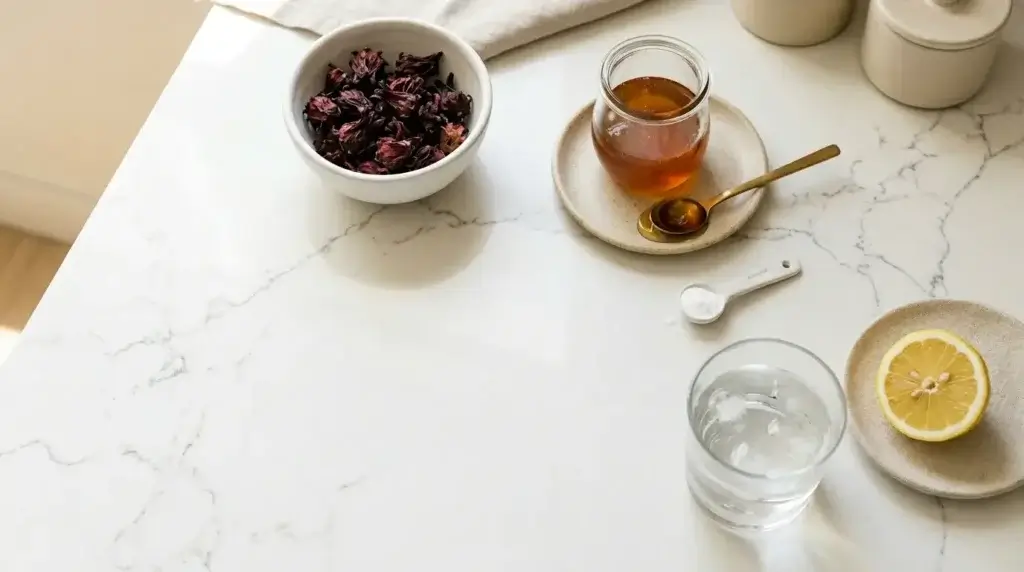
How to cold brew: Place 2–3 tablespoons of dried hibiscus calyces in 1 liter of cold water. Refrigerate for 4 to 8 hours, strain, and serve over ice. Do not heat.
2. Never Drink It on an Empty Stomach
Drinking any acidic beverage on an empty stomach means there’s nothing to dilute or buffer the acid before it reaches your LES. Food — especially carbohydrates and proteins — forms a natural buffer in the stomach that reduces the acidic load. Have hibiscus tea after a meal, not first thing in the morning before breakfast.
3. Dilute It More Than Usual
Most hibiscus tea recipes use 1–2 tablespoons of dried flowers per 8 oz of water. For reflux sufferers, use 1 teaspoon per 10–12 oz of water and steep for a shorter time (3–4 minutes instead of 8–10). Less steep time and more water means a higher final pH and a milder drink.
4. Add Honey or a Pinch of Baking Soda
Honey is slightly alkaline and can partially neutralize the acidity of hibiscus tea. A teaspoon of raw honey per cup won’t eliminate the acidity, but it raises the pH enough to make a noticeable difference for mild reflux.
A very small pinch of baking soda (sodium bicarbonate) is a more aggressive option — it’s alkaline and directly neutralizes acid, similar to how antacids work. Use very sparingly (a tiny pinch per liter) as too much affects the taste and adds sodium.
5. Avoid Drinking It Late at Night
Acid reflux is significantly worse when you’re lying down, because gravity no longer helps keep stomach contents where they belong. Drinking acidic beverages within 2–3 hours of bedtime increases the risk of nighttime reflux. Enjoy hibiscus tea in the morning or early afternoon — and if sleep is your goal, you’ll find better options in this guide to the best drinks for better sleep.
Hot vs. Cold Hibiscus Tea for Acid Reflux: Which Is Better?
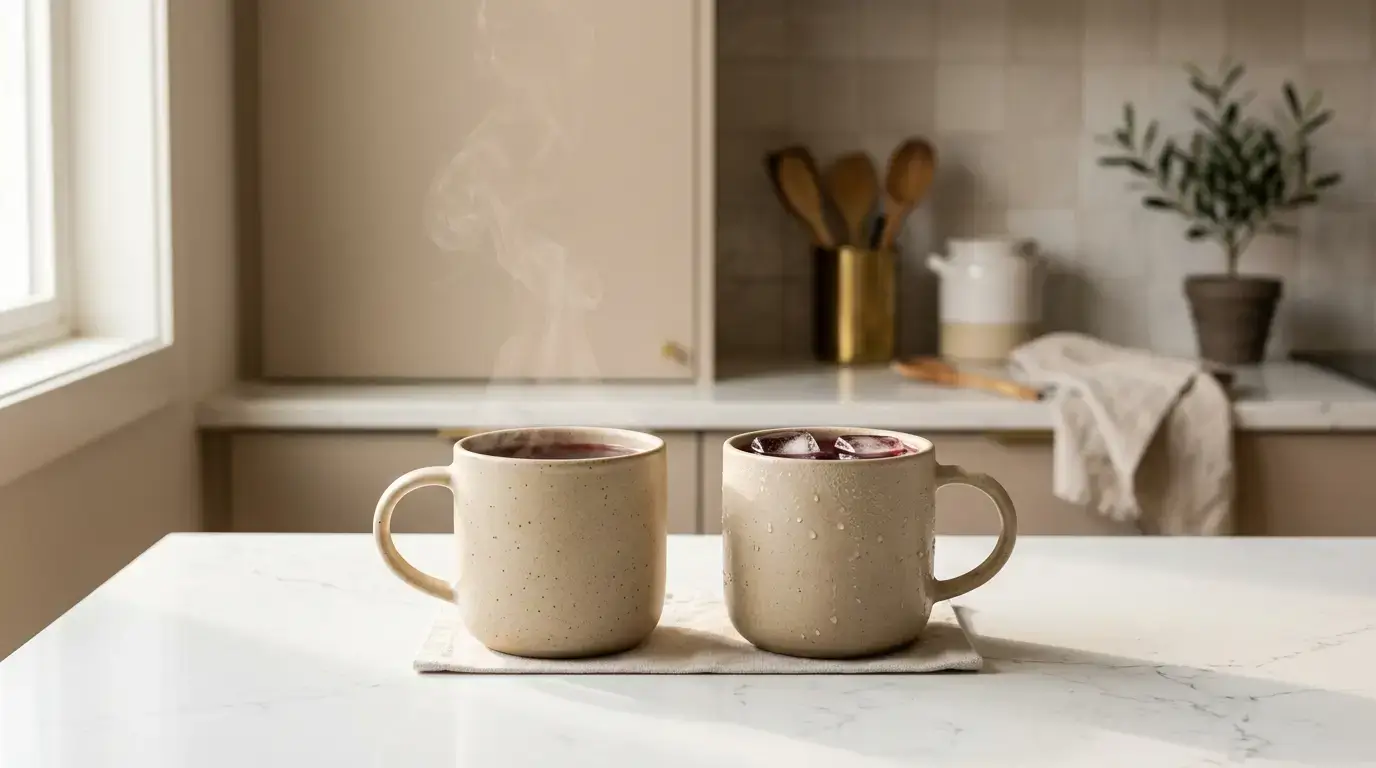
First, cold brewing extracts fewer acids from the hibiscus flowers, resulting in a drink with a slightly higher pH. One study comparing cold-brew and hot-brew hibiscus tea found that hot brewing extracted significantly more anthocyanins and organic acids than cold infusion — great for antioxidant benefits, but less ideal for people sensitive to acidity.
Second, hot drinks in general can relax the lower esophageal sphincter. There is evidence that drinking very hot beverages is associated with increased esophageal irritation. A cold hibiscus tea served over ice avoids this mechanism entirely.
This hot vs. cold dynamic also matters beyond reflux — if you’re wondering about the effect of hibiscus tea hot or cold on blood pressure, the difference in extraction also changes its antihypertensive properties.
For reflux specifically: cold brew > iced hot-brew > hot hibiscus tea.
How Much Hibiscus Tea Is Safe With Acid Reflux?
There is no universal safe dose for people with acid reflux, because individual tolerance varies. Based on the general evidence around hibiscus tea consumption and reflux triggers:
- No reflux symptoms: Up to 2–3 cups per day of standard-strength hibiscus tea is generally considered safe
- Mild acid reflux: Limit to 1 cup per day, cold-brewed, after a meal
- Moderate to severe GERD: Consider avoiding hibiscus tea during flare-ups; 1 small cup (6 oz) of cold brew after a meal may be tolerable during symptom-free periods
- Active esophagitis: Avoid hibiscus tea entirely until your doctor confirms the inflammation has resolved
Does Hibiscus Tea Become Alkaline After Digestion?
This is a common question, based on the idea that some acidic foods (like lemon juice) leave an alkaline “ash” after being metabolized — meaning their net effect on blood pH is alkaline.
Hibiscus tea does not follow this pattern in a way that’s meaningful for reflux. The relevant issue is not what happens to your blood pH after digestion — it’s what the drink does to your esophagus and stomach while you’re drinking it. Hibiscus tea is acidic when it contacts your esophageal lining, and that’s what matters for reflux sufferers.
The “alkaline after digestion” concept is true in a narrow metabolic sense but does not protect your esophagus from the acidity of what you’re swallowing.
Hibiscus Tea and GERD: What About the Benefits?
Hibiscus tea offers genuine health benefits, including blood pressure reduction, antioxidant activity, and anti-inflammatory effects. You can explore the full picture in our article on hibiscus tea benefits.
The challenge for GERD patients is that the compounds responsible for many of its benefits — particularly the organic acids and anthocyanins — are also the compounds that make it acidic and potentially irritating.
Better Alternatives to Hibiscus Tea for Acid Reflux Sufferers
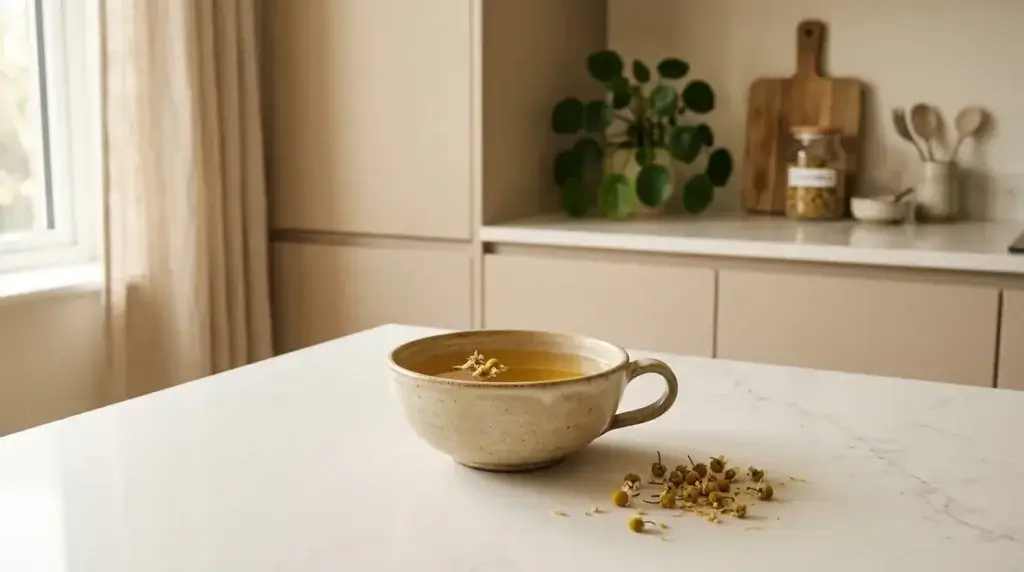
If hibiscus tea consistently triggers your reflux, these alternatives offer similar wellness benefits with much lower acidity. For a broader overview of your options, our herbal teas guide covers the full spectrum of caffeine-free drinks.
Chamomile tea (pH 6–7): One of the most reflux-friendly herbal teas. Chamomile is slightly alkaline, anti-inflammatory, and known to soothe the digestive lining. It’s a direct alternative for people who drink hibiscus for relaxation or as an evening wind-down.
Licorice root tea (pH 6–7): Deglycyrrhizinated licorice (DGL) is used as a natural remedy for GERD because it’s thought to help protect and restore the esophageal and stomach lining.
Ginger tea — with caution (pH 7): Plain ginger tea is close to neutral in pH and has well-documented anti-nausea and digestive benefits. It’s generally considered safe for most GERD patients when consumed in moderate amounts after a meal. See our guide on ginger tea benefits and the best time to drink ginger tea to get the most out of it without digestive discomfort.
Slippery elm tea (pH ~7): A traditional remedy for digestive discomfort. Contains mucilage, a gel-like substance that coats and soothes the esophageal lining. Very low risk for reflux sufferers.
Frequently Asked Questions
Is hibiscus tea acidic or alkaline?
Hibiscus tea is acidic, with a typical pH between 2.5 and 3.5 depending on brewing method, steep time, and concentration.
Can hibiscus tea cause heartburn?
Yes, in people who are sensitive to acidic beverages, hibiscus tea can trigger or worsen heartburn. Its acidity can irritate an already inflamed esophagus and may contribute to relaxation of the lower esophageal sphincter.
Is hibiscus tea good for acid reflux?
Not generally. The high acidity of hibiscus tea makes it a potential trigger for acid reflux symptoms. People with mild reflux may tolerate one small cup of cold-brewed hibiscus tea after a meal, but it is not recommended for people with moderate to severe GERD.
Does cold hibiscus tea cause less acid reflux than hot hibiscus tea?
Yes. Cold-brewed hibiscus tea has a slightly higher pH than hot-brewed, and cold drinks are less likely to relax the lower esophageal sphincter compared to hot drinks. Cold brew is the better option for reflux-sensitive individuals.
Can I drink hibiscus tea if I have GERD?
It depends on the severity of your GERD. During active flare-ups or if you have esophagitis, hibiscus tea should be avoided. If your GERD is mild and well-managed, a small amount of cold-brewed hibiscus tea after a meal may be tolerable. Always monitor your individual response.
What is the pH of hibiscus tea?
Hibiscus tea typically has a pH of 2.5 to 3.5. Hot brew tends to sit at the lower (more acidic) end; cold brew sits slightly higher.
Does hibiscus tea cause acid reflux in everyone?
No. People without reflux issues or with a healthy lower esophageal sphincter can generally drink hibiscus tea without any digestive side effects. The problem is specific to people with existing GERD or reflux sensitivity.
What herbal teas are safe for acid reflux?
The safest herbal teas for reflux sufferers include chamomile, licorice root, slippery elm, and plain ginger tea (in moderation). These all have near-neutral or alkaline pH levels and are unlikely to irritate the esophagus.
Key Takeaways
To summarize: hibiscus tea acid reflux risk is highest when drinking hot, on an empty stomach, or in large quantities.
- Hibiscus tea has a pH of 2.5–3.5, placing it among the most acidic herbal teas
- Its acidity can irritate an inflamed esophagus and may trigger or worsen acid reflux and GERD symptoms
- People with mild reflux can often tolerate one small cup of cold-brewed hibiscus tea per day, taken after a meal
- Cold brew has a higher pH and is less likely to trigger symptoms than hot brew
- Avoid hibiscus tea on an empty stomach, late at night, or during GERD flare-ups
- Adding honey, diluting more, or brewing cold are the most effective ways to reduce its acidic impact
- Chamomile, licorice root, and slippery elm tea are reliable alternatives with minimal reflux risk