
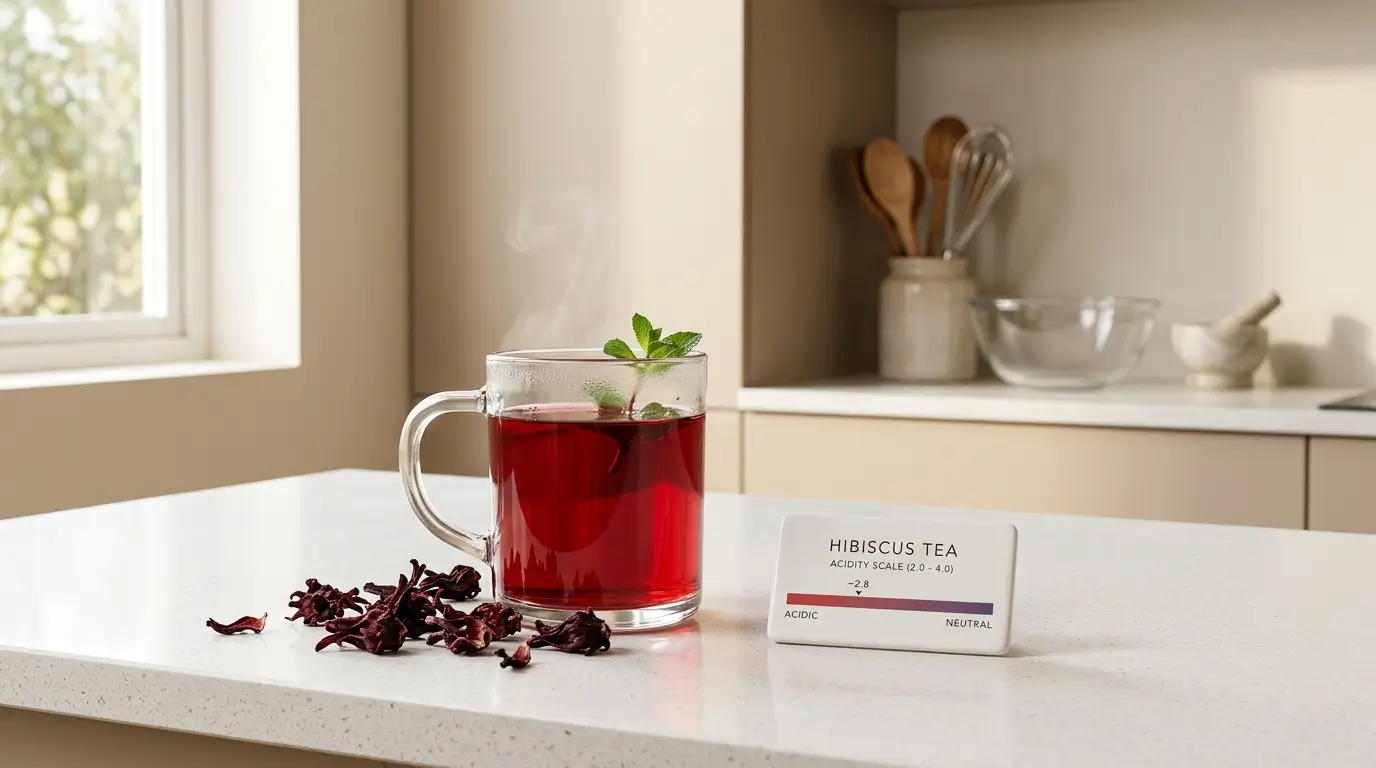
Hibiscus tea is acidic — with a pH between 2.5 and 3.5, it is one of the most acidic herbal teas available. This places it closer to lemon juice (pH 2.0–2.6) than to neutral water (pH 7.0). The table below shows exactly where hibiscus tea sits on the pH scale compared to other common drinks.
Hibiscus Tea pH vs. Common Drinks
| Drink | pH Range | Acidity Level |
|---|---|---|
| Lemon juice | 2.0 – 2.6 | Very high |
| Hibiscus tea (hot brew) | 2.5 – 2.8 | Very high |
| Hibiscus tea (cold brew) | 3.0 – 3.5 | High |
| Vinegar | 2.5 – 3.0 | Very high |
| Orange juice | 3.3 – 4.0 | High |
| Coffee | 4.5 – 5.5 | Moderate |
| Green tea | 7.0 – 10.0 | Low / alkaline |
| Water | 7.0 | Neutral |
why Is Hibiscus Tea So Acidic? The 3 Organic Acids Responsible
Hibiscus tea gets its deep ruby-red color and sharp, cranberry-like tartness from the dried calyces of Hibiscus sabdariffa. That tartness is a direct sensory signal of its acidity. Three organic acids are responsible:
- Citric acid — the same acid that makes lemons sour
- Malic acid — found in apples and cranberries, contributing a clean, sharp tartness
- Hibiscus acid (hydroxycitric acid) — unique to hibiscus, the dominant acid in the calyx
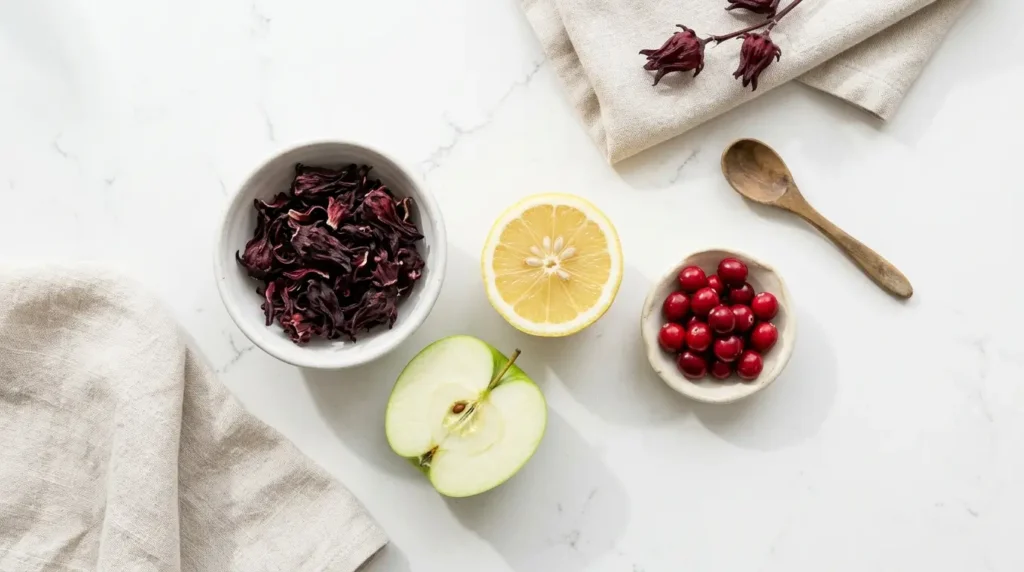
These acids are not added during processing — they are naturally present in the fresh hibiscus calyx and concentrate during drying. The higher the brewing temperature and the longer the steep time, the more acids are extracted into the water, and the lower (more acidic) the final pH.
Does Hibiscus Tea Become Alkaline in Your Body? Here’s the Real Answer
This is one of the most common questions about hibiscus tea acidity — and the answer matters for different reasons depending on what you’re asking.
Some acidic foods (notably lemon juice) are described as “alkaline-forming” because they leave an alkaline residue after being metabolized. The organic acids in lemon are converted to carbon dioxide and water, which shifts the net metabolic effect toward alkaline.
Hibiscus tea does not clearly follow this pattern. More importantly, even if it did, this metabolic effect on blood pH has no bearing on what happens in your esophagus and stomach when you drink it. Hibiscus tea is acidic at the point of contact with your digestive lining — and that is what matters for people with acid reflux, heartburn, or GERD.
If you have a sensitive stomach or reflux, the post-digestive pH of hibiscus tea is irrelevant. The relevant pH is the one in the cup. For a full guide on how hibiscus tea acidity affects reflux sufferers, see our dedicated article on hibiscus tea and acid reflux.
Hot Brew vs. Cold Brew Hibiscus Tea: The pH Difference Is Bigger Than You Think
Yes — significantly. This is one of the most practically useful facts about hibiscus tea acidity.
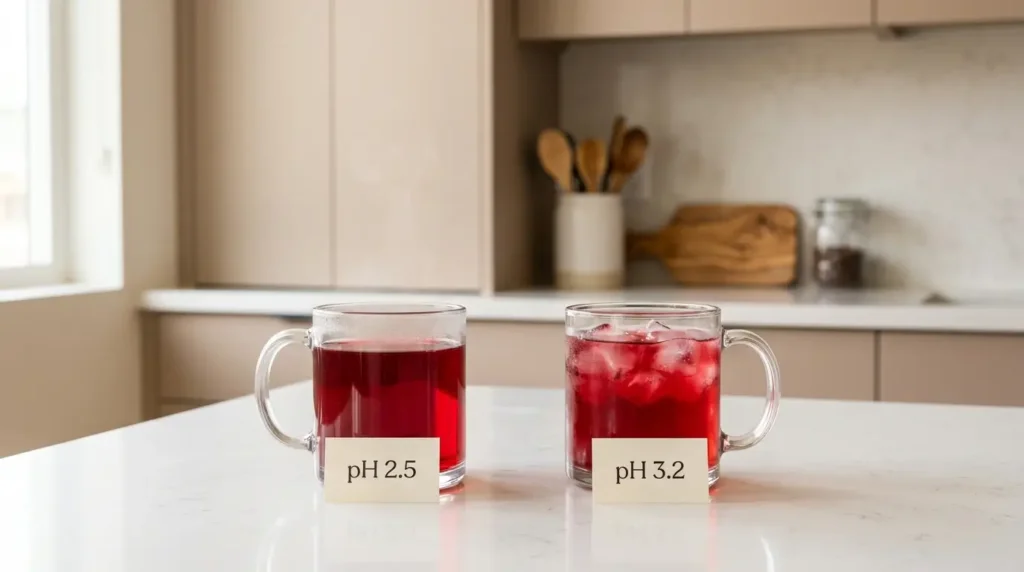
Hot brew (standard method): Boiling or near-boiling water extracts the maximum amount of organic acids from the hibiscus calyces. pH typically falls between 2.5 and 2.8 — at the lower (more acidic) end of the range.
Cold brew (overnight method): Cold water extracts significantly fewer acids over an 8–12 hour steep. The result is a drink with a pH of approximately 3.0 to 3.5 — measurably less acidic, smoother in flavor, and gentler on the stomach.
For people who are sensitive to acidity — those with reflux, heartburn, or a delicate stomach lining — cold brew is the consistently recommended preparation. Our guide on hibiscus tea hot or cold covers how this difference in extraction also affects the blood pressure benefits of hibiscus tea.
Steep time also matters: A 5-minute steep extracts fewer acids than a 15-minute one. If you prefer hot brew but want to reduce acidity, steep for 5 minutes maximum and use slightly cooler water (around 80–85°C rather than boiling).
Why Does Hibiscus Tea Change Color? The pH Science Behind It
Yes — and this makes for a striking visual demonstration of pH chemistry. Hibiscus anthocyanins are natural pH indicators, similar to red cabbage juice used in chemistry classes.
- In acidic conditions (low pH): hibiscus tea is deep ruby-red to purple-red
- In neutral conditions (pH ~7): the color shifts toward purple
- In alkaline conditions (high pH): hibiscus tea turns blue-green
If you add a pinch of baking soda to hibiscus tea, you can watch it shift from red to purple to blue-green in real time — a direct visual confirmation of the pH change. This is also why hibiscus tea served with an alkaline mineral water looks slightly different from the same tea made with acidic tap water.
Is Hibiscus Tea Acidity Bad for You? It Depends on One Key Factor
The acidic pH of hibiscus tea has different implications depending on your health situation:
For Healthy Adults
No concern. The digestive system handles acidic foods and beverages routinely. One to three cups per day of hibiscus tea poses no health risk related to acidity for people with a healthy digestive system.
For People With Acid Reflux or GERD
Hibiscus tea’s acidity is a genuine concern. A drink at pH 2.5–3.5 can irritate an already inflamed esophagus and may contribute to relaxation of the lower esophageal sphincter — the valve that prevents stomach acid from rising. The full breakdown of who is at risk and how to drink hibiscus tea safely with reflux is in our guide on hibiscus tea and acid reflux.
For People With Kidney Stones
Hibiscus tea’s citric acid contributes to oxalate load, which is relevant for people with a history of calcium oxalate kidney stones. Our dedicated article on hibiscus tea and kidneys covers this in full detail including safe daily intake by risk profile.
For People With Sensitive Teeth
Regularly bathing tooth enamel in highly acidic drinks can contribute to enamel erosion over time. This is not unique to hibiscus tea — it applies to all drinks with a pH below 4.0 (including orange juice and sports drinks). Using a straw, not swishing hibiscus tea in the mouth, and waiting 30 minutes before brushing after consumption all reduce this risk.
5 Ways to Reduce Hibiscus Tea Acidity (Ranked by Effectiveness)
If you want to enjoy hibiscus tea but minimize its acidity, these are the most effective methods:
Cold brew instead of hot: The single most effective method. Raises pH from ~2.5 to ~3.2–3.5 without affecting flavor significantly.
Add a pinch of baking soda: Sodium bicarbonate is alkaline and directly neutralizes acid. A tiny pinch (1/8 teaspoon) per liter raises the pH meaningfully and does not significantly alter the flavor at low amounts.
Add honey: Raw honey is slightly alkaline and partially buffers the acidity. It also adds a pleasant sweetness that balances the natural tartness.
Dilute more: Using more water per teaspoon of dried hibiscus reduces the acid concentration. Double the water, keep the same amount of hibiscus = significantly higher pH in the cup.
Shorter steep time: 5 minutes vs. 15 minutes = meaningfully less acid extraction, especially for hot brew.
Drink after meals: Food in the stomach buffers acid from any beverage. Never drink hibiscus tea on an empty stomach if you are acid-sensitive. For more on timing, see our guide on the best time to drink hibiscus tea.
Does Cold Brew Hibiscus Tea Lose Its Health Benefits? The Trade-Off Explained
Yes — and this is an important nuance. The same organic acids that make hibiscus tea acidic are also responsible for some of its most celebrated health benefits.
Hibiscus acid (hydroxycitric acid) has been studied for its potential role in weight management and blood pressure regulation. Citric acid enhances iron absorption and contributes antioxidant activity. Malic acid supports cellular energy production.
Reducing the acidity of hibiscus tea through cold brew or dilution does reduce the concentration of these acids — but does not eliminate them. The polyphenols and anthocyanins responsible for the antioxidant and blood pressure benefits are separate from the acids and are not significantly reduced by cold brewing. You can access most of the hibiscus tea benefits from a cold brew preparation at a higher pH.
For the full safety picture including who should limit or avoid hibiscus tea regardless of acidity, see our guide on hibiscus tea side effects. And if you want to know how much is safe to drink daily, our how much hibiscus tea per day guide covers every population group.
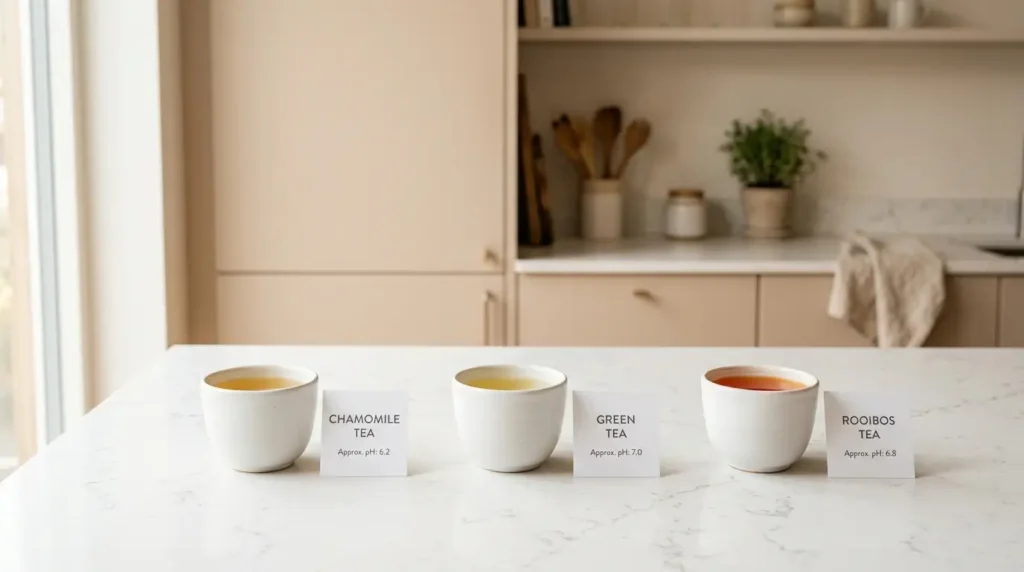
Best Low-Acidity Herbal Teas If Hibiscus Is Too Harsh for Your Stomach
If hibiscus tea’s acidity is a problem for your digestive system, these alternatives offer comparable wellness benefits at a much friendlier pH:
| Herbal Tea | pH Range | Key Benefit |
|---|---|---|
| Chamomile | 6.0 – 7.0 | Anti-inflammatory, sleep support |
| Green tea | 7.0 – 10.0 | Antioxidants, metabolism |
| Rooibos | 6.0 – 7.0 | Antioxidants, caffeine-free |
| Ginger tea | 6.5 – 7.0 | Digestive, anti-nausea |
| Peppermint tea | 6.0 – 7.0 | Digestive (avoid with reflux) |
| Licorice root | 6.0 – 7.0 | Esophageal protection |
Frequently Asked Questions
Is hibiscus tea acidic or alkaline?
Hibiscus tea is acidic, with a pH between 2.5 and 3.5. It is not alkaline at any point during normal preparation and consumption.
What is the exact pH of hibiscus tea?
Hot-brewed hibiscus tea typically has a pH of 2.5–2.8. Cold-brewed hibiscus tea has a higher pH of 3.0–3.5 because cold water extracts fewer organic acids from the dried calyces.
Is hibiscus tea more acidic than coffee?
Yes. Hibiscus tea (pH 2.5–3.5) is more acidic than coffee (pH 4.5–5.5). Hibiscus tea is closer in acidity to lemon juice and vinegar than to coffee or most other common beverages.
Does hibiscus tea become alkaline in the body?
No — not in any way that is relevant to digestive health. Hibiscus tea is acidic when it contacts your esophagus and stomach lining, which is what matters for people with acid sensitivity. Any post-metabolic alkaline effect does not protect the esophagus during consumption.
Is hibiscus tea acidic enough to damage teeth?
Drinks below pH 4.0 can erode tooth enamel with repeated exposure. Hibiscus tea at pH 2.5–3.5 falls in this range. Using a straw and not swishing it in your mouth significantly reduces this risk.
Why does hibiscus tea taste sour?
The sour taste of hibiscus tea comes from its high organic acid content — primarily citric acid, malic acid, and hibiscus acid. These are the same compounds that make lemons, apples, and cranberries taste tart.
Does cold brew hibiscus tea have a higher pH than hot brew?
Yes. Cold brewing extracts significantly fewer organic acids than hot brewing, resulting in a higher (less acidic) pH of approximately 3.0–3.5 compared to 2.5–2.8 for hot brew.
Is hibiscus tea bad for acid reflux because it is acidic?
The acidic pH of hibiscus tea (2.5–3.5) can irritate an already inflamed esophagus and may worsen acid reflux symptoms in sensitive individuals. Cold brew, smaller amounts, and drinking it after meals reduce but do not eliminate this risk.
What color does hibiscus tea turn in alkaline conditions?
Hibiscus tea turns from deep ruby-red to purple and eventually blue-green as pH increases into the alkaline range. This color change is caused by the anthocyanin pigments, which are natural pH indicators.
Key Takeaways
- Hibiscus tea is acidic — pH 2.5 to 3.5 depending on brewing method
- Hot brew is more acidic (pH 2.5–2.8) than cold brew (pH 3.0–3.5)
- The acidity comes from three organic acids: citric acid, malic acid, and hibiscus acid
- Hibiscus tea does not become alkaline in any digestive-health-relevant way after consumption
- For acid-sensitive people, cold brew + after meals + diluted = the safest approach
- The same acids that create acidity contribute to some of hibiscus tea’s health benefits
- Adding baking soda, honey, or more water effectively raises the pH of hibiscus tea
- Chamomile, rooibos, and ginger tea are excellent lower-acidity alternatives