

Milk thistle tea benefits are real — but they come with an important caveat that most wellness articles skip. The active compound in milk thistle, silymarin, is most concentrated in the seeds and is present in tea at significantly lower levels than in standardized extracts and capsules. This means that the clinical research showing liver protection, blood sugar regulation, and anti-inflammatory effects was mostly conducted with concentrated extracts — not tea. This does not mean milk thistle tea is without benefit, but it does mean expectations need to be calibrated correctly. This guide covers what milk thistle actually contains, what the research supports, how tea compares to supplements, and the significant drug interactions everyone drinking this tea needs to know.
What Is Milk Thistle Tea?
Milk thistle tea is brewed from the seeds, leaves, or flower heads of Silybum marianum — a tall purple-flowering plant in the Asteraceae family (related to daisies and ragweed) native to the Mediterranean region. It has been used in herbal medicine for over 2,000 years, primarily for liver and gallbladder conditions.
The plant is also known as holy thistle, Mary thistle, and St. Mary’s thistle. It is one of the most widely sold herbal supplements in the world and is described by researchers as “the most well-researched plant in the treatment of liver disease.”
What part makes the tea:
- Seeds — contain the highest concentration of silymarin, the main active compound. Tea made from ground or crushed seeds is the most potent preparation
- Leaves — lower silymarin content but easier to source and steep. Most commercial milk thistle tea bags use a combination of leaves and some seed material
- Flowers — the least active part; mainly used for visual appeal in blended teas
The Active Compound: Silymarin
Almost all of milk thistle’s documented health effects trace back to silymarin — a complex of flavonolignans extracted from the plant’s seeds. The main component of silymarin is silybin (also written as silibinin), which accounts for approximately 50–70% of silymarin’s activity.
Silymarin’s primary mechanisms:
Antioxidant activity: Silymarin is a potent free radical scavenger that neutralizes reactive oxygen species (ROS) in liver cells — protecting cellular DNA, proteins, and membranes from oxidative damage.
Anti-inflammatory: Silymarin inhibits NF-kB — a key transcription factor regulating inflammatory gene expression — and reduces production of pro-inflammatory cytokines including TNF-alpha and IL-6.
Hepatoprotective: Silymarin stabilizes liver cell membranes, making them more resistant to penetration by toxins. It also stimulates liver cell regeneration by activating protein synthesis in hepatocytes.
Estrogen-like activity: Silymarin has mild phytoestrogenic properties — relevant to both its potential benefits and safety considerations for people with hormone-sensitive conditions (see safety section).
Milk Thistle Tea vs. Supplements: The Critical Difference

This distinction is essential before discussing benefits. Most clinical research on milk thistle used standardized silymarin extracts — typically 70–80% silymarin content — at doses of 420–800mg of silymarin per day.
A cup of milk thistle tea contains far less. Estimates suggest a standard cup provides 20–100mg of silymarin at most, depending on preparation method, seed vs leaf content, steeping time, and the specific product used. This is 4–20 times less than the doses used in most clinical trials.
What this means practically:
- The liver-protective effects observed in clinical research are most reliably produced by standardized extract supplements, not tea
- Tea still provides antioxidant and mild anti-inflammatory benefits at the doses available in a cup
- For serious liver conditions, tea alone is insufficient — a supplement is needed for therapeutic doses
- For general wellness, liver maintenance, and daily antioxidant support, tea is a reasonable and safer-dosed option
Think of milk thistle tea as a gentle daily wellness drink rather than a therapeutic intervention.
Milk Thistle Tea Benefits: What the Research Shows
1. Liver Protection — The Most Documented Benefit

Milk thistle’s hepatoprotective properties are the most studied in herbal medicine. The research shows silymarin:
Protects against liver toxins: Silymarin has demonstrated protective effects against acetaminophen (Tylenol) overdose, alcohol-induced liver damage, and certain industrial toxins including toluene and xylene in both animal and human studies.
Supports fatty liver disease (NAFLD): Multiple clinical studies have found that milk thistle supplementation reduces liver enzyme levels (ALT, AST, GGT) in patients with non-alcoholic fatty liver disease and improves liver ultrasound grading after 8 weeks of use.
Cirrhosis support: Some studies suggest milk thistle may help reduce liver scarring progression and improve survival in cirrhosis patients — though the evidence is mixed and high-quality trials are limited.
Honest summary: The research base is genuinely promising but not conclusive. The most rigorous trials — including a large NCCIH-funded study on hepatitis C — did not show significant benefits from silymarin. The evidence is strongest for NAFLD and toxin-induced liver stress, and weaker for viral hepatitis and cirrhosis.
For people with diagnosed liver disease, milk thistle tea is a potential supportive measure alongside medical treatment — not a replacement for it.
2. Blood Sugar Regulation — Mixed Evidence
Multiple studies have found that silymarin reduces fasting blood glucose and improves insulin sensitivity in people with type 2 diabetes. A study using 600mg of silymarin daily for six months showed significant reductions in fasting glucose and mean daily glucose levels without increasing hypoglycemic episodes.
However — and this is important — a 2025 systematic review and meta-analysis published in a leading journal concluded that while silymarin appeared to benefit insulin sensitivity, it had no detectable effects on insulin levels or blood sugar in the pooled analysis. The evidence is contradictory and most studies are of low quality.
The honest position: Blood sugar effects from milk thistle are plausible but not confirmed. Tea provides far less silymarin than supplement doses used in studies. If blood sugar management is your primary goal, milk thistle tea is not a reliable intervention — dietary changes and medical guidance are more evidence-based approaches.
3. Cholesterol and Cardiovascular Support
A randomized double-blind placebo-controlled trial found that silymarin supplementation significantly reduced total cholesterol, LDL cholesterol, and triglycerides. Silymarin appears to reduce hepatic lipid synthesis and enhance LDL clearance.
At tea concentration, this effect is milder than supplement doses but contributes positively to a broader anti-inflammatory, antioxidant daily routine alongside other lifestyle factors.
4. Anti-Inflammatory and Antioxidant Activity
This is the benefit most consistently available from tea (rather than extract) concentration. Silymarin’s inhibition of NF-kB and reduction of inflammatory cytokines is measurable at lower doses, making it one of the benefits that milk thistle tea can contribute to meaningfully.
Regular daily consumption of milk thistle tea adds a distinct class of antioxidant (flavonolignans) that is not found in other common herbal teas. This complements the anthocyanins in hibiscus, the aspalathin in rooibos, and the apigenin in chamomile for a broader daily antioxidant strategy. For a complete overview of functional drinks for gut and liver support, our gut health drinks guide covers the full landscape.
5. Digestive Support
Milk thistle has mild digestive bitter properties similar to dandelion root — stimulating bile flow and digestive enzyme production. This makes it useful for bloating, slow digestion, and post-meal digestive discomfort. The combination of milk thistle and dandelion in a tea blend is a traditional European liver and digestive tonic. For dandelion’s specific digestive benefits, our dandelion tea benefits guide covers this in detail.
6. Skin Health
Topical silymarin application has shown benefits for rosacea, acne, and UV-induced skin damage in clinical studies. When consumed as tea, silymarin’s systemic anti-inflammatory and antioxidant effects contribute to skin health from the inside — reducing the inflammatory load that drives skin reactivity and accelerated aging.
How to Make Milk Thistle Tea
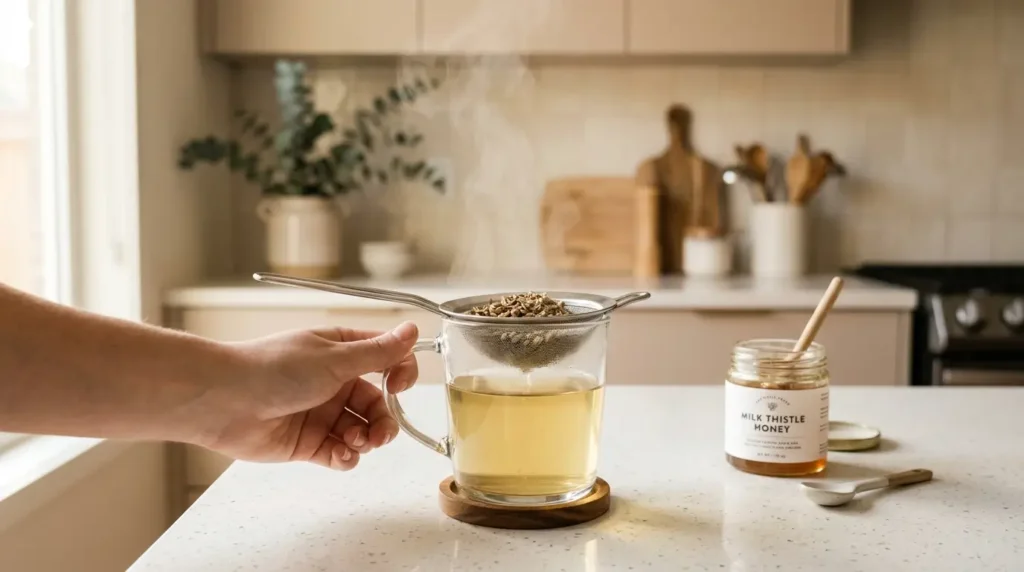
From seeds (highest potency):
- Lightly crush 1 teaspoon of dried milk thistle seeds in a mortar and pestle — crushing increases surface area and silymarin extraction
- Steep in 240ml of near-boiling water (90°C / 195°F) for 10–15 minutes
- Strain through a fine mesh strainer (seed particles are fine)
- Add honey to balance the mild bitter flavor
- Silymarin is not very water-soluble — longer steep times improve extraction modestly
From tea bags (most convenient):
- Use quality commercial milk thistle tea bags (Traditional Medicinals is the most consistent brand)
- Steep for 10 minutes — longer than most herbal teas to maximize silymarin extraction
- Cover while steeping to preserve volatile compounds
Milk thistle blend (for better flavor):
- Combine with dandelion root, peppermint, or licorice root for a more pleasant, balanced flavor
- The bitterness of milk thistle is mellowed significantly by a small amount of honey
Flavor: Milk thistle tea has a mild, slightly bitter, earthy flavor — comparable to dandelion tea in most descriptions. It is less sharp than dandelion and easier to drink plain.
Milk Thistle Tea Side Effects and Drug Interactions
This is the most clinically important section for anyone considering daily milk thistle tea consumption.
Allergies: Milk thistle belongs to the Asteraceae family (ragweed, daisies, chrysanthemums, marigolds). Anyone with allergies to these plants is at risk for allergic reactions to milk thistle — ranging from mild digestive upset to, rarely, severe anaphylaxis. Test with a very small amount if you have Asteraceae allergies.
Digestive side effects: The most common reported side effects are mild — bloating, nausea, and gas. These are more common with concentrated extracts than with tea.
Hormone-sensitive conditions: Silymarin has mild phytoestrogenic activity. People with hormone-sensitive cancers (estrogen receptor-positive breast cancer, uterine cancer, ovarian cancer), endometriosis, or uterine fibroids should consult their doctor before consuming milk thistle regularly.
Pregnancy and breastfeeding: Little is known about whether it’s safe to use milk thistle during pregnancy or while breastfeeding. As a precaution, avoid without medical guidance.
Drug interactions — this list is significant:
| Medication | Interaction | Action |
|---|---|---|
| Warfarin (blood thinner) | Milk thistle affects CYP2C9 enzyme which processes warfarin | Consult doctor — may change warfarin levels |
| Diabetes medications | Additive blood sugar-lowering effect | Monitor blood glucose carefully |
| Simeprevir (hepatitis C drug) | Milk thistle increases drug blood levels | Avoid combination |
| Sirolimus (immunosuppressant) | Altered drug metabolism | Avoid without medical clearance |
| Metronidazole (antibiotic) | May reduce antibiotic effectiveness | Take separately |
| Raloxifene (osteoporosis drug) | Higher drug blood levels | Consult doctor |
For general herbal tea drug interaction principles, our guide on hibiscus tea side effects covers the broader safety framework applicable across herbal teas.
Milk Thistle Tea vs Other Liver-Supporting Herbal Teas
| Milk Thistle | Dandelion Root | Rooibos | Hibiscus | |
|---|---|---|---|---|
| Best for | Liver protection, detox | Liver, gut, bile flow | Antioxidants, heart | Blood pressure |
| Active compound | Silymarin | Taraxacin, inulin | Aspalathin | Anthocyanins |
| Tea vs extract | Significant difference | Minimal difference | Minimal difference | Minimal difference |
| Acid reflux safe | ✅ Yes | ✅ Yes | ✅ Yes | ⚠️ Cold brew |
| Drug interactions | ⚠️ Several significant | ⚠️ Mild | ✅ Minimal | ⚠️ BP medications |
| Flavor | Mild bitter, earthy | Earthy, bitter | Sweet, earthy | Tart, cranberry |
For a complete comparison of herbal teas and their safety profiles, our herbal tea vs green tea benefits guide covers the full landscape. Our herbal teas guide provides a broader reference for all the teas we cover.
Frequently Asked Questions
What are the benefits of milk thistle tea?
Milk thistle tea benefits include antioxidant and anti-inflammatory protection through silymarin, liver support for NAFLD and toxin-induced stress, digestive bitter stimulation, mild cholesterol support, and skin health through systemic anti-inflammatory effects. Benefits are generally milder from tea than from standardized extract supplements due to lower silymarin concentration.
Is milk thistle tea good for the liver?
Milk thistle’s liver-protective effects are among the most studied in herbal medicine. Tea provides lower silymarin doses than clinical extract doses, so effects are milder. For general liver maintenance and daily antioxidant support, tea is useful. For serious liver conditions, a standardized silymarin supplement at therapeutic doses is more appropriate.
How does milk thistle tea compare to milk thistle supplements?
Tea contains significantly less silymarin than standardized supplements — roughly 20–100mg per cup versus 420–800mg per day in clinical trials. Tea is appropriate for daily wellness support; supplements are needed for therapeutic liver-disease management.
Does milk thistle tea have caffeine?
No. Milk thistle tea is completely caffeine-free.
Is milk thistle tea safe to drink every day?
For most healthy adults, 1–2 cups per day is considered safe. People on warfarin, diabetes medications, simeprevir, sirolimus, or metronidazole should consult their doctor before drinking it regularly due to significant drug interactions.
What does milk thistle tea taste like?
Mild, slightly bitter, and earthy — similar in profile to dandelion tea but less sharp. Most people find it easy to drink with a small amount of honey. Blending with peppermint or licorice root significantly improves palatability.
Can milk thistle tea help with fatty liver disease?
Clinical studies on concentrated silymarin extract show improvements in liver enzyme levels and fatty liver grading in NAFLD patients. Tea provides lower doses than these studies used, so effects will be milder. It can be a supportive daily habit alongside medical management, dietary changes, and weight management — not a standalone treatment.
Key Takeaways
- Milk thistle tea benefits center on silymarin — a unique class of antioxidant flavonolignans most concentrated in the seeds
- The critical caveat: tea provides significantly less silymarin than the standardized extract doses used in most clinical research — expectations should reflect this
- Most reliably supported benefits at tea concentration: antioxidant protection, mild liver support, anti-inflammatory activity, and digestive bitter effects
- Blood sugar evidence is mixed — a 2025 meta-analysis found no clear effect on insulin or blood glucose from silymarin
- Drug interactions are significant — warfarin, diabetes medications, simeprevir, sirolimus, and metronidazole all have documented interactions
- People with Asteraceae allergies, hormone-sensitive conditions, or on the medications above should consult their doctor before daily use
- For general wellness: 1–2 cups per day of quality milk thistle tea (seed-based preferred) is a reasonable supportive habit
- For liver disease management: a standardized silymarin supplement at therapeutic doses is more appropriate than tea alone