
Peppermint tea benefits are primarily driven by one compound: menthol. The menthol in peppermint (Mentha × piperita) relaxes smooth muscle, relieves pain, opens airways, and produces the characteristic cooling sensation that makes peppermint one of the most distinctive and widely consumed herbal teas in the world. Unlike many herbal teas where the evidence is preliminary, peppermint’s digestive benefits — particularly for IBS, bloating, and nausea — are backed by multiple clinical trials. This guide covers what peppermint tea actually does, what the research supports, how it compares to spearmint, and who should be careful with it.
What Makes Peppermint Tea Different
Peppermint is a natural hybrid of watermint and spearmint. Its distinctive character comes from its exceptionally high menthol content — typically 40–55% of the plant’s essential oil. This is what separates peppermint from spearmint (which contains very little menthol) and gives it a much more intense, cooling flavor and a different pharmacological profile.
Does peppermint tea have caffeine? No. Peppermint tea is completely caffeine-free. It is made from the dried or fresh leaves of the peppermint plant — not from Camellia sinensis tea leaves — and contains no caffeine whatsoever.
Peppermint Tea Benefits: What the Research Shows
1. Bloating and IBS Relief — The Strongest Evidence

This is peppermint’s most clinically supported benefit and the reason most people reach for it after a heavy meal.
The mechanism: Menthol activates calcium channels in the smooth muscle cells of the gastrointestinal tract, causing them to relax. This antispasmodic effect reduces intestinal cramping, spasms, and the pressure that causes bloating and gas. It is a real, documented pharmacological interaction — not placebo.
Clinical evidence for IBS: A 2019 meta-analysis in the Journal of Clinical Gastroenterology analyzed 12 randomized controlled trials on peppermint oil (the concentrated form of peppermint’s active compounds) for IBS. The conclusion: peppermint oil was significantly more effective than placebo for reducing overall IBS symptoms, abdominal pain, and bloating.
Peppermint tea vs peppermint oil: The clinical trials used peppermint oil capsules at higher concentrations than brewed tea. However, peppermint tea delivers meaningful menthol to the gastrointestinal tract and produces the same antispasmodic mechanism — at lower intensity. For mild bloating and general digestive discomfort, tea is effective. For diagnosed IBS requiring consistent therapeutic doses, enteric-coated peppermint oil capsules are more reliable.
Best timing: Drink peppermint tea 20–30 minutes after a meal for bloating relief, or at the first sign of digestive discomfort.
“For a full comparison of how peppermint stacks up against other digestive teas, see our guide on the best teas for digestion and bloating.”
2. Constipation Support
Peppermint tea’s smooth muscle relaxation extends to the large intestine. By reducing intestinal spasm and cramping — a common cause of constipation — peppermint tea can help restore normal bowel motility.
A 2022 study found that peppermint oil supplementation reduced constipation symptoms including straining, incomplete evacuation, and bowel movement frequency. At tea concentration, the effect is milder but consistently reported by people who drink it regularly.
Important caveat: Peppermint is not a laxative. It does not stimulate bowel movements directly. Its benefit for constipation is through reducing the spasmodic component that inhibits normal bowel function — most relevant for spasm-associated or IBS-related constipation rather than simple dehydration-related constipation.
3. Nausea Relief
Menthol has documented antiemetic (anti-nausea) properties. The mechanism involves both the direct effect of menthol on smooth muscle (reducing gastric spasm that contributes to nausea) and aromatherapy-type effects through inhalation of menthol vapors.
A clinical trial found that inhaling peppermint essential oil significantly reduced postoperative nausea. While brewed tea involves both consumption and inhalation of steam, the evidence base for tea specifically is less robust than for the aroma alone.
Practical use: Sipping warm peppermint tea slowly during nausea — and inhaling the steam from the cup — combines both delivery routes. This is why peppermint tea is one of the most consistently recommended folk remedies for morning sickness, travel sickness, and chemotherapy-related nausea.
4. Headache Relief
Topical menthol application has been shown in randomized controlled trials to be as effective as acetaminophen (paracetamol) for tension headaches — applied to the forehead and temples. Orally, peppermint tea’s menthol circulates systemically and may provide mild analgesic and muscle-relaxing effects relevant to tension headache.
The evidence for peppermint tea specifically in headache relief is less direct than for topical application, but the mechanism is plausible and consistent with clinical aromatherapy research.
5. Respiratory Relief and Sinus Congestion
Menthol produces a sensation of improved airflow in the nasal passages — not by actually widening the airways, but by activating cold-sensitive receptors (TRPM8) that create the perception of freer breathing. This makes peppermint tea one of the most pleasant and effective remedies for stuffy nose, sinus congestion, and upper respiratory discomfort.
Inhaling the steam from a hot cup of peppermint tea — particularly if you lean over the cup and breathe deeply — provides the most direct decongestant benefit. This is different from the antispasmodic effects that require the menthol to reach the digestive system.
6. Oral Health and Breath Freshening
Peppermint has genuine antimicrobial properties against oral bacteria — including Streptococcus mutans (a primary cause of tooth decay) and the bacteria associated with halitosis. This is not just flavor masking: menthol and other peppermint compounds actually reduce bacterial populations in the oral cavity.
7. Sleep and Relaxation

Peppermint tea is not a sedative in the clinical sense — it does not contain apigenin (like chamomile) or other compounds that directly activate sleep receptors. However, it contributes to better sleep conditions through:
Muscle relaxation: Menthol’s smooth muscle relaxing effect extends beyond the digestive system — it reduces physical tension that can interfere with sleep onset.
Caffeine-free ritual: An evening cup of peppermint tea provides the ritual of a warm beverage without any caffeine stimulation.
Digestive comfort: Going to bed without bloating, gas, or digestive discomfort significantly improves sleep quality for many people.
For direct sleep benefits, chamomile’s apigenin provides a more pharmacologically targeted effect. Peppermint is better positioned as part of a calming evening routine that also addresses digestive comfort. For a comprehensive guide to sleep-supporting drinks, see our best drinks for better sleep article.
8. Mild Weight Management Support
Peppermint does not cause fat loss. However, it may support weight management through two mechanisms:
Appetite modulation: Some research suggests menthol inhalation reduces appetite and food cravings. A study found that people who inhaled peppermint aroma every two hours consumed significantly fewer calories during the day.
Beverage substitution: Replacing sweetened drinks with unsweetened peppermint tea eliminates calories while providing a satisfying, flavorful option that feels indulgent without the caloric cost.
Peppermint vs Spearmint Tea: Key Differences
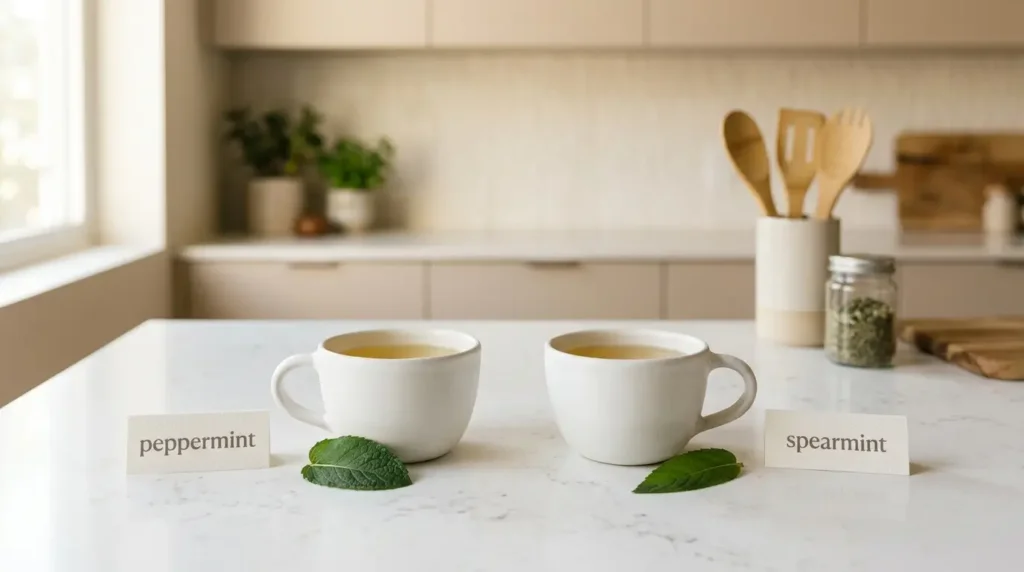
These are two of the most commonly confused herbal teas — but they are pharmacologically distinct.
| Peppermint | Spearmint | |
|---|---|---|
| Plant | Mentha × piperita | Mentha spicata |
| Key compound | Menthol (40–55%) | Carvone + rosmarinic acid |
| Flavor | Intensely cool, sharp | Lighter, sweeter, less cooling |
| Caffeine | None | None |
| Best for | Digestion, bloating, IBS, nausea | Hormones, PCOS, acne |
| Anti-androgenic | ❌ No | ✅ Yes — reduces free testosterone |
| IBS evidence | ✅ Strong (multiple RCTs) | ⚠️ Mild |
| Acid reflux safe | ❌ No — worsens GERD | ✅ Yes |
| Pregnancy | ✅ Small amounts considered safe | ⚠️ Moderate |
The most important difference for health goals:
- Choose peppermint for digestive symptoms, bloating, IBS, nausea, and headaches
- Choose spearmint for hormonal acne, PCOS, hirsutism, and androgen-related conditions
For the full spearmint profile, our spearmint tea benefits guide covers the hormonal research in detail.
Peppermint Tea and Acid Reflux: A Critical Warning
Peppermint tea worsens acid reflux and GERD — this is one of the most important safety points about this tea, and one that is frequently overlooked.
Menthol relaxes the lower esophageal sphincter (LES) — the muscular valve between the esophagus and stomach that prevents stomach acid from flowing upward. When the LES is relaxed by menthol, acid reflux becomes significantly more likely. This is why peppermint is specifically contraindicated for people with GERD in gastroenterology guidelines.
If you have acid reflux, heartburn, or GERD: avoid peppermint tea entirely and choose ginger tea or chamomile instead — both provide digestive benefits without the LES-relaxing risk.
For people with reflux who want herbal digestive support, our hibiscus tea and acid reflux guide covers the full landscape of safe and unsafe herbal teas for GERD.
How to Make Peppermint Tea
Standard hot brew:
- Heat water to 90°C (195°F) — slightly below boiling
- Add 1 tablespoon of fresh peppermint leaves or 1 teaspoon of dried peppermint to your cup
- Pour hot water over the leaves
- Cover the cup while steeping — menthol is volatile and escapes as steam from an uncovered cup
- Steep for 5–7 minutes
- Strain and serve with optional honey
Iced peppermint tea: Brew double-strength (2 tablespoons fresh leaves) and pour immediately over a glass full of ice. The ice chills and dilutes to the right strength.
Fresh vs dried: Fresh peppermint produces a brighter, more aromatic cup. Dried peppermint is more convenient and has a more concentrated flavor. Both work well — use whichever is available.
For cold brew and more herbal combinations, our cold brew herbal tea recipes guide covers the options.
Peppermint Tea During Pregnancy and Breastfeeding
Pregnancy: Peppermint tea in small amounts (1 cup per day) is generally considered safe during pregnancy and is often used for morning sickness and nausea. Most herbalists and midwives consider culinary amounts of peppermint safe. Large amounts should be avoided — very high menthol doses have theoretical uterine-stimulating effects at medicinal concentrations.
First trimester: Extra caution is warranted. Limit to small, weak cups if using for nausea. Always confirm with your midwife.
Breastfeeding: Peppermint may reduce milk supply — menthol has been associated with decreased prolactin levels in some studies. Breastfeeding mothers should avoid large amounts of peppermint tea, particularly if they have any concerns about milk supply. Occasional small amounts are generally considered low-risk.
Peppermint Tea Side Effects and Safety
Acid reflux / GERD: Avoid entirely — menthol relaxes the lower esophageal sphincter, worsening reflux. This is the most important safety consideration.
Hiatal hernia: Same reasoning as reflux — avoid.
Drug interactions:
- Cyclosporine: Peppermint may increase blood levels of this immunosuppressant — transplant patients should avoid
- Blood pressure medications: Menthol may mildly lower blood pressure — additive effect possible
- Diabetes medications: Some evidence of mild blood sugar-lowering interaction
Excessive consumption: Very large amounts of peppermint tea can cause heartburn, skin irritation, and headache. Stick to 2–3 cups per day maximum.
Children under 5: Menthol can cause breathing difficulties in very young children — avoid giving peppermint tea to infants and toddlers.
For general herbal tea safety principles, our hibiscus tea side effects guide provides a useful reference framework.
Peppermint Tea vs Other Herbal Teas for Digestion
| Peppermint | Ginger | Chamomile | Spearmint | |
|---|---|---|---|---|
| Bloating | ✅ Strong | ✅ Good | ✅ Mild | ⚠️ Mild |
| IBS | ✅ Multiple RCTs | ⚠️ Mild | ✅ Antispasmodic | ⚠️ Mild |
| Nausea | ✅ Good | ✅ Strong (best) | ⚠️ Mild | ⚠️ Mild |
| Acid reflux | ❌ Worsens | ✅ Safe | ✅ Safe | ✅ Safe |
| Constipation | ✅ Spasm-type | ⚠️ Stimulant | ⚠️ Mild | ⚠️ Mild |
| Caffeine | None | None | None | None |
For ginger tea benefits particularly for nausea and digestive health, and chamomile tea benefits for sleep and anxiety alongside digestion, our dedicated guides cover each in full.
Frequently asked questions
Key Takeaways
- Peppermint tea benefits are primarily driven by menthol — a compound with documented antispasmodic, analgesic, and antimicrobial properties
- Strongest evidence: bloating and IBS relief through smooth muscle relaxation (multiple RCTs)
- Also effective for: nausea, sinus congestion, tension headache, constipation (spasm-type), oral health
- Completely caffeine-free — safe at any time of day
- Critical warning: peppermint worsens acid reflux and GERD — avoid if you have either condition
- Different from spearmint: menthol (peppermint) = digestive; carvone (spearmint) = hormonal
- Safe in small amounts during pregnancy for nausea; avoid large amounts while breastfeeding (may reduce milk supply)
- Cover the cup while steeping to preserve volatile menthol compounds