
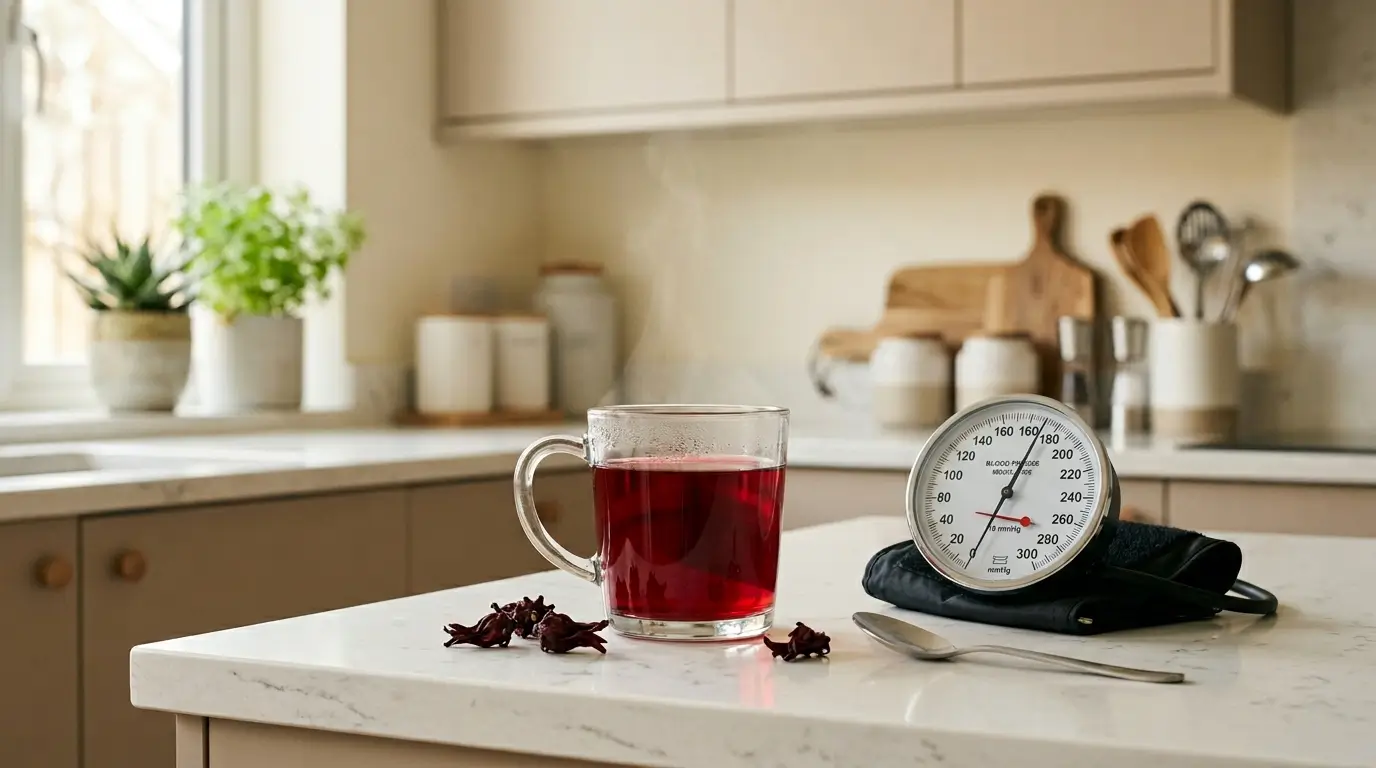
Hibiscus tea for high blood pressure is one of the most clinically supported uses of any herbal remedy. Multiple randomized controlled trials have documented reductions of 7–13 mmHg in systolic blood pressure with consistent daily consumption — a result comparable to low-dose antihypertensive medication for people with mild hypertension. The mechanism is well understood, the evidence is among the strongest in herbal cardiovascular research, and the practical protocol is simple. This guide covers what the research shows, how hibiscus actually works on blood pressure, who benefits most, and what you realistically need to do to see results.
Does Hibiscus Tea Lower High Blood Pressure? The Short Answer
Yes — with important conditions:
| Condition | Verdict |
|---|---|
| Mild hypertension (stage 1, systolic 130–139 mmHg) | ✅ Strong evidence, clinically meaningful reduction |
| High-normal (systolic 120–129 mmHg) | ✅ Good evidence for modest reduction |
| Moderate hypertension (systolic 140–159 mmHg) | ⚠️ Supportive benefit, not sufficient as sole treatment |
| Severe hypertension (systolic 160+ mmHg) | ❌ Requires medical treatment — hibiscus is adjunct only |
| On antihypertensive medication | ⚠️ Consult doctor — additive effect can cause excessive lowering |
The evidence is strongest for people with mild to moderate hypertension who are not yet on medication or who want to complement lifestyle changes. For severe hypertension, hibiscus tea is not a safe or sufficient standalone intervention.
What the Clinical Trials Show
The research base for hibiscus tea and blood pressure is unusually strong for a herbal intervention. Here are the key studies:
Journal of Nutrition (2010) — the most cited trial: 65 adults with pre-hypertension or mild hypertension were randomized to drink 3 cups of brewed hibiscus tea per day or a placebo for 6 weeks. The hibiscus group showed a mean systolic reduction of 7.2 mmHg compared to 1.3 mmHg in the placebo group — a statistically significant and clinically meaningful difference.
Journal of Human Hypertension (2008): A randomized controlled trial in 54 patients with mild to moderate hypertension found that hibiscus tea reduced systolic blood pressure by 11.58 mmHg and diastolic by 3.53 mmHg after 4 weeks of daily consumption — results comparable to the ACE inhibitor captopril at 25mg per day.
Phytomedicine meta-analysis (2015): A systematic review and meta-analysis of 5 randomized controlled trials concluded that hibiscus tea consumption significantly reduced both systolic and diastolic blood pressure, with the largest effects seen in people with the highest baseline blood pressure.
The consistent finding across trials: 2–3 cups per day for 4–6 weeks produces a meaningful reduction in systolic pressure ranging from 7 to 13 mmHg. This is not a trivial effect — a 5 mmHg reduction in systolic pressure is associated with a 14% reduction in stroke risk.
How Hibiscus Tea Lowers Blood Pressure: The Mechanism
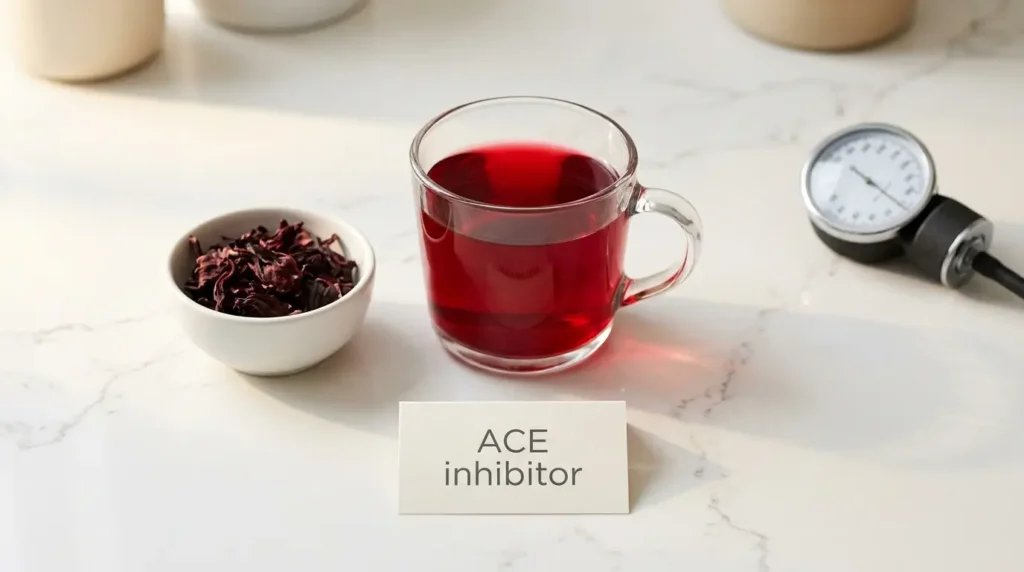
Hibiscus works on blood pressure through two primary and well-understood mechanisms:
1. ACE Inhibition
Hibiscus contains anthocyanins and organic acids — particularly hibiscus acid (hydroxycitric acid lactone) — that inhibit angiotensin-converting enzyme (ACE). ACE converts angiotensin I into angiotensin II, a potent vasoconstrictor that narrows blood vessels and raises blood pressure. By inhibiting ACE, hibiscus compounds produce the same vasodilatory effect as ACE inhibitor drugs like lisinopril, enalapril, and captopril — but at lower intensity and without the pharmaceutical side effects.
This is why the Journal of Human Hypertension trial found hibiscus tea comparable to captopril — they work through the same mechanism.
2. Mild Diuretic Effect
Hibiscus increases urinary output, reducing fluid volume in the bloodstream. Lower blood volume means lower pressure against arterial walls — the same mechanism as thiazide diuretic medications. This diuretic effect is mild (much less than pharmaceutical diuretics) but contributes to the overall blood pressure reduction.
Why Both Mechanisms Matter
The combination of ACE inhibition and mild diuresis is pharmacologically similar to the combination of ACE inhibitors and diuretics that many antihypertensive medication regimens use. This dual mechanism gives hibiscus a broader blood pressure-lowering profile than a single-mechanism herb.
Hibiscus Tea for High Blood Pressure vs. Medication
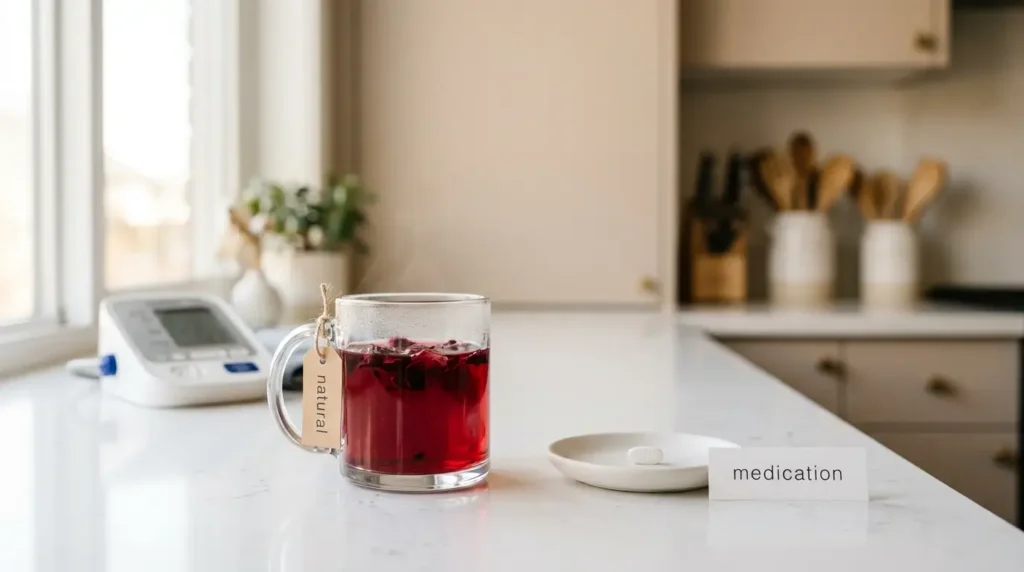
This is the question most people with hypertension want answered directly.
For stage 1 hypertension (systolic 130–139 mmHg): The reduction documented in clinical trials (7–13 mmHg systolic) is comparable to what many patients achieve with low-dose antihypertensive medication. For people in this category who prefer to try lifestyle interventions before starting medication, hibiscus tea — alongside dietary changes (DASH diet, reduced sodium) and regular physical activity — represents a genuine evidence-based option.
For stage 2 hypertension (systolic 140+ mmHg): Hibiscus tea alone is not sufficient. A 7–13 mmHg reduction from a starting point of 150 mmHg systolic brings you to ~137–143 mmHg — still in the stage 1 hypertension range. Medical treatment is needed at this level, and hibiscus tea can be a useful complement to medication.
The critical warning: Never discontinue prescribed antihypertensive medication to try hibiscus tea without your doctor’s guidance. The combination of medication and hibiscus tea can cause additive hypotension — blood pressure dropping too low, causing dizziness, fainting, or in rare cases more serious events.
Who Benefits Most From Hibiscus Tea for Blood Pressure
Based on the clinical evidence, hibiscus tea for blood pressure is most effective for:
People with prehypertension or stage 1 hypertension (systolic 120–139 mmHg) who are not yet on medication and want to use lifestyle interventions first. This is where the evidence is strongest and where hibiscus may make the difference between needing medication and not.
People with elevated stress-related blood pressure — hibiscus’s mild adaptogenic properties through reishi-like cortisol modulation add a stress-related benefit on top of the direct ACE inhibition.
People who cannot tolerate pharmaceutical ACE inhibitors — the most common side effect of ACE inhibitor drugs is a persistent dry cough (caused by accumulation of bradykinin). Hibiscus achieves similar ACE inhibition without this side effect.
People over 50 — age-related hypertension, which is driven largely by increased arterial stiffness and reduced vasodilation, responds well to the vasodilatory compounds in hibiscus.
The Protocol: How to Use Hibiscus Tea for High Blood Pressure
For detailed dosage and timing guidance, our dedicated articles cover each component:
How much: 2 cups per day at standard strength (2 teaspoons of dried hibiscus per 240ml). See our how much hibiscus tea to lower blood pressure guide for the complete dosage breakdown.
When: One cup after breakfast, one cup in the early afternoon. The best time to drink hibiscus tea guide covers the full timing rationale.
Hot or cold: Both work — hot brew extracts more active compounds per cup, cold brew is better for people with acid reflux. Full comparison in our hibiscus tea hot or cold for blood pressure article.
How long: Minimum 4 weeks before expecting measurable results, optimal at 6–8 weeks. See does hibiscus tea lower blood pressure immediately for the full timeline explanation.
How to prepare: Our how to make hibiscus tea guide covers all preparation methods.
Important Safety Considerations
Blood pressure medication interaction: This is the most clinically significant safety concern. If you take any antihypertensive medication (ACE inhibitors, ARBs, calcium channel blockers, beta blockers, diuretics), adding daily hibiscus tea can cause excessive blood pressure lowering. Always discuss with your doctor before starting a daily hibiscus tea habit while on medication.
Monitor your readings: If you are using hibiscus tea specifically for blood pressure, track your readings before starting and after 4–6 weeks. A home blood pressure monitor is an inexpensive and essential tool for this.
Do not self-treat severe hypertension: Systolic pressure above 160 mmHg requires medical evaluation and treatment. Hibiscus tea is not a safe primary intervention at this level.
For the full safety profile including all drug interactions and populations who should limit hibiscus tea, see our comprehensive hibiscus tea side effects guide. For dosage safety across different populations, see our how much hibiscus tea per day article.
Frequently Asked Questions
Is hibiscus tea good for high blood pressure?
Yes — hibiscus tea is one of the most clinically supported herbal interventions for blood pressure. Clinical trials show 7–13 mmHg systolic reduction with 2 cups per day for 4–6 weeks. The evidence is strongest for mild to moderate hypertension. It is not sufficient as a standalone treatment for severe hypertension.
How does hibiscus tea lower blood pressure?
Through two mechanisms: ACE inhibition (the same pathway as lisinopril and other ACE inhibitor drugs) and a mild diuretic effect that reduces blood volume. The combination of these two mechanisms gives hibiscus a similar — though less potent — profile to common antihypertensive medication combinations.
How much hibiscus tea should I drink for high blood pressure?
2 cups per day at standard strength (2 teaspoons of dried calyces per 240ml), consumed consistently every day for at least 4–6 weeks. This is the protocol used in the clinical trials showing blood pressure reduction.
How quickly does hibiscus tea lower blood pressure?
It does not work immediately. Meaningful reduction typically appears after 4–6 weeks of consistent daily consumption. The effect is cumulative — it does not occur after one cup or one week.
Can hibiscus tea replace blood pressure medication?
For mild hypertension (stage 1, systolic 130–139 mmHg), the clinical evidence suggests hibiscus tea can produce results comparable to low-dose medication as part of a broader lifestyle intervention. For moderate to severe hypertension, it is a complement to medication, not a substitute. Never discontinue prescribed medication without your doctor’s guidance.
Is hibiscus tea safe with blood pressure medication?
Not without medical consultation. The combination of antihypertensive medication and daily hibiscus tea can cause additive hypotension — excessively low blood pressure. Your doctor may need to adjust your medication dose if you add hibiscus tea to your routine.
Which hibiscus tea is best for blood pressure?
Pure dried Hibiscus sabdariffa calyces brewed at standard strength — not blends diluted with other herbs. Look for products that list only hibiscus (Hibiscus sabdariffa or "flor de jamaica") as the ingredient, without fillers or blending agents that reduce the per-cup concentration of active compounds.
Key Takeaways
- Hibiscus tea for high blood pressure is backed by multiple randomized controlled trials showing 7–13 mmHg systolic reduction
- The mechanism is ACE inhibition plus mild diuresis — pharmacologically similar to common antihypertensive medication combinations
- Most effective for mild to moderate hypertension (stage 1) in people not yet on medication
- The protocol is 2 cups per day at standard strength for 4–6 weeks minimum
- Results are cumulative — no immediate effect from a single cup
- People on antihypertensive medication must consult their doctor before adding daily hibiscus tea
- Never use hibiscus tea as a sole treatment for severe hypertension (systolic 160+ mmHg)
- For mild hypertension, the documented reduction is clinically meaningful and comparable to low-dose medication