
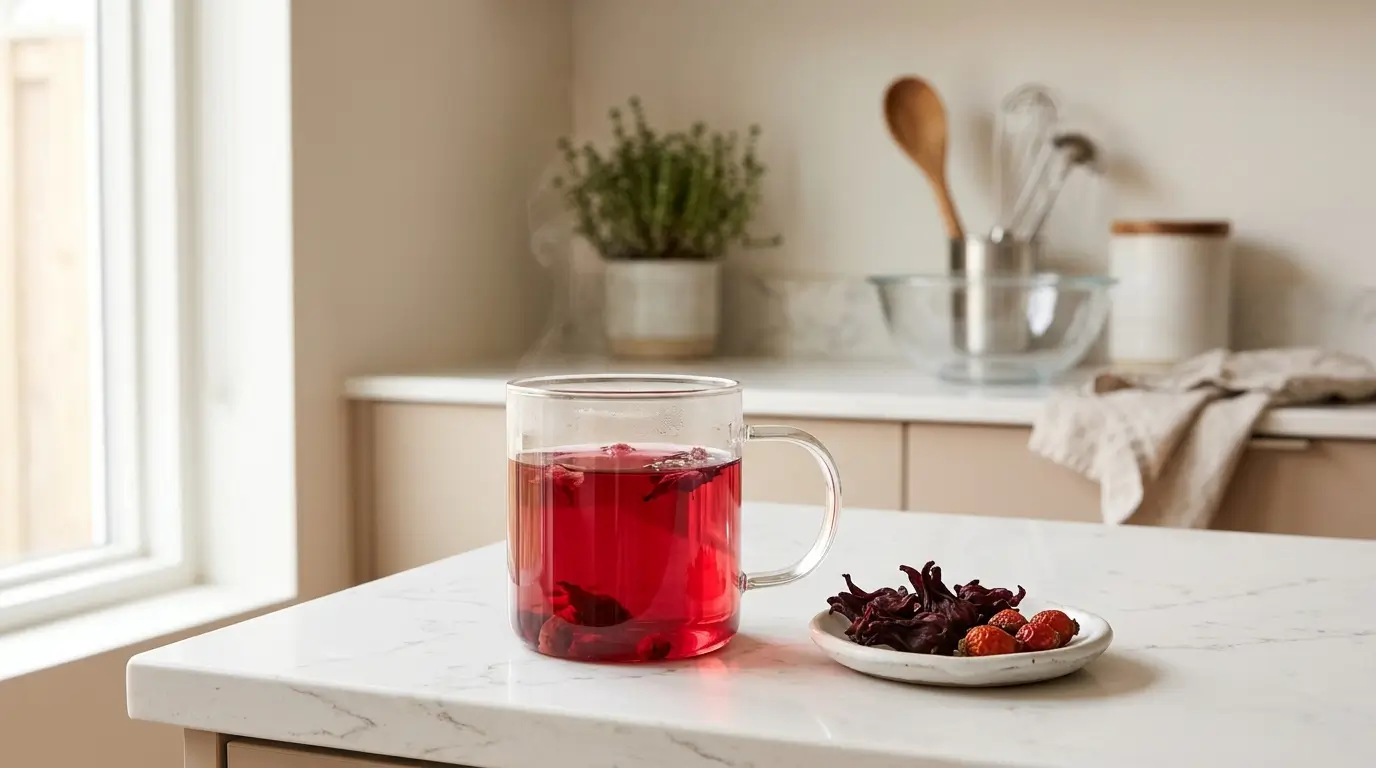
Rosehip and hibiscus tea benefits are amplified by the combination itself — these two ingredients share complementary antioxidant profiles, synergistic vitamin C content, and overlapping anti-inflammatory mechanisms that make the blend more powerful than either ingredient alone. Rosehip and hibiscus tea is one of the most popular commercial herbal blends sold worldwide, and for good reason. This guide breaks down exactly what rosehip does, what hibiscus adds, how the two work together, and who benefits most from drinking this blend.
What Is Rosehip?
Before understanding the combined benefits, it helps to know what rosehip actually is — because it is less familiar than hibiscus to most people.
Rosehips are the fruit of the rose plant (Rosa canina and related species) — the small, oval, red-orange berries that develop after the rose flower blooms and the petals fall. They are one of the most concentrated natural sources of vitamin C available, containing 10–40 times more vitamin C per gram than oranges depending on the variety and ripeness.
Rosehips have been used in traditional medicine across Europe, the Middle East, and Asia for centuries — for immune support, joint health, and skin care. During World War II, when citrus imports to Britain were disrupted, rosehip syrup was produced nationally as a vitamin C supplement for children.
Rosehip vs hibiscus: Both are tart, red-pink in color, and rich in antioxidants. The key differences:
| Rosehip | Hibiscus | |
|---|---|---|
| Plant part | Fruit (berry) | Calyx (flower base) |
| Vitamin C | Very high (best source) | High |
| Flavor | Fruity, tart, slightly sweet | Sharply tart, cranberry-like |
| pH | Acidic (3.5–4.0) | Very acidic (2.5–3.5) |
| Best documented benefit | Vitamin C, joint health, skin | Blood pressure, antioxidants |
| Caffeine | None | None |
Rosehip Tea Benefits
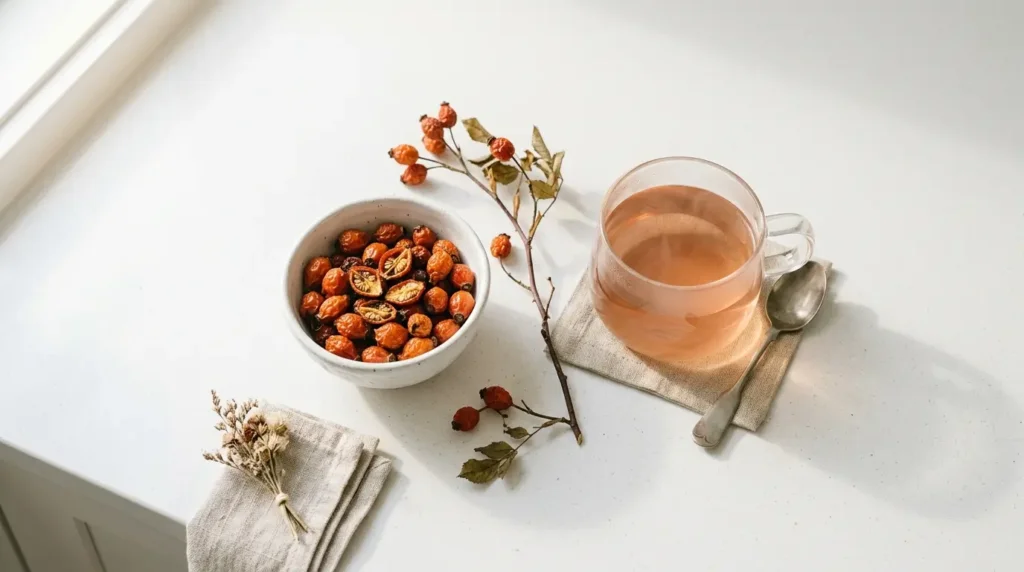
1. Exceptional Vitamin C Content
This is rosehip’s defining nutritional property. Rosehip tea — even after the heat processing of drying and brewing — delivers a meaningful dose of vitamin C per cup. Vitamin C is essential for:
- Collagen synthesis — the structural protein of skin, joints, and blood vessels
- Immune function — supporting white blood cell production and activity
- Iron absorption — converting non-heme iron from plant foods into its absorbable form
- Antioxidant protection — directly neutralizing free radicals in plasma and tissues
2. Joint Health and Osteoarthritis Support
This is rosehip’s most clinically studied benefit beyond vitamin C. Multiple randomized controlled trials have tested rosehip powder supplementation in patients with osteoarthritis and found significant reductions in pain and stiffness.
A 2008 meta-analysis in Osteoarthritis and Cartilage found that rosehip powder significantly reduced pain in patients with hip and knee osteoarthritis compared to placebo — with a meaningful effect size that held across multiple trials. The active compounds identified include GOPO (galactolipid) — a fatty acid compound found in rosehip that has demonstrated anti-inflammatory and cartilage-protective effects in laboratory studies.
At tea concentration rather than powdered supplement concentration, this benefit is present but likely milder than supplement doses. Regular daily consumption as part of an anti-inflammatory diet is the most realistic framing.
3. Skin Health
The combination of vitamin C (collagen support), beta-carotene (antioxidant and UV protection), and fatty acids (skin barrier function) in rosehip makes it one of the most skin-relevant herbal teas available. The vitamin C in rosehip tea supports collagen synthesis from the inside — complementing the topical rosehip oil that has become well-established in skincare.
4. Immune Support
The vitamin C content combined with rosehip’s flavonoids, carotenoids, and tannins creates a comprehensive immune-supporting profile. Regular rosehip tea consumption during cold and flu season provides a convenient daily dose of these compounds in a pleasant, warming drink.
5. Mild Diuretic and Kidney Flushing
Like many herbal teas, rosehip has a mild diuretic effect that increases urinary output and supports kidney flushing. At normal consumption levels (1–2 cups per day), this is beneficial for urinary tract health and hydration without being excessive.
Hibiscus Tea Benefits in the Blend
The hibiscus component of rosehip and hibiscus tea contributes its own distinct benefit profile that complements rosehip. For the full breakdown, our comprehensive guide on hibiscus tea benefits covers every documented effect in detail.
Key hibiscus contributions to the blend:
Blood pressure reduction: Hibiscus is the most evidence-backed herbal ingredient for blood pressure management, with clinical trials showing 7–13 mmHg systolic reduction with consistent daily use. This benefit comes primarily from hibiscus and not rosehip. For everything about hibiscus and blood pressure, see our guide on hibiscus tea for blood pressure.
Anthocyanin antioxidants: Hibiscus is exceptionally rich in anthocyanins — the same class of antioxidants in blueberries and red grapes. These complement the carotenoid antioxidants in rosehip, covering a broader range of free radical types.
Deeper color and bolder flavor: Hibiscus contributes the deep ruby-red color and the sharp, cranberry-like tartness that gives this blend its distinctive character.
Anti-inflammatory activity: Hibiscus’s organic acids and polyphenols add to the anti-inflammatory effect that rosehip’s GOPO and vitamin C also provide — multiple compounds attacking inflammation through different pathways.
Why Rosehip and Hibiscus Work Better Together
The combination produces benefits that exceed either ingredient alone for three reasons:
1. Complementary vitamin C synergy Both rosehip and hibiscus are high in vitamin C, but rosehip’s concentration is significantly higher. Together, the blend delivers one of the highest natural vitamin C contents of any herbal tea. Vitamin C also regenerates other antioxidants (including vitamin E) — meaning higher vitamin C from the blend protects more of the other antioxidants in the cup.
2. Anthocyanins + carotenoids = broader antioxidant coverage Hibiscus provides anthocyanins (water-soluble, protecting aqueous cellular environments). Rosehip provides carotenoids and vitamin C. These antioxidants protect different parts of the cell and neutralize different classes of free radicals — the combination is more comprehensive than either alone.
3. Flavor balance Pure hibiscus tea can be sharply acidic and intensely tart. Pure rosehip tea is fruitier but also quite sour. Together, the flavors balance each other — the fruity sweetness of rosehip softens hibiscus’s sharp edge, producing a more rounded, pleasant drink that most people find easier to drink without sweetener.
Rosehip and Hibiscus Tea Benefits Summary
| Benefit | From Rosehip | From Hibiscus | Combined |
|---|---|---|---|
| Vitamin C | ✅ Very high | ✅ High | ✅✅ Exceptional |
| Blood pressure | ⚠️ Mild | ✅ Strong | ✅ Strong |
| Antioxidants | ✅ Carotenoids | ✅ Anthocyanins | ✅✅ Broad spectrum |
| Skin health | ✅ Collagen, UV | ✅ Anti-aging | ✅✅ Comprehensive |
| Joint health | ✅ GOPO | ⚠️ Anti-inflammatory | ✅ Synergistic |
| Immune support | ✅ Strong | ✅ Good | ✅✅ Excellent |
| Flavor | Fruity, tart | Sharp, tart | ✅ Balanced |
| Acid reflux safe | ⚠️ Moderate acid | ❌ High acid | ⚠️ Cold brew recommended |
How to Make Rosehip and Hibiscus Tea
Standard hot brew:
- 1 teaspoon dried hibiscus calyces + 1 teaspoon dried rosehip pieces per 240ml
- Steep in near-boiling water (90°C / 195°F) for 8–10 minutes
- Strain and serve with a small amount of honey if desired
- The longer you steep, the deeper the color and the more tart the flavor
Cold brew (recommended for acid-sensitive people):

- 2 tablespoons each of dried hibiscus and dried rosehip per 1 liter of cold water
- Refrigerate for 10–12 hours (overnight)
- Strain and serve over ice with a slice of orange
- Cold brew is significantly less acidic than hot brew — the better choice for people with acid reflux or GERD
For more cold brew techniques, our cold brew herbal tea recipes guide covers a full range of herbal combinations.
Flavor additions that work well:
- Cinnamon stick (steeped with the herbs)
- Fresh ginger (adds warmth and anti-inflammatory benefit)
- Orange peel (adds citrus brightness)
- Vanilla (softens tartness)
- Rose petals (visual and mild floral note)
Rosehip and Hibiscus Tea for Skin
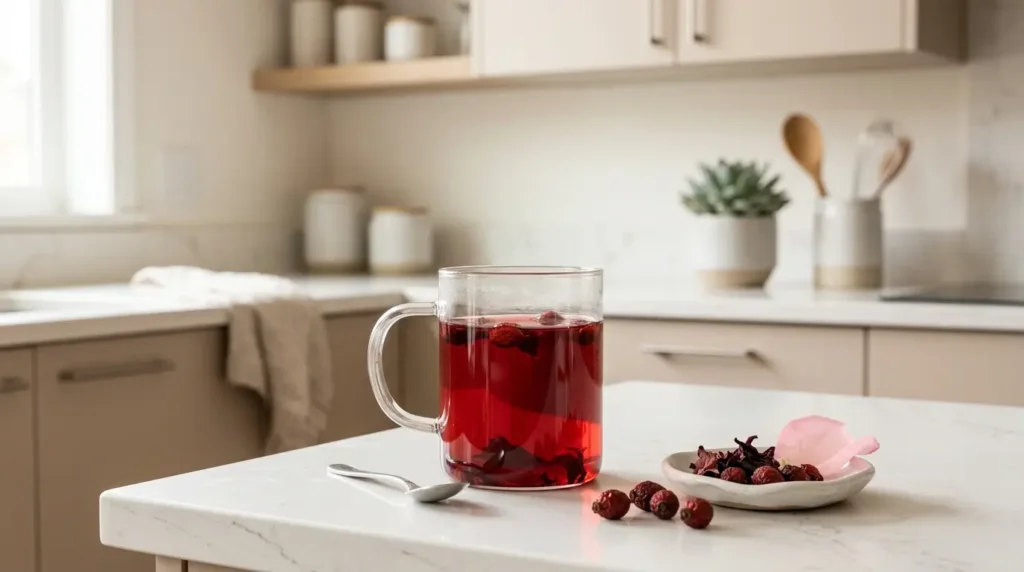
The skin benefits of this combination are among the most practical and consistently supported. The mechanism is straightforward:
Collagen synthesis: Vitamin C is the essential cofactor for the enzymes that produce collagen — the structural protein that determines skin firmness and elasticity. Both rosehip and hibiscus contribute meaningful vitamin C. Regular daily consumption maintains the vitamin C levels needed for optimal collagen production.
Antioxidant skin protection: UV radiation and pollution generate free radicals that directly damage skin cell DNA and accelerate visible aging. The anthocyanins from hibiscus and the carotenoids from rosehip together provide broad-spectrum antioxidant protection against this damage.
Anti-inflammatory benefit for skin: Chronic low-grade inflammation accelerates skin aging (“inflammaging”). The anti-inflammatory compounds in both hibiscus and rosehip reduce this baseline inflammation level over time.
The skin benefits are cumulative — they develop over weeks and months of consistent daily consumption, not days. One to two cups per day consistently over 8–12 weeks is the realistic timeframe for visible skin improvements. For women specifically, these skin benefits complement the hormonal benefits discussed in our guide on hibiscus tea benefits for women.
Is Rosehip and Hibiscus Tea Safe During Pregnancy?
This is one of the most searched questions about this blend. The answer requires nuance because the two ingredients have different safety profiles in pregnancy:
Hibiscus: Not safe during pregnancy — has emmenagogue properties that can stimulate uterine contractions. Should be avoided entirely throughout pregnancy.
Rosehip: Generally considered safe during pregnancy in moderate amounts (1–2 cups per day). The vitamin C content is beneficial. However, very high doses should be avoided as excessive vitamin C supplementation has been associated with preterm birth risk in some studies.
The blend: Because of the hibiscus component, rosehip and hibiscus tea should be avoided during pregnancy. If you want the benefits of rosehip during pregnancy, drink plain rosehip tea (without hibiscus) in moderate amounts and consult your midwife or OB.
For a comprehensive guide on hibiscus safety in pregnancy, see our article on can pregnant women drink hibiscus tea.
Rosehip and Hibiscus Tea Side Effects
Both ingredients are safe for most healthy adults at 1–3 cups per day. The main considerations:
Acidity: Both rosehip and hibiscus are acidic. The combination is gentler than pure hibiscus (rosehip’s pH of 3.5–4.0 partially buffers hibiscus’s pH of 2.5–3.5) but still acidic enough to warrant cold brew preparation for people with acid reflux or GERD. Our guide on hibiscus tea and acid reflux covers the full picture.
Blood pressure interaction: The hibiscus component can lower blood pressure. People on antihypertensive medication should consult their doctor before drinking this blend daily.
Iron absorption: The vitamin C from rosehip enhances iron absorption from non-heme plant sources when the tea is consumed with iron-rich meals — a benefit for most people, but something to be aware of.
Pregnancy: Avoid due to hibiscus component (see above).
For the full safety guide on hibiscus including all drug interactions, see our comprehensive hibiscus tea side effects article.
Frequently Asked Questions
What are the benefits of rosehip and hibiscus tea?
The main rosehip and hibiscus tea benefits include exceptional vitamin C content from both ingredients, blood pressure support from hibiscus, joint health support from rosehip's GOPO compound, broad-spectrum antioxidant protection from both anthocyanins and carotenoids, skin health through collagen support and antioxidants, immune support, and a naturally balanced tart-fruity flavor.
What is rosehip good for?
Rosehip is best known for its exceptional vitamin C content, joint health and osteoarthritis support (through GOPO and anti-inflammatory compounds), skin health (collagen synthesis, UV protection), immune support, and mild diuretic activity.
Is rosehip and hibiscus tea good for you?
Yes — for most healthy adults this is one of the most nutrient-rich herbal tea blends available. It combines two of the highest natural vitamin C sources in herbal tea form with complementary antioxidant profiles and multiple documented health benefits.
Does rosehip and hibiscus tea lower blood pressure?
Yes — primarily through the hibiscus component. Clinical trials have shown hibiscus reduces systolic blood pressure by 7–13 mmHg with consistent daily use over 4–6 weeks. Rosehip has a milder blood pressure effect.
Is rosehip and hibiscus tea safe during pregnancy?
No — the hibiscus component has emmenagogue properties and should be avoided during pregnancy. Plain rosehip tea (without hibiscus) in moderate amounts is generally considered safe during pregnancy.
What does rosehip and hibiscus tea taste like?
The blend is tart, fruity, and deeply ruby-red. Rosehip's fruity sweetness softens hibiscus's sharp, cranberry-like tartness — producing a more balanced and rounded flavor than either ingredient alone. Most people find it pleasantly tart and drinkable without sweetener.
How do you make rosehip and hibiscus tea?
Use 1 teaspoon each of dried hibiscus calyces and dried rosehip pieces per 240ml of hot water. Steep for 8–10 minutes, strain, and serve hot or over ice. For cold brew, use 2 tablespoons of each per 1 liter of cold water and refrigerate overnight.
Is rosehip and hibiscus tea good for skin?
Yes — the combined vitamin C from both ingredients supports collagen synthesis, while anthocyanins from hibiscus and carotenoids from rosehip provide broad antioxidant protection against UV and oxidative skin damage. Benefits develop over 8–12 weeks of consistent daily consumption.
Key Takeaways
- Rosehip and hibiscus tea benefits are amplified by the combination — complementary antioxidant profiles, synergistic vitamin C, and balanced flavor
- Rosehip contributes exceptional vitamin C, joint health support through GOPO, skin benefits, and immune support
- Hibiscus contributes blood pressure reduction, anthocyanin antioxidants, and bold flavor
- Together they deliver one of the broadest and most nutrient-dense herbal tea profiles available
- Cold brew is recommended for acid-sensitive people — both ingredients are acidic but the combination is less harsh than pure hibiscus
- Avoid during pregnancy due to hibiscus’s emmenagogue properties
- People on blood pressure medication should consult their doctor before daily consumption
- Skin benefits are cumulative — consistent daily use over 8–12 weeks produces the most visible results