
No — hibiscus tea does not lower blood pressure immediately. Clinical research consistently shows that meaningful blood pressure reduction requires daily consumption over 2 to 6 weeks. A single cup will not produce a measurable drop. However, the evidence that regular hibiscus tea consumption does lower blood pressure is among the strongest in herbal medicine — with reductions of 7–13 mmHg systolic pressure documented in multiple randomized controlled trials. This article explains exactly how long it takes, how much you need to drink, and what to realistically expect.
How Long Does Hibiscus Tea Take to Lower Blood Pressure?
Based on the available clinical evidence, here is what to expect by timeframe:
| Timeframe | What Happens |
|---|---|
| First cup | No measurable blood pressure change |
| Days 1–7 | No significant effect — compounds are building up |
| Weeks 2–3 | Some people begin to notice mild effects |
| Weeks 4–6 | Clinically meaningful reduction in most studies |
| Weeks 6–12 | Maximum benefit with consistent daily use |
The most frequently cited clinical trial — a double-blind, randomized controlled study published in the Journal of Nutrition — found that participants drinking hibiscus tea daily for 6 weeks experienced a reduction of 7.2 mmHg in systolic blood pressure compared to placebo. A study published in the Journal of Human Hypertension found reductions of up to 11.58 mmHg systolic and 3.53 mmHg diastolic after 4 weeks in participants with stage 1 hypertension.
These results take weeks — not hours or days.
Why Doesn’t It Work Immediately?
Hibiscus tea lowers blood pressure through two primary mechanisms — and neither produces an instant effect.
1. ACE inhibition Hibiscus contains compounds that inhibit angiotensin-converting enzyme (ACE) — the same enzyme targeted by ACE inhibitor drugs like lisinopril. Unlike pharmaceutical ACE inhibitors, which act within hours at therapeutic doses, the natural ACE-inhibiting compounds in hibiscus tea accumulate gradually in the bloodstream with repeated daily doses before producing a measurable vascular effect.
2. Mild diuretic effect Hibiscus tea increases urine output and reduces fluid retention, which lowers blood volume and therefore blood pressure. A single cup’s diuretic effect is too mild to produce significant blood pressure change — the effect builds over days and weeks of consistent consumption.
Both mechanisms require repeated daily exposure to produce the cumulative vascular adaptation that clinical trials measure. There is no shortcut.
How Much Hibiscus Tea Do You Need to Lower Blood Pressure?
The clinical trials showing blood pressure reduction used a consistent protocol:
- Amount: 2 cups (approximately 480ml) per day
- Strength: 1–2 teaspoons of dried hibiscus calyces per cup
- Duration: Minimum 4 weeks, optimal results at 6–8 weeks
- Timing: One cup after breakfast, one cup in the early afternoon
Drinking more than 2 cups per day does not appear to accelerate the blood pressure effect — and at higher doses, the risk of excessive blood pressure lowering increases, particularly for people already on antihypertensive medication. For complete dosage guidance across different health conditions and populations, see our article on how much hibiscus tea per day.
The preparation method also matters. Hot brew extracts slightly more active compounds per cup. Cold brew is gentler on the stomach and easier to maintain as a daily habit. Our full comparison of hibiscus tea hot or cold for blood pressure covers this in detail.
The Critical Role of Consistency
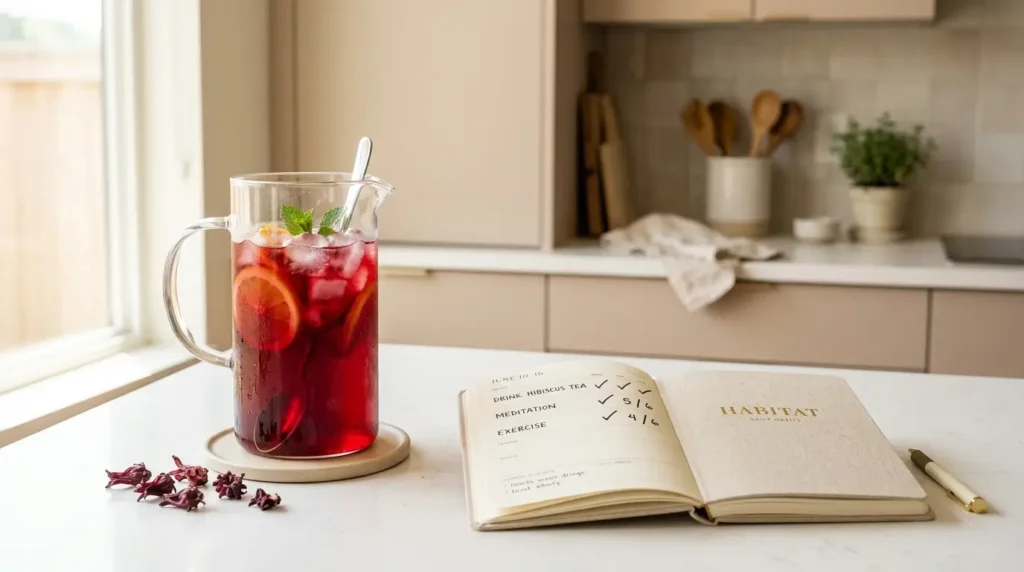
The most important variable in whether hibiscus tea lowers your blood pressure is not the dose per cup — it is whether you drink it every day without significant gaps.
Research on herbal interventions consistently shows that the therapeutic effect depends on maintaining steady plasma levels of the active compounds. Drinking 4 cups one day and nothing for three days is less effective than 2 cups every single day.
Practical consistency tips:
- Brew a large cold brew pitcher at the start of each week — removes the daily effort
- Drink the first cup after breakfast as part of your existing morning routine
- Set a reminder for the afternoon cup until it becomes habitual
- Don’t skip more than 2 consecutive days
For timing guidance and which daily schedule produces the most consistent blood pressure benefit, see our guide on the best time to drink hibiscus tea.
What Blood Pressure Reduction Can You Realistically Expect?
With 2 cups per day consistently over 6 weeks, the clinical data suggests:
- Systolic pressure reduction: 7–13 mmHg
- Diastolic pressure reduction: 3–7 mmHg
A reduction of 5 mmHg in systolic pressure is associated with a 14% reduction in stroke risk according to meta-analyses of blood pressure intervention studies. The reduction seen with hibiscus tea is clinically meaningful — not dramatic, but real.
For people with mild hypertension (stage 1, systolic 130–139 mmHg), this reduction may be enough to bring readings into the normal range without medication. For moderate to severe hypertension, hibiscus tea is a supportive measure alongside — not a replacement for — prescribed treatment.
The full spectrum of hibiscus tea benefits extends beyond blood pressure — including antioxidant protection, cholesterol management, and metabolic support — all of which develop on the same cumulative timeline.
Important Safety Note
Because hibiscus tea lowers blood pressure through a genuine pharmacological mechanism, there is a real risk of additive hypotension for people already taking antihypertensive medication. Do not add daily hibiscus tea to a medicated routine without consulting your doctor.
Signs that hibiscus tea may be lowering your blood pressure too much: dizziness when standing up, lightheadedness, unusual fatigue. These are symptoms of hypotension and require medical attention.
For the full safety profile including drug interactions and who should avoid hibiscus tea entirely, see our guide on hibiscus tea side effects. People with kidney conditions should also review our article on hibiscus tea and kidneys before making it a daily habit.
Frequently Asked Questions
Does hibiscus tea lower blood pressure immediately?
No. Hibiscus tea does not lower blood pressure immediately after a single cup. Meaningful reduction requires daily consumption of 2 cups per day for at least 4–6 weeks.
How long does it take for hibiscus tea to lower blood pressure?
Most clinical trials report measurable blood pressure reduction after 4–6 weeks of consistent daily consumption. Some people begin to notice mild effects after 2–3 weeks, but the full benefit develops over 4–6 weeks minimum.
How much hibiscus tea do I need to drink to lower blood pressure?
The evidence-based protocol is 2 cups per day — approximately 1–2 teaspoons of dried hibiscus per cup — consumed consistently every day. More than 2 cups per day does not appear to accelerate results.
Does hibiscus tea lower blood pressure as well as medication?
In people with mild hypertension (stage 1), the reduction from daily hibiscus tea (7–13 mmHg systolic) is comparable to low-dose antihypertensive medication. For moderate to severe hypertension, hibiscus tea is a complement to medication, not a substitute.
Can hibiscus tea lower blood pressure too much?
Yes — especially for people already on antihypertensive medication. The combination can cause blood pressure to drop excessively, leading to dizziness or lightheadedness. Always consult your doctor before adding daily hibiscus tea to a medicated routine.
What is the best time to drink hibiscus tea for blood pressure?
One cup after breakfast and one cup in the early afternoon mirrors the protocol used in most clinical trials and maintains steady compound levels throughout the day.
Is hot or cold hibiscus tea better for blood pressure?
Both are effective. Hot brew extracts slightly more active compounds per cup. Cold brew is gentler on the stomach and easier to sustain daily. The method you can maintain consistently every day is the more effective one in practice.
Key Takeaways
- Hibiscus tea does not lower blood pressure immediately — results require 4–6 weeks of daily consumption
- The evidence-based protocol is 2 cups per day of standard-strength hibiscus tea
- Clinical trials show reductions of 7–13 mmHg systolic and 3–7 mmHg diastolic with consistent use
- The mechanism involves ACE inhibition and mild diuretic effect — both require time to produce measurable change
- Consistency matters more than any other variable — daily consumption outperforms occasional high doses
- People on antihypertensive medication must consult their doctor before adding hibiscus tea daily
- For mild hypertension stage 1, the reduction from hibiscus tea is clinically meaningful