
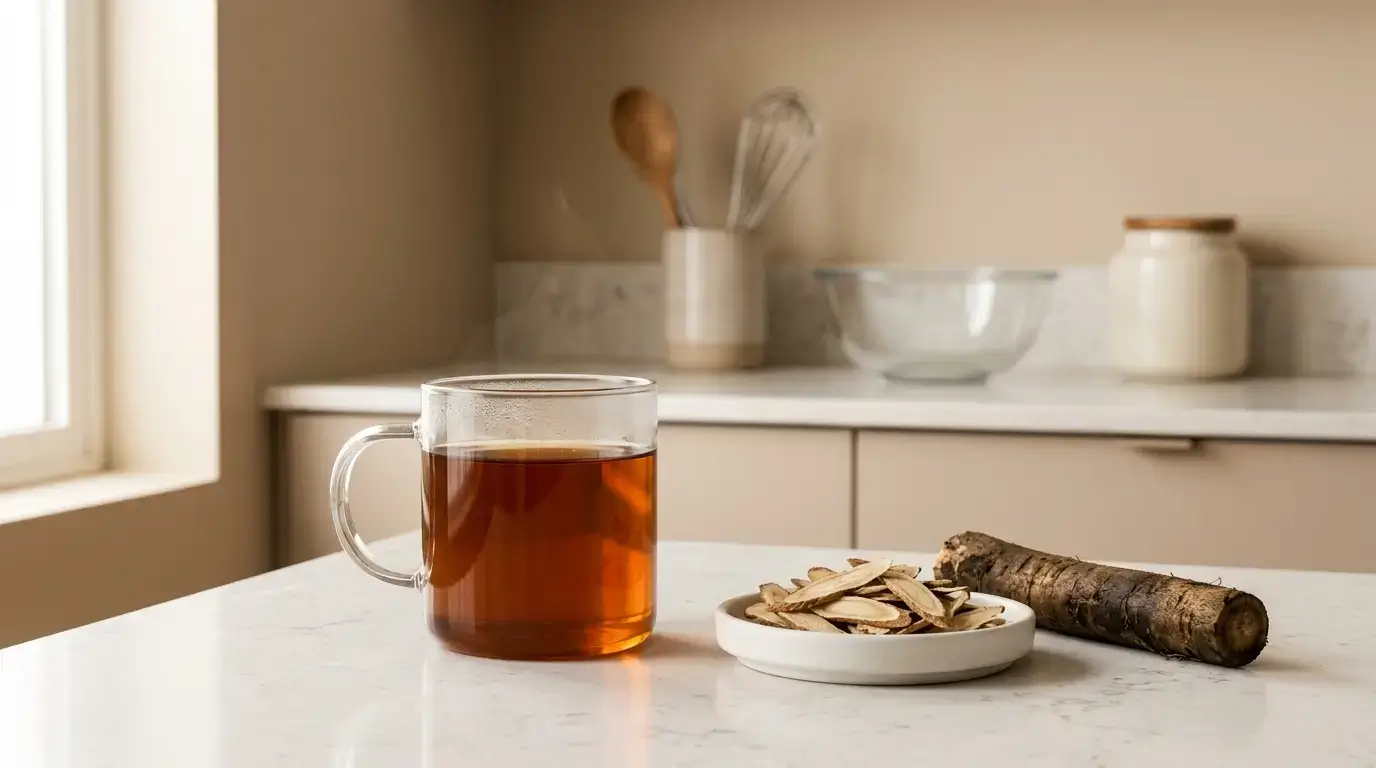
Burdock root tea benefits center on three areas that have been recognized across traditional medicine systems for centuries: liver support, skin clarity, and blood purification. Made from the dried root of Arctium lappa — a plant known in Japan as gobo and used as both a food and medicine throughout Asia and Europe — burdock root tea is one of the most nutrient-dense and functionally specific herbal teas available. This guide covers what burdock root actually contains, what the research supports, who benefits most, and how to brew it correctly for maximum benefit.
What Is Burdock Root?
Burdock (Arctium lappa) is a large biennial plant native to Europe and Asia, now naturalized across North America. The root — which can grow up to a meter long and resembles a thin, dark-skinned parsnip — is used both as a vegetable (particularly in Japanese and Korean cuisine as gobo) and as a medicinal herb.
Burdock root has been central to Traditional Chinese Medicine, Ayurvedic medicine, and European herbalism for over 3,000 years — consistently used for liver conditions, skin problems, and as a blood purifier. Modern research is beginning to identify the specific compounds behind these traditional uses.
What makes burdock root unique:
- Inulin — the same prebiotic fiber found in dandelion root, up to 45% of dry weight in burdock root
- Polyacetylenes — unique antimicrobial and anti-inflammatory compounds specific to the Asteraceae family
- Chlorogenic acid — a polyphenol antioxidant also found in coffee
- Arctiin and arctigenin — lignans with documented anti-inflammatory, antiviral, and potentially anti-cancer properties
- Mucilage — soothing compounds that protect the digestive and urinary mucosa
Burdock Root Tea Benefits: What the Research Shows
1. Liver Support and Detoxification
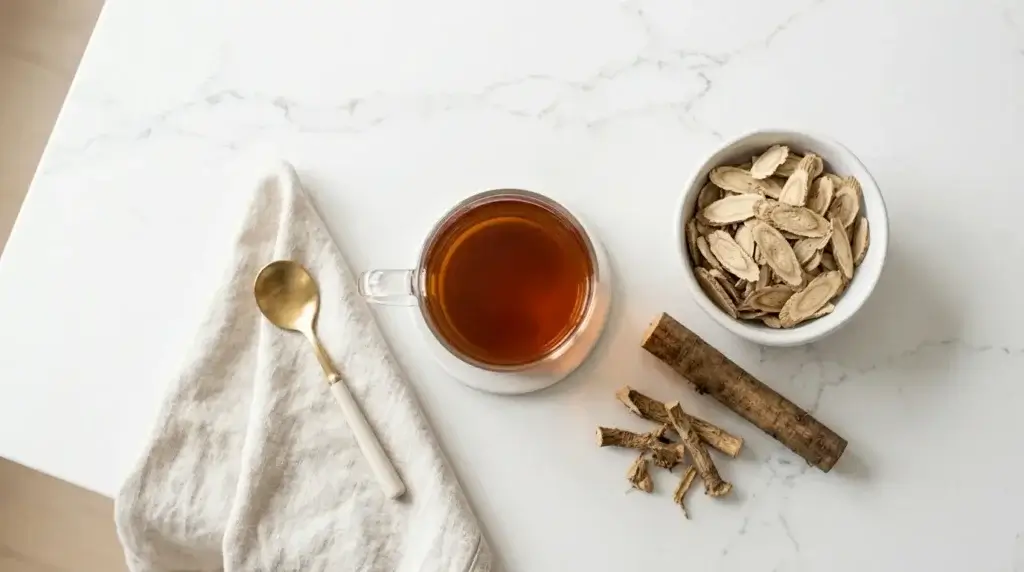
This is burdock’s most historically consistent and mechanistically supported benefit. Burdock root contains compounds that support liver function through several pathways:
Antioxidant hepatoprotection: Burdock’s chlorogenic acid and quercetin reduce oxidative stress in liver cells — the same mechanism that drives the liver damage seen in non-alcoholic fatty liver disease (NAFLD), alcohol-induced liver injury, and drug-induced hepatotoxicity.
Bile stimulation: Like dandelion root, burdock root stimulates bile production and secretion from the gallbladder. Increased bile flow supports fat digestion, reduces cholesterol buildup in the liver, and helps the body excrete toxins that are processed through the bile duct.
Arctigenin’s hepatoprotective activity: This lignan compound found specifically in burdock has shown protective effects against liver cell damage in laboratory studies — reducing inflammatory markers and preventing cell death in hepatocytes exposed to toxic substances.
A study published in the International Journal of Molecular Sciences found that burdock root extract significantly reduced liver damage markers (ALT and AST) and decreased inflammatory gene expression in a liver injury model.
Burdock root pairs naturally with dandelion root for liver support — the two plants share complementary mechanisms and are frequently combined in traditional European liver tonic formulas. See our dandelion tea benefits guide for how dandelion root’s specific prebiotic and bitter properties complement burdock.
2. Skin Clarity — The Most Searched Benefit
The skin benefits of burdock root are among the most consistently reported across traditional medicine and anecdotal evidence, and the mechanisms are increasingly well understood.
Blood purification mechanism: Traditional herbalism describes burdock as a “blood purifier” — a concept that modern research translates into specific effects: reduced circulating inflammatory markers, enhanced liver clearance of metabolic waste products, and diuretic action that reduces the buildup of compounds that contribute to skin conditions.
Direct anti-inflammatory effect on skin: Burdock’s polyacetylenes and arctigenin have demonstrated anti-inflammatory activity relevant to skin conditions — reducing the cytokine production that drives acne, eczema, psoriasis, and other inflammatory skin conditions.
Antimicrobial properties: Laboratory studies have found burdock root extract effective against Propionibacterium acnes — the bacteria most directly linked to acne. Taken internally, burdock’s antimicrobial compounds circulate systemically and may reduce bacterial-driven skin inflammation from the inside.
The skin benefits are most relevant for:
- Hormonal acne (particularly jawline and chin acne driven by androgen activity)
- Eczema and psoriasis (inflammatory skin conditions)
- General skin clarity and reduced congestion
For women dealing with hormonal acne specifically, burdock root works complementarily alongside spearmint tea benefits — spearmint addresses the hormonal (androgen) driver while burdock addresses the inflammatory and hepatic dimensions.
3. Prebiotic Gut Health
Burdock root contains up to 45% inulin by dry weight — making it one of the richest natural sources of this prebiotic fiber in any food or herbal preparation. Inulin selectively feeds beneficial gut bacteria, particularly Lactobacillus and Bifidobacterium species.
The practical effects of regular inulin consumption include:
- Improved gut microbiome diversity
- Reduced constipation and improved stool regularity
- Enhanced mineral absorption (particularly calcium and magnesium)
- Reduced intestinal pH, which inhibits pathogenic bacteria
At tea concentration, inulin extraction is significant — burdock root tea provides more inulin per cup than most other herbal teas. For a broader guide on gut-supporting drinks, our gut health drinks article covers the full landscape.
4. Blood Sugar Regulation
Burdock root’s inulin content is not only prebiotic — it also has direct blood sugar-regulating properties. As a fructo-oligosaccharide that resists digestion, inulin:
- Slows gastric emptying, reducing the rate of carbohydrate absorption
- Reduces post-meal blood glucose spikes
- Improves insulin sensitivity over time with regular consumption
A study found that burdock root extract significantly reduced fasting blood glucose and improved glucose tolerance in diabetic animal models. The inulin mechanism aligns with the evidence seen for other inulin-rich plants like dandelion and chicory root.
5. Anti-Inflammatory Effects
Burdock’s arctigenin — one of its most pharmacologically active compounds — has demonstrated significant anti-inflammatory activity in multiple studies. It inhibits NF-kB (the master regulator of inflammatory gene expression) and reduces the production of TNF-alpha and IL-6.
This systemic anti-inflammatory effect is relevant across multiple conditions:
- Arthritis and joint inflammation
- Inflammatory skin conditions
- Digestive inflammation (IBD, gastritis)
- General chronic low-grade inflammation
6. Diuretic and Kidney Support
Burdock root has traditional use as a diuretic — increasing urinary output and supporting kidney flushing. This mild diuretic activity:
- Reduces water retention and bloating
- Supports kidney flushing of metabolic waste
- May help prevent urinary tract infections through increased urine flow
For people with kidney concerns, burdock root is generally considered safer than hibiscus tea because it does not carry the same potassium accumulation risk for CKD patients. However, anyone with kidney disease should still consult their doctor. Our guide on hibiscus tea and kidneys provides a useful comparison framework.
7. Burdock Root Benefits for Women

Burdock root has specific relevance for women’s health that goes beyond its general benefits:
Hormonal acne support: Through its liver support, burdock helps the liver more efficiently metabolize and clear excess androgens from circulation — addressing one of the root causes of hormonal acne in women. This liver clearance mechanism works alongside spearmint’s direct anti-androgenic effect.
PMS and bloating: The diuretic and anti-inflammatory properties may reduce premenstrual water retention and the bloating and breast tenderness associated with the luteal phase.
Estrogen metabolism: The liver’s ability to properly process and excrete estrogen metabolites is central to hormonal balance. Burdock’s hepatoprotective and bile-stimulating effects support efficient estrogen clearance — relevant for women with estrogen dominance symptoms.
For a comprehensive guide to herbal teas and women’s hormonal health, see our article on hibiscus tea benefits for women.
8. Burdock Root Benefits for Men
Research has investigated burdock root’s potential benefits for male health, particularly regarding testosterone:
Testosterone support: Some studies suggest burdock root may modestly support testosterone levels through two mechanisms — reducing the oxidative stress in testicular tissue that impairs Leydig cell function, and inhibiting aromatase (the enzyme that converts testosterone to estrogen) through its polyacetylene compounds.
Prostate health: Arctigenin has shown activity against prostate cancer cell lines in laboratory studies, though this is far from clinical application. The anti-inflammatory effects are more immediately relevant for general prostate health.
How to Make Burdock Root Tea
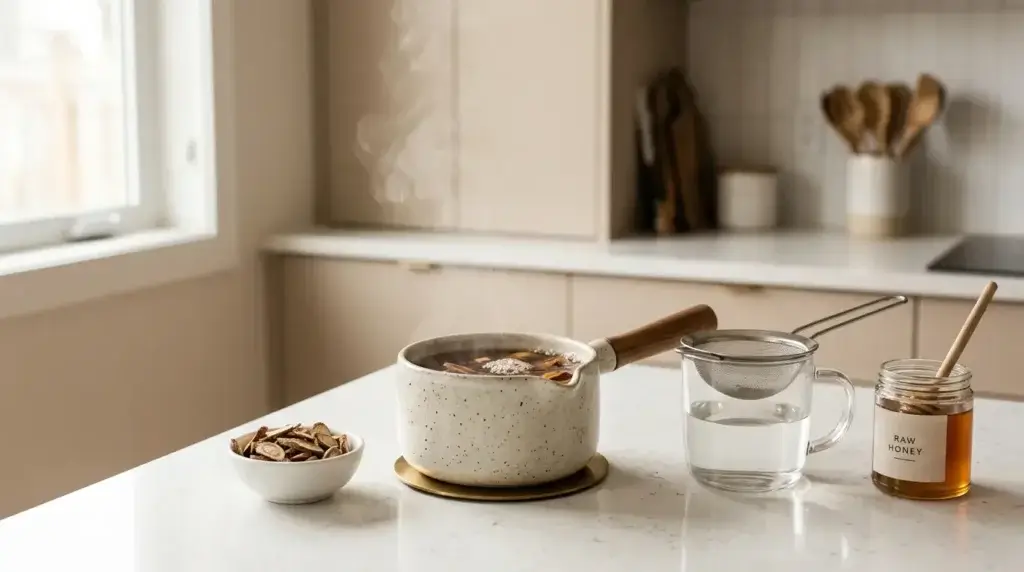
Burdock root is denser than most herbal tea ingredients — simple steeping extracts less than decoction (simmering). For best results:
Decoction method (recommended):
- Add 1 tablespoon of dried burdock root slices per 240ml (8 oz) of cold water to a small saucepan
- Bring to a gentle simmer over medium heat
- Simmer for 5–10 minutes — do not boil vigorously
- Remove from heat and allow to steep for an additional 5 minutes
- Strain through a fine mesh strainer
- Add honey to balance the earthy, slightly bitter flavor
- Serve warm or allow to cool and serve over ice
Simple steeping method (convenient):
- Add 2 teaspoons of finely cut dried burdock root to a cup
- Pour near-boiling water over the root
- Cover and steep for 10–15 minutes
- Strain and serve
- Less potent than decoction but convenient for daily use
Burdock and dandelion blend: Combine equal parts dried burdock root and roasted dandelion root. Simmer together for 10 minutes. Strain and serve. This is the classic European liver tonic tea — the two roots complement each other’s bitter, prebiotic, and hepatoprotective properties.
Burdock, ginger, and lemon (skin-clearing blend): Add 2–3 slices of fresh ginger to the simmering burdock root. Finish with a squeeze of fresh lemon juice after straining. The combination adds ginger’s anti-inflammatory and circulation-boosting properties to burdock’s detox profile — particularly popular for skin-clearing routines.
Flavor profile: Earthy, mildly bitter, slightly sweet — similar to dandelion root but with a slightly more vegetal quality. Most people find it pleasant with honey.
Storage of dried burdock root: Same principles apply as with other dried roots — store in an airtight glass container away from light and heat. Shelf life: 12–18 months. The same guidelines in our how to dry hibiscus flowers for tea article apply to storage of any dried herbal root or flower.
Print
Burdock Root Tea Benefits: What It Does for Liver, Skin, and Blood Sugar
Burdock root tea is best made by simmering dried root slices — decoction extracts significantly more of the medicinal compounds than simple steeping. This recipe covers the classic method plus a skin-clearing ginger lemon blend.
- Total Time: 17 min
- Yield: 1 cup 1x
Ingredients
- 1 tbsp dried burdock root slices per 240ml water (standard)
- 2–3 slices fresh ginger (skin-clearing blend)
- Fresh lemon juice to taste (optional)
- Raw honey to taste
- Cold water for decoction start
Instructions
- Add dried burdock root slices and cold water to a small saucepan
- Bring to a gentle simmer over medium heat
- Simmer for 5–10 minutes — do not boil vigorously
- Remove from heat and steep for 5 more minutes
- Strain through a fine mesh strainer into your cup
- Add honey while still hot
- For the skin-clearing blend: add fresh ginger slices at step 1 and a squeeze of lemon after straining
Notes
Decoction (simmering) is recommended over simple steeping for burdock root — the dense root requires heat to release its inulin, arctigenin, and polyacetylenes properly. Store dried burdock root in an airtight glass container away from light for up to 18 months.
- Prep Time: 2 min
- Cook Time: 15 min
- Category: Drinks
- Method: Decoction
- Cuisine: Universal
- Diet: Vegan
Nutrition
- Serving Size: 1 cup (240ml)
- Calories: 10
- Sugar: 0g
- Fat: 0g
- Fiber: 1g
- Cholesterol: 0mg
Keywords: burdock root tea recipe, how to make burdock root tea, burdock root decoction, skin clearing herbal tea
Burdock Root Tea Side Effects and Safety
Burdock root tea is safe for most healthy adults. Key considerations:
Allergies: Burdock belongs to the Asteraceae family (same as ragweed, daisies, and chrysanthemums). People with Asteraceae allergies should test with a small amount first.
Pregnancy: Burdock has traditionally been used to stimulate uterine contractions at high doses. As a precaution, avoid during pregnancy or limit to occasional small amounts and consult your midwife.
Blood sugar medications: Burdock’s inulin and arctigenin may lower blood sugar. People on insulin or oral hypoglycemics should monitor glucose carefully when adding daily burdock root tea.
Diuretics: Additive diuretic effect with prescription diuretics — may cause excessive fluid loss.
Anticoagulants: Some burdock compounds may have mild anti-platelet activity. People on blood thinners should consult their doctor.
Kidney disease: While burdock is generally safer than hibiscus for kidneys, people with CKD or urinary obstructions should consult their doctor before regular consumption.
For general herbal tea safety principles, our hibiscus tea side effects guide covers the framework applicable across herbal teas.
Burdock Root vs Dandelion Root vs Milk Thistle: Which Is Better for the Liver?
| Burdock Root | Dandelion Root | Milk Thistle | |
|---|---|---|---|
| Primary liver mechanism | Bile stimulation, antioxidant | Bile stimulation, prebiotic | Silymarin antioxidant |
| Prebiotic inulin | ✅ Very high (45%) | ✅ High (20–40%) | ❌ Minimal |
| Skin benefits | ✅ Strong | ⚠️ Indirect | ⚠️ Indirect |
| Blood sugar | ✅ Inulin mechanism | ✅ Inulin + alpha-glucosidase | ⚠️ Mixed evidence |
| Drug interactions | ⚠️ Mild | ⚠️ Mild | ⚠️ Several significant |
| Flavor | Earthy, mildly bitter | Bitter, earthy | Mild bitter |
| Best for | Skin + liver + gut | Liver + gut + coffee alt | Liver protection |
The three herbs are most effective when combined rather than chosen between. A rotation of dandelion root, burdock root, and milk thistle covers the broadest liver and metabolic support profile available from herbal teas.
Frequently Asked Questions
What are the benefits of burdock root tea?
The main burdock root tea benefits are liver support through bile stimulation and hepatoprotective antioxidants, skin clarity through blood purification and anti-inflammatory effects, prebiotic gut health from its high inulin content, blood sugar regulation, systemic anti-inflammatory activity, mild diuretic support, and specific women’s health benefits including hormonal acne support.
Is burdock root tea good for the liver?
Yes — burdock root stimulates bile flow, reduces oxidative stress in liver cells, and contains arctigenin which has shown hepatoprotective activity in studies. It is particularly useful for fatty liver support and general liver maintenance, complementing dandelion root and milk thistle in a liver-supporting herbal tea rotation.
What is burdock root good for?
Burdock root is primarily used for liver detox and support, skin conditions (acne, eczema, psoriasis), blood sugar regulation through inulin, gut health as a prebiotic, anti-inflammatory conditions including arthritis, and traditional blood purification.
Is burdock root tea good for skin?
Yes — this is one of its most consistently reported benefits. Burdock reduces the circulating inflammatory markers that drive skin conditions, has antimicrobial activity against acne-causing bacteria, and supports liver clearance of the metabolic compounds that contribute to congested skin. Benefits develop over 4–8 weeks of consistent daily consumption.
Does burdock root tea have caffeine?
No. Burdock root tea is completely caffeine-free.
How do you make burdock root tea?
The most effective method is decoction: simmer 1 tablespoon of dried burdock root slices in 240ml of water for 5–10 minutes, then steep for 5 more minutes off the heat, strain, and add honey. Simple steeping (10–15 minutes in hot water) works but extracts less of the active compounds.
What does burdock root tea taste like?
Earthy, mildly bitter, slightly sweet — comparable to dandelion root tea but with a slightly more vegetal quality. Most people find it pleasant and easy to drink with a small amount of honey.
Key Takeaways
- Burdock root tea benefits are most distinctive for liver support, skin clarity, and prebiotic gut health through its exceptionally high inulin content
- Contains unique compounds not found in other common herbal teas: arctigenin, polyacetylenes, and high-concentration inulin (up to 45% dry weight)
- Skin benefits work through blood purification, liver toxin clearance, direct antimicrobial activity against acne bacteria, and anti-inflammatory effects
- For women: particularly relevant for hormonal acne through liver-based androgen clearance — works alongside spearmint’s direct anti-androgenic effect
- Decoction (simmering) extracts more active compounds than simple steeping
- Combines exceptionally well with dandelion root for liver support and with ginger + lemon for skin-clearing routines
- Safe for most healthy adults — caution for Asteraceae allergies, pregnancy, diabetes medications, and blood thinners
- Caffeine-free, mild earthy flavor, generally pleasant with honey